.webp&w=384&q=75)

Loading, please wait...
Loading, please wait...
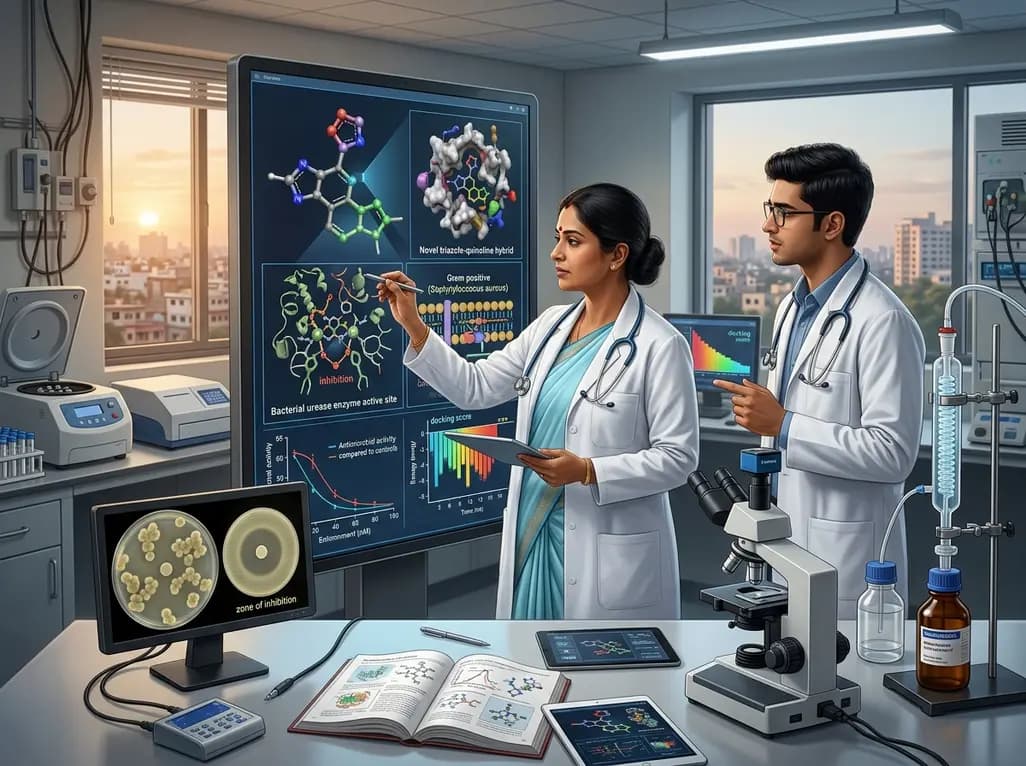
Researchers recently designed novel antimicrobial hybrids to combat the rising threat of drug resistance. Specifically, this study explored the synthesis of 1,2,4-triazole-5-thione-quinoline Schiff base hybrids. Notably, these molecules demonstrate high potential in targeting bacterial urease and mitigating oxidative stress. Furthermore, the scientific team utilized advanced spectroscopic methods to confirm the structural integrity of all synthesized compounds. Consequently, this rigorous characterization ensures the high reliability of the subsequent biological results.
The biological evaluation primarily focused on urease inhibition, which is a key factor in bacterial survival. Significantly, compounds 8b and 8d emerged as the most potent inhibitors in the series. Moreover, they both exhibited a strong IC value of 1.37 mM. Similarly, molecular docking studies highlighted the exceptional binding affinity of these molecules. For example, compound 8c achieved a superior binding score of -7.6 kcal/mol during computational testing.
Antimicrobial screening showed that these hybrids primarily affect Gram-positive pathogens. However, Gram-negative bacteria showed generalized resistance to these specific chemical agents. Therefore, these compounds could lead to the development of more targeted antimicrobial therapies in the future. Specifically, compound 8f displayed a broad-spectrum profile against Staphylococcus aureus and Streptococcus pyogenes. Such findings are particularly relevant for treating persistent skin and soft tissue infections.
Additionally, antioxidant assays provided further insights into the therapeutic versatility of these hybrids. In fact, compounds 8b and 8e showed superior ferric-reducing power compared to others. Meanwhile, 8f and 8g demonstrated exceptional radical-scavenging capabilities in the DPPH assay. Thus, the study provides a robust foundation for multi-targeted drug development. Ultimately, computational results using Density Functional Theory (DFT) aligned perfectly with the observed structure-activity relationships.
These are synthetic chemical compounds that combine triazole and quinoline rings into a single molecule. This chemical combination creates new agents with enhanced biological activities, such as antimicrobial, antioxidant, and enzyme-inhibitory properties.
Urease inhibitors block enzymes that certain bacteria use to neutralize stomach acid or form urinary stones. By inhibiting this enzyme, these compounds help manage H. pylori infections and prevent the recurrence of infection-induced kidney stones.
Disclaimer: This content is for informational and educational purposes only. It does not constitute medical advice or professional recommendation. Always consult a qualified healthcare provider for diagnosis and treatment. Refer to the latest local and national guidelines for clinical practice.
References

Read summarized clinical updates, watch expert medical content, and earn CME certifications right from your smartphone.
Open your smartphone camera to scan and install.





Researchers have synthesized novel triazole-quinoline hybrids showing potent urease inhibition and antimicrobial activity against Gram-positive bacteria. These compounds offer a multi-targeted approach to treating infectious diseases, supported by advanced computational docking and DFT studies.
4 months ago

Explore vital recurrent stroke predictors in lacunar stroke patients managed with intensive blood pressure lowering. This analysis examines trial findings from SPS3 to uncover residual vascular risks, metabolic factors, and targeted secondary prevention strategies for high-risk neurological patients.
Today

A comprehensive scoping review synthesises evidence linking prenatal maternal mental health to long-term offspring neurodevelopment, evaluating neuroendocrine, inflammatory, and epigenetic pathways while highlighting clinical screening and future research priorities.
Today

The Directorate General of Health Services directs Indian states to halt the hazardous reuse and reprocessing of single-use medical devices. Discover regulatory implications under the Drugs and Cosmetics Act, critical infection risks, legal liabilities, and operational changes required across clinical specialties.
Today
Mitochondria-targeted nanoparticles self-assembled from EGCG and L-glutamic acid effectively restore mitochondrial homeostasis, suppress synovial inflammation, and attenuate chondrocyte senescence in osteoarthritis, offering a promising disease-modifying nanotherapy.
Today

India is advancing preventive healthcare by integrating genomics, artificial intelligence, and quantum technologies. With the SANGAM programme sequencing one million Indian genomes, clinicians can unlock personalized therapies, detect cardiometabolic risks early, and curb the burden of diabetes and heart disease.
Today
