.webp&w=384&q=75)

Loading, please wait...
Loading, please wait...

Recent epidemiological breakthroughs have uncovered an intriguing link between structural cardiac anomalies and pediatric malignancies. While past studies often conflated chromosomal abnormalities with isolated cardiac malformations, emerging evidence focuses specifically on nonsyndromic congenital heart disease. A massive multi-state investigation evaluating 11 million pediatric patients has revealed distinct oncologic vulnerabilities across specific cardiac phenotypes. Consequently, understanding these intricate relationships enables clinicians to improve long-term surveillance and identify common developmental pathways.
Epidemiologists long recognized that children born with structural heart defects faced an increased likelihood of developing childhood cancer. However, previous investigations encountered significant methodological challenges because they rarely distinguished syndromic conditions from isolated lesions. Children with Down syndrome or Turner syndrome harbor well-documented predispositions to leukemia and other neoplasms. When researchers combine syndromic and nonsyndromic cohorts, they obscure the unique biology underlying isolated cardiovascular malformations.
To address this crucial knowledge gap, investigators analyzed a vast population-based cohort comprising 11 million children across four diverse states. Specifically, the study team assessed 60 distinct cardiac lesions grouped into seven clinical categories. They identified 74,755 pediatric individuals diagnosed with nonsyndromic cardiac lesions. The researchers followed these children longitudinally using state birth defect registries and comprehensive cancer records. Furthermore, they employed robust Cox proportional hazards regression models to calculate precise hazard ratios while adjusting for potential confounders. By comparing these children to peers without congenital anomalies, the team established reliable baseline risk profiles. Therefore, this expansive methodology provides unprecedented statistical clarity regarding lesion-specific oncologic vulnerabilities in pediatric cardiology.
The multi-state investigation revealed striking correlations between specific cardiac malformations and hematologic neoplasms. Most notably, children diagnosed with aortic arch obstruction demonstrated an extraordinary twelvefold increase in lymphoma risk compared to healthy controls. Similarly, children presenting with single-ventricle disease experienced a nearly tenfold higher hazard for lymphoma. These alarming numbers suggest that hemodynamically severe malformations or their subsequent surgical interventions might profoundly influence lymphoid tissue homeostasis.
In addition, the researchers identified significant hazards for hematologic malignancies among children with central septal defects. Specifically, complex atrioventricular septal defects correlated with an eightfold elevation in leukemia incidence. Because the study excluded children with recognized chromosomal aneuploidies, these findings point toward shared nonchromosomal genetic regulators. Pathologists hypothesize that transcription factors governing early cardiac septation also regulate hematopoietic stem cell differentiation. Moreover, repetitive cardiopulmonary bypass, critical care interventions, and therapeutic catheterizations might impart distinct immunological stresses. Consequently, pediatricians caring for children with complex structural lesions must remain cognizant of these hematologic risks during routine follow-up examinations.
Beyond hematologic malignancies, the cohort data demonstrated notable correlations with pediatric embryonal solid tumors. For instance, children born with ventricular septal defects exhibited an elevenfold increase in the hazard for hepatoblastoma. This strong correlation aligns with emerging embryological evidence linking hepatic vascular development with central cardiac morphogenesis. Early perturbations in shared endodermal-mesodermal signaling cascades may simultaneously disrupt intrahepatic vascular architecture and stimulate aberrant hepatocyte proliferation.
Furthermore, the investigators identified a sixfold elevation in neuroblastoma risk among patients diagnosed with conotruncal heart defects. This finding offers compelling biological coherence because neural crest cells contribute directly to both cardiac outflow tract septation and sympathetic nervous tissue. When migratory neural crest pathways experience genetic disruptions, infants develop malformations such as tetralogy of Fallot alongside adrenal neuroblastomas. Therefore, these solid tumor associations confirm that specific embryological origins dictate malignancy susceptibility. By identifying these distinct lesion-tumor pairs, the researchers have established clear biological rationales for targeted oncologic vigilance rather than generalized non-specific concern.
Elucidating the precise mechanisms driving these cancer associations remains a paramount objective for pediatric researchers. Current scientific evidence suggests a multifactorial etiology involving both innate genetic variants and iatrogenic exposures. On one hand, shared germline mutations in developmental control genes, including chromatin remodelers and RAS-MAPK signaling components, predispose infants to both structural cardiac flaws and oncogenesis. These developmental genes orchestrate crucial embryonic milestones, meaning early disruptive mutations can alter multiple organ systems simultaneously.
On the other hand, extrinsic clinical exposures encountered during complex cardiac management may compound baseline risks. Children with severe cardiac lesions frequently undergo numerous diagnostic fluoroscopies, computed tomography scans, and catheterizations during infancy. Consequently, cumulative low-dose ionizing radiation can induce DNA double-strand breaks in rapidly dividing tissues. In addition, patients undergoing major palliative surgeries often receive immunosuppressive therapies or experience chronic low-grade inflammation. Thus, a multi-hit model likely operates in this population, where an underlying developmental predisposition interacts with environmental stressors to facilitate malignant transformation.
These remarkable epidemiological findings carry profound clinical implications for pediatricians, cardiologists, and oncologists worldwide. Although relative hazard ratios appear strikingly elevated, clinicians must remember that the absolute cumulative incidence of childhood cancer remains low. Therefore, professional societies do not recommend indiscriminate whole-body radiological screening or invasive bone marrow biopsies for asymptomatic cardiac patients. Such unselected screening would generate high false-positive rates, excessive anxiety, and unnecessary economic burdens for families.
Instead, clinical teams should implement proactive symptom-based surveillance and multidisciplinary communication. Pediatricians must maintain a low diagnostic threshold to evaluate suspicious clinical features, such as persistent lymphadenopathy, unexplained cytopenias, unremitting bone pain, or unexplained hepatomegaly. Furthermore, primary care physicians should coordinate closely with pediatric cardiologists to document lifetime diagnostic radiation exposures. When invasive interventions are necessary, teams should aggressively practice radiation optimization protocols. Ultimately, structured parental education regarding warning signs empowers caregivers to seek timely medical attention without causing undue psychological distress.
Researchers propose several biological mechanisms connecting structural cardiac defects to malignant neoplasms. Shared developmental genetic pathways, such as mutations altering cellular differentiation or embryonic signaling, likely drive both cardiac malformations and tumorigenesis. In addition, repeated therapeutic ionizing radiation from fluoroscopy and cardiac catheterizations during infancy can contribute to oncogenic DNA damage. Consequently, altered tissue development and early environmental exposures may act synergistically in these vulnerable children.
The landmark cohort study identified striking associations between specific structural lesions and distinct pediatric cancers. Most notably, aortic arch obstruction and single-ventricle physiology correlate with markedly heightened hazard ratios for pediatric lymphoma. Furthermore, complex atrioventricular septal defects demonstrate an eightfold increase in leukemia risk. Ventricular septal defects strongly correlate with hepatoblastoma, whereas conotruncal malformations exhibit significant links to neuroblastoma. These lesion-specific patterns highlight distinct underlying developmental vulnerabilities.
Clinicians do not currently recommend aggressive universal cancer screening imaging for all children with cardiac malformations. However, pediatricians must maintain heightened diagnostic suspicion when these patients present with persistent systemic symptoms. Specifically, unexplained cytopenias, protracted fever, lymphadenopathy, or abdominal masses warrant prompt oncologic workup. Moreover, multidisciplinary collaboration between pediatric cardiologists and pediatric oncologists ensures timely diagnosis while avoiding unnecessary invasive testing and excessive diagnostic radiation exposure.
Disclaimer: This content is for informational and educational purposes only. It is not intended to be a substitute for professional medical advice, diagnosis, or treatment. Always seek the advice of your physician or other qualified health provider with any questions you may have regarding a medical condition. Never disregard professional medical advice or delay in seeking it because of something you have read here. The findings and opinions expressed are those of the authors and do not necessarily reflect the official policy or position of any affiliated organizations or medical bodies. Refer to the latest local and national guidelines for clinical practice.
References

Read summarized clinical updates, watch expert medical content, and earn CME certifications right from your smartphone.
Open your smartphone camera to scan and install.





A multi-state cohort study of 11 million children reveals that nonsyndromic congenital heart disease significantly increases specific childhood cancer hazards, including lymphoma, hepatoblastoma, and leukemia. These findings underscore the need for targeted clinical vigilance and shared developmental research.
last month

An observational study from the NIH All of Us Research Program reveals that adding a multi-ancestry polygenic risk score to machine learning models provides only modest improvements in predicting adult weight gain, underscoring the enduring significance of routine clinical and lifestyle factors.
Today

A study in JAMIA Open shows lightweight open-source reasoning LLMs achieve up to 95% sensitivity and accelerate evidence synthesis screening by nearly twentyfold, presenting a cost-effective, scalable AI solution for biomedical research and systematic reviews.
Today
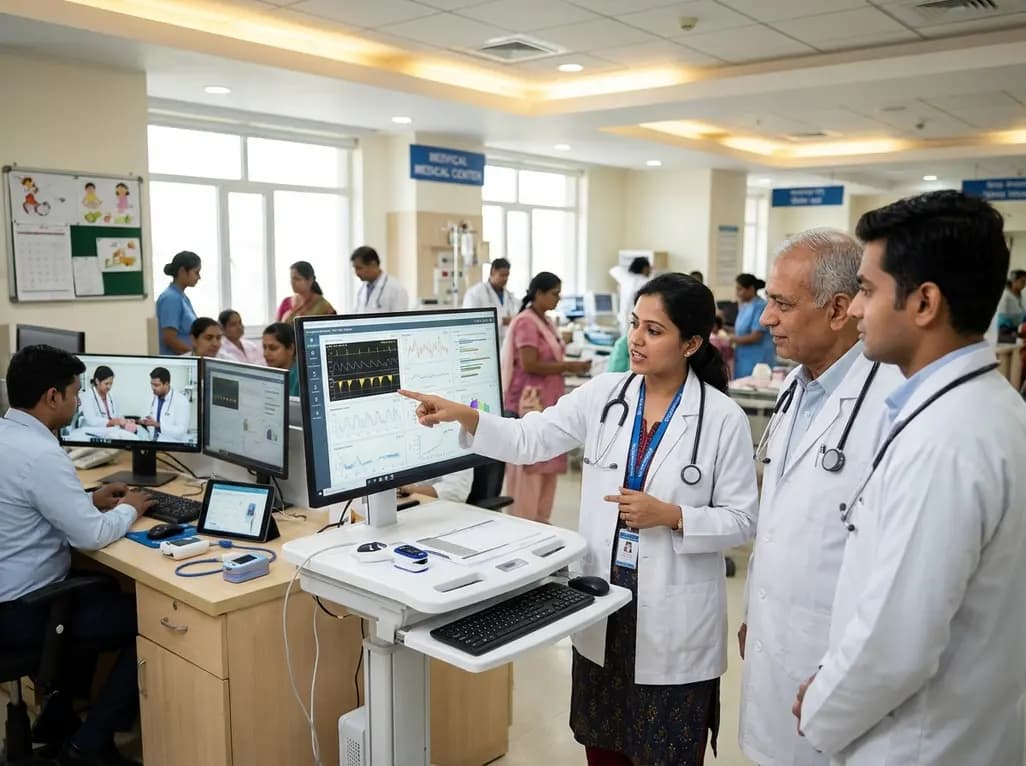
A landmark study details how an enterprise pediatric remote patient management model expanded from a single cardiology pilot to 16 diverse specialty programs by combining centralized digital operations with specialty clinical leadership.
Today

A comparative review of tension band wiring and intramedullary screw fixation in thumb metacarpophalangeal arthrodesis, evaluating union rates, hardware complications, and clinical outcomes.
Yesterday

A breakthrough ultrathin multimodal sensor decouples physical hemodynamic monitoring from disposable electrochemical calibration, achieving long-term wearable glucose prediction with 81.36% accuracy and a 9.12% MARD. This offers a robust, drift-free solution for outpatient metabolic surveillance.
Yesterday
