.webp&w=384&q=75)

Loading, please wait...
Loading, please wait...
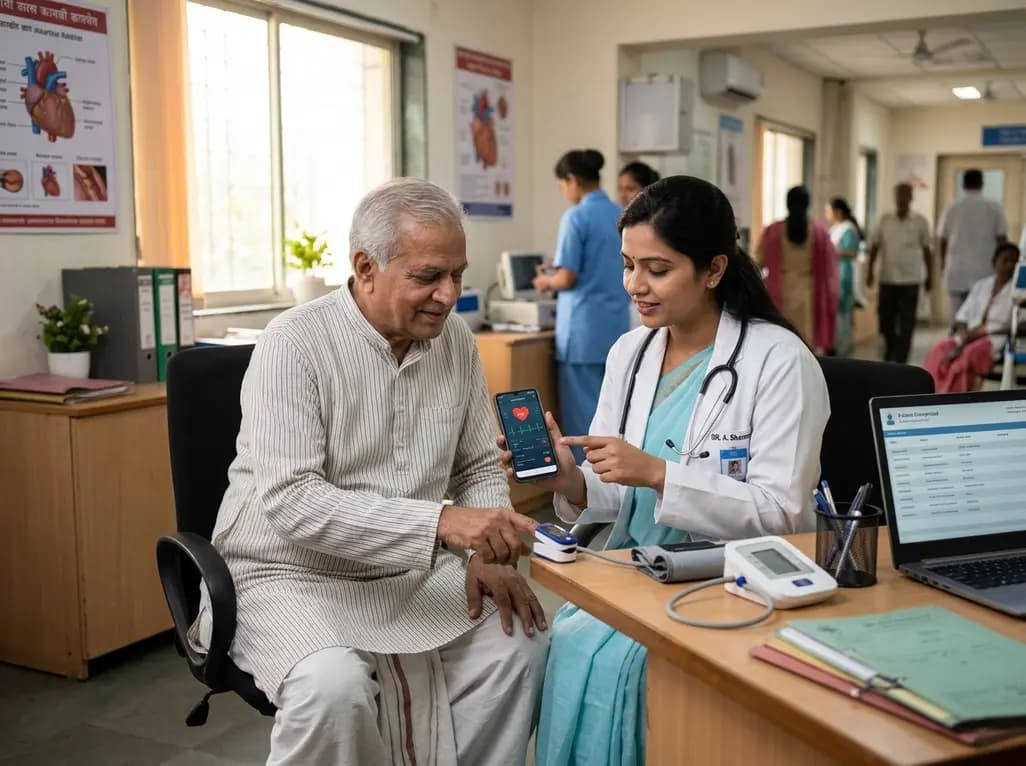
Chronic heart disease disproportionately affects older adults and frequently requires rigorous long-term management. Digital innovations offer promising ways to support home monitoring, therapeutic compliance, and patient education. However, achieving sustained cardiac mHealth app adoption among adults aged 65 years and older remains challenging. Clinicians must understand the complex personal, design, and systemic factors that dictate whether elderly patients embrace or abandon digital health tools.
Chronic cardiovascular conditions require regular monitoring and structured lifestyle modifications. Mobile health tools support these goals by offering real-time telemonitoring, guided telerehabilitation, structured educational content, and timely medication reminders. When older individuals actively use these digital solutions, clinical teams can track hemodynamic fluctuations earlier and prevent unnecessary hospital admissions. Furthermore, digital tools empower patients by demystifying complex treatment regimens.
Nevertheless, technology deployment alone does not guarantee meaningful engagement. Older patients often present with multiple comorbidities, unique socioeconomic limitations, and distinct psychological barriers. Consequently, digital cardiac interventions must align closely with the daily routines and physical capabilities of senior patients. Without deliberate clinical alignment, mobile apps risk becoming passive installations rather than proactive therapeutic instruments. Clinicians should therefore recognize that technical availability is only the first step toward effective cardiovascular digital health integration.
Older cardiac patients face numerous individual and environmental hurdles when navigating digital applications. Physical and cognitive limitations represent prominent obstacles. Age-related visual impairment, decreased manual dexterity, and mild cognitive decline often make intricate touch-screen navigation frustrating. In addition, technological anxiety frequently deters older individuals who lack prior smartphone experience. When an app interface presents crowded menus or ambiguous icons, elderly users can quickly feel overwhelmed and disengage entirely.
Beyond personal challenges, structural and organizational factors strongly influence patient participation. Many older individuals experience social isolation or lack family members who can troubleshoot technical errors. Moreover, healthcare systems often deploy fragmented digital pilots that lack long-term technical support or clear integration into primary care workflows. Unclear data privacy protections and ambiguous regulatory oversight further deepen patient hesitation. Because of these cumulative barriers, unsupported digital implementations frequently fail to achieve sustained user retention.
Despite notable obstacles, several predictable facilitators promote lasting digital adherence among elderly cardiac patients. First and foremost, software developers must prioritize simplicity and accessibility. Interfaces featuring large fonts, high-contrast layouts, straightforward navigation menus, and minimal data-entry requirements significantly enhance usability. When elderly patients find an application intuitive, their confidence improves, and their technostress decreases rapidly.
Equally important is the direct perception of clinical utility. When individuals understand how tracking daily weights, vitals, or symptoms protects them from acute decompensation, their motivation increases substantially. Strong family support also serves as a vital bridge. Caregivers who assist with initial setup and daily entries reinforce positive user behaviors. Additionally, explicit endorsement from trusted cardiologists and primary care physicians provides crucial validation, reassuring patients that digital self-care directly enhances their medical supervision.
Implementation science frameworks, such as Greenhalgh's diffusion of innovations model, highlight that successful digital adoption requires alignment across multiple organizational layers. Interventions must transcend isolated commercial downloads by integrating directly into established clinical workflows. For example, remote patient data should flow securely into electronic health records rather than existing in disconnected proprietary software silos. This integration ensures that clinical teams can review telemetry trends during scheduled consultations.
Furthermore, developers and clinical teams must collaborate through participatory co-design. Engaging geriatric patients, informal caregivers, and cardiovascular nurses during early development ensures that functional requirements match real-world senior capabilities. Hybrid effectiveness-implementation clinical trials are also necessary to assess both patient outcomes and institutional feasibility simultaneously. By addressing regulatory guidelines, digital equity, and scalable reimbursement models, healthcare systems can transform temporary digital experiments into permanent components of outpatient cardiac care.
Cardiovascular nurses occupy an ideal vantage point to guide geriatric patients through digital transitions. During outpatient encounters or predischarge planning, nurses can systematically assess each patient's digital readiness, cognitive baseline, and physical limitations. This structured screening identifies individuals who require simplified tools or dedicated caregiver involvement before discharge.
Additionally, nurses provide essential, hands-on digital coaching. Demonstrating how to record vital signs, log daily medications, and interpret automated clinical alerts builds patient self-efficacy effectively. Nurses also coordinate ongoing communication, reassuring patients that submitted metrics are actively monitored by their healthcare team. Through patient advocacy, empathetic education, and continuous operational feedback, nursing professionals ensure that digital cardiology pathways remain accessible, equitable, and patient-centered.
Age-related declines in eyesight, hearing, and tactile sensitivity directly hinder digital interactions. Conditions such as cataracts, macular degeneration, and diabetic retinopathy make small fonts hard to read. Furthermore, peripheral neuropathy or joint stiffness impairs fine motor control on modern capacitive touchscreens. Designing applications with customizable text sizes, high-contrast visuals, voice-activated prompts, and spacious interactive buttons mitigates these physical barriers and significantly improves daily usability for older users.
Elderly cardiac patients place high trust in their treating cardiologists and nursing teams. When clinicians explicitly prescribe and validate an application, patients perceive the tool as an essential component of their medical therapy rather than an optional novelty. This professional endorsement dispels privacy concerns, alleviates technological apprehension, and reinforces the tangible clinical benefits of sustained daily tracking for long-term health outcomes.
Informal caregivers provide critical technical, logistical, and emotional reinforcement for elderly patients using mobile health tools. They frequently assist with downloading applications, configuring user accounts, pairing remote diagnostic peripherals, and troubleshooting software updates. Moreover, caregivers encourage continuous data logging and help interpret digital alerts, ensuring that vulnerable older adults maintain consistent therapeutic engagement even during acute health fluctuations.
Disclaimer: This content is for informational and educational purposes only and should not be considered medical advice. It is not intended to replace professional healthcare consultation, diagnosis, or treatment. Healthcare providers should rely on their clinical judgment and verify details against relevant medical resources. Refer to the latest local and national guidelines for clinical practice.
References

Read summarized clinical updates, watch expert medical content, and earn CME certifications right from your smartphone.
Open your smartphone camera to scan and install.





A comprehensive scoping review synthesizes multilevel determinants influencing mobile health application adoption among older adults with chronic heart disease, emphasizing the essential role of interface design, caregiver engagement, and clinical nursing pathways.
last month

As monsoon seasons elevate arboviral disease threats, Tamil Nadu has initiated an ICMR-monitored evaluation of the tetravalent dengue vaccine in Tenkasi district. Clinicians emphasize clinical monitoring, public prevention, and high-quality early pediatric care to reduce disease morbidity across endemic regions.
Today

Leucine Rich Bio has introduced South Asia's first comprehensive vaginal microbiome test, BugSpeaks. By profiling microbial dysbiosis, pathogens, and antimicrobial resistance, this next-generation diagnostic platform provides clinicians with deeper insights into recurrent infections, fertility, and reproductive health.
Today

Review how tailored exercise programs benefit frail older patients with heart failure. Explore pathophysiological mechanisms, individualized training prescriptions, and strategies to overcome adherence barriers in clinical practice.
Today

This comparative study evaluates posterior labral tears with and without glenohumeral instability, highlighting distinct demographic patterns, MRI underestimation in stable shoulders, and successful arthroscopic repair outcomes.
Today

A clinical study demonstrates that early intervention with tocilizumab, either as monotherapy or bridged with corticosteroids, achieves significant proptosis reduction and resolves active inflammation in treatment-naive thyroid eye disease.
Today
