.webp&w=384&q=75)

Loading, please wait...
Loading, please wait...
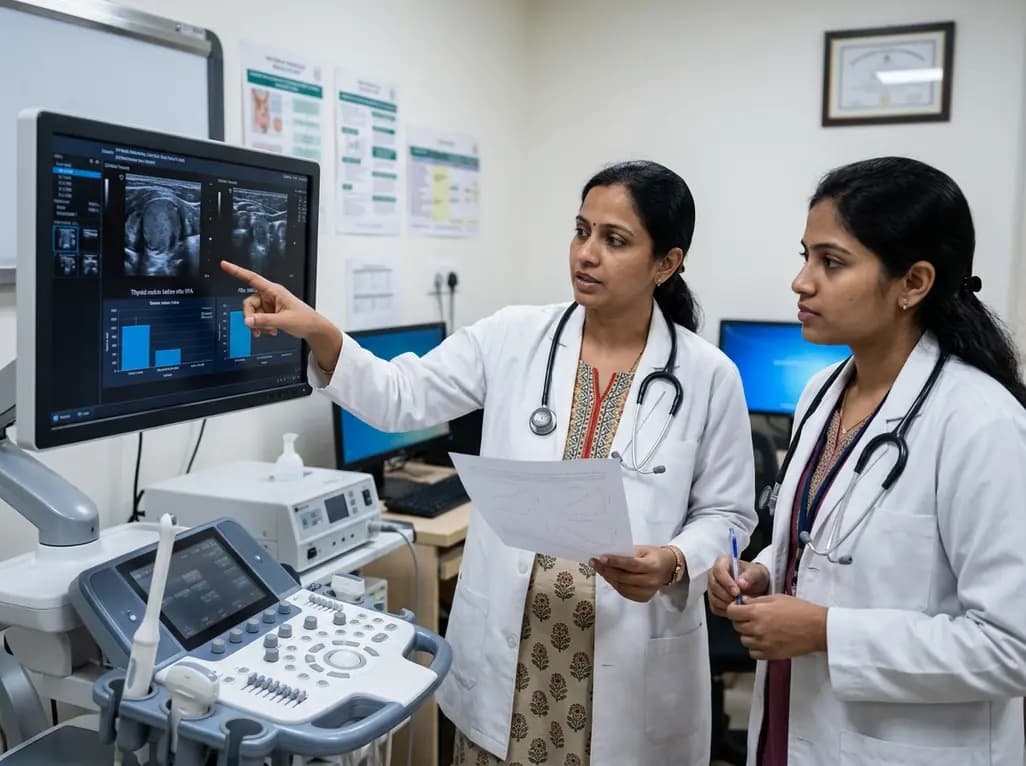
Clinical management of non-malignant thyroid enlargements has evolved significantly in recent years. Physicians frequently encounter symptomatic or cosmetically visible lesions that require intervention without undergoing full surgical excision. To address these clinical challenges, clinicians utilize various non-surgical benign thyroid nodule treatments to reduce lesion volume while preserving surrounding parenchymal function. Traditional medical therapy historically relied heavily on suppressive levothyroxine administration, whereas modern interventional radiology and endocrine surgery favor minimally invasive thermal ablation techniques. However, direct randomized head-to-head evidence comparing these diverse therapeutic options has remained fragmented. Consequently, understanding the relative structural efficacy and hormone impact of each modality is essential for optimizing patient care.
Non-surgical management of benign thyroid pathology encompasses both pharmacological suppression and minimally invasive image-guided techniques. Pharmacological management primarily involves levothyroxine (L-T4) suppressive therapy, which aims to decrease thyroid-stimulating hormone (TSH) secretion and thereby inhibit nodule growth. Conversely, image-guided percutaneous procedures deliver local energy or chemical agents directly into the nodular tissue under continuous ultrasound visualization. Thermal ablation modalities include radiofrequency ablation (RFA), microwave ablation (MWA), and percutaneous laser ablation (PLA). In contrast, chemical options rely on percutaneous ethanol injection (PEI), which is particularly effective for cystic or predominantly fluid-filled lesions.
Each technique possesses distinct mechanisms of action and clinical profiles. Thermal ablation modalities utilize high temperatures to induce localized coagulative necrosis and subsequent tissue resorption, which leads to substantial volume reduction over several months. On the other hand, levothyroxine therapy acts systemically rather than locally. Although suppressive medication remains widely accessible, its capacity to shrink solid nodular mass is relatively modest compared to direct thermal intervention. Therefore, selecting the appropriate treatment modality requires balancing structural therapeutic goals against potential systemic endocrine alterations and procedural invasiveness.
A recent comprehensive Bayesian network meta-analysis evaluated fourteen randomized controlled trials encompassing 545 adult participants with benign thyroid nodules. The primary structural objective across these trials was assessing overall volume reduction across various non-surgical benign thyroid nodule treatments. The network meta-analysis demonstrated that thermal ablation techniques achieved significantly superior structural efficacy compared to pharmacological suppression or placebo interventions. Specifically, percutaneous laser ablation (PLA) demonstrated a weighted mean difference (WMD) in nodule volume reduction of approximately -5.23 (95% CI: -8.26 to -2.15). Similarly, radiofrequency ablation (RFA) yielded a prominent volume reduction with a WMD of -4.11 (95% CI: -6.19 to -2.38).
These numerical outcomes highlight the profound structural superiority of minimally invasive thermal modalities over systemic hormone therapy. While levothyroxine therapy produced minimal reduction in physical nodule dimensions, both PLA and RFA successfully achieved major, sustained volume shrinkage. Furthermore, comparative rankings using surface under the cumulative ranking curve (SUCRA) analysis reinforced that thermal ablative techniques consistently ranked highest for physical volume reduction. Consequently, for patients presenting with local compressive symptoms or cosmetic concerns, thermal ablation represents a far more effective therapeutic pathway than suppressive thyroid hormone therapy.
In addition to physical volume reduction, assessing post-treatment thyroid function is vital for patient safety and long-term endocrinological stability. The Bayesian network meta-analysis evaluated specific serum markers, including thyroid-stimulating hormone (TSH), free triiodothyronine (FT3), and free thyroxine (FT4). Interestingly, the analysis revealed distinct outcome-specific differences across the evaluated modalities. Levothyroxine suppressive therapy exerted the strongest effect on TSH suppression when compared to ablation techniques such as microwave ablation (WMD = -1.59, 95% CI: -2.42 to -0.79). This finding aligns with physiological expectations, as exogenous thyroid hormone administration suppresses pituitary TSH secretion via negative feedback mechanisms.
In contrast, thermal and chemical ablation techniques demonstrated minimal disruptive effects on baseline circulating thyroid hormone levels. Specifically, no statistically significant differences were observed across interventions regarding FT3 or FT4 serum concentrations. This stability demonstrates that local ablative procedures destroy target nodular tissue while preserving healthy adjacent thyroid parenchyma. Consequently, patients undergoing thermal ablation maintain endogenous hormone production and rarely develop procedural hypothyroidism. Therefore, thermal ablation offers a dual advantage by providing substantial structural reduction without disrupting system-wide pituitary-thyroid feedback loops or requiring long-term replacement therapy.
Although the Bayesian network meta-analysis provides valuable comparative insights, several critical limitations inherent in the existing trial landscape must be acknowledged. First, the evidentiary network relies substantially on historical trial comparators, including placebo and levothyroxine suppression, which no longer represent the frontline gold standard in many contemporary clinical guidelines. Consequently, direct head-to-head randomized trials comparing modern ablation modalities against one another—such as RFA versus MWA or PLA—remain relatively sparse within the published literature.
Second, the included randomized clinical trials focused heavily on surrogate biophysical parameters, such as ultrasound-measured nodule volume and biochemical hormone markers. Crucially, several key patient-centered outcomes were underreported or entirely absent across the primary trial datasets. Parameters such as validated health-related quality of life scores, validated cosmetic improvement scales, patient-reported compressive symptom relief, and long-term nodule regrowth rates were not systematically captured. Additionally, comprehensive reporting regarding procedure-related complications, such as transient vocal cord paresis or localized pain, varied considerably. Therefore, clinicians must interpret these network rankings cautiously when translating findings to individual patient care plans.
For practicing clinicians, endocrinologists, and interventional radiologists, these network meta-analysis findings offer clear guidance regarding therapeutic selection for benign thyroid nodules. Pharmacological suppression using levothyroxine should no longer be recommended as a primary strategy to shrink symptomatic benign nodules, given its limited structural efficacy and potential cardiovascular or skeletal risks associated with subclinical TSH suppression. Instead, thermal ablation modalities, particularly radiofrequency ablation and laser ablation, should be prioritized when non-surgical volume reduction is required.
Moving forward, healthcare providers must adopt a nuanced, individualized approach to nodule management. Ultrasound-guided thermal ablation allows patients to achieve effective symptom relief and cosmetic improvement without suffering surgical scarring, general anesthesia risks, or permanent hypothyroidism. However, to bridge existing gaps in clinical evidence, future research must prioritize large-scale, head-to-head randomized controlled trials comparing contemporary minimally invasive modalities. These future studies should integrate robust, standardized patient-centered outcomes alongside long-term recurrence surveillance to establish definitive evidence-based care pathways.
Thermal ablation techniques, such as laser ablation and radiofrequency ablation, are significantly more effective at reducing nodule volume than levothyroxine therapy. Network meta-analysis demonstrates that laser and radiofrequency ablation achieve marked physical shrinkage. Conversely, levothyroxine primarily suppresses pituitary thyroid-stimulating hormone levels rather than shrinking solid tissue, providing negligible volume reduction while introducing potential systemic side effects from hormone suppression.
No, thermal ablation procedures generally preserve surrounding healthy thyroid tissue and do not alter circulating free hormone levels. Clinical evidence shows no statistically significant differences in free T3 or free T4 levels following thermal ablation compared to baseline. Because energy is delivered precisely inside the nodule under ultrasound guidance, intact functional parenchyma remains unaffected, eliminating the need for lifelong hormone replacement therapy.
Current research is limited by a reliance on historical comparators like placebo and levothyroxine rather than direct head-to-head comparisons between modern thermal modalities. Furthermore, existing trials focus mainly on volumetric and laboratory outcomes rather than patient-centered endpoints such as symptom scores, cosmetic satisfaction, voice changes, or long-term regrowth rates. Further randomized head-to-head trials evaluating contemporary techniques are necessary to clarify optimal selection criteria.
Disclaimer: This content is for informational and educational purposes only. It does not constitute medical advice, diagnosis, or treatment. Healthcare professionals should rely on their clinical judgment and refer to the latest local and national guidelines for clinical practice.
References

Read summarized clinical updates, watch expert medical content, and earn CME certifications right from your smartphone.
Open your smartphone camera to scan and install.





A Bayesian network meta-analysis evaluated non-surgical treatments for benign thyroid nodules, finding thermal ablation techniques like laser and radiofrequency ablation superior in nodule volume reduction, whereas levothyroxine showed the strongest TSH suppression without significant changes in FT3 or FT4.
last month

Epidemiologists and health leaders warn that active Ebola virus transmission in the Democratic Republic of Congo remains entrenched within communities. With fewer than ten percent of expected contacts monitored, public health officials urge rapid surveillance scale-up and reinforced healthcare precautions.
Today

A scoping review evaluates 116 studies on AI in women's reproductive health, finding that 83.6% carry high risk of bias. While ensemble models show promise, disparities and lack of validation hinder LMIC deployment.
Today
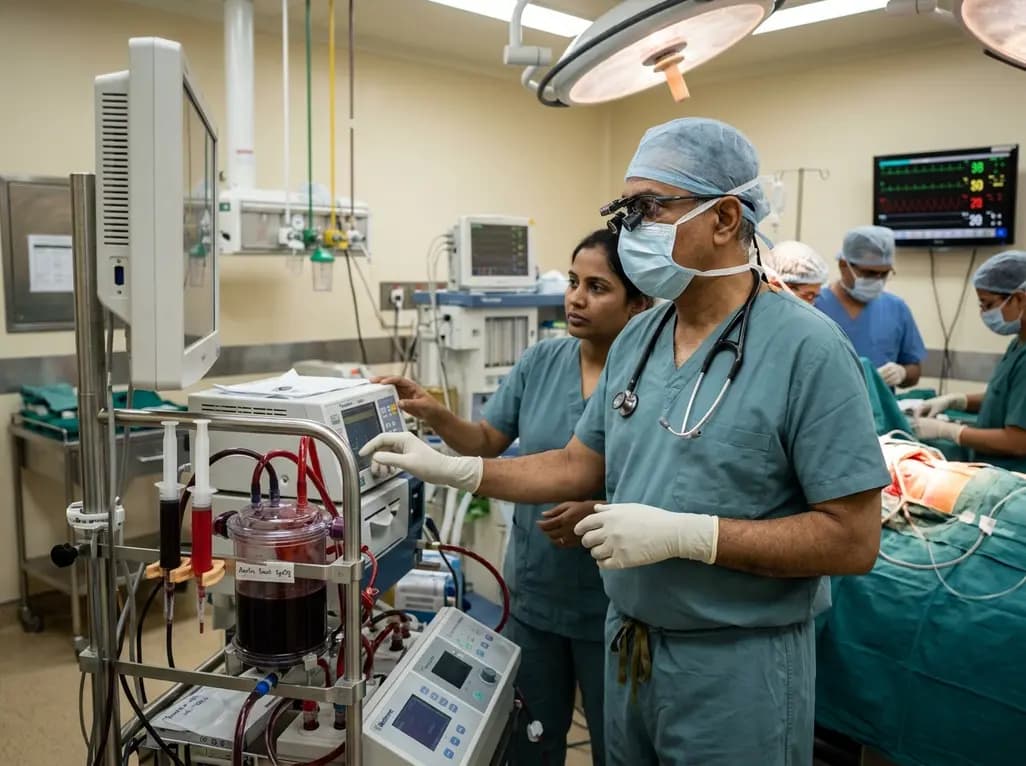
Differential oxygenation during peripheral TA-NRP can cause undetected coronary hypoxemia due to arch vessel clamping. A novel circuit with continuous aortic root monitoring detects desaturation early, facilitating left ventricular unloading and preventing allograft dysfunction and unnecessary heart discard.
Today

India faces significant opportunities to expand medical device exports to high-growth markets like Mexico, Brazil, and the UK. By addressing its trade deficit, advancing domestic component manufacturing, and aligning with global regulatory standards, the country aims to become an international healthcare hub.
Today

A post hoc analysis of the PARM-T2D study shows pemafibrate exerts baseline-dependent effects on LDL-C and particle size in type 2 diabetes and hypertriglyceridemia. It lowers triglycerides and remnants while favorably remodeling atherogenic LDL particles based on initial lipid control status.
Today
