

Loading, please wait...
Loading, please wait...
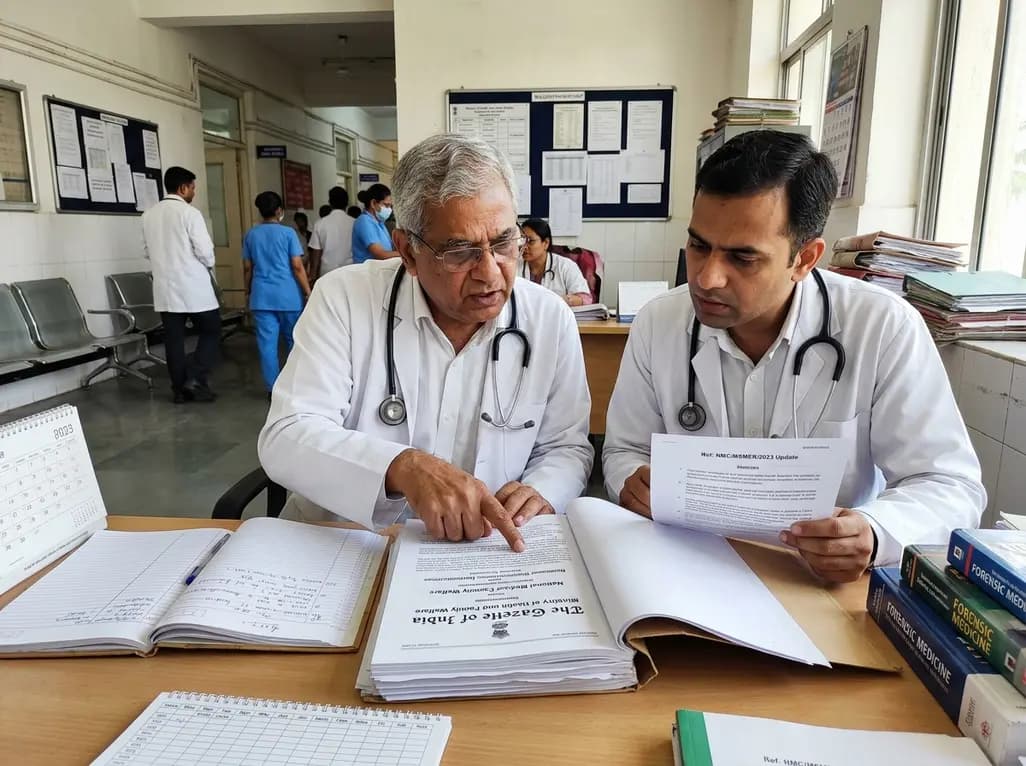
The National Medical Commission has recently announced a major regulatory shift across the country. In a fresh official gazette notification, the commission formally rescinded the 2023 guidelines governing medical education standards. However, the regulatory body clarified that basic transparency rules remain fully active for medical colleges. Consequently, leadership teams and academic faculties must navigate this transitional phase with close attention to statutory duties.
The National Medical Commission notified the Maintenance of Standards of Medical Education Regulations on September 19, 2023. Subsequently, the Central Government published the regulatory framework in the Gazette of India on September 21, 2023. These regulations served as an overarching enforcement manual for all undergraduate and postgraduate medical institutions. Specifically, the manual detailed infrastructural requirements, clinical material criteria, and academic obligations. Furthermore, the provisions outlined explicit consequences for colleges that failed to maintain these vital educational parameters.
On October 14, 2026, the commission formally de-notified these regulations with immediate effect. Dr. Raghav Langer, Secretary of the National Medical Commission, signed the gazette notification. The commission exercised statutory powers conferred under Sections 10, 24, 25, and 57 of the National Medical Commission Act, 2019. Although the commission did not elaborate on specific administrative reasons for the withdrawal, the action alters previous enforcement protocols. Therefore, medical college administrators must quickly reassess their institutional compliance mechanisms. Moreover, faculty members need to understand how regulatory reviews will proceed without the 2023 rulebook. Despite this sudden withdrawal, statutory principles under the parent Act continue providing fundamental benchmarks for all Indian medical colleges. Hence, medical education governance remains anchored in established parliamentary legislation.
Medical colleges must note that this de-notification does not eliminate mandatory reporting requirements. In particular, the commission explicitly retained the statutory obligation for submitting the Annual Disclosure Report. The commission affirmed that this reporting obligation operates under Section 24(1)(i) and Section 25(1)(h) of the NMC Act. Consequently, medical institutions must continue documenting faculty staffing levels, patient attendance, and infrastructural updates accurately.
Furthermore, autonomous boards within the commission retain full authority to evaluate these disclosures. The Undergraduate Medical Education Board and the Post Graduate Medical Education Board continue appraising college submissions annually. Therefore, institutions cannot lower their internal operational standards or neglect annual administrative paperwork. In addition, institutions must continue providing verified data regarding biometric attendance systems and daily clinical workloads. Transparency remains a core pillar of medical education governance across India. Thus, medical administrators should compile their annual records with the utmost diligence and thoroughness. Any deliberate failure to provide complete institutional disclosures can still trigger formal administrative scrutiny under statutory provisions. As a result, academic leadership must maintain rigorous record-keeping protocols throughout the current academic year. Furthermore, adhering strictly to these requirements maintains transparency across all medical colleges.
The official notification contains explicit saving and transitional provisions to prevent regulatory chaos. First, the de-notification does not invalidate any action duly taken while the 2023 regulations remained in force. Similarly, past approvals, seat renewals, official orders, and policy directions issued before October 14 retain their full legal standing. Medical colleges that secured expansion permissions or course renewals under the previous rules do not risk losing their status.
Moreover, all rights, privileges, obligations, and liabilities that accrued before the withdrawal date remain protected under the law. Students currently enrolled in medical colleges can rest assured that their admissions remain valid and legally recognized. In addition, candidates preparing for national entrance examinations face no disruption regarding recognized degree seats. The commission specifically designed these saving clauses to preserve stability across the medical education sector. Nevertheless, administrative teams must recognize the dividing timeline established by this Gazette order. Pending inquiries, appeals, and formal proceedings initiated before the de-notification will still conclude under the 2023 procedural terms. Conversely, any new regulatory issues emerging after the withdrawal date fall squarely under the statutory provisions of the primary Act. Therefore, administrative clarity remains preserved across both historical actions and upcoming regulatory reviews.
The withdrawal of the 2023 regulations eliminates the rigid penalty framework that previously governed institutional violations. Under the rescinded framework, the commission utilized a tiered penalty structure against institutions violating educational standards. That penalty ladder ranged from formal warnings to heavy fines reaching one crore rupees per infraction. Additionally, authorities could reduce seat allocations, halt admissions, or suspend course accreditations for academic sessions.
Furthermore, the 2023 regulations imposed personal fines of up to five lakh rupees for individuals submitting fraudulent declarations. With the de-notification, this specific monetary schedule no longer applies to faculty members. However, medical professionals must not misinterpret this revision as an excuse to relax compliance standards. Falsifying institutional records, patient data, or faculty attendance remains a serious offense under Indian law. Specifically, doctors who endorse deceptive compliance documents still face stringent disciplinary proceedings from the Ethics Board. Additionally, relevant authorities can initiate criminal proceedings under statutory laws for fraud or document fabrication. Consequently, institutional integrity and professional ethics remain vital imperatives for all medical college faculty members. In conclusion, institutions must consistently prioritize honest reporting over regulatory shortcuts and administrative lapses. Thus, clinical educators must uphold rigorous standards of truthfulness in every statutory filing.
This recent policy adjustment introduces meaningful practical implications across various levels of the medical fraternity. For medical colleges, administrators must maintain direct compliance with the parent National Medical Commission Act of 2019. Institutions should continue upgrading clinical laboratories, library resources, and hospital facilities to ensure exceptional learning environments. Furthermore, deans and department heads must conduct regular internal audits of hospital bed occupancy and surgical logbooks.
For medical educators and clinicians, transparent teaching practices and accurate documentation remain essential responsibilities. In fact, professional credibility depends heavily on honest institutional disclosures during regulatory evaluations. Faculty members must consistently uphold academic rigor while mentoring undergraduate and postgraduate trainees. Meanwhile, medical students and prospective candidates gain clarity and reassurance regarding their academic futures. Because existing institutional accreditations remain valid, ongoing training schedules and university degrees will proceed without disruptions. Nevertheless, stakeholder organizations anticipate that the commission will eventually introduce an updated, streamlined framework for educational standards. In the interim, healthcare institutions must actively collaborate with regulatory bodies to maintain educational excellence. Ultimately, ensuring high training standards guarantees superior patient safety and clinical care throughout the healthcare delivery system. Consequently, collaborative efforts will ensure continuous progress throughout the medical education landscape.
Q1: Why did the National Medical Commission withdraw the 2023 regulations?
The commission issued the formal withdrawal through an official gazette notification on October 14, 2026, invoking powers under Sections 10, 24, 25, and 57 of the NMC Act. Although the regulatory body did not specify distinct administrative reasons in the gazette notice, the step removes the previous rigid penalty manual. However, the commission retains full legal authority under the primary Act to supervise institutional standards and oversee medical training throughout India.
Q2: Do medical institutions still need to submit the Annual Disclosure Report?
Yes, medical institutions must continue submitting their Annual Disclosure Reports on schedule. The commission clarified that this disclosure mandate remains fully operative under statutory provisions outlined in Section 24(1)(i) and Section 25(1)(h) of the NMC Act, 2019. Consequently, colleges must accurately report clinical infrastructure, patient occupancy, and faculty strength. Failing to submit verified annual data leaves an institution vulnerable to regulatory assessments, formal investigations, and subsequent statutory actions.
Q3: Does the withdrawal affect current MBBS admissions or existing college approvals?
No, the de-notification does not disrupt current admissions or invalidate past college approvals. The commission included explicit saving provisions ensuring that all decisions, renewals, and permissions granted under the 2023 regulations remain entirely valid. Furthermore, degrees obtained by enrolled students retain complete statutory recognition. Medical colleges continue their academic courses without interruption, while any newly arising regulatory issues will follow standard enforcement procedures under the primary NMC Act.
Disclaimer: This content is for informational and educational purposes only. It does not constitute medical advice or replace professional judgment. Refer to the latest local and national guidelines for clinical practice.
References

Read summarized clinical updates, watch expert medical content, and earn CME certifications right from your smartphone.
Open your smartphone camera to scan and install.





The National Medical Commission has officially de-notified the 2023 MSMER framework through a gazette order. While previous approvals remain intact and annual disclosure submissions continue under statutory mandates, medical institutions face shifting compliance, legal oversight, and procedural adjustments.
Today
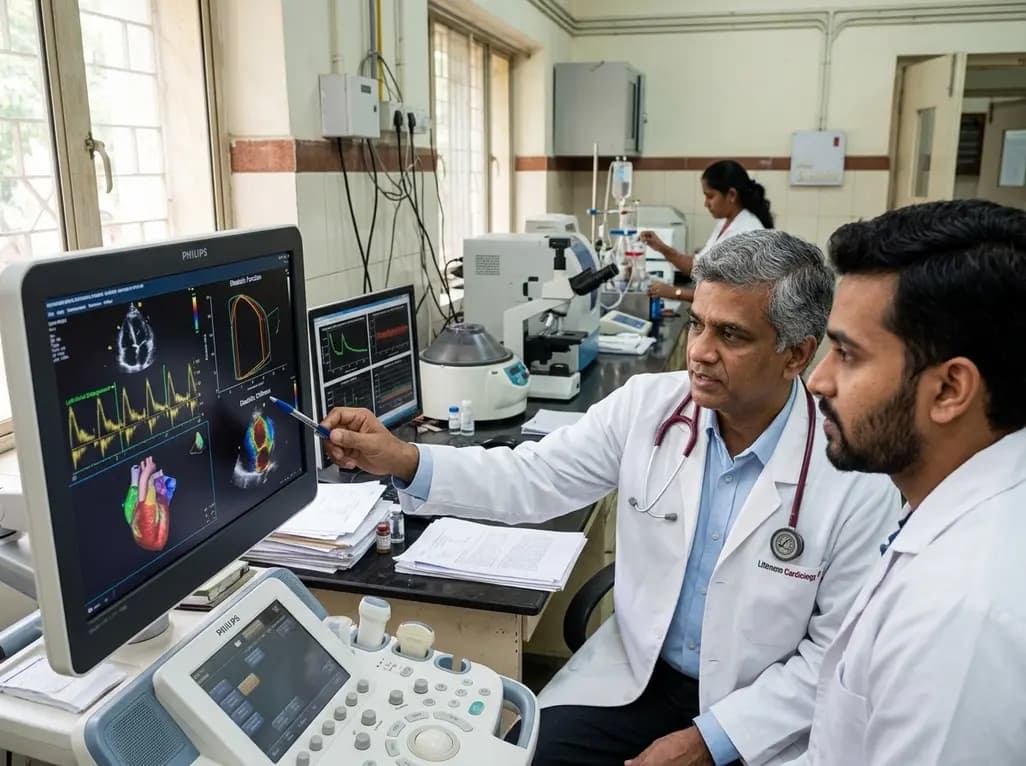
A study evaluates a cardiometabolic HFpEF model combining metabolic stress with chronic mineralocorticoid excess. The findings reveal profound diastolic stiffness, endothelial dysfunction, and pulmonary hypertension, illuminating key pathophysiological mechanisms for targeted cardiopulmonary therapies.
Today

The Human Reproduction and Development Database (HRD) consolidates bulk and single-cell transcriptomics, epigenomics, metabolomics, proteomics, and clinical trial records into a unified platform to advance reproductive health research.
Today

Partial heart transplantation offers living, growth-capable cardiac valve replacements for children. While orthotopic heart transplantation faces severe logistical barriers in low-resource settings, partial transplantation presents lower graft ischemia sensitivity and simplified immunosuppression protocols.
Today

A single-cell transcriptomic atlas reveals how peripheral nerve injuries cause dorsal root ganglion remodeling. By evaluating proximal nerve crush and resection, researchers identify distinct glial and immune programs that resolve neuropathic pain and promote regeneration.
Today
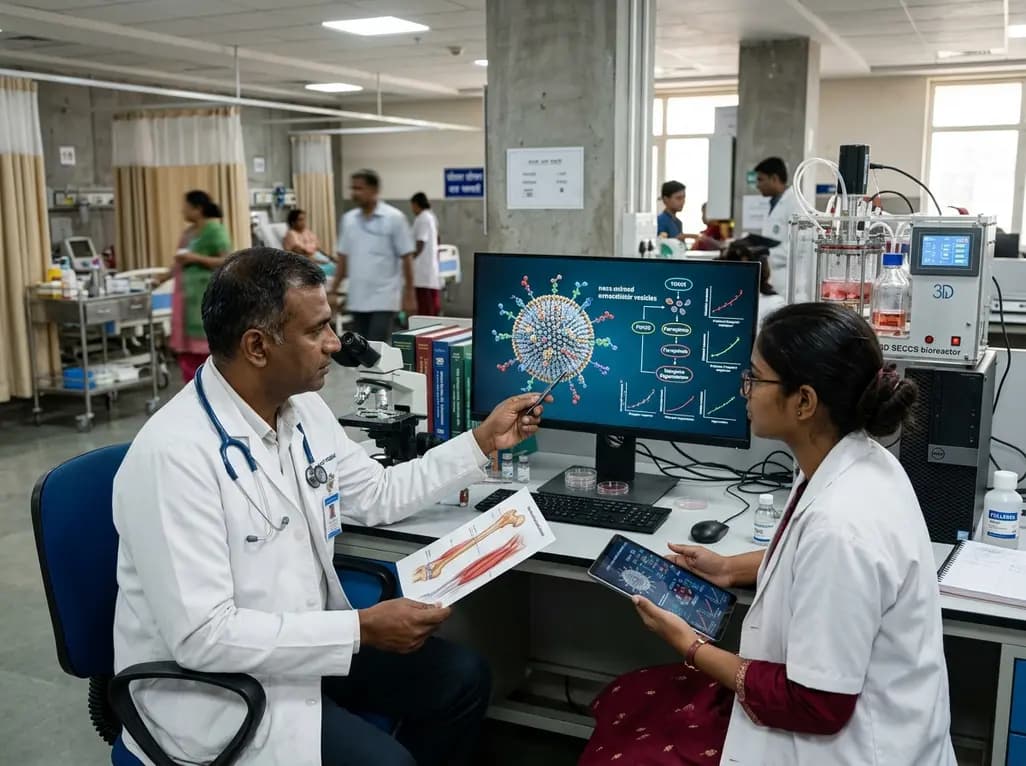
A breakthrough study demonstrates that fullerol-primed extracellular vesicles generated in a 3D SECCS bioreactor attenuate ferroptosis and restore myogenic regeneration in diabetes via the FOXO3 pathway, offering a cell-free therapeutic strategy for diabetic musculoskeletal degeneration.
Today
