.webp&w=384&q=75)

Loading, please wait...
Loading, please wait...

The National Medical Commission (NMC) has launched an essential online NMC Student Feedback form, specifically designed for undergraduate medical students across India. This initiative aims to gather valuable, anonymous input on various critical aspects of medical colleges and the overall education experience. Therefore, it provides a direct channel for students to contribute to enhancing medical education quality.
Many areas of medical education are covered within the form. For example, it addresses the quality of teaching and lectures, faculty availability, clinical training, patient exposure, and practical training in labs and dissection halls. Additionally, it delves into community medicine, rural training, student safety, anti-ragging measures, grievance redressal, and mental health support. The curriculum, extracurricular activities, and college administration also fall under its purview. Consequently, this comprehensive approach ensures that diverse student concerns are heard.
Student feedback is a cornerstone of continuous quality improvement in education. Furthermore, it offers unique insights into the learning environment that are otherwise difficult to obtain. Your responses to the NMC Student Feedback form will remain anonymous and confidential. The NMC collects this information solely for internal academic review and for enhancing the quality of medical education programs. Studies highlight that student evaluations are crucial for assessing teaching effectiveness and overall learning experiences. Therefore, participation is vital for progressive changes.
Accessing the online feedback form is straightforward. Students can find the form on the NMC website's home page. The direct URL for submission is https://application.nmc.org.in/student-feedback. You are strongly encouraged to participate wholeheartedly. By providing valuable feedback, you help identify areas needing improvement and contribute to a better learning environment for current and future medical professionals. Moreover, the NMC emphasizes establishing proper mechanisms at all levels to ensure grievances are addressed effectively.
This feedback mechanism aligns with the NMC's broader initiatives to improve medical education and student welfare. Recently, the NMC also proposed a structured three-tier grievance redressal system for medical students across India. This system aims to enhance transparency, accountability, and digital accessibility for addressing student concerns. Grievances related to excessive fees, stipends, ragging, harassment, and academic issues can first be addressed at the college level, then escalated to the university, and finally to the state Directorate of Medical Education or the NMC if unresolved. Thus, the online feedback form complements these efforts, promoting a responsive educational ecosystem.
Disclaimer: This content is for informational and educational purposes only... Refer to the latest local and national guidelines for clinical practice.
References

Read summarized clinical updates, watch expert medical content, and earn CME certifications right from your smartphone.
Open your smartphone camera to scan and install.





NMC has launched an online student feedback form for UG students. Your anonymous input helps improve medical education quality. Participate now!...
6 months ago
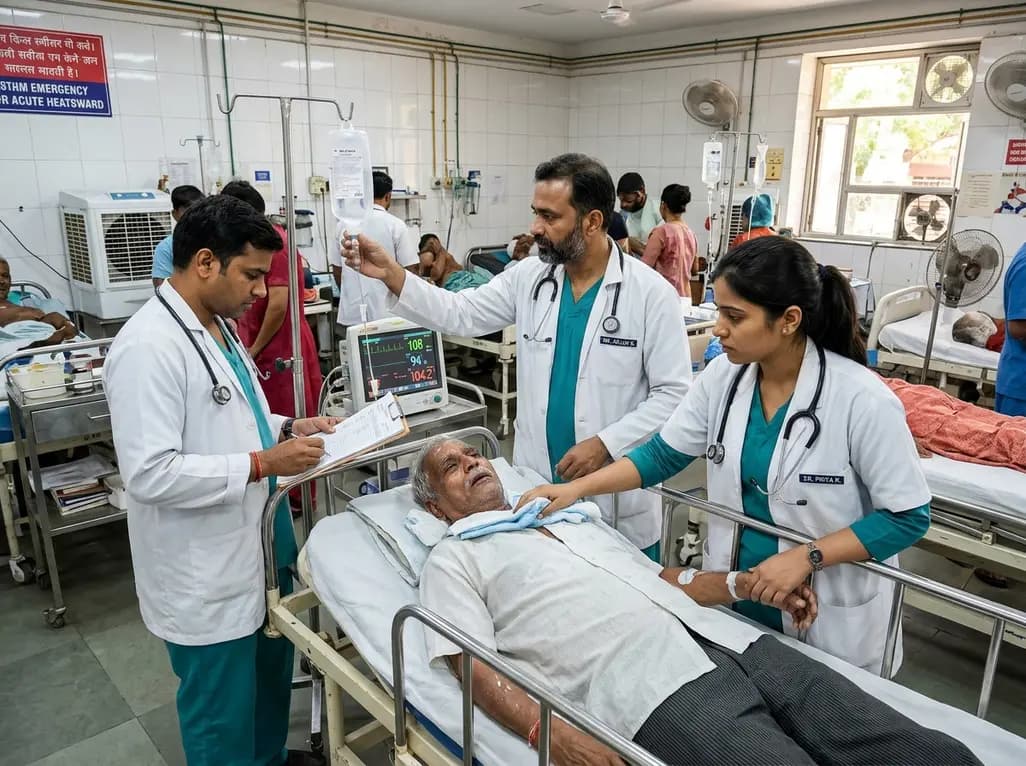
Recent epidemiological data reveals a dramatic surge in summer heat mortality driven by human-induced climate warming. This analysis explores the pathophysiological impacts on cardiac and renal systems, diagnostic dilemmas in death certification, and essential emergency cooling protocols for acute clinical care.
Today

Odisha has established India's first state-level clinical protocol specifically tailored for pregnant women with sickle cell disease. Developed with NHM and UNICEF, the framework provides structured antenatal screening, crisis mitigation, standardized referral pathways, and specialized interdisciplinary care.
Today

India is advancing preventive healthcare by integrating genomics, artificial intelligence, and quantum technologies. With the SANGAM programme sequencing one million Indian genomes, clinicians can unlock personalized therapies, detect cardiometabolic risks early, and curb the burden of diabetes and heart disease.
Today

A randomized controlled trial demonstrates that an eight-week dual-task training intervention significantly improves static and dynamic postural control over standard balance exercises in individuals with chronic ankle instability, addressing critical neurocognitive deficits during athletic and daily activities.
Today

A retrospective cohort study of 7,716 ICU patients from the MIMIC-IV database demonstrates that Gradient Boosting Decision Trees significantly outperform traditional SOFA scores in predicting in-hospital mortality among patients with sepsis and diabetes, with SHAP analysis providing clinical interpretability.
Today
