.webp&w=384&q=75)

Loading, please wait...
Loading, please wait...
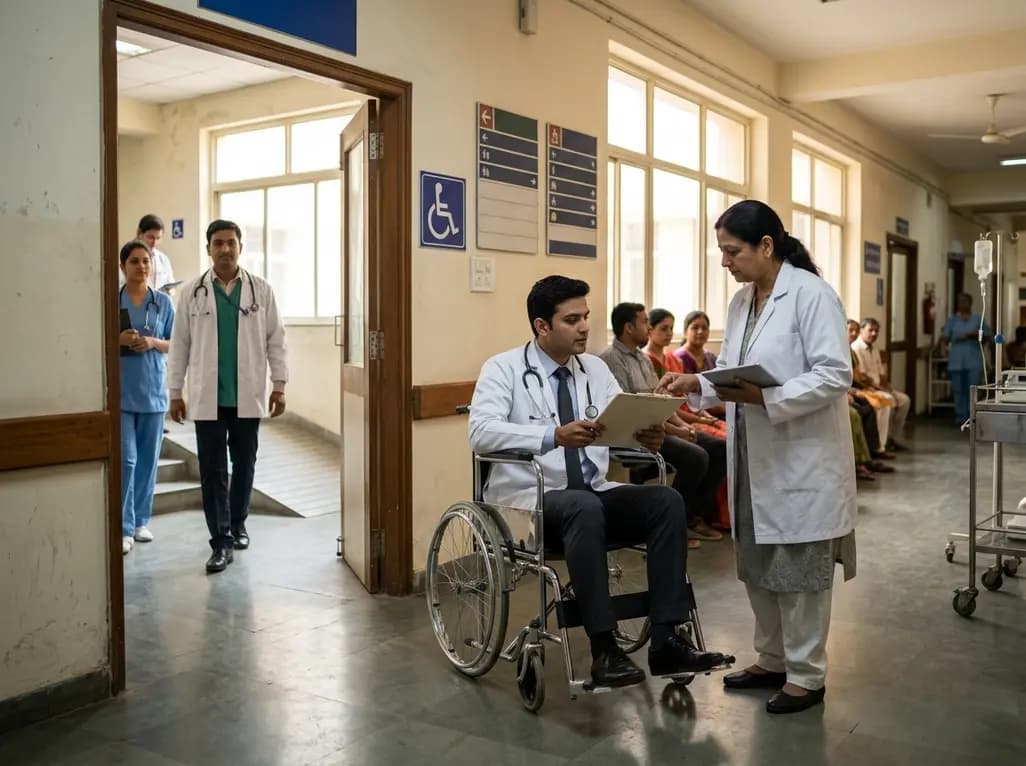
The National Medical Commission has officially published the NMC Enabling Unit Guidelines to reshape disability support across Indian medical education. Consequently, every medical college in the country must establish a functioning Enabling Unit for Persons with Benchmark Disabilities (PwBD). This historic directive aligns directly with Sections 16 and 17 of the Rights of Persons with Disabilities (RPwD) Act, 2016. Furthermore, the directive operationalizes recent mandates issued by the Hon'ble Supreme Court of India. Therefore, medical institutions must swiftly adapt their infrastructure and academic policies to ensure complete inclusion.
The National Medical Commission issued this circular on July 27, 2026, to enforce mandatory disability accessibility. Historically, medical aspirants with benchmark disabilities faced significant structural and procedural hurdles. However, landmark judicial interventions have fundamentally transformed this institutional landscape. Specifically, the Supreme Court ruled in Om Rathore v. Director General of Health Services. Furthermore, the Apex Court reinforced these rights in Anmol v. Union of India. As a result, the court ordered all medical colleges to establish dedicated disability support bodies.
Consequently, Section 16 and Section 17 of the RPwD Act 2016 place a mandatory obligation on educational institutions. These sections mandate inclusive education, barrier-free learning environments, and tailored support measures. Therefore, medical colleges can no longer deny admission or reasonable accommodations based on arbitrary physical criteria. Instead, institutions must evaluate functional abilities through supportive measures. Additionally, the NMC directive requires immediate compliance from all recognized colleges.
Furthermore, medical education in India has long lacked a unified point of contact for disabled students. Previously, students had to navigate complex administrative bureaucracies to request clinical adjustments. However, these new rules streamline the process entirely. Accordingly, institutional leadership must prioritize setting up these dedicated units immediately. You can review relevant internal content regarding medical curriculum updates for additional legal context.
The new framework mandates that every medical college set up an Enabling Unit without delay. Furthermore, this unit must act as the primary single point of contact for PwBD students. Consequently, students will no longer need to approach multiple hospital departments for academic accommodations. In addition, the unit must handle requests across undergraduate, postgraduate, and internship programs.
Specifically, the Enabling Unit must facilitate access to reasonable accommodation throughout clinical training. For instance, this includes modifying clinical schedules or providing specialized assistive devices during hospital postings. Furthermore, the unit must ensure barrier-free physical access across campus facilities. Therefore, ramps, accessible restrooms, and adapted laboratory spaces must be constructed.
Additionally, the circular requires the Enabling Unit to proactively publicize its services. Specifically, details must be published on college websites and physical notice boards. As a result, incoming students will receive complete information right at the time of admission. Moreover, this transparency guarantees that disabled students understand their rights from day one. Consequently, medical colleges must appoint qualified coordinators to manage these operational requirements effectively.
Clinical training presents unique physical and psychomotor challenges for students with disabilities. Therefore, the Enabling Unit must actively support students during hospital rotations and internship phases. Furthermore, the unit must evaluate each candidate's functional capacity in real clinical environments. Consequently, rigid physical standards are replaced by individual, solution-oriented clinical support plans.
Specifically, the unit will receive and process accommodation requests for clinical procedures and ward duties. However, standards of patient safety and educational core competencies will remain fully preserved. In addition, the unit will collaborate with clinical department heads to design practical workarounds. For instance, ergonomically designed workstations or modified instruments may be provided in operating theaters.
Moreover, the Enabling Unit must coordinate directly with designated Disability Assessment Boards. Therefore, local medical faculties and hospital administrators will work alongside national disability experts. Furthermore, this collaborative approach ensures that accommodations follow both national norms and judicial mandates. Consequently, students receive timely support without bureaucratic delays during rigorous internship duties.
Confidentiality remains a core pillar of the NMC Enabling Unit Guidelines administrative policy. Consequently, all accommodation requests and medical records must be securely maintained within the unit. Furthermore, institutional staff must prevent unauthorized disclosure of a student's disability status. Therefore, students can request support without fear of stigma or career prejudice.
In addition, the circular explicitly mandates non-discrimination across all institutional operations. Specifically, medical colleges must foster an empathetic, inclusive environment for all trainees. However, achieving this goal requires active sensitization of teaching faculty and nursing staff. Consequently, Enabling Units should conduct periodic disability awareness workshops for institutional leadership.
Furthermore, proper record-keeping is required for regulatory verification. Specifically, the unit must document every accommodation request alongside the action taken. As a result, regulatory authorities can review institutional compliance during annual NMC inspections. Moreover, precise documentation protects both the student and the medical college in legal reviews. Therefore, establishing robust digital record management systems is essential for every medical college.
Deans and Directors of Medical Education (DMEs) bear primary responsibility for enforcing these directives. Consequently, top administrative leadership must immediately issue formal orders constituting the Enabling Unit. Furthermore, adequate financial and logistical resources must be allocated to these units. Therefore, institutional budgets must account for accessibility modifications and assistive equipment.
Additionally, college principals must ensure that the unit is fully functional and readily accessible. For instance, the physical office of the unit must be located in a barrier-free building. Furthermore, contact information must be prominent on official institutional portals. As a result, prospective candidates can contact the unit during the counseling and admission process.
Moreover, state directors of medical education must oversee compliance across all municipal and state colleges. Consequently, state health authorities will monitor implementation timelines and resolve operational bottlenecks. Furthermore, colleges must submit periodic compliance reports to the National Medical Commission. Therefore, proactive governance by medical college deans will ensure smooth compliance with national accessibility standards.
The establishment of Enabling Units marks a monumental shift toward inclusive medical education. Furthermore, admitting diverse medical professionals enriches the entire healthcare workforce. Specifically, doctors with disabilities bring invaluable lived experiences to patient care. Consequently, empathetic patient-physician communication and clinical problem-solving will improve significantly across hospitals.
Moreover, dismantling ableist barriers aligns India's medical education system with international standards. For instance, international regulatory bodies like the UK General Medical Council already employ similar support frameworks. Therefore, adopting functional evaluations over rigid physical exclusions modernizes Indian medical training. In addition, this progressive reform encourages bright disabled students to pursue ambitious medical careers.
Finally, compliance with the NMC circular is legally mandatory for continued institutional recognition. Consequently, medical colleges must view this directive as an opportunity to build world-class inclusive infrastructure. Furthermore, prompt execution of these guidelines will establish India as a global leader in accessible medical training. Therefore, all medical colleges must act immediately to operationalize their dedicated Enabling Units.
Disclaimer: This content is for informational and educational purposes only. It does not constitute legal or institutional administrative advice. Refer to the latest local and national guidelines for clinical practice and institutional governance.
References

Read summarized clinical updates, watch expert medical content, and earn CME certifications right from your smartphone.
Open your smartphone camera to scan and install.





The National Medical Commission (NMC) has directed all medical colleges to establish dedicated Enabling Units for Persons with Benchmark Disabilities (PwBD). This crucial update operationalizes recent Supreme Court directives to guarantee reasonable accommodations and barrier-free learning environments.
2 months ago

Review how tailored exercise programs benefit frail older patients with heart failure. Explore pathophysiological mechanisms, individualized training prescriptions, and strategies to overcome adherence barriers in clinical practice.
Today
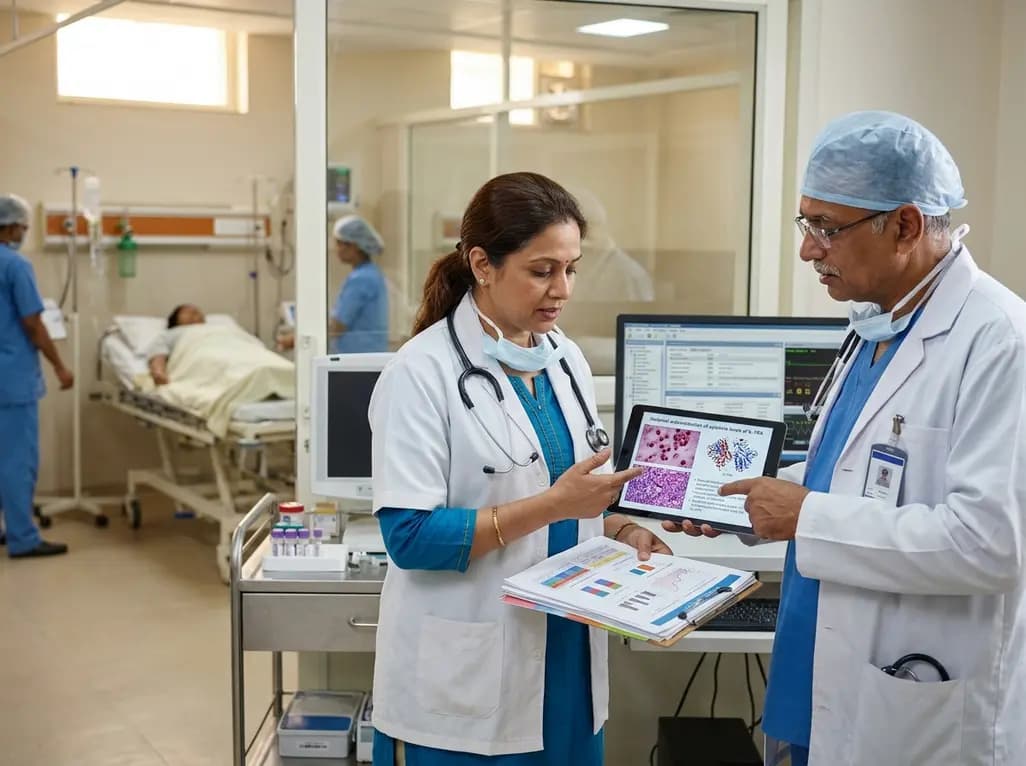
Recent clinical studies reveal maternal autoantibodies targeting IL-1RA as potential triggers for preterm labor, opening avenues for targeted cytokine therapies. Concurrently, new perioperative findings show inhaled cannabis increases propofol requirements during upper endoscopy compared to oral edible consumption.
Today

In high-risk pulmonary embolism complicated by severe anemia and active uterine bleeding, systemic thrombolysis is contraindicated. Large-bore aspiration thrombectomy provides rapid hemodynamic rescue without fibrinolysis, supported by inferior vena cava filter placement and multidisciplinary critical care.
Today

This comparative study evaluates posterior labral tears with and without glenohumeral instability, highlighting distinct demographic patterns, MRI underestimation in stable shoulders, and successful arthroscopic repair outcomes.
Today

A clinical study demonstrates that early intervention with tocilizumab, either as monotherapy or bridged with corticosteroids, achieves significant proptosis reduction and resolves active inflammation in treatment-naive thyroid eye disease.
Today
