.webp&w=384&q=75)

Loading, please wait...
Loading, please wait...
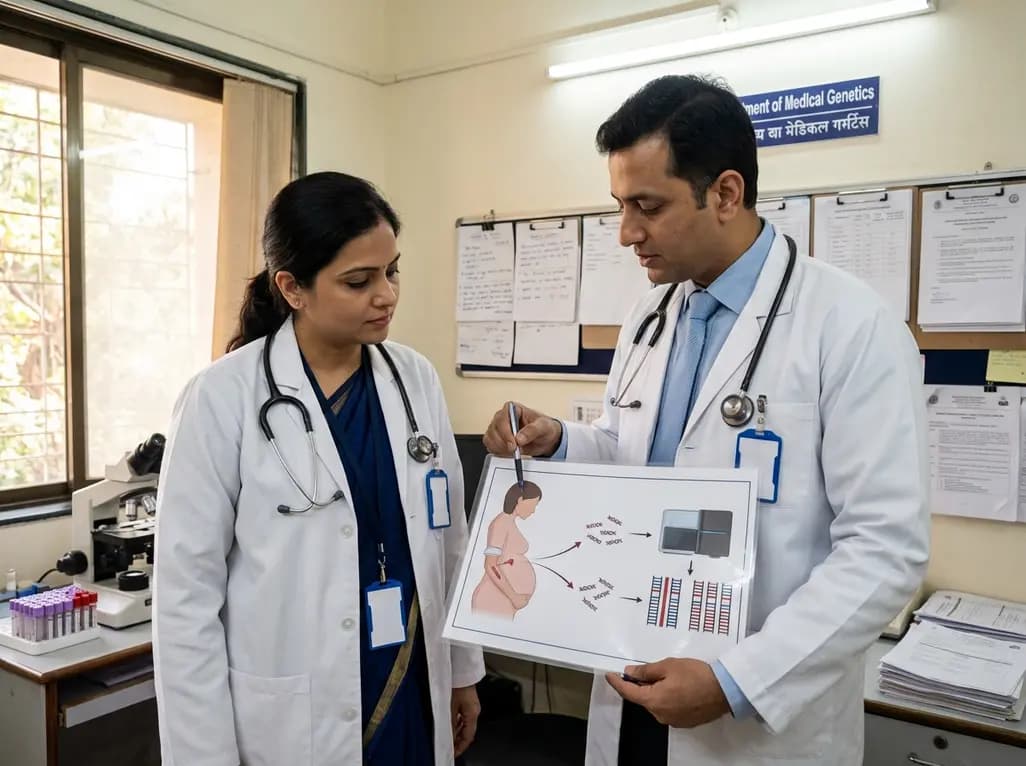
The management of hereditary hemoglobinopathies is undergoing a significant transformation with the emergence of NIPT for Thalassemia. Thalassemia remains one of the most prevalent genetic disorders globally, particularly across the Indian subcontinent and Southeast Asia. Traditionally, definitive prenatal diagnosis relied heavily on invasive procedures such as chorionic villus sampling or amniocentesis. Although these methods are accurate, they carry inherent risks, including a small but notable potential for procedure-related miscarriage. Consequently, there has been a growing clinical demand for safer, non-invasive alternatives. The development of cell-free DNA (cfDNA) analysis has paved the way for modern screening, allowing clinicians to analyze fetal genetic material directly from the maternal bloodstream. Furthermore, this transition toward non-invasive methods aligns with the increasing patient preference for early and risk-free diagnostic options. By utilizing advanced molecular techniques, healthcare providers can now offer comprehensive genetic insights without compromising the safety of the pregnancy. This technological shift is particularly vital for carrier families who face significant emotional and physical stress during the diagnostic journey. Therefore, the introduction of high-precision testing platforms like cfBEST represents a major milestone in prenatal care.
Understanding the technical foundation of the cell-free DNA barcode-enabled single-molecule test, or cfBEST, is essential for appreciating its clinical utility. This method leverages unique molecular identifiers, often referred to as barcodes, to tag individual DNA fragments. By doing so, the system can distinguish between genuine fetal genetic sequences and the overwhelming background of maternal DNA. Additionally, the single-molecule approach ensures that even low concentrations of fetal cfDNA are detected with high fidelity. During the process, researchers extract DNA from maternal plasma and target specific mutations associated with both alpha and beta-thalassemia. Specifically, the test monitors common mutations that contribute to the disease phenotype in diverse populations. Moreover, the barcoding technology minimizes the amplification errors that often plague traditional polymerase chain reaction methods. As a result, the accuracy of the genotype identification is significantly enhanced. This precision is crucial because fetal DNA constitutes only a small fraction of the total cfDNA in the mother's blood. By filtering out noise and focusing on individual molecules, cfBEST provides a clear genetic profile of the fetus. Consequently, this allows for the reliable detection of both paternal and maternal inherited alleles early in the first or second trimester.
A recent clinical study focusing on NIPT for Thalassemia has demonstrated the remarkable diagnostic performance of the cfBEST platform. In a cohort involving seventy-two thalassemia carrier families, researchers sought to validate the efficacy of this method against traditional invasive standards. The results were highly encouraging, as the test successfully identified 94.6% of fetal alleles. Notably, the study reported a sensitivity of 94% and a specificity of 95.35%, which underscores the reliability of the test in a clinical setting. Furthermore, the researchers targeted a wide array of mutations, including four alpha-thalassemia and thirteen common beta-thalassemia gene variants. Such a broad scope is essential for covering the genetic diversity often seen in high-risk populations. All results obtained through cfBEST were subsequently validated using gap-PCR and PCR-RDB, which are considered the gold standards for thalassemia diagnosis. Importantly, the follow-up findings after birth were entirely consistent with the prenatal results, confirming the long-term accuracy of the test. Therefore, the study concludes that cfBEST is not only precise but also a robust tool for routine prenatal screening. These findings provide strong evidence that non-invasive molecular testing can match the performance of invasive techniques while eliminating physical risks.
The implications of these findings are particularly profound for healthcare systems in India, where the burden of thalassemia is exceptionally high. Thousands of children are born with thalassemia major every year, necessitating lifelong blood transfusions and chelation therapy. In this context, early and accessible prenatal diagnosis is a public health priority. The introduction of a reliable non-invasive test could significantly increase the uptake of screening among high-risk communities. Moreover, the cost-efficiency and simplicity of the cfBEST method make it a viable candidate for large-scale implementation in resource-limited settings. Unlike complex sequencing platforms that require extensive infrastructure, this approach streamlines the molecular analysis process. Consequently, more carrier families can receive timely information regarding the health of their fetus without needing to travel to specialized tertiary centers for invasive sampling. Furthermore, the reduction in physical risk encourages more mothers to participate in screening programs. When families have access to accurate genetic information early in pregnancy, they can make more informed reproductive choices. Thus, integrating this technology into the national health framework could lead to a substantial reduction in the birth prevalence of severe thalassemia. This strategic shift would ultimately alleviate the socio-economic burden on families and the national healthcare infrastructure.
Comparing cfBEST to conventional invasive methods reveals several distinct advantages that favor the non-invasive approach. Firstly, the elimination of needle-based sampling removes the risk of infection and fetal loss, which are the primary concerns for expecting parents. Secondly, the cfBEST method offers a faster turnaround time for results, which is critical for managing prenatal anxiety. Additionally, the ability to screen for multiple mutations simultaneously provides a more comprehensive genetic overview than some standard targeted tests. While invasive methods remain necessary for confirming certain ambiguous cases, the high specificity of NIPT reduces the overall number of required procedures. Furthermore, the single-molecule resolution of cfBEST allows for the detection of fetal alleles even when the fetal fraction is relatively low. This is a common challenge in early-stage pregnancies or in mothers with a high body mass index. By overcoming these biological hurdles, the test ensures that fewer patients receive inconclusive results. Moreover, the simple blood draw required for cfDNA analysis is far less taxing on the patient than a surgical intervention. Therefore, the clinical shift toward non-invasive testing is driven not just by safety, but also by efficiency and patient-centered care. As the technology matures, it is likely to become the primary screening modality for all high-risk pregnancies.
The success of the cfBEST study suggests a bright future for the expansion of non-invasive genetic testing beyond thalassemia. As researchers refine the barcoding and single-molecule detection algorithms, similar platforms could be adapted for other monogenic disorders. For instance, testing for sickle cell anemia or cystic fibrosis could benefit from the same high-resolution methodology. Furthermore, the integration of bioinformatics tools will likely enhance the predictive power of these tests, allowing for even higher sensitivity. In the coming years, we may see the development of universal screening panels that cover a broader spectrum of genetic mutations within a single assay. This would further simplify the prenatal diagnostic pipeline and reduce the cumulative costs of multiple separate tests. Additionally, as global awareness of genetic health increases, the demand for accessible and non-invasive options will continue to surge. Healthcare providers must remain updated on these technological advancements to offer the best possible guidance to their patients. Consequently, the ongoing validation of cfBEST in larger, more diverse populations will be essential for its widespread adoption. Ultimately, the goal is to create a seamless diagnostic experience that empowers families with knowledge while ensuring the highest standards of safety. The future of prenatal medicine lies in these precise, non-invasive molecular insights.
The cfBEST method distinguishes itself through its barcode-enabled single-molecule testing, which significantly enhances precision. Unlike some traditional NIPT techniques that may struggle with maternal DNA interference, cfBEST uses unique molecular identifiers to tag and track individual fetal DNA fragments. This high-resolution approach allows for the accurate detection of specific mutations even at low fetal fractions. Consequently, it provides a more reliable genotype identification compared to standard quantitative cfDNA methods, ensuring fewer false results for carrier families.
Thalassemia carrier families often undergo significant stress during pregnancy due to the 25% risk of having a child with thalassemia major. Traditional invasive tests, while diagnostic, carry a risk of miscarriage that many parents find daunting. Non-invasive screening provides a safe, blood-based alternative that eliminates these physical risks. By offering a high-accuracy result early in the pregnancy, it allows parents to receive critical genetic information without jeopardizing the safety of the fetus, thereby reducing emotional burden.
From a clinical perspective, cfBEST offers a combination of reliability, simplicity, and cost-efficiency. It achieves high sensitivity and specificity, matching the performance of more complex diagnostic tools. The workflow is designed to be streamlined, making it suitable for routine clinical use in various laboratory settings. Furthermore, its ability to target a wide range of common alpha and beta-thalassemia mutations ensures broad clinical utility, particularly in populations where these genetic variants are highly prevalent, such as in India.
Disclaimer: This content is for informational and educational purposes only and does not constitute medical advice. It is not intended to be a substitute for professional medical advice, diagnosis, or treatment. Always seek the advice of your physician or other qualified health provider with any questions you may have regarding a medical condition. Refer to the latest local and national guidelines for clinical practice.
References
Liu Q et al. Application of Cell-Free DNA Barcode-Enabled Single-Molecule Test for Non-Invasive Prenatal Testing of α-Thalassemia and β-Thalassemia. J Clin Lab Anal. 2026 Jul 05. doi: 10.1002/jcla.70298. PMID: 42402011.
Weatherall DJ. The inherited diseases of hemoglobin are an emerging global health burden. Blood. 2010;115(22):4331-4336. doi:10.1182/blood-2010-01-251348.
Colah R, Gorakshakar A, Nadkarni A. Invasive & non-invasive prenatal diagnosis of thalassemia: Indian perspective. Indian J Med Res. 2011;134(11):552-558.

Read summarized clinical updates, watch expert medical content, and earn CME certifications right from your smartphone.
Open your smartphone camera to scan and install.





A new study evaluates the cell-free DNA barcode-enabled single-molecule test (cfBEST) for non-invasive prenatal testing of thalassemia. Achieving over 94% sensitivity, this method provides a reliable and cost-efficient alternative to invasive procedures for identifying fetal genotypes in carrier families.
3 months ago
Recent epidemiological data reveals a dramatic surge in summer heat mortality driven by human-induced climate warming. This analysis explores the pathophysiological impacts on cardiac and renal systems, diagnostic dilemmas in death certification, and essential emergency cooling protocols for acute clinical care.
Today

Odisha has established India's first state-level clinical protocol specifically tailored for pregnant women with sickle cell disease. Developed with NHM and UNICEF, the framework provides structured antenatal screening, crisis mitigation, standardized referral pathways, and specialized interdisciplinary care.
Today

India is advancing preventive healthcare by integrating genomics, artificial intelligence, and quantum technologies. With the SANGAM programme sequencing one million Indian genomes, clinicians can unlock personalized therapies, detect cardiometabolic risks early, and curb the burden of diabetes and heart disease.
Today

A randomized controlled trial demonstrates that an eight-week dual-task training intervention significantly improves static and dynamic postural control over standard balance exercises in individuals with chronic ankle instability, addressing critical neurocognitive deficits during athletic and daily activities.
Today

A retrospective cohort study of 7,716 ICU patients from the MIMIC-IV database demonstrates that Gradient Boosting Decision Trees significantly outperform traditional SOFA scores in predicting in-hospital mortality among patients with sepsis and diabetes, with SHAP analysis providing clinical interpretability.
Today
