.webp&w=384&q=75)

Loading, please wait...
Loading, please wait...

While Nipah virus is a lethal pathogen, the Nipah virus transmission risk remains a significant challenge for public health in South Asia. Specifically, infection usually occurs because humans consume raw date palm sap contaminated by Pteropus bats. However, recent research shows that sellers now use social media platforms to market this dangerous product widely. Consequently, this digital shift exposes a wider, unsuspecting audience to a virus with a high fatality rate.
In fact, a descriptive study analyzed over 500 social media posts across various platforms. Notably, nearly 65% of these posts were advertisements promoting the raw sap as a seasonal delicacy. In contrast, less than 2% of the content focused on raising awareness about potential health dangers. Furthermore, commercial distribution has reached districts that were previously isolated. Therefore, the geographical footprint of potential outbreaks is expanding rapidly.
Moreover, the ease of access provided by online vendors has transformed a local tradition into a widespread hazard. For instance, many suppliers operate in districts known for high viral activity. Additionally, younger people often view raw sap consumption as an adventurous social event. Indeed, this perception necessitates urgent intervention from both public health authorities and digital media regulators.
As a result, a multidisciplinary approach is now essential for effective mitigation. Specifically, authorities must integrate digital media surveillance into existing public health strategies. Because harvesting peaks from November to March, clinicians must remain especially vigilant during these months. Consequently, early identification of symptoms can prevent a larger epidemic and save lives.
Raw date palm sap is dangerous because fruit bats, which carry the Nipah virus, often contaminate the collection pots. They deposit the virus through their saliva or urine while feeding on the sweet sap at night.
The most effective way to prevent infection is to avoid consuming raw date palm sap entirely. If you choose to consume it, you must boil the sap thoroughly to kill any potential viral pathogens.
Disclaimer: This content is for informational and educational purposes only. It does not constitute medical advice or a substitute for professional healthcare. Always seek the advice of a physician or other qualified health provider with any questions regarding a medical condition. Refer to the latest local and national guidelines for clinical practice.
References
Chowdhury KIA et al. Social Media Promotion of Raw Date Palm Sap and Emerging Nipah Virus Transmission Risk in Bangladesh: Descriptive Analysis of Multisource Data. JMIR Form Res. 2026 Apr 02. doi: 10.2196/84947. PMID: 41926155.
World Health Organization. Nipah virus fact sheet. https://www.who.int/news-room/fact-sheets/detail/nipah-virus
National Centre for Disease Control (NCDC), India. CD Alert: Nipah Virus Disease. https://ncdc.gov.in/

Read summarized clinical updates, watch expert medical content, and earn CME certifications right from your smartphone.
Open your smartphone camera to scan and install.





A study reveals how social media marketing of raw date palm sap increases Nipah virus transmission risk, urging clinicians to monitor seasonal outbreaks....
6 months ago
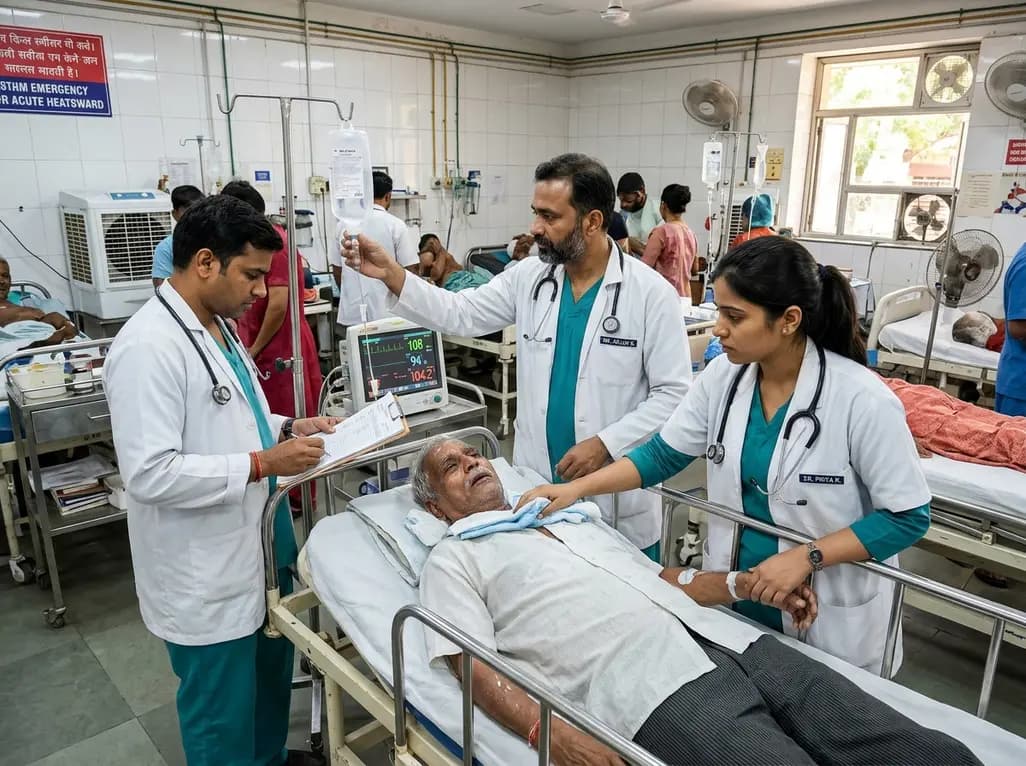
Recent epidemiological data reveals a dramatic surge in summer heat mortality driven by human-induced climate warming. This analysis explores the pathophysiological impacts on cardiac and renal systems, diagnostic dilemmas in death certification, and essential emergency cooling protocols for acute clinical care.
Today

Odisha has established India's first state-level clinical protocol specifically tailored for pregnant women with sickle cell disease. Developed with NHM and UNICEF, the framework provides structured antenatal screening, crisis mitigation, standardized referral pathways, and specialized interdisciplinary care.
Today

India is advancing preventive healthcare by integrating genomics, artificial intelligence, and quantum technologies. With the SANGAM programme sequencing one million Indian genomes, clinicians can unlock personalized therapies, detect cardiometabolic risks early, and curb the burden of diabetes and heart disease.
Today

A randomized controlled trial demonstrates that an eight-week dual-task training intervention significantly improves static and dynamic postural control over standard balance exercises in individuals with chronic ankle instability, addressing critical neurocognitive deficits during athletic and daily activities.
Today

A retrospective cohort study of 7,716 ICU patients from the MIMIC-IV database demonstrates that Gradient Boosting Decision Trees significantly outperform traditional SOFA scores in predicting in-hospital mortality among patients with sepsis and diabetes, with SHAP analysis providing clinical interpretability.
Today
