.webp&w=384&q=75)

Loading, please wait...
Loading, please wait...

The Trump administration recently unsealed a significant indictment against a former senior official from the National Institutes of Health (NIH). David Morens, once a top advisor at the NIAID, faces multiple federal charges. Prosecutors allege that Morens conspired to evade federal records requests during the height of the COVID-19 pandemic. Consequently, this NIH official COVID indictment highlights severe concerns regarding government transparency and the management of sensitive public health data.
According to the indictment, Morens and his co-conspirators deliberately used personal email accounts to conduct official business. This practice allegedly allowed them to bypass the Freedom of Information Act (FOIA). Furthermore, investigators claim they falsified records to suppress specific theories about the origins of COVID-19. Specifically, the group reportedly worked to counter the narrative that the virus might have leaked from a laboratory in China. Therefore, these actions have triggered a broader investigation into the integrity of pandemic research grants.
The legal case against Morens centers on five major counts, including conspiracy and records destruction. Government officials state that these alleged actions represent a profound abuse of trust. Since Morens served as a senior advisor to Dr. Anthony Fauci, the case has garnered intense political attention. However, Fauci has previously denied any involvement in suppressing research theories or influencing the handling of federal records. The indictment also names a New York-based nonprofit and an academic physician as co-conspirators in the scheme.
Additionally, the Department of Justice claims that Morens received illegal gratuities in exchange for his actions. These gifts reportedly included wine and promises of luxury meals. In return, Morens allegedly authored scientific commentaries that advocated for a natural origin of the virus. Consequently, the legal fallout could have lasting implications for how federal agencies manage correspondence and research oversight. Medical researchers must remain vigilant about compliance with record-keeping protocols to maintain public confidence in scientific institutions.
Q1: What are the specific charges against David Morens?
David Morens faces five federal charges. These include conspiracy against the United States, as well as the destruction, alteration, or falsification of records in federal investigations. He also faces charges for the concealment, removal, or mutilation of official records and aiding and abetting these acts.
Q2: Why is the use of personal email central to this indictment?
The indictment alleges that Morens used a personal Gmail account to exchange non-public NIH information. By doing so, he reportedly intended to hide communications from Freedom of Information Act (FOIA) requests. This practice allowed the conspirators to conduct unofficial discussions regarding grant funding and COVID-19 origin theories without creating a public record.
Q3: How does this indictment affect the COVID-19 origin debate?
The charges suggest that official records were handled in a way that favored the natural spillover theory over the lab leak theory. This development has intensified calls for a more transparent investigation into the pandemic's beginnings. It also underscores the importance of unbiased scientific inquiry and strict adherence to federal transparency laws.
Disclaimer: This content is for informational and educational purposes only. It does not constitute medical advice or replace professional judgment. Refer to the latest local and national guidelines for clinical practice.
References

Read summarized clinical updates, watch expert medical content, and earn CME certifications right from your smartphone.
Open your smartphone camera to scan and install.





Former NIH official David Morens faces federal charges for allegedly evading COVID-19 records requests and using personal email to hide official business....
5 months ago

Recent epidemiological data reveals a dramatic surge in summer heat mortality driven by human-induced climate warming. This analysis explores the pathophysiological impacts on cardiac and renal systems, diagnostic dilemmas in death certification, and essential emergency cooling protocols for acute clinical care.
Today

Odisha has established India's first state-level clinical protocol specifically tailored for pregnant women with sickle cell disease. Developed with NHM and UNICEF, the framework provides structured antenatal screening, crisis mitigation, standardized referral pathways, and specialized interdisciplinary care.
Today

India is advancing preventive healthcare by integrating genomics, artificial intelligence, and quantum technologies. With the SANGAM programme sequencing one million Indian genomes, clinicians can unlock personalized therapies, detect cardiometabolic risks early, and curb the burden of diabetes and heart disease.
Today
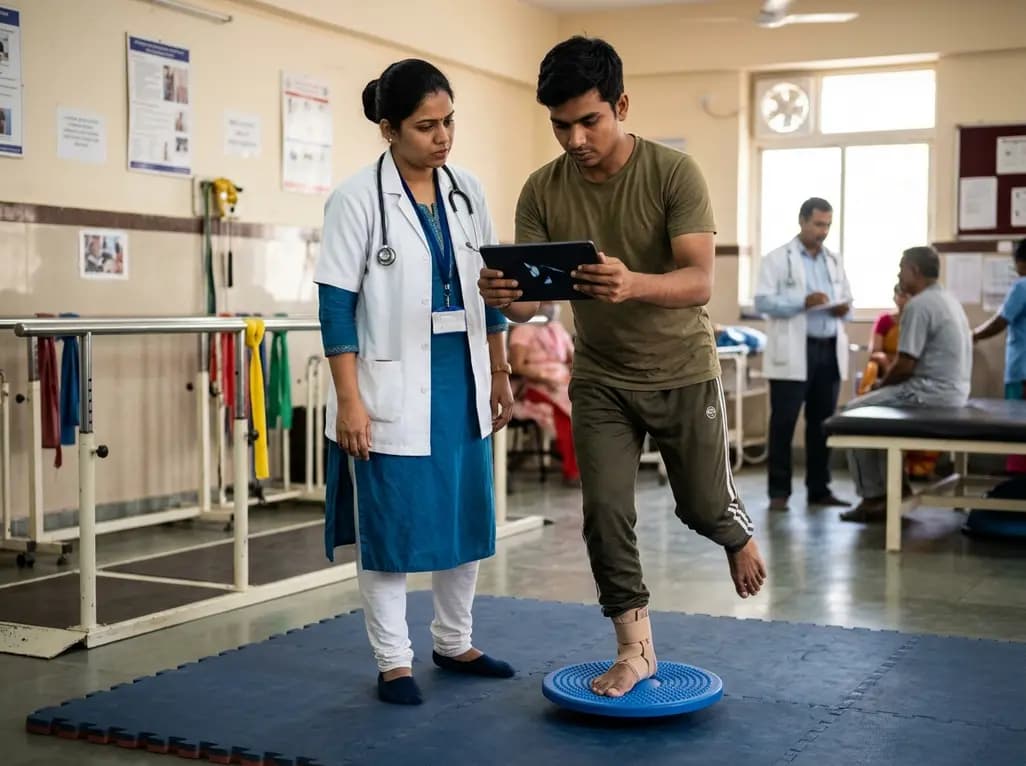
A randomized controlled trial demonstrates that an eight-week dual-task training intervention significantly improves static and dynamic postural control over standard balance exercises in individuals with chronic ankle instability, addressing critical neurocognitive deficits during athletic and daily activities.
Today

A retrospective cohort study of 7,716 ICU patients from the MIMIC-IV database demonstrates that Gradient Boosting Decision Trees significantly outperform traditional SOFA scores in predicting in-hospital mortality among patients with sepsis and diabetes, with SHAP analysis providing clinical interpretability.
Today
