.webp&w=384&q=75)

Loading, please wait...
Loading, please wait...
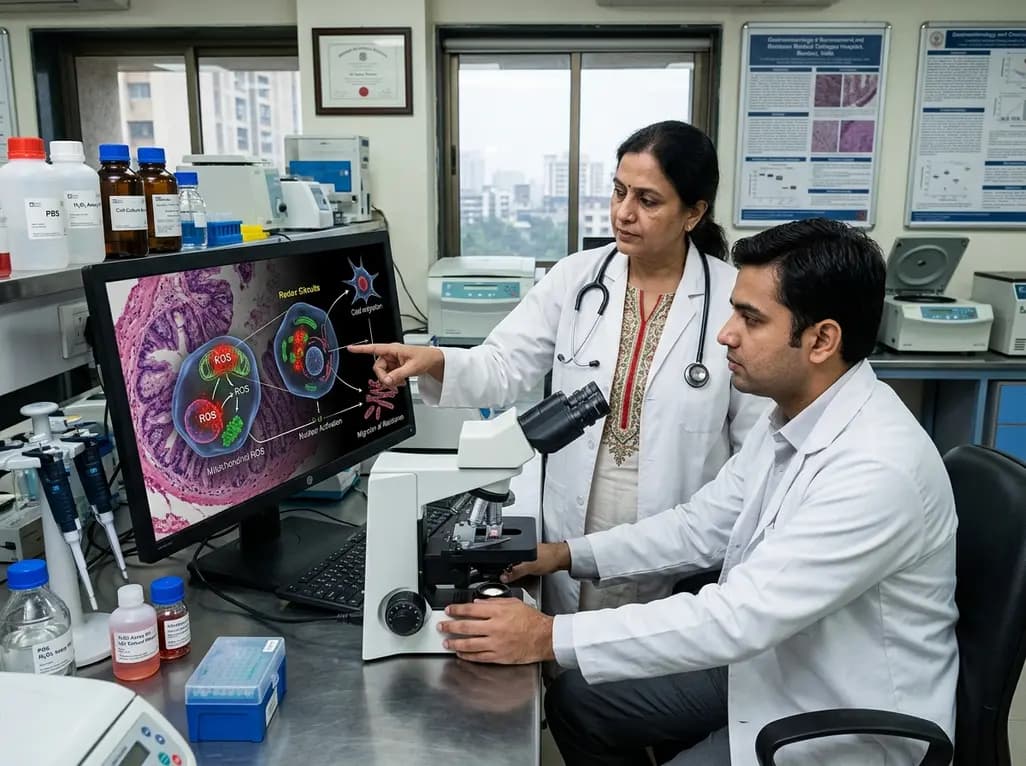
Tobacco use remains a leading preventable cause of gastrointestinal malignancies worldwide. While clinicians readily associate inhaled tobacco with pulmonary neoplasms, exposure to nicotine from combustible cigarettes, smokeless tobacco, and electronic delivery systems plays a decisive role in nicotine gastric carcinogenesis. Conventional oncological models traditionally viewed reactive oxygen species (ROS) solely as indiscriminate byproducts that inflict non-specific cellular damage. However, emerging molecular insights demonstrate that chronic nicotine exposure systematically alters cellular homeostasis through a process known as redox rewiring. In this orchestrated state, sustained oxidative stress acts as a precise signaling mechanism rather than mere metabolic debris. Consequently, gastric epithelial cells undergo adaptive phenotypic changes that favor malignant transformation, survival, and aggressive progression. Understanding how nicotine coordinates these intracellular cascades provides clinicians with vital perspectives on early oncogenesis, diagnostic biomarkers, and novel therapeutic vulnerabilities in gastric cancer management.
Nicotine binds directly to nicotinic acetylcholine receptors (nAChRs) and beta-adrenergic receptors (β-ARs) expressed on gastric epithelial cells. This ligand-receptor interaction immediately triggers an intracellular influx of calcium ions, which subsequently activates protein kinase C (PKC) isoforms. Following this initial stimulus, activated PKC mobilizes NADPH oxidase (NOX) complexes within specific cellular compartments. Unlike uncoordinated oxidative bursts, NOX-derived reactive oxygen species function as spatially compartmentalized secondary messengers. These localized oxidative bursts selectively modify redox-sensitive cysteine residues on regulatory kinases, phosphatases, and transcription factors. Furthermore, chronic receptor stimulation maintains a steady state of localized ROS production, effectively overriding basal antioxidant defense systems. Consequently, downstream inflammatory cascades become chronically activated, most notably the canonical NF-κB and mitogen-activated protein kinase (MAPK) pathways. These inflammatory circuits accelerate the transcription and secretion of interleukin-8 (IL-8) and matrix metalloproteinase-9 (MMP-9). As a result, the gastric microenvironment experiences sustained pro-inflammatory signaling, extracellular matrix degradation, and early mucosal tissue remodeling.
Beyond basic inflammatory signaling, redox rewiring establishes specialized multi-protein networks that govern epithelial-mesenchymal transition (EMT) and metastatic dissemination. Central to this aggressive phenotype is the coordinated ABL1/STAT3/COX-2/periostin signaling module. Localized ROS generated during chronic nicotine exposure enhance the phosphorylation and kinase activity of ABL proto-oncogene 1 (ABL1). Consequently, activated ABL1 stimulates signal transducer and activator of transcription 3 (STAT3) phosphorylation and nuclear translocation. Activated STAT3 subsequently upregulates cyclooxygenase-2 (COX-2) expression, amplifying prostaglandin synthesis and sustaining an autocrine inflammatory loop. In addition, this axis drives the robust expression of periostin, a matricellular protein that actively remodels the extracellular matrix and promotes cell motility. Gastric epithelial cells undergoing this transition lose their apicobasal polarity, downregulate E-cadherin, and upregulate mesenchymal markers such as vimentin and N-cadherin. Therefore, nicotine exposure directly arms mucosal cells with heightened migratory capacity and invasiveness, creating a permissive niche for vascular intravasation and early micrometastasis.
Tumor persistence and therapeutic failure frequently stem from the activation of robust anti-apoptotic programs during malignant transformation. In nicotine-induced redox rewiring, ROS-dependent signaling activates the extracellular signal-regulated kinase (ERK) pathway, establishing the ERK/GLI1/Bcl-2 oncogenic axis. Under persistent oxidative conditions, redox-sensitive phosphatases that normally restrain ERK activity become reversibly oxidized and inactivated. As a result, sustained ERK phosphorylation drives the non-canonical transcriptional activation of GLI family zinc finger 1 (GLI1), independent of classical Hedgehog ligand binding. Translocated GLI1 then directly binds the promoter region of the anti-apoptotic gene B-cell lymphoma 2 (Bcl-2), markedly elevating its intracellular concentration. Consequently, gastric tumor cells resist mitochondrial outer membrane permeabilization and evade cytochrome c release during cytotoxic stress. Furthermore, this sustained survival signaling neutralizes the pro-apoptotic effects of standard chemotherapeutic regimens, including platinum agents and fluoropyrimidines. Thus, nicotine-mediated redox adaptation not only supports malignant cell survival under stressful microenvironmental conditions but also promotes primary chemoresistance.
A third critical regulatory circuit uncovers how localized oxidative stress modulates non-coding RNAs to facilitate tissue invasion and immune evasion. Chronic nicotine exposure selectively upregulates microRNA-21 (miR-21) through ROS-responsive transcriptional factors. Elevated miR-21 directly binds the 3'-untranslated region of programmed cell death 4 (PDCD4) mRNA, leading to its translational repression and targeted degradation. PDCD4 functions physiologically as a tumor suppressor by inhibiting translation initiation and suppressing eukaryotic initiation factor 4A (eIF4A) helicase activity. Therefore, the loss of PDCD4 relieves translational repression on multiple oncogenic proteins, accelerating cellular proliferation, motility, and matrix invasion. Moreover, the downregulation of PDCD4 alters local cytokine expression profiles and modulates immune surveillance within the gastric mucosa. By shifting the local cytokine milieu, neoplastic cells inhibit cytotoxic T-lymphocyte infiltration and foster an immunosuppressive microenvironment. Consequently, this epigenetic and post-transcriptional rewiring allows emerging gastric malignancies to evade host immune detection while aggressively infiltrating deep muscular layers of the stomach.
Translating these preclinical discoveries into meaningful clinical practice requires overcoming several methodological and pharmacological challenges. Currently, many published investigations utilize non-physiological nicotine concentrations and non-specific ROS fluorescent probes that may introduce experimental artifacts. In addition, cells frequently engage compensatory antioxidant pathways when individual nodes are targeted, diminishing therapeutic efficacy. Therefore, future research must validate these three interconnected axes using patient-derived organoids and genetically engineered in vivo models under physiological nicotine concentrations. Advancements in time-resolved, genetically encoded redox biosensors will enable investigators to track compartmentalized oxidative events in real time. Clinically, precision redox oncology aims to pair pathway-specific biomarkers with targeted redox modulators and mechanistically matched natural compounds. Applying pulsed therapeutic regimens containing natural antioxidants may selectively disrupt oncogenic circuits without quenching beneficial physiological ROS. Furthermore, integrating smoking cessation programs with molecular stratification in clinical trials will improve prognostic accuracy and therapeutic outcomes for patients facing aggressive gastric malignancies.
General oxidative stress involves uncoordinated ROS accumulation causing indiscriminate cellular damage and lipid peroxidation. In contrast, nicotine-induced redox rewiring utilizes compartmentalized NADPH oxidase activity to generate localized ROS pulses. These reactive molecules function as deliberate secondary messengers that selectively modulate kinases, phosphatases, and transcription factors. Consequently, this organized signaling reprograms cellular pathways toward survival, metastasis, and therapy resistance rather than uncoordinated apoptosis.
Nicotine-driven ROS oxidatively inactivate regulatory phosphatases, triggering persistent ERK phosphorylation and non-canonical GLI1 transcription factor activation. GLI1 subsequently upregulates the potent anti-apoptotic protein Bcl-2. High Bcl-2 expression prevents mitochondrial membrane permeabilization during cellular stress, effectively blocking chemotherapy-induced apoptotic cascades. Therefore, gastric cancer cells exposed to chronic nicotine maintain heightened survival and exhibit significant resistance against conventional cytotoxic agents like cisplatin and 5-fluorouracil.
Precision redox oncology integrates pathway-specific biomarkers with targeted redox modulators to dismantle specific oncogenic signaling nodes. Instead of administering non-specific antioxidant supplements, clinicians may utilize mechanistically matched compounds or pulsed natural product regimens. This approach selectively disrupts compartmentalized tumor-promoting ROS circuits without impairing essential physiological redox signaling. Consequently, combining these therapies with smoking cessation and conventional treatments could substantially reduce recurrence and overcome chemoresistance.
Disclaimer: This content is for informational and educational purposes only. It is not intended to provide medical advice or to substitute for the professional judgment of a healthcare provider. Refer to the latest local and national guidelines for clinical practice.
References
Liu X et al. Redox Rewiring in Nicotine-Driven Gastric Carcinogenesis: Uncovering ROS-Dependent Oncogenic Circuits. Antioxid Redox Signal. 2026 Sep 01. doi: 10.1177/15230864261483986. PMID: 42680691.
Matsuzaki J, Suzuki H. Redox biology and gastric carcinogenesis: the role of Helicobacter pylori and environmental factors. Free Radic Res. 2014;48(1):3-10.
Bedard K, Krause KH. The NOX family of ROS-generating NADPH oxidases: Physiology and pathophysiology. Physiol Rev. 2007;87(1):245-313.

Read summarized clinical updates, watch expert medical content, and earn CME certifications right from your smartphone.
Open your smartphone camera to scan and install.





Chronic nicotine exposure reprograms gastric epithelial cells through redox rewiring, where compartmentalized ROS drive key oncogenic circuits governing metastasis, chemoresistance, and immune evasion in gastric carcinogenesis.
4 weeks back

Emerging neuroenergetic research reveals that cognitive fatigue stems from local metabolic constraints and regional aerobic glycolysis rather than global resource depletion. This paradigm shift offers valuable clinical insights for managing chronic mental exhaustion, post-viral syndromes, and neurodegenerative fatigue.
Today

A scoping review reveals how pregnancy affects phonation through laryngeal edema and reduced phonation time rather than major acoustic pitch alterations. Learn how to identify, evaluate, and manage vocal symptoms in expectant mothers.
Today

According to WHO data, average lifespan reached 73.3 years in 2023, recovering from pandemic lows. However, healthy life expectancy lags at 62.8 years due to surging noncommunicable conditions like cardiovascular disease and dementia, demanding proactive primary screening and sustained chronic care.
Today

Researchers have engineered an artificial sensory-pain integrated receptor using a multi-threshold organic synaptic transistor. The system distinguishes benign touch from noxious stimuli, enabling safer, more responsive prosthetic limbs with built-in memory and simplified hardware architecture.
Today

Medical robotics is transitioning beyond operative suites into diagnostics, cardiology, and endocrinology. Explore how innovations in tele-robotics, AI integration, and nanomedicine are overcoming geographical barriers and transforming precision healthcare delivery across India's evolving disease landscape.
Today
