

Loading, please wait...
Loading, please wait...

Mucopolysaccharidoses comprise rare inherited lysosomal storage disorders caused by deficiencies in glycosaminoglycan-degrading enzymes. Consequently, central nervous system complications frequently emerge during early childhood and adolescence. Understanding the neurosurgical manifestations of mucopolysaccharidoses remains crucial for preventing permanent neurological injury. Historically, clinical evidence remained fragmented regarding long-term surgical outcomes across diverse phenotypes. Therefore, a systematic review following PRISMA guidelines analyzed seventy-eight studies encompassing 983 patients. This synthesis provides essential clinical guidance for neurosurgeons, pediatricians, and multidisciplinary healthcare teams managing these complex conditions.
The systematic analysis revealed that neurosurgical pathologies develop in over four-fifths of patients diagnosed with mucopolysaccharidosis. Specifically, 819 of the 983 evaluated patients, representing 83% of the total cohort, exhibited neurosurgical manifestations. The studied cohort had a mean age of 12.4 years, with females accounting for 37.8%. Furthermore, three major subtypes predominated: MPS I represented 34% of cases, MPS II comprised 31%, and MPS IV accounted for 26%.
These inherited metabolic defects trigger progressive structural and biomechanical alterations across multiple neuroaxial compartments. Notably, spinal deformity emerged as the most frequent condition, affecting 29% of evaluated individuals. Concurrently, hydrocephalus occurred in 28% of patients across the dataset. Spinal cord compression and progressive myelopathy afflicted 22% of cases, whereas craniovertebral junction abnormalities involved 20%. Because these structural lesions progress silently during early skeletal growth, clinicians must implement vigilant monitoring protocols. Consequently, timely detection allows surgical teams to intervene before irreversible neural damage occurs.
Although all subtypes share abnormal glycosaminoglycan deposition, specific enzymatic deficiencies generate distinctive neurosurgical distribution patterns. For instance, spinal deformity predominated in MPS I, occurring in 24% of these patients. These children frequently present with progressive thoracolumbar kyphosis and bullet-shaped vertebrae requiring orthopedic surveillance. In contrast, hydrocephalus represented the dominant manifestation in MPS II, developing in 20% of affected individuals. Intracranial pressure elevation often remains subtle in MPS II because macrocephaly and developmental delays obscure classic clinical symptoms.
Meanwhile, craniovertebral junction instability and compression predominated in MPS IV, affecting 12% of patients. Children with Morquio syndrome experience severe odontoid hypoplasia combined with ligamentous laxity and extradural storage deposition. Consequently, atlantoaxial subluxation creates critical cervical cord compression, predisposing children to quadriplegia from minor trauma. Overall, surgeons operated on 41% of all documented craniovertebral junction abnormalities. Posterior decompression and instrumented occipitocervical fusion reliably stabilize the junction. However, severe cervical dysmorphism demands sophisticated navigation to avoid catastrophic vertebral artery or cord injuries.
Hydrocephalus constitutes a critical neurosurgical manifestation of mucopolysaccharidoses, requiring surgical intervention in 74% of documented instances. The pathophysiology involves complex mechanical and hemodynamic barriers to cerebrospinal fluid resorption. Glycosaminoglycan infiltration thickens the arachnoid villi and leptomeninges, markedly reducing normal outflow pathways. Additionally, dysplastic skull base development compresses the internal jugular veins and dural venous sinuses, increasing intracranial venous pressure. Consequently, communicating hydrocephalus develops frequently and accelerates cognitive decline if left untreated.
Surgical management predominantly relies on ventriculoperitoneal shunt placement to alleviate intracranial hypertension. Furthermore, timely shunting preserves visual function by preventing chronic papilledema and secondary optic atrophy. However, ventricular cannulation presents notable technical challenges in these patients. Calvarial hyperostosis, thickened dura, and narrowed cerebral ventricles increase the failure rate of freehand ventricular punctures. Moreover, clinicians must carefully distinguish true communicating hydrocephalus from compensatory ventricular enlargement secondary to cerebral atrophy. Therefore, surgeons utilize routine intracranial pressure monitoring and neuroimaging to verify clear indications before shunt implantation.
Spinal cord compression and progressive spinal deformities inflict severe functional morbidity across all mucopolysaccharidosis subtypes. Diffuse dural thickening, retro-odontoid pseudotumors, and thoracolumbar gibbus deformities combine to compromise spinal canal dimensions. Clinicians surgically treated 23% of spinal cord compression cases across the analyzed cohort. Decompressive laminectomy paired with instrumented fusion effectively relieves neural compression and corrects debilitating kyphoscoliotic deformities.
Nevertheless, spinal surgery in this population carries substantial technical complexity and elevated complication rates. Severe osteopenia, small dysplastic pedicles, and abnormal anatomy challenge solid pedicle screw purchase. Consequently, surgeons frequently encounter pseudoarthrosis, hardware failure, and proximal junctional kyphosis. In addition, spinal cord blood supply remains fragile in stenotic regions, predisposing patients to intraoperative ischemic insult. Therefore, continuous multimodal neurophysiological monitoring remains mandatory during corrective maneuvers. Furthermore, postoperative immobilization with custom orthoses often supports fusion healing. Ultimately, aggressive early intervention before profound myelopathy develops ensures the greatest likelihood of preserving functional ambulation.
Modern medical management, including enzyme replacement therapy and hematopoietic stem cell transplantation, has dramatically altered life expectancy in mucopolysaccharidoses. Interestingly, the systematic review demonstrated that patients without prior systemic treatment required significantly higher rates of neurosurgical intervention. Systemic therapies attenuate soft-tissue glycosaminoglycan storage and decrease ligamentous hypertrophy, thereby slowing compressive spinal complications. However, systemic intravenous infusions cannot cross the blood-brain barrier or penetrate avascular osteocartilaginous tissue. Consequently, hydrocephalus, odontoid dysplasia, and progressive spinal stenosis often advance despite effective systemic therapy.
Furthermore, mucopolysaccharidosis patients represent difficult operative candidates in pediatric surgery. Macroglossia, adenotonsillar hypertrophy, vocal cord thickening, and restricted cervical motion frequently cause airway obstruction during intubation. Therefore, experienced pediatric neuroanesthesiologists must perform fiberoptic awake or video-assisted intubations with emergency surgical airway equipment available. Additionally, associated cardiomyopathy and restrictive thoracic disease elevate perioperative cardiopulmonary risk. Consequently, multidisciplinary evaluation involving cardiologists, pulmonologists, and metabolic specialists ensures optimal perioperative safety before elective neurosurgical procedures.
Given the high lifetime prevalence of neurosurgical morbidity, medical centers must establish structured surveillance protocols at initial diagnosis. Routine physical examinations often fail to detect early myelopathy because cognitive deficits, joint contractures, and physical limitations mask subtle neurological deficits. Therefore, clinicians must acquire baseline neuroimaging, including whole-spine magnetic resonance imaging and dynamic craniocervical radiographs, in all diagnosed patients. Serial imaging performed every one to two years ensures prompt identification of asymptomatic spinal cord indentation and progressive ventricular enlargement.
Furthermore, optimal patient outcomes depend upon coordinated collaboration among metabolic pediatricians, neurosurgeons, pediatric neurologists, radiologists, and orthopedic spine specialists. Early surgical decompression prior to irreversible spinal cord signal change consistently preserves functional ambulation and respiratory independence. When caregivers report subtle functional decline, gait deterioration, or frequent falls, clinical teams must immediately investigate cord compression. Ultimately, proactive multidisciplinary surveillance coupled with prompt, individualized operative intervention substantially improves quality of life across these complex disorders.
Neurosurgical complications develop in approximately 83% of patients with mucopolysaccharidoses. Progressive spinal deformities and hydrocephalus represent the most frequent conditions, affecting 29% and 28% of patients respectively. Furthermore, spinal cord compression and craniovertebral junction abnormalities affect over 20% of patients, underscoring the critical necessity for proactive neurosurgical surveillance.
Standard intravenous enzyme replacement therapies cannot cross the blood-brain barrier and exhibit poor penetrance into avascular cartilage and bone. Consequently, skeletal dysplasia, ligamentous hypertrophy, and dural thickening often continue to progress silently. Therefore, patients require continuous neuroimaging monitoring and timely surgical decompression despite successful systemic metabolic control.
Neurosurgical procedures in mucopolysaccharidoses involve severe perioperative hazards, particularly difficult endotracheal intubation caused by macroglossia, restricted cervical mobility, and pharyngeal thickening. Additionally, cardiac valvular dysfunction, restrictive respiratory disease, and dysplastic vertebral bone quality increase surgical complexity, requiring dedicated pediatric neuroanesthesia teams and meticulous preoperative multidisciplinary planning.
Disclaimer: This content is for informational and educational purposes only, and should not be taken as professional medical advice. While we strive to provide accurate and up-to-date information, the field of medicine is constantly evolving, and individual patient needs may vary. Always consult with a qualified healthcare professional regarding any medical questions or conditions, and before taking any medication or starting a new treatment. Refer to the latest local and national guidelines for clinical practice.
References

Read summarized clinical updates, watch expert medical content, and earn CME certifications right from your smartphone.
Open your smartphone camera to scan and install.





A systematic review of 78 studies and 983 patients outlines the neurosurgical manifestations of mucopolysaccharidoses, detailing hydrocephalus, spinal cord compression, craniovertebral junction instability, and surgical outcomes across clinical subtypes.
Today

Review how tailored exercise programs benefit frail older patients with heart failure. Explore pathophysiological mechanisms, individualized training prescriptions, and strategies to overcome adherence barriers in clinical practice.
Today
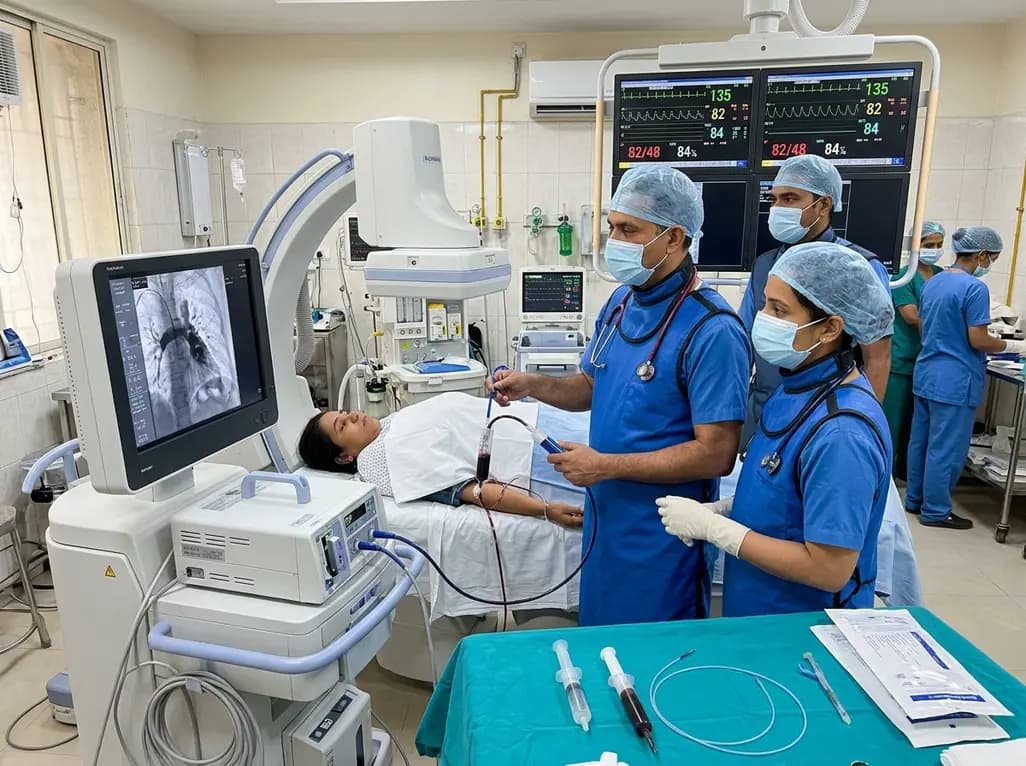
In high-risk pulmonary embolism complicated by severe anemia and active uterine bleeding, systemic thrombolysis is contraindicated. Large-bore aspiration thrombectomy provides rapid hemodynamic rescue without fibrinolysis, supported by inferior vena cava filter placement and multidisciplinary critical care.
Today

A cross-sectional study in Zanzibar reveals that 46.5% of adults with type 2 diabetes experience multidomain autonomic dysfunction on the COMPASS-31 tool, primarily orthostatic intolerance, while 45.9% exhibit cardiovascular autonomic neuropathy, highlighting the urgent need for structured clinical screening.
Today

This comparative study evaluates posterior labral tears with and without glenohumeral instability, highlighting distinct demographic patterns, MRI underestimation in stable shoulders, and successful arthroscopic repair outcomes.
Today

A recent case-control study reveals that urinary clusterin provides superior diagnostic performance for early diabetic kidney disease detection in pediatric type 1 diabetes mellitus, identifying tubular damage before conventional microalbuminuria occurs.
Today
