.webp&w=384&q=75)

Loading, please wait...
Loading, please wait...
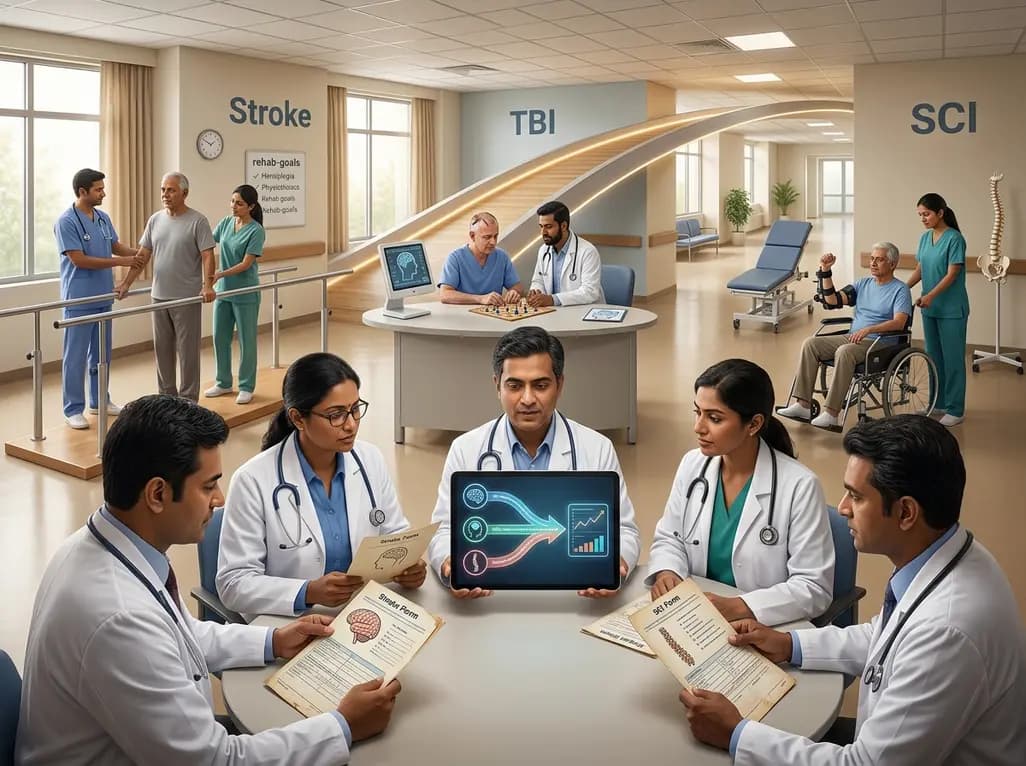
In the modern era of evidence-based medicine, the implementation of Standardized Neurorehabilitation Outcome Measures has become a cornerstone for enhancing clinical precision. These tools allow healthcare providers to quantify functional recovery objectively across various neurological conditions. Learning health systems (LHS) rely heavily on such data to refine treatment protocols and improve longitudinal patient care. For adults recovering from stroke, traumatic brain injury (TBI), or spinal cord injury (SCI), the consistency of these measurements determines the quality of the rehabilitation journey. Historically, clinicians used disparate tools, making it difficult to compare outcomes across different patient cohorts. However, as neurorehabilitation transitions toward a more integrated model, the need for a unified approach becomes paramount. Standardized assessments provide a common language for multidisciplinary teams, including neurologists, therapists, and surgeons. By utilizing these validated metrics, medical professionals can ensure that rehabilitation strategies are not only effective but also reproducible. Consequently, the push for standardization is driving a paradigm shift in how we understand and manage neurological recovery. Furthermore, the integration of these measures into electronic health records facilitates real-time data analysis. This shift eventually leads to more personalized and responsive care pathways for patients facing significant neurological challenges.
A recent scoping review involving forty-eight distinct studies provides critical insights into the current state of neurorehabilitation measurement. The researchers examined core outcome sets specifically designed for stroke, TBI, and SCI. One of the most striking findings was the conceptual alignment among these conditions. Specifically, over half of the meaningful outcomes were shared across all three neurological categories. This suggests that the ultimate goals of rehabilitation—such as regaining independence and improving quality of life—are remarkably consistent. Despite this high degree of alignment in rehabilitation priorities, the actual tools used to measure these outcomes remain highly fragmented. In fact, only 3% of the recommended outcome measures were utilized across all three conditions. This disparity highlights a significant gap in clinical practice where the methods for tracking progress do not reflect the shared nature of the recovery goals. Moreover, the review identified a lack of universal consensus on which instruments best capture long-term functional gains. This fragmentation complicates the ability of researchers to conduct large-scale meta-analyses and limits the growth of multi-condition learning health systems. Therefore, addressing this disconnect is essential for advancing the field of neurorehabilitation globally. Similarly, clinicians must advocate for the adoption of more versatile instruments that bridge these diagnostic silos.
The International Classification of Functioning, Disability and Health (ICF) serves as a vital framework for mapping neurorehabilitation outcomes. By categorizing health components into body functions, activities, and participation, the ICF provides a holistic view of the patient experience. The scoping review mapped various outcome domains to this framework to identify where the current focus lies. Most existing measures center on physical impairments and basic activities of daily living, such as mobility and self-care. While these are undoubtedly important, the ICF also emphasizes the role of environmental factors and social participation. Interestingly, the review found that these broader domains are often underrepresented in standard outcome sets. For instance, the attitudes of others and the accessibility of the physical environment are rarely measured, despite their significant impact on long-term recovery. Consequently, the reliance on traditional metrics may result in an incomplete picture of a patient’s true functional status. By aligning Standardized Neurorehabilitation Outcome Measures more closely with the full spectrum of the ICF, clinicians can better address the multifaceted needs of their patients. This alignment also supports the development of more comprehensive care plans that look beyond the hospital setting. Furthermore, utilizing the ICF framework ensures that rehabilitation remains focused on the patient's ability to navigate their real-world environment.
Patient engagement is a fundamental aspect of developing effective clinical guidelines, yet it remains limited in the field of neurorehabilitation. The scoping review revealed that persons with lived experience were involved in only 35% of the studies describing outcome set development. This lack of involvement often leads to a mismatch between what clinicians measure and what patients value most. Patients frequently prioritize domains that are overlooked by standardized clinical tools, such as emotional well-being, social reintegration, and environmental barriers. For example, while a clinician might focus on gait speed, a patient might be more concerned about their ability to return to a workplace that lacks proper accommodations. The review highlighted that measures for accessible environments and the social attitudes of others are notably absent from current core sets. Consequently, the recovery process might ignore the very factors that define success for the individual. To bridge this gap, future development of outcome sets must prioritize the voices of those living with stroke, TBI, or SCI. Furthermore, involving patients in the design process ensures that the chosen metrics are relevant and meaningful to their daily lives. By incorporating these patient-reported outcomes, healthcare systems can transition toward a more empathetic and effective model of neurorehabilitation. This shift ultimately fosters a stronger therapeutic alliance between patients and their healthcare providers.
The successful implementation of learning health systems in neurorehabilitation depends on the harmonization of data collection strategies. When different facilities use the same Standardized Neurorehabilitation Outcome Measures, it becomes possible to aggregate data and identify best practices. Currently, the fragmentation of measures across stroke, TBI, and SCI prevents this large-scale collaboration. Harmonization does not mean ignoring the unique aspects of each condition but rather finding common ground where possible. By adopting a core set of cross-condition measures, health systems can streamline data entry and reduce the burden on clinicians. Moreover, harmonized strategies allow for better benchmarking of performance across different rehabilitation centers. This comparison can highlight areas for improvement and drive clinical innovation. Therefore, stakeholders must work toward creating a unified measurement infrastructure that supports continuous learning. Additionally, these strategies should be flexible enough to accommodate the evolving nature of neurorehabilitation technology. As we integrate robotics and digital health tools into recovery, the underlying outcome measures must remain robust and standardized. Consequently, the development of patient-informed and implementable strategies is not just a research priority but a clinical necessity. This approach ensures that every piece of data collected contributes to the collective knowledge of the medical community. Furthermore, it paves the way for more equitable healthcare delivery by identifying disparities in recovery outcomes.
Despite the clear benefits of standardized measurement, several barriers hinder its widespread adoption in clinical practice. One of the primary challenges is the perceived time and effort required to administer complex outcome tools. Clinicians often feel overwhelmed by administrative tasks, leading to the selection of shorter, less comprehensive measures. To overcome this, organizations must provide adequate training and technological support to simplify data collection. Additionally, the lack of clear institutional guidelines can lead to inconsistent use of outcome sets among different departments. Therefore, leadership within healthcare facilities must prioritize the integration of these tools into standard workflows. Another significant barrier is the limited availability of measures that have been validated in diverse cultural and linguistic contexts. For neurorehabilitation in India, it is essential to ensure that the chosen tools are culturally appropriate and accessible to the local population. Moreover, financial constraints in low-resource settings can limit access to proprietary measurement software. Consequently, there is a strong need for open-access, validated instruments that can be used globally. By addressing these practical challenges, the medical community can move closer to a truly standardized approach to neurorehabilitation. Furthermore, continuous feedback from frontline clinicians will be vital in refining these tools for real-world use. This collaborative effort ensures that the focus remains on improving the lives of individuals recovering from neurological injuries.
Harmonization is essential because it allows for the comparison of rehabilitation efficacy across different diagnostic groups like stroke and TBI. When healthcare systems use the same metrics, they can aggregate larger datasets to identify universal predictors of recovery. This shared data infrastructure supports the growth of learning health systems, which utilize real-world evidence to continuously improve clinical guidelines and patient care strategies for all neurorehabilitation patients.
The ICF provides a standardized framework that encourages clinicians to look beyond physical impairments. It categorizes recovery into body function, activity, and participation, ensuring a holistic assessment. By using the ICF, developers of outcome sets can identify gaps in current measurement, such as the neglect of environmental factors or social participation. This leads to more comprehensive tools that reflect the true complexity of a patient's daily life and recovery goals.
Common barriers include a lack of structured engagement frameworks, time constraints for both researchers and patients, and the physical or cognitive challenges faced by individuals with neurological injuries. Additionally, clinicians may sometimes prioritize technical psychometric properties over the subjective relevance of a measure to the patient. Overcoming these hurdles requires a deliberate commitment to patient-centered research, providing appropriate support for participation, and recognizing the unique value that lived experience brings to clinical science.
Disclaimer: This content is for informational and educational purposes only... Refer to the latest local and national guidelines for clinical practice.
References
Widge S et al. A scoping review of outcome and outcome measure sets for adults with spinal cord injury, stroke, and traumatic brain injury. J Rehabil Med. 2026 Jul 17. doi: 10.2340/jrm.v58.45634. PMID: 42464853.
World Health Organization. International Classification of Functioning, Disability and Health (ICF). Geneva: WHO.
Salinas J et al. An international standard set of patient-centered outcome measures after stroke. Stroke. 2016;47(1):180-186.

Read summarized clinical updates, watch expert medical content, and earn CME certifications right from your smartphone.
Open your smartphone camera to scan and install.





A comprehensive scoping review examines standardized neurorehabilitation outcome measures across stroke, TBI, and spinal cord injury. While clinical priorities align, measurement strategies remain fragmented. The study calls for harmonized, patient-informed tools to drive learning health systems.
3 months ago
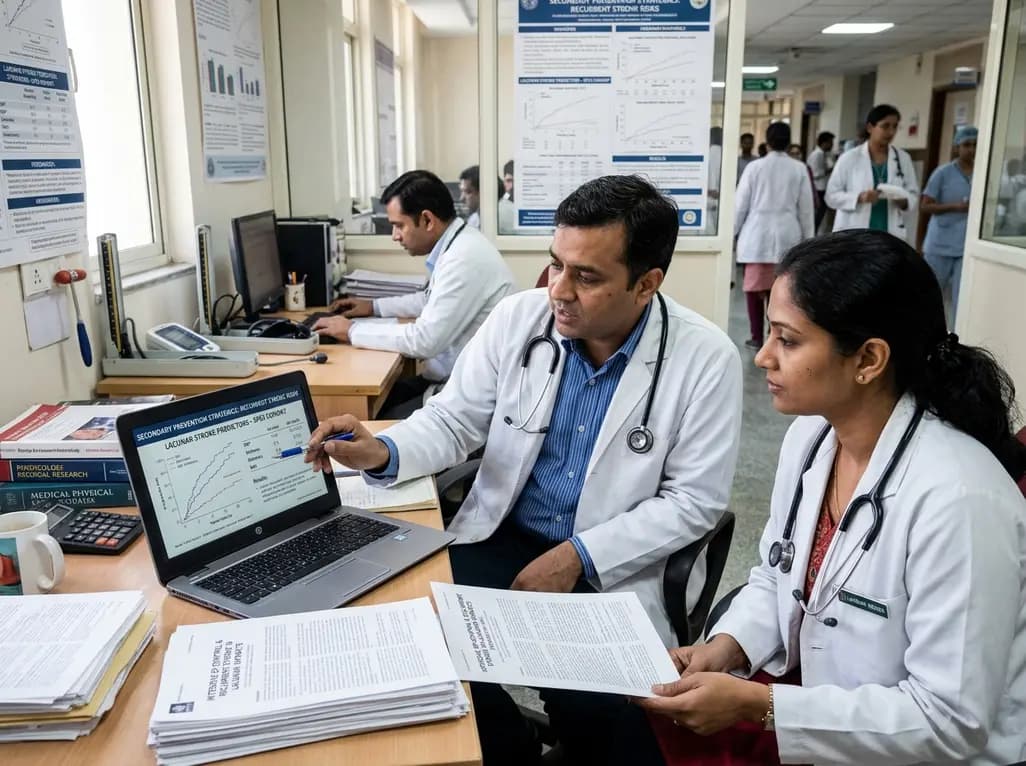
Explore vital recurrent stroke predictors in lacunar stroke patients managed with intensive blood pressure lowering. This analysis examines trial findings from SPS3 to uncover residual vascular risks, metabolic factors, and targeted secondary prevention strategies for high-risk neurological patients.
Today

Odisha has established India's first state-level clinical protocol specifically tailored for pregnant women with sickle cell disease. Developed with NHM and UNICEF, the framework provides structured antenatal screening, crisis mitigation, standardized referral pathways, and specialized interdisciplinary care.
Today

The Directorate General of Health Services directs Indian states to halt the hazardous reuse and reprocessing of single-use medical devices. Discover regulatory implications under the Drugs and Cosmetics Act, critical infection risks, legal liabilities, and operational changes required across clinical specialties.
Today

Mitochondria-targeted nanoparticles self-assembled from EGCG and L-glutamic acid effectively restore mitochondrial homeostasis, suppress synovial inflammation, and attenuate chondrocyte senescence in osteoarthritis, offering a promising disease-modifying nanotherapy.
Today

India is advancing preventive healthcare by integrating genomics, artificial intelligence, and quantum technologies. With the SANGAM programme sequencing one million Indian genomes, clinicians can unlock personalized therapies, detect cardiometabolic risks early, and curb the burden of diabetes and heart disease.
Today
