.webp&w=384&q=75)

Loading, please wait...
Loading, please wait...

Adolescent mental health remains a significant priority for clinicians worldwide, particularly in the context of the evolving social pressures faced by young individuals today. In India, where cultural expectations and digital connectivity intersect, understanding the adolescent social anxiety risk is essential for effective early intervention. Social anxiety disorder often emerges during the transition into puberty, a period marked by profound neurobiological and social changes. Specifically, adolescent girls frequently exhibit a higher prevalence of these symptoms compared to their male counterparts. This heightened vulnerability often stems from a complex interplay between internal neural sensitivities and external environmental perceptions. Recent research suggests that the way a young person processes social rewards can significantly influence their long-term emotional trajectory. Therefore, identifying specific biomarkers and behavioral patterns can help clinicians predict which individuals may require more intensive support. Furthermore, modern theories emphasize that social anxiety is not merely a reaction to stress but a manifestation of how the brain anticipates and learns from social feedback. Consequently, a longitudinal perspective is necessary to map these developmental pathways over time.
The basolateral amygdala (BLA) plays a fundamental role in the brain's reward and incentive processing systems. Traditionally, many researchers viewed the amygdala primarily as a center for fear and threat detection. However, advanced neuroimaging has revealed that the BLA is equally critical for assigning value to positive social incentives. Specifically, when adolescents anticipate positive feedback from their peers, the BLA activates to signal the potential for reward. For some individuals, this neural response is exceptionally robust, indicating a high sensitivity to social approval. Moreover, this sensitivity can become a double-edged sword when paired with negative social environments. Although a strong reward response is generally adaptive, it may predispose certain youth to emotional distress if their social expectations are consistently unmet. Notably, studies have shown that high BLA activation during reward anticipation is a specific marker for future anxiety symptoms. This neurobiological sensitivity essentially sets the stage for how an adolescent will interpret their daily social world. Thus, the BLA functions as a central hub where neural predispositions and social experiences converge.
Ecological momentary assessment (EMA) provides a unique window into the daily lives of adolescents, capturing real-time perceptions of social threat. Unlike traditional retrospective reports, EMA allows researchers to track how youth feel during actual peer interactions. For many adolescent girls, the perception of social threat—such as fear of judgment or exclusion—is a common daily occurrence. However, the frequency and intensity of these perceptions vary significantly between individuals. Interestingly, the subjective experience of threat often carries more weight than objective social stressors. When an adolescent consistently perceives high levels of threat in their environment, it can lead to chronic emotional strain. Furthermore, EMA data suggests that these daily perceptions are relatively stable over time, forming a consistent psychological profile. Consequently, clinicians can use these insights to understand the "micro-stressors" that contribute to long-term pathology. Specifically, the interaction between these daily experiences and underlying neural sensitivities creates a distinct risk profile. Therefore, moving beyond clinical interviews to include real-world data collection can enhance our understanding of adolescent development.
The core finding of recent longitudinal research highlights that the adolescent social anxiety risk is most potent when high BLA reward sensitivity meets high perceived social threat. Specifically, for girls who exhibited significant neural responses to social incentives, the presence of frequent daily threat perceptions predicted severe social anxiety symptoms two years later. Conversely, those with lower BLA activation appeared relatively resilient to the effects of perceived social threat. This suggests that the brain's reward system may mediate how environmental stress is processed and internalized. Moreover, this interaction was specific to reward cues rather than threat cues, indicating that social anxiety development is intimately tied to the reward-learning process. Notably, when an adolescent is highly motivated by social rewards but perceives their social environment as threatening, they may experience a persistent state of evaluative distress. Thus, the mismatch between neural drive and environmental feedback becomes a primary driver of symptom escalation. Therefore, identifying this specific interaction allows for more targeted screening of at-risk youth in primary care settings.
Interestingly, the interaction between BLA reward activation and perceived social threat does not only predict social anxiety. Recent data indicates that this same pathway also predicts the development of generalized anxiety and depression symptoms over a two-year period. This suggests the existence of a transdiagnostic risk pathway that spans multiple psychiatric domains. Specifically, the underlying mechanism may involve a broader failure in reward-learning processes, where the individual becomes unable to distinguish between safe and dangerous social contexts. Furthermore, the overlap between anxiety and depression in adolescence is well-documented, yet the neural underpinnings are often unclear. This research provides a concrete framework for understanding how a single neural-environmental interaction can lead to diverse emotional outcomes. Consequently, clinicians should look for signs of social sensitivity even in patients presenting with primary depressive symptoms. By addressing these shared risk factors, practitioners can develop more comprehensive treatment plans that target the root of the problem. Therefore, the BLA's role in social reward processing serves as a vital link in understanding the commonalities across different adolescent internalizing disorders.
For pediatricians and psychiatrists in India, these findings offer a practical framework for identifying high-risk adolescents before clinical symptoms fully manifest. Specifically, practitioners should consider both the child's temperament—such as shyness or high sensitivity to peer approval—and their perceived social environment. Moreover, the inclusion of digital social experiences is crucial, as these platforms often amplify perceptions of social threat. Since the interaction between neural sensitivity and environment is key, interventions should aim to either modulate the neural response or provide tools to manage threat perceptions. For instance, cognitive-behavioral strategies that focus on reappraising social feedback can be particularly effective for youth with high reward sensitivity. Additionally, early screening for social anxiety should be integrated into routine adolescent wellness checks to facilitate prompt referral. Ultimately, the goal is to intervene during the critical window of early adolescence when neural plasticity is high. Thus, by leveraging neurobiological insights, clinicians can move toward a more personalized and preventive model of mental healthcare. Furthermore, ongoing research continues to refine these predictors, ensuring that clinical guidelines remain evidence-based and effective for diverse populations.
The basolateral amygdala (BLA) is a brain region responsible for processing the value of incentives. In adolescents, high BLA activation during social reward anticipation indicates an increased sensitivity to peer approval. When this sensitivity interacts with negative social perceptions, it significantly increases the long-term risk of developing social anxiety symptoms.
Ecological momentary assessment is a research method used to collect real-time data about an individual's thoughts and feelings in their natural environment. By using smartphone-based surveys, clinicians and researchers can track how adolescents perceive social threats during daily peer interactions, providing a more accurate picture than retrospective interviews.
Yes, the interaction between high neural reward sensitivity and perceived social threat is considered a transdiagnostic risk factor. This means it predicts not only social anxiety but also generalized anxiety and depression. Understanding this common pathway helps clinicians address multiple psychiatric conditions through shared neurobiological and behavioral interventions.
Disclaimer: This content is for informational and educational purposes only. It is not a substitute for professional medical advice, diagnosis, or treatment. Always seek the advice of your physician or other qualified health provider with any questions you may have regarding a medical condition. Refer to the latest local and national guidelines for clinical practice.
References
Sequeira SL et al. Pathways to adolescent social anxiety: Testing interactions between neural social reward function and perceived social threat in daily life. Dev Psychopathol. 2025 Aug. doi: 10.1017/S0954579424001068. PMID: 38801123.
National Institute of Mental Health (NIMH). Social Anxiety Disorder: More Than Just Shyness. NIH Publication No. 22-MH-8083. 2022.
World Health Organization (WHO). Adolescent Mental Health Fact Sheet. 2023.

Read summarized clinical updates, watch expert medical content, and earn CME certifications right from your smartphone.
Open your smartphone camera to scan and install.





A study involving 129 adolescent girls found that high basolateral amygdala activation to social rewards, combined with high daily perceived social threat, predicts social anxiety, depression, and generalized anxiety two years later, highlighting new transdiagnostic risk pathways.
3 months ago
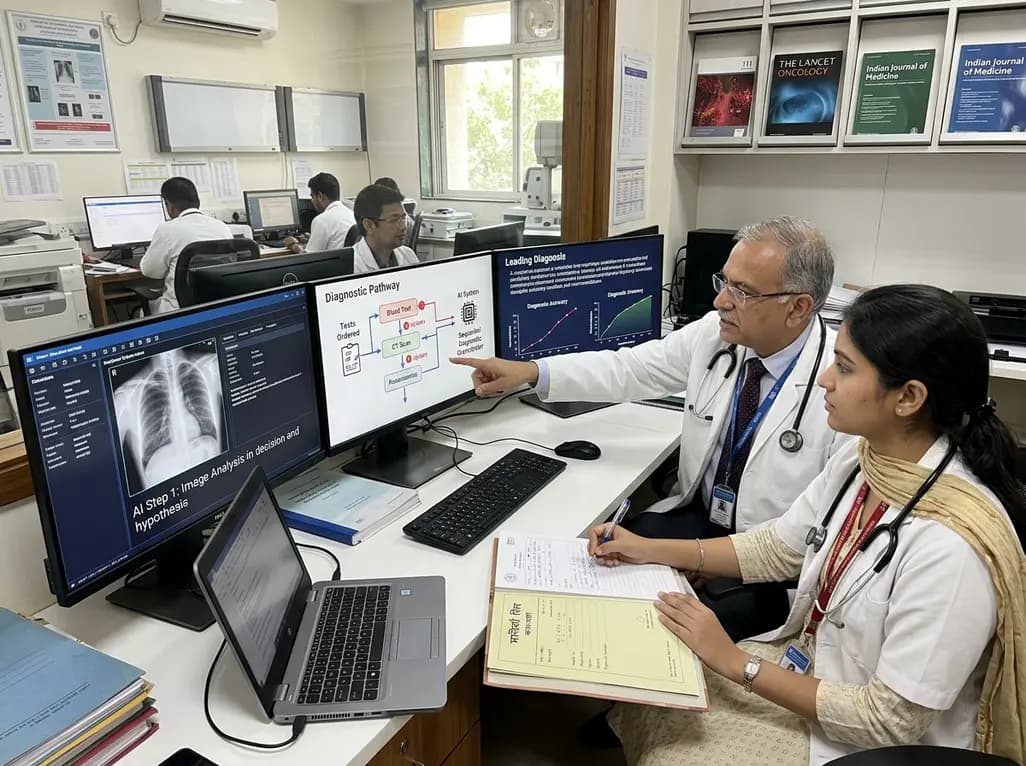
A breakthrough peer-reviewed study demonstrates that a sequential AI diagnosis system can mirror real-world clinical reasoning. By ordering stepwise tests and updating hypotheses dynamically, this multi-agent orchestrator achieved superior diagnostic accuracy while reducing investigative costs.
Today

A prenatal case highlights severe glutaric acidemia type II presenting as bilateral hyperechoic cystic kidneys at 18 weeks. Whole-exome sequencing revealed a novel homozygous ETFDH frameshift variant, demonstrating the power of rapid genetic testing in fetal renal anomalies.
Today

Review how tailored exercise programs benefit frail older patients with heart failure. Explore pathophysiological mechanisms, individualized training prescriptions, and strategies to overcome adherence barriers in clinical practice.
Yesterday

This comparative study evaluates posterior labral tears with and without glenohumeral instability, highlighting distinct demographic patterns, MRI underestimation in stable shoulders, and successful arthroscopic repair outcomes.
Yesterday

A clinical study demonstrates that early intervention with tocilizumab, either as monotherapy or bridged with corticosteroids, achieves significant proptosis reduction and resolves active inflammation in treatment-naive thyroid eye disease.
Yesterday
