.webp&w=384&q=75)

Loading, please wait...
Loading, please wait...
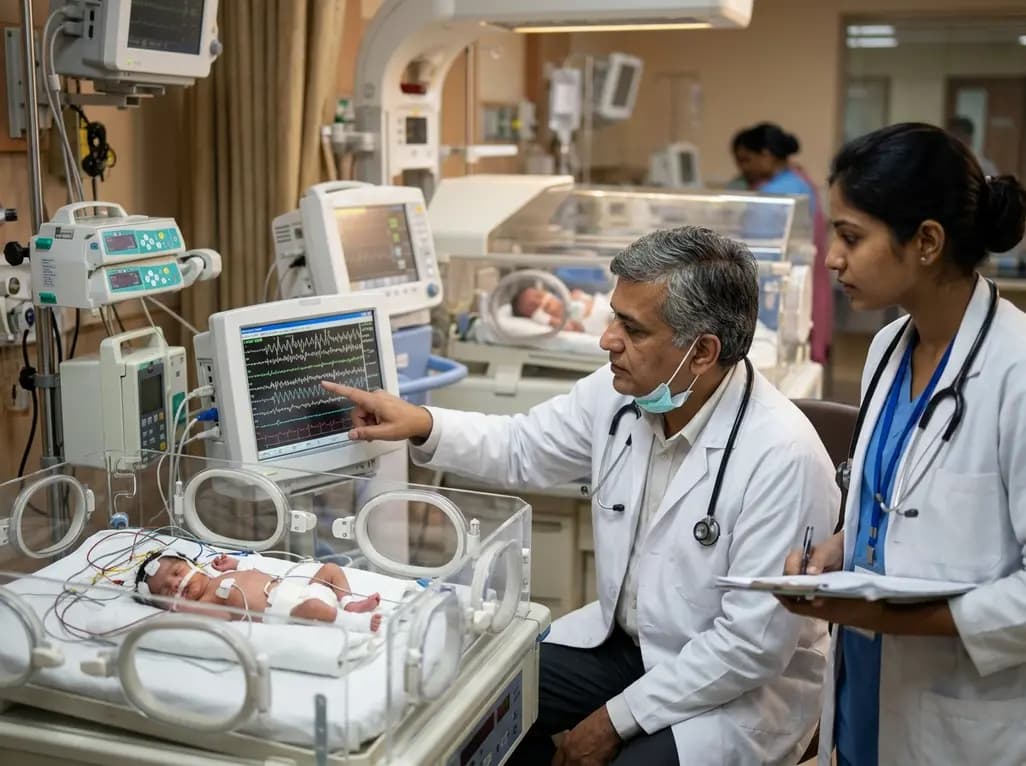
Recent advancements in pediatric cardiac surgery have significantly improved survival rates for infants born with complex structural heart defects. However, as mortality rates decline, the focus of clinical research has shifted toward long-term morbidity, particularly neonatal CHD neurodevelopmental outcomes. Children undergoing corrective cardiac surgery in the neonatal period often face a unique set of neurological challenges. These challenges stem from a combination of prenatal brain development alterations, intraoperative physiological stress, and post-operative recovery complications. Specifically, clinicians have observed that survivors of congenital heart disease (CHD) frequently exhibit below-average scores in cognitive, language, and motor domains compared to their healthy peers. Understanding the predictors of these developmental trajectories is essential for early intervention and parental counseling. By identifying high-risk infants through neuromonitoring and surgical metrics, medical teams can better tailor post-operative care. This proactive approach aims to mitigate the long-term impact of early neurological insults. Furthermore, emerging data suggests that even infants who appear clinically stable in the intensive care unit may harbor subclinical neurological injuries. Consequently, the integration of advanced diagnostic tools like continuous electroencephalography (cEEG) has become a cornerstone in modern neonatal cardiac intensive care units (NICUs) to monitor brain health during the critical 24-hour post-operative window.
Continuous electroencephalography (cEEG) serves as a vital non-invasive window into the functional state of the neonatal brain following cardiac repair. Unlike intermittent or routine EEG, cEEG provides real-time data over extended periods, allowing clinicians to capture transient events such as subclinical seizures or fluctuations in background activity. In the context of neonatal CHD neurodevelopmental outcomes, the background patterns observed during the first 24 hours post-surgery are highly prognostic. Researchers often categorize these patterns to assess the severity of encephalopathy, which reflects the overall degree of cerebral dysfunction. Specifically, patterns characterized by excessive discontinuity or lack of reactivity may indicate significant neurological stress or injury. Moreover, cEEG can identify subclinical seizures that occur in up to 20% of neonates after cardiopulmonary bypass (CPB). These seizures are frequently "silent," meaning they lack obvious motor manifestations, yet they can contribute to secondary brain injury. Therefore, the ability to monitor the brain’s electrical activity continuously allows for immediate adjustments in sedation, oxygenation, or anti-seizure therapy. By maintaining stable cerebral physiology during the early post-operative phase, medical teams strive to optimize the infant\'s developmental potential. Recent studies have confirmed that the severity of encephalopathy, as detected by cEEG, directly correlates with poorer outcomes in specific developmental domains such as language acquisition.
The technical aspects of cardiac surgery, particularly the duration of the aortic cross-clamp and cardiopulmonary bypass (CPB), play a major role in determining neonatal CHD neurodevelopmental outcomes. The cross-clamp time represents the period during which the heart is isolated from systemic circulation to allow for precise surgical repair. While surgeons utilize cooling and cardioplegia to protect the myocardium and brain, prolonged cross-clamp durations are associated with an increased risk of global cerebral hypoperfusion. Specifically, longer durations can lead to microvascular changes and inflammatory responses within the developing brain. A recent retrospective cohort study involving 34 neonates operated on at a median age of 7 days demonstrated a clear link between these surgical variables and future performance. The data indicated that a longer duration of cross-clamp time was significantly associated with poor language composite scores (LCS) at 12 to 24 months (p-value = 0.036). Furthermore, prolonged bypass times can exacerbate the systemic inflammatory response, which further impacts the blood-brain barrier. Consequently, minimizing surgical time while maintaining adequate neuroprotection remains a primary goal for surgical teams. Understanding these surgical risks allows pediatric cardiologists to identify which infants require the most intensive neurodevelopmental surveillance during their first two years of life.
The relationship between early post-operative encephalopathy and subsequent language delays is a critical finding in the study of neonatal CHD neurodevelopmental outcomes. Encephalopathy in the neonatal period is often the clinical manifestation of a variety of stressors, including hypoxia, inflammation, and hemodynamic instability. When clinicians assess encephalopathy through cEEG, they are looking for deviations from the expected developmental brain maturity. Notably, the study found a significant association between the severity of encephalopathy during the 24-hour post-operative period and poor language composite scores (p-value = 0.026). Language development is a complex process that requires the integrity of multiple neural networks, many of which are highly metabolic and sensitive to early injury. Therefore, an infant who exhibits moderate to severe encephalopathy after surgery is at a significantly higher risk for expressive and receptive language delays. In contrast, those with normal or mildly abnormal cEEG backgrounds tend to have better language trajectories. This correlation highlights the importance of using cEEG not just for seizure detection, but as a global assessment of brain health. Because language skills are foundational for later academic and social success, identifying these risks early allows for the timely initiation of speech and language therapy, which can greatly improve a child’s quality of life.
To accurately measure neonatal CHD neurodevelopmental outcomes, researchers frequently employ the Bayley Scales of Infant and Toddler Development, Third Edition (BSID-III). This standardized tool evaluates development across three primary domains: cognitive, language (receptive and expressive), and motor (fine and gross) skills. In studies focusing on neonates with CHD, the BSID-III provides a granular view of how surgical and physiological variables translate into real-world functional abilities. Most neonates with complex CHD tend to score below the population average in these categories. Specifically, cognitive and motor scores often fall into the low-average range, while language scores show the most significant sensitivity to perioperative factors. The BSID-III assessment, typically conducted between 12 and 24 months of age, serves as a crucial milestone for pediatric neurologists and developmental specialists. During this window, the rapid pace of brain growth makes it easier to spot deviations from typical development. Furthermore, the results from these scales help clinicians educate parents about what to expect as their child enters preschool. By using a standardized metric like the BSID-III, medical centers can benchmark their outcomes against global standards, ensuring that their perioperative protocols are providing the best possible neuroprotection. Ultimately, these assessments confirm that early surgical and neurological factors have long-lasting echoes in a child\'s developmental journey.
Given the documented risks to neonatal CHD neurodevelopmental outcomes, a multidisciplinary approach to post-operative care is essential. The findings regarding cross-clamp time and post-operative encephalopathy suggest that neuromonitoring should be standard practice for all neonates undergoing complex cardiac repair. Specifically, utilizing cEEG for at least the first 24 hours can identify infants who may benefit from early intervention. Moreover, the association between longer surgical times and language delays should prompt surgeons to refine techniques that minimize bypass and cross-clamp durations. In the clinical setting, once an infant is discharged, a structured follow-up program is necessary. This program should include periodic neurodevelopmental screenings using tools like the BSID-III or its subsequent editions. Consequently, if delays are identified at 12 or 18 months, children can be referred to early intervention services immediately. In India, where access to specialized developmental care can vary, establishing these neuro-cardiac follow-up clinics is a priority. Therefore, integrating cardiology, neurology, and developmental pediatrics ensures that the survival of these infants is matched by a high quality of life and optimal functional development.
Research indicates that longer durations of aortic cross-clamp time during neonatal cardiac surgery are significantly associated with poorer language composite scores at 12-24 months. This relationship likely stems from the physiological stress and potential micro-ischemic changes the brain undergoes during the surgical period, highlighting the need for efficient surgical techniques.
Continuous EEG (cEEG) allows clinicians to monitor real-time brain function during the critical 24-hour post-operative window. It is particularly effective at detecting subclinical encephalopathy and silent seizures, which are strong predictors of future neurodevelopmental delays. This data enables immediate clinical adjustments to protect the infant\'s fragile neurological health.
Neonates with congenital heart disease who undergo surgery often exhibit below-average scores in cognitive, motor, and language domains. Language development appears particularly sensitive to the severity of post-operative encephalopathy and surgical duration, often showing the most significant deficits when assessed at 12 to 24 months using the BSID-III scale.
Disclaimer: This content is for informational and educational purposes only. It is not intended as medical advice or a substitute for the recommendations of a qualified healthcare professional. Always consult with a specialist for specific medical concerns or treatments. Refer to the latest local and national guidelines for clinical practice.
References
Padiyar S et al. Continuous Electroencephalogram (cEEG) Findings and Neurodevelopmental Outcomes in Neonates with Congenital Heart Disease (CHD) at 12-24 Months of Age. J Autism Dev Disord. 2025 Sep. doi: 10.1007/s10803-024-06418-y. PMID: 38819704.
Sood E, Newburger JW, Anixt JS, et al. Neurodevelopmental Outcomes for Individuals With Congenital Heart Disease: Updates in Neuroprotection, Risk-Stratification, Evaluation, and Management: A Scientific Statement From the American Heart Association. Circulation. 2024;149(22):e1155-e1183.
Petit CJ et al. Neurodevelopmental outcomes after cardiac surgery utilizing cardiopulmonary bypass in children. Pediatr Crit Care Med. 2023;24(11):961-965.

Read summarized clinical updates, watch expert medical content, and earn CME certifications right from your smartphone.
Open your smartphone camera to scan and install.





A retrospective study highlights the impact of surgical cross-clamp time and post-operative encephalopathy on neonatal CHD neurodevelopmental outcomes. Using continuous EEG (cEEG) and BSID-III, researchers found significant correlations with language delays at 12-24 months, stressing the need for neuromonitoring.
3 months ago

As monsoon seasons elevate arboviral disease threats, Tamil Nadu has initiated an ICMR-monitored evaluation of the tetravalent dengue vaccine in Tenkasi district. Clinicians emphasize clinical monitoring, public prevention, and high-quality early pediatric care to reduce disease morbidity across endemic regions.
Today

Leucine Rich Bio has introduced South Asia's first comprehensive vaginal microbiome test, BugSpeaks. By profiling microbial dysbiosis, pathogens, and antimicrobial resistance, this next-generation diagnostic platform provides clinicians with deeper insights into recurrent infections, fertility, and reproductive health.
Today

Review how tailored exercise programs benefit frail older patients with heart failure. Explore pathophysiological mechanisms, individualized training prescriptions, and strategies to overcome adherence barriers in clinical practice.
Today

This comparative study evaluates posterior labral tears with and without glenohumeral instability, highlighting distinct demographic patterns, MRI underestimation in stable shoulders, and successful arthroscopic repair outcomes.
Today

A clinical study demonstrates that early intervention with tocilizumab, either as monotherapy or bridged with corticosteroids, achieves significant proptosis reduction and resolves active inflammation in treatment-naive thyroid eye disease.
Today
