.webp&w=384&q=75)

Loading, please wait...
Loading, please wait...

The National Board of Examinations in Medical Sciences officially announced the NEET-PG 2026 result for thousands of aspiring medical postgraduates across India. Consequently, candidates can now review their performance metrics and start planning their subsequent postgraduate medical education pathways. Medical aspirants throughout the country had waited eagerly for these critical performance metrics to emerge.
The National Board of Examinations in Medical Sciences conducted the nationwide postgraduate entrance test on August 30. Furthermore, an impressive cohort of 2,65,960 medical graduates appeared for the examination across multiple designated testing centres. The examination administration executed the testing schedule smoothly across two distinct phases. Additionally, administrative teams ensured that rigorous biometric verifications and surveillance protocols prevented procedural discrepancies. Subject specialists reviewed all question papers immediately following the conclusion of the test. These specialty faculty members evaluated every single item to confirm conceptual clarity and scientific validity. Consequently, the evaluating committee confirmed that no question suffered from technical flaws or curriculum discrepancies. Therefore, the examination authority preserved the baseline academic integrity of the test papers. Candidates can directly evaluate their preliminary standing through raw scores and All India Rank allotments published online. In addition, this comprehensive announcement lays the groundwork for seat allotments across thousands of clinical and paraclinical departments. Eligible doctors will pursue degree training, master in surgery programs, and diplomate qualifications across diverse teaching institutions. Overall, the prompt release of candidate scores reassures medical aspirants and academic hospital leadership alike regarding standard admission timelines. Furthermore, administrative observers documented high procedural compliance across every government and private testing facility nationwide.
The examination authority preserved the qualifying percentile benchmarks unchanged from previous operational years. For candidates in the General and Economically Weaker Section categories, the qualifying threshold stood firmly at the 50th percentile. Consequently, the minimum qualifying score for these applicants settled at 262 marks. Meanwhile, candidates representing General Persons with Benchmark Disabilities faced a qualifying requirement fixed at the 45th percentile. Therefore, these doctors required a minimum score of 244 marks to achieve eligibility for counselling participation. In contrast, applicants belonging to Scheduled Caste, Scheduled Tribe, and Other Backward Classes observed a 40th percentile qualifying benchmark. This standard also applied to persons with benchmark disabilities within those designated social groups. Thus, candidates in these reserved classifications achieved eligibility with a qualifying threshold of 226 marks. Achieving these scores represents an essential prerequisite for post-examination counselling participation across state and national medical colleges. However, candidates must realize that qualifying marks alone do not assure allocation into competitive specialty residencies. Instead, ultimate seat allocation depends upon overall rank distribution and institutional seat quotas. As a result, candidates must assess their rank standing against historical closing ranks across their preferred specialty disciplines. Furthermore, candidates must monitor official announcements closely to avoid missing crucial seat allocation rounds.
Medical educators frequently compare annual scoring distributions to understand shifting examination dynamics and candidate performance. Interestingly, the testing agency evaluated the current session using a maximum aggregate scale of 720 marks. In contrast, the examination body evaluated the preceding 2025 assessment out of 800 total marks. During that previous cycle, the General qualifying mark reached 276 marks at the equivalent 50th percentile cutoff. Similarly, the 2025 threshold for General candidates with disabilities settled at 255 marks. Furthermore, the reserved category cutoff previously stood at 235 marks under the older testing structure. Therefore, candidates should avoid comparing raw numerical cut-offs directly across consecutive test iterations without adjusting for scaling parameters. Variations in scoring patterns often arise from slight adjustments in question difficulty and curriculum distribution. Moreover, the shift toward higher-order clinical scenarios requires doctors to apply practical ward management concepts rather than passive rote memory. Because the examination authority strictly normalizes outcomes across testing shifts, percentile standings provide the most reliable indicator of actual candidate competency. Consequently, academic mentors advise applicants to focus primarily on their relative merit position rather than raw numerical scores alone. In addition, academic mentors emphasize that percentile stability reflects consistent performance across the applicant pool.
The overall merit position of each candidate reflects both raw scores and rigorous administrative tie-breaking protocols. Specifically, the board assigns merit standings using objective criteria when multiple candidates achieve identical overall marks. First, the evaluation system prioritizes candidates demonstrating fewer incorrect responses throughout the entire examination paper. If ties persist, authorities compare scores obtained in specific clinical sections to resolve individual applicant rankings. Additionally, older applicants receive higher priority when all other performance parameters match identically between competing candidates. Thus, these systematic tie-breaking rules guarantee absolute fairness during the formulation of the nationwide merit roster. Furthermore, the central rank roster serves as the single foundation for both All India Quota and regional state allotments. Respective state counselling authorities will utilize these validated national rankings to prepare local state quota merit lists. However, individual states continue to apply their distinct reservation policies, domicile criteria, and rural service incentives during seat distribution. Consequently, candidates must verify both their national merit standing and their localized state quota eligibility before choice filling. This dual preparation ensures doctors maximize their chances of securing appropriate residency positions without encountering procedural disqualifications. Therefore, proactive applicants consistently research departmental accreditations and state bond conditions before finalizing preference sheets.
Candidates can officially download their individualized scorecards directly from the examination portal on or after October 1. Moreover, the board maintains these scorecards on the website for approximately six months from publication. During this period, candidates must securely store both digital and physical copies of their scorecards for upcoming verification rounds. In addition, the examination board will publish the comprehensive answer key alongside candidate question papers on the same date. This transparency enables doctors to verify question IDs, registered responses, and final scoring keys systematically. Meanwhile, the Medical Counselling Committee will soon announce the official schedule for centralized seat allotment rounds. Qualified doctors should therefore assemble all essential documentation, including medical registration certificates, internship completion records, and valid category certificates. Furthermore, candidates must review college accreditation statuses, annual bed occupancies, and departmental operative caseloads across candidate training hospitals. Seeking advice from current resident doctors helps applicants assess clinical workload, academic teaching quality, and institutional stipends accurately. Ultimately, methodical preparation during this intermediate period minimizes stress and facilitates optimal decision-making when the choice-locking window formally opens. Moreover, establishing clear priorities early ensures that applicants navigate subsequent counseling phases with confidence and clarity.
Q1: What are the minimum qualifying scores across different categories for this examination?
The examination authority established the General and Economically Weaker Section cut-off at 262 marks, which corresponds precisely to the 50th percentile. Meanwhile, General candidates with benchmark disabilities required 244 marks, fulfilling the 45th percentile standard. Furthermore, candidates from Scheduled Caste, Scheduled Tribe, and Other Backward Classes achieved qualification with 226 marks at the 40th percentile. These thresholds establish counselling eligibility across institutions nationwide.
Q2: When can candidates download their official scorecards and review the final answer keys?
Candidates can download their individualized scorecards directly from the official examination portal on or after October 1. Additionally, the examination board will publish the official answer key on the same date. This release allows candidates to inspect specific question identifications, correct answer keys, and their recorded choices. Candidates should retain several copies of their official scorecard for mandatory document verification sessions during counselling.
Q3: How does the examination authority resolve ranking ties when candidates score identical marks?
The examination authority implements a predefined tie-breaking procedure to establish distinct merit rankings for candidates with identical scores. Specifically, the board prioritizes candidates who recorded fewer negative responses throughout the test paper. If identical scores persist, authorities examine performance in specific clinical subject domains to break the tie. Finally, older candidates receive seniority in merit placement if all academic evaluation metrics remain completely identical.
Disclaimer: This content is for informational and educational purposes only. It does not constitute medical advice or replace professional judgment. Refer to the latest local and national guidelines for clinical practice.
References

Read summarized clinical updates, watch expert medical content, and earn CME certifications right from your smartphone.
Open your smartphone camera to scan and install.





The National Board of Examinations in Medical Sciences announced qualifying cut-offs for over 2.65 lakh candidates across India. Discover essential insights into category percentiles, answer key releases, scorecard downloads, and subsequent All India Quota seat allotment procedures.
Today

At UNGA81, India demonstrated transformative public health achievements, showcasing over 1.8 lakh Ayushman Arogya Mandirs, 900 million ABHA IDs, extensive viral hepatitis screening, and the National Sickle Cell Anaemia Elimination Mission, reinforcing its global leadership in equitable and accessible healthcare delivery.
Today
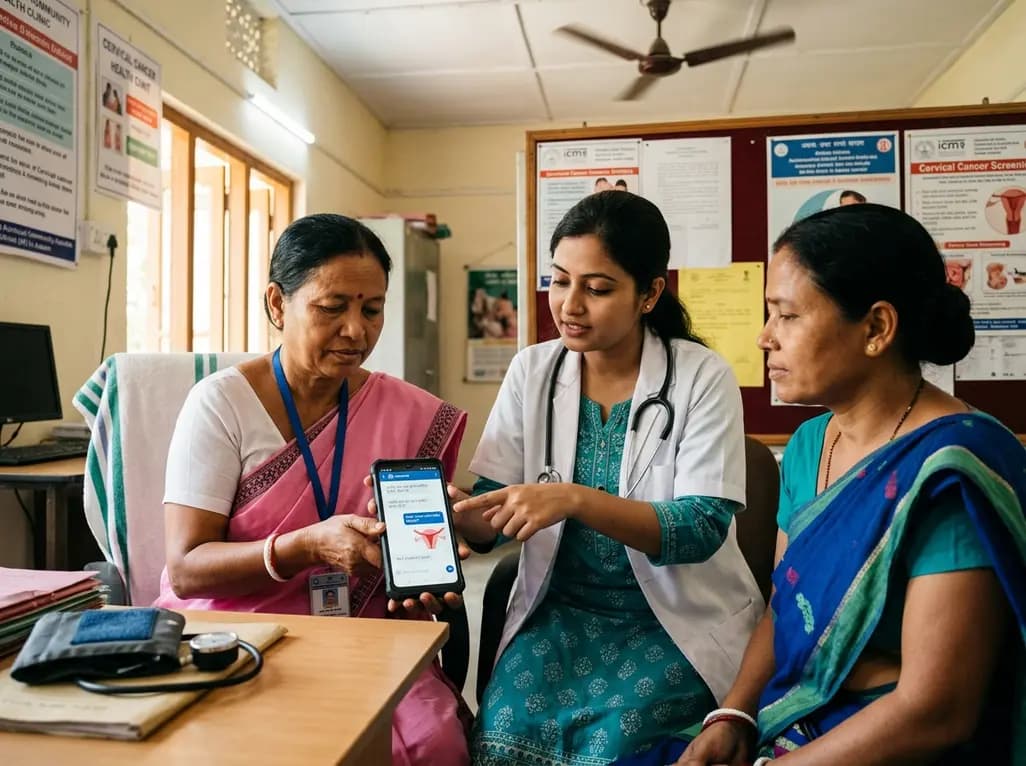
Accredited Social Health Activists in Assam are co-designing an ICMR-backed multilingual voice chatbot and AI training platform. The initiative addresses community barriers, improves visual inspection counselling, and empowers frontline workers to boost early detection of precancerous cervical lesions.
Today

Managing refractory hypoxemia after cardiothoracic surgery becomes perilous when prolonged air leak limits positive-pressure ventilation. This case-based review details how high-flow nasal cannula, paired with awake rehabilitation, enabled successful extubation and avoided invasive re-intubation.
Today
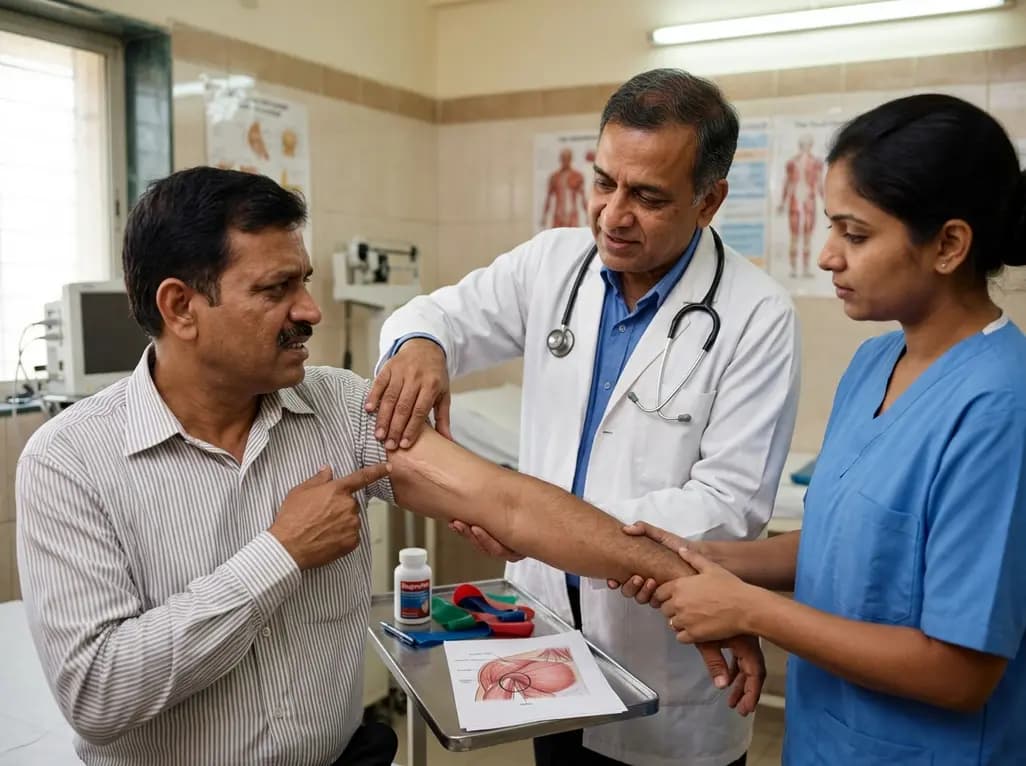
Idiopathic axillary web syndrome (IAWS) is a rare cause of shoulder pain and mobility restriction characterized by palpable axillary cording without prior surgery or trauma. Early diagnosis, nonsteroidal anti-inflammatory therapy, and physical rehabilitation lead to complete resolution of symptoms.
Today
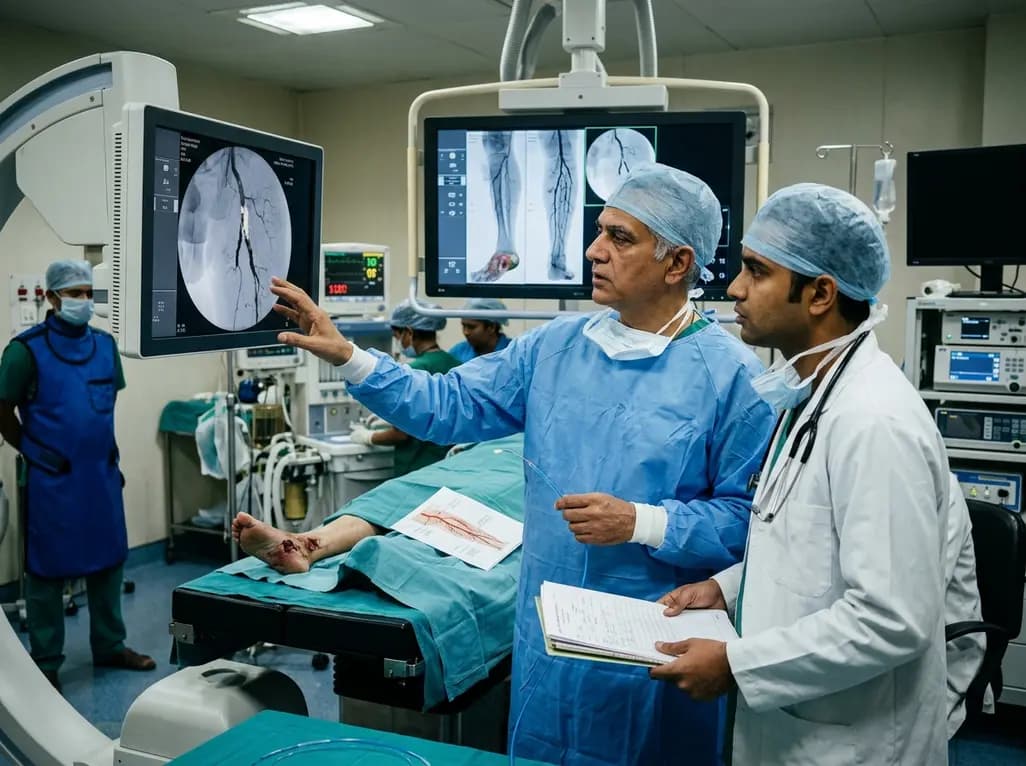
SWEDEPAD-1 trial insights show paclitaxel-coated devices do not improve long-term limb salvage in patients with chronic limb-threatening ischemia and tissue loss. While one-year reinterventions decreased, the devices were linked to a higher risk of major amputation at three months.
Today
