.webp&w=384&q=75)

Loading, please wait...
Loading, please wait...
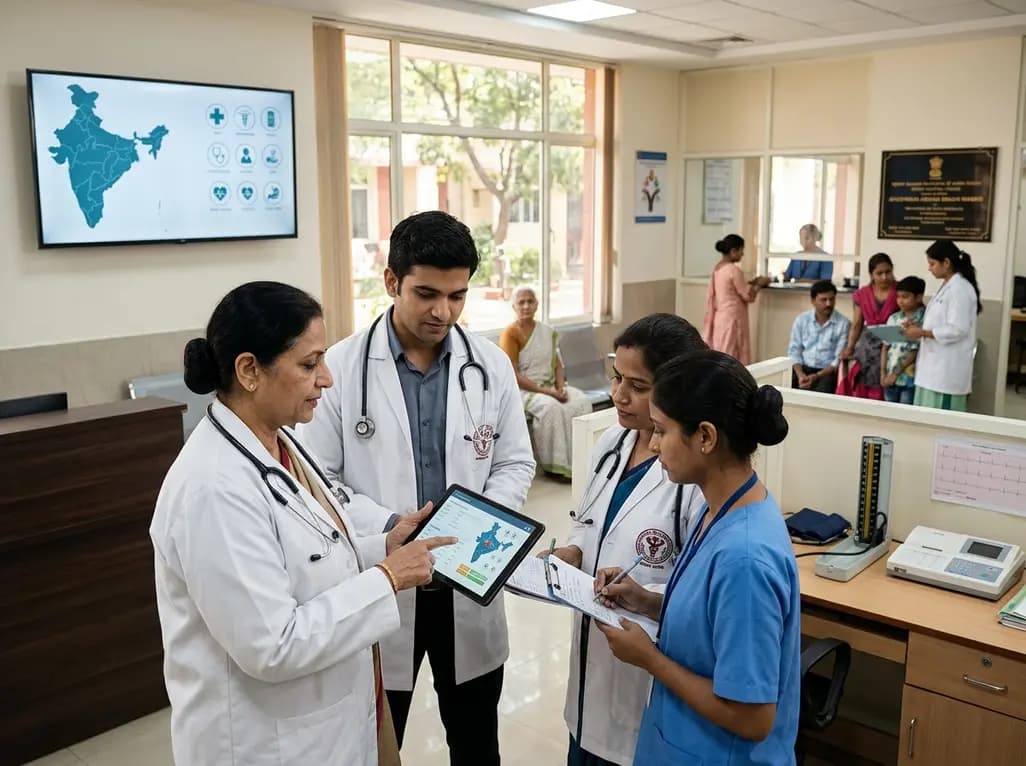
During high-level side events at the 81st United Nations General Assembly in New York, India showcased decisive healthcare progress. Specifically, Union Health Secretary Punya Salila Srivastava highlighted the nation's rapid expansion of universal health coverage. Furthermore, international health leaders commended India's structured approach to accessible clinical care and disease control.
To establish dependable primary healthcare, India transitioned traditional sub-centres into more than 1.8 lakh Ayushman Arogya Mandirs. Consequently, these upgraded facilities deliver comprehensive healthcare services directly within rural and peri-urban communities. Clinicians and community health officers deliver maternal, neonatal, and child health interventions. Furthermore, teams routinely screen adult populations for non-communicable diseases such as hypertension and diabetes mellitus.
Additionally, the centres integrate mental health support, elderly care, and community-based palliative services. Frontline healthcare workers emphasize preventive lifestyles while providing essential outpatient curative treatments. In doing so, these frontline facilities significantly reduce the patient load on overcrowded tertiary medical institutions. As a result, these community clinics promote long-term wellness rather than merely responding to acute illnesses. Moreover, the health ministry maintains stringent clinical quality standards across every primary facility.
Importantly, the system connects grassroots centres to secondary and tertiary hospitals through structured referral pathways. Thus, patients requiring specialist intervention move smoothly through established public health networks. Primary healthcare teams maintain regular follow-ups after patients return from higher-level referral hospitals. Therefore, this coordinated continuum of care protects vulnerable individuals while reinforcing community-level health security across diverse regions.
Catastrophic medical expenses remain a leading cause of impoverishment among vulnerable households. Therefore, the Indian government established the Ayushman Bharat Pradhan Mantri Jan Arogya Yojana to provide robust financial protection. This publicly funded assurance scheme covers secondary and tertiary inpatient hospital care for economically disadvantaged citizens. Consequently, millions of families receive life-saving medical procedures without incurring crushing personal debts.
Furthermore, the Free Drugs and Diagnostics Service Initiative directly reduces out-of-pocket expenses for routine consultations. Patients visiting public health centres receive essential diagnostic tests and prescribed generic pharmaceuticals completely free of charge. In addition, the Prime Minister's National Dialysis Programme provides crucial renal replacement therapy across district hospitals. Thus, patients with end-stage renal disease receive life-sustaining hemodialysis treatments close to their homes.
Similarly, these combined financing programs eliminate significant economic barriers to timely clinical management. Hospital admissions no longer force impoverished families to sell productive assets or borrow from informal lenders. Instead, public entitlements safeguard family finances while ensuring prompt therapeutic interventions. Moreover, state health agencies continuously audit empaneled hospitals to maintain treatment protocols and patient safety. Ultimately, these integrated social security programs form an indispensable pillar of India's universal healthcare infrastructure.
Digital technology has rapidly bridged vast geographic divides across India's expansive medical landscape. For instance, the Ayushman Bharat Digital Mission has generated unique health identities for over 900 million citizens. Consequently, Ayushman Bharat Health Account numbers link longitudinal patient data securely across clinics and diagnostic facilities. Furthermore, inter-operable digital registries track certified medical practitioners and accredited public health institutions with remarkable accuracy.
In addition, the national telemedicine platform, e-Sanjeevani, has completed more than 497 million digital consultations. This system connects rural patients and community health workers directly to specialized physicians in tertiary hospitals. As a result, patients in remote mountain villages or forest settlements receive rapid expert diagnostic evaluations. Moreover, the integration of teleradiology accelerates the transmission of radiographic images to off-site radiologists for prompt interpretation.
Similarly, artificial intelligence assists primary clinicians through automated chest X-ray screening for pulmonary tuberculosis and related respiratory conditions. Mobile Medical Units traverse difficult terrains, offering on-site laboratory testing and point-of-care ultrasound examinations. Therefore, digital connectivity empowers healthcare workers to detect acute illnesses early and manage chronic diseases effectively. Ultimately, these digital platforms enhance clinical continuity while dismantling geographic barriers that previously delayed vital medical care.
During her address in New York, the Union Health Secretary reaffirmed India's commitment to eliminate viral hepatitis by 2030. Specifically, the country aims to eradicate Hepatitis B and Hepatitis C as major public health threats. To achieve this ambitious target, the government launched the National Viral Hepatitis Control Program in 2018. Since then, healthcare teams have screened nearly 225 million individuals across diverse clinical settings.
Furthermore, the national framework provides screening services through roughly 1.80 lakh primary and secondary healthcare centres. The programme currently operates 1,039 dedicated treatment centres offering standardized, free antiviral therapy to diagnosed patients. As a result, clinicians have successfully treated hundreds of thousands of chronic hepatitis patients with direct-acting antivirals. Moreover, primary care providers routinely administer the birth dose of Hepatitis B vaccine to prevent vertical transmission.
In addition, maternal screening protocols under reproductive and child health frameworks identify seropositive pregnant women early. Consequently, medical teams administer hepatitis immunoglobulin and infant vaccines promptly at delivery to prevent vertical transmission. The program also promotes safe injection practices, safe blood transfusions, and targeted harm reduction for high-risk populations. Therefore, these comprehensive interventions suppress viral transmission rates while preventing end-stage liver cirrhosis and hepatocellular carcinoma across the country.
Sickle cell disease presents a profound genetic burden, particularly among India's historically under-served tribal communities. To confront this challenge, India co-hosted the launch of OneSCD on the sidelines of UNGA81. This global partnership unites India, Nigeria, the World Health Organization, UNICEF, and the Africa CDC to transform patient care. Nationally, Prime Minister Narendra Modi inaugurated the National Sickle Cell Anaemia Elimination Mission in 2023.
Crucially, the mission aims to eliminate sickle cell disease as a pressing public health concern before 2047. The programmatic approach integrates mass community screening, point-of-care testing, early diagnosis, genetic counselling, and ongoing digital tracking. To date, public health workers have screened more than 7.29 crore individuals in high-prevalence districts. Consequently, laboratories identified over 20 lakh genetic carriers and accurately diagnosed approximately 2.5 lakh individuals with active disease.
Furthermore, field workers have distributed more than 4.93 crore color-coded sickle cell genetic status cards to screened individuals. These cards guide families during pre-marital counselling, thereby reducing the probability of transmitting pathogenic sickle alleles to offspring. Additionally, primary healthcare facilities ensure uninterrupted access to prophylactic hydroxyurea, folic acid supplementation, and necessary blood transfusions. Therefore, this holistic public health mission provides early therapeutic interventions that significantly enhance patient longevity and daily quality of life.
Q1: How do Ayushman Arogya Mandirs advance universal health coverage?
Ayushman Arogya Mandirs serve as the primary institutional foundation for universal healthcare across India. Over 1.8 lakh operational centres deliver comprehensive outpatient services directly within local communities. Healthcare teams provide preventive screenings for non-communicable diseases, maternal and child healthcare, and essential palliative support. Furthermore, they supply free essential diagnostics and generic medications. Consequently, these frontline clinics establish reliable continuum-of-care referral pathways, ensuring timely specialist care while substantially mitigating catastrophic family healthcare expenditures.
Q2: How does India manage viral hepatitis screening and clinical care?
India manages viral hepatitis through the National Viral Hepatitis Control Program embedded within the National Health Mission. Primary facilities across the country utilize point-of-care screening assays, having evaluated nearly 225 million individuals. Moreover, 1,039 designated treatment centres provide free confirmatory molecular viral load testing and direct-acting antiviral therapies. In addition, routine birth-dose immunization against Hepatitis B and antenatal screening protocols protect infants from vertical transmission, effectively halting chronic hepatitis progression nationwide.
Q3: How does the National Sickle Cell Anaemia Elimination Mission function?
The National Sickle Cell Anaemia Elimination Mission aims to eradicate the disorder as a public health concern by 2047. Specifically, the program screens individuals aged 0 to 40 across endemic tribal districts using point-of-care diagnostics. Additionally, identified individuals receive color-coded genetic status cards that facilitate informed marital counselling. Furthermore, diagnosed patients receive free clinical follow-ups, prophylactic vaccines, and hydroxyurea management at public healthcare institutions to prevent debilitating vaso-occlusive pain crises and premature organ damage.
Disclaimer: This content is for informational and educational purposes only. It does not constitute medical advice or replace professional judgment. Refer to the latest local and national guidelines for clinical practice.
References

Read summarized clinical updates, watch expert medical content, and earn CME certifications right from your smartphone.
Open your smartphone camera to scan and install.





At UNGA81, India demonstrated transformative public health achievements, showcasing over 1.8 lakh Ayushman Arogya Mandirs, 900 million ABHA IDs, extensive viral hepatitis screening, and the National Sickle Cell Anaemia Elimination Mission, reinforcing its global leadership in equitable and accessible healthcare delivery.
Today
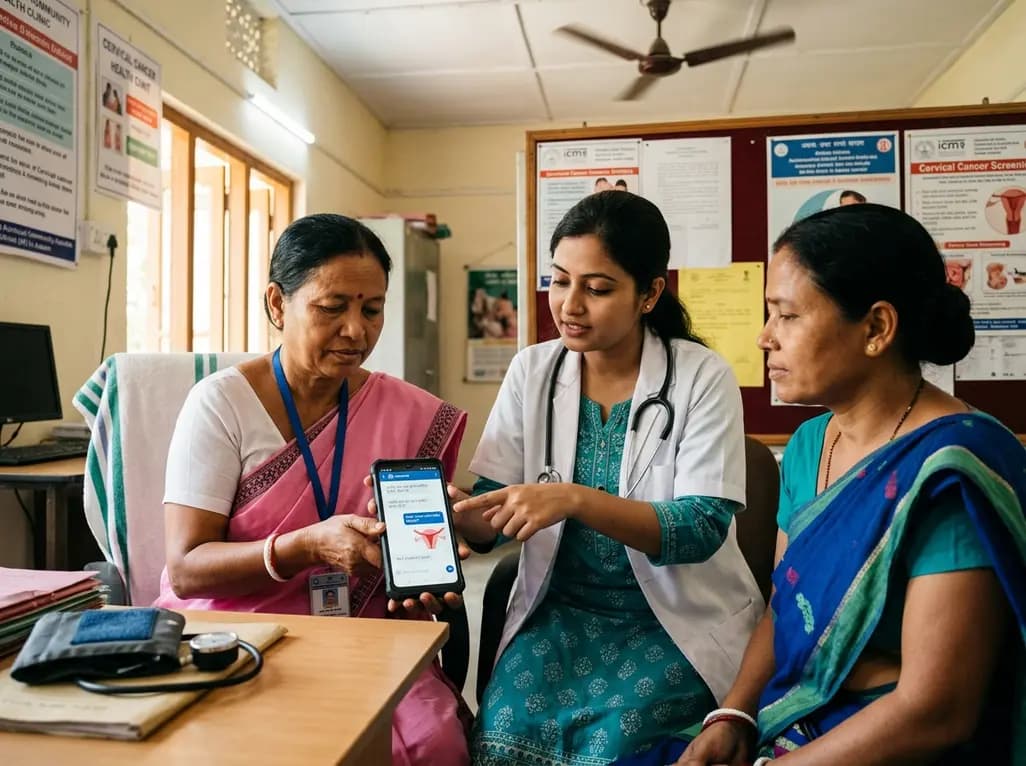
Accredited Social Health Activists in Assam are co-designing an ICMR-backed multilingual voice chatbot and AI training platform. The initiative addresses community barriers, improves visual inspection counselling, and empowers frontline workers to boost early detection of precancerous cervical lesions.
Today
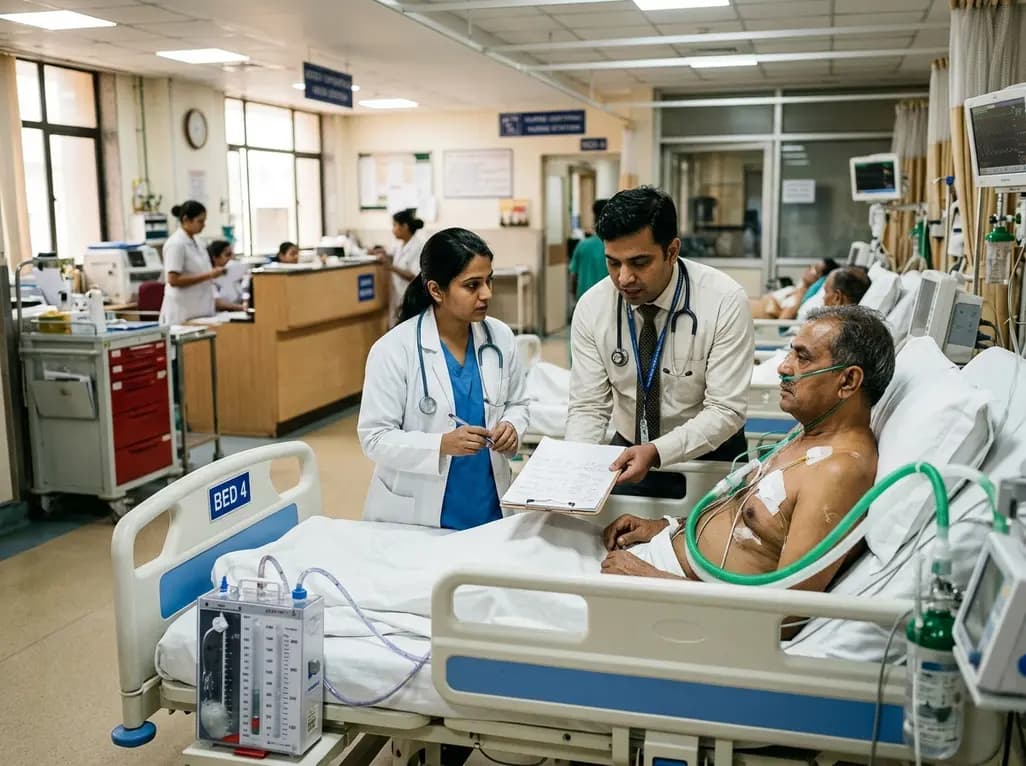
Managing refractory hypoxemia after cardiothoracic surgery becomes perilous when prolonged air leak limits positive-pressure ventilation. This case-based review details how high-flow nasal cannula, paired with awake rehabilitation, enabled successful extubation and avoided invasive re-intubation.
Today
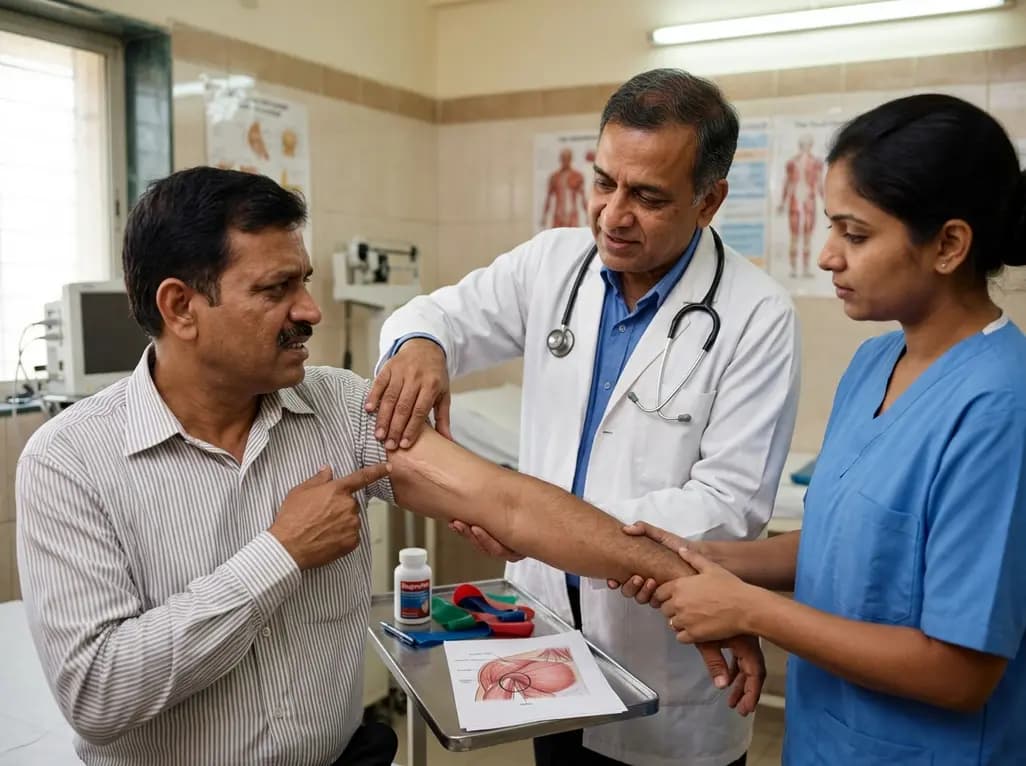
Idiopathic axillary web syndrome (IAWS) is a rare cause of shoulder pain and mobility restriction characterized by palpable axillary cording without prior surgery or trauma. Early diagnosis, nonsteroidal anti-inflammatory therapy, and physical rehabilitation lead to complete resolution of symptoms.
Today
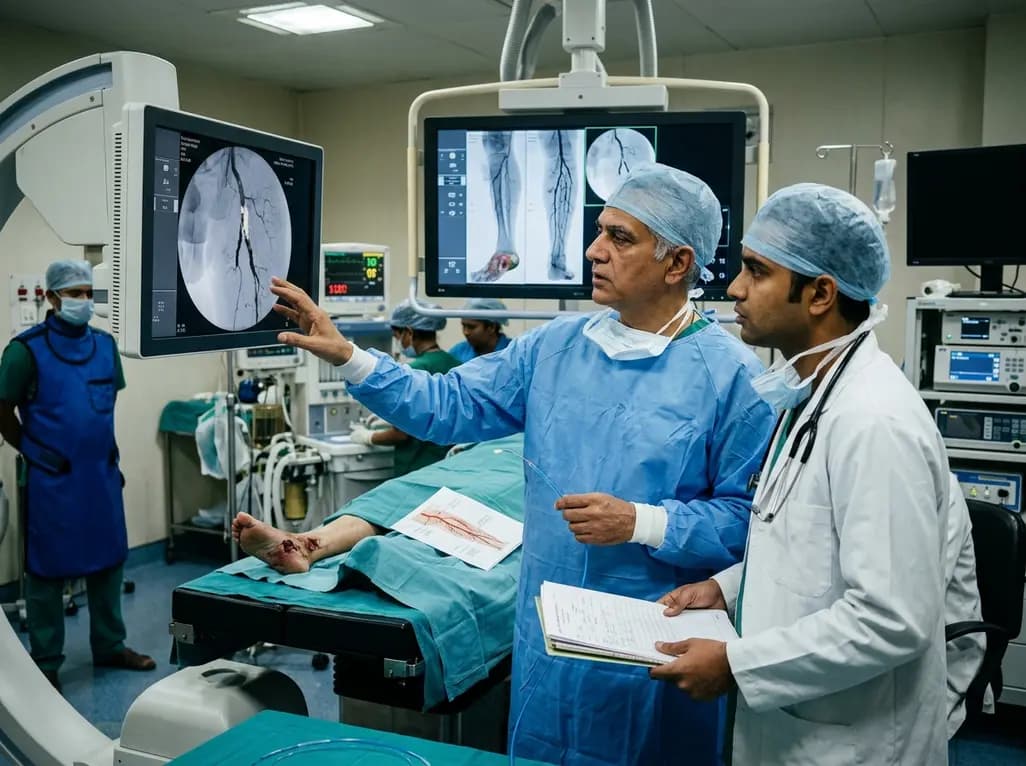
SWEDEPAD-1 trial insights show paclitaxel-coated devices do not improve long-term limb salvage in patients with chronic limb-threatening ischemia and tissue loss. While one-year reinterventions decreased, the devices were linked to a higher risk of major amputation at three months.
Today
