.webp&w=384&q=75)

Loading, please wait...
Loading, please wait...
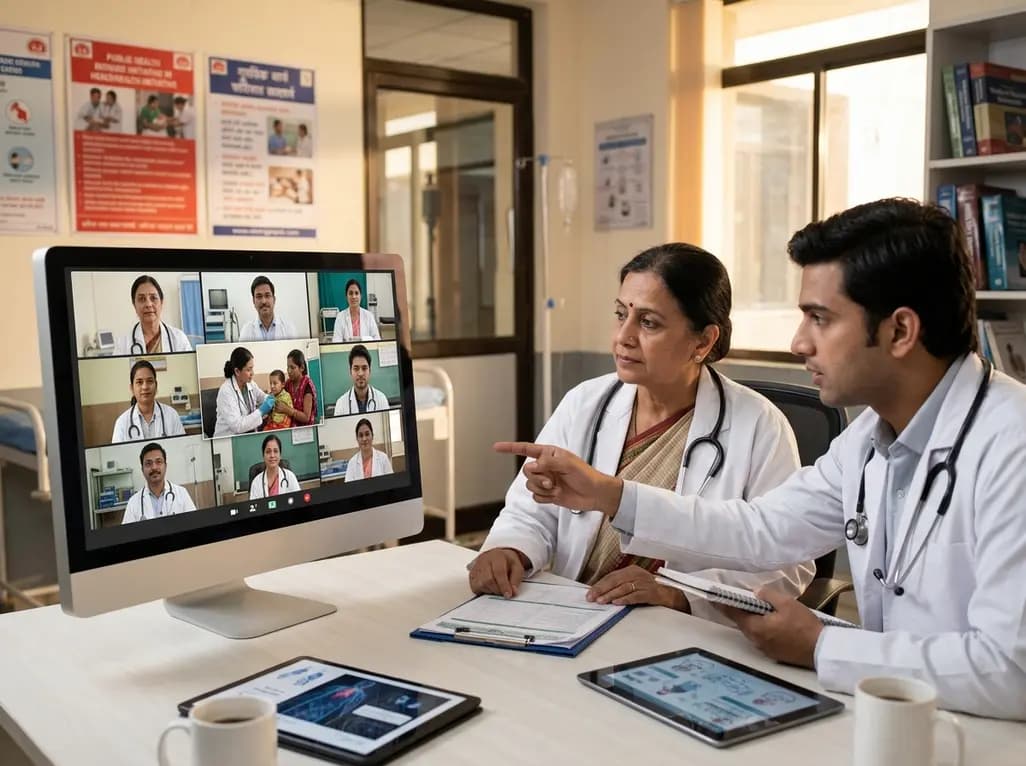
On the momentous occasion of World Population Day 2026, the Union Ministry of Health and Family Welfare (MoHFW) launched a groundbreaking initiative. Specifically, the ministry introduced the Monthly Webinar Series on Best Practices under the National Health Mission. This year-round knowledge-sharing platform aims to revolutionize public healthcare across India. Consequently, it brings together diverse States and Union Territories to share successful innovations. By facilitating the exchange of implementation experiences, the National Health Mission webinar serves as a critical mechanism. Indeed, it accelerates the adoption of scalable, evidence-based practices to strengthen healthcare delivery nationwide. Furthermore, the inaugural session, chaired by Aradhana Patnaik, Additional Secretary and Mission Director of NHM, set a progressive tone. She emphasized that continuous innovation remains central to building responsive and resilient public health systems. Additionally, the initiative bridges the gap between field-level implementation and structured documentation. Through this national platform, local successes can rapidly scale up to benefit the entire country.
Historically, grassroots health workers in India have developed highly effective, localized solutions to complex clinical challenges. However, these brilliant initiatives often remain undocumented and unshared. Consequently, other regions struggle to solve identical public health issues. To systematically address this gap, the National Health Systems Resource Centre provides dedicated technical support. They will document and showcase emerging innovations, thereby expanding the reach of national health summits.
Moreover, creating a culture of continuous learning is essential for public health resilience. When healthcare administrators from different districts collaborate, they exchange valuable insights and practical implementation strategies. This collaborative approach ensures that successful healthcare delivery models do not remain isolated in single districts. Instead, they can undergo rapid adaptation and replication nationwide.
Ultimately, this webinar series acts as an institutional mechanism to identify, document, and disseminate successful practices. States and Union Territories are actively encouraged to present innovative solutions. These projects should extend beyond existing rigid program frameworks. By addressing emerging public health challenges through locally developed strategies, districts can cultivate sustainable health outcomes. Therefore, the ministry's new initiative establishes a robust foundation for an adaptable and forward-looking healthcare ecosystem.
The inaugural session focused heavily on the vital themes of anemia, child health, and adolescent wellbeing. This choice of focus aligns perfectly with India's urgent demographic and clinical priorities. Therefore, the webinar highlighted three groundbreaking state-level interventions that demonstrated measurable, positive clinical outcomes.
Firstly, Jharkhand presented its innovative Anemia Mukt Bharat T4 App. This mobile application streamlines the tracking and treatment of iron deficiency among vulnerable populations. Alongside this digital solution, Jharkhand showcased its integrated home-visit programs. Specifically, these include the Home-Based Newborn Care and Home-Based Young Child Care initiatives.
Secondly, Chhattisgarh showcased Chirayu Day under the Rashtriya Bal Swasthya Karyakram. This structured initiative provides systematic screening and early intervention for children.
Thirdly, Madhya Pradesh presented a comprehensive initiative aimed at addressing adolescent obesity. This rising metabolic concern poses long-term risks for non-communicable diseases. Together, these diverse case studies illustrated how states can tackle pressing pediatric challenges. By designing context-specific, localized models of care, these programs prove that targeted public health strategies yield superior clinical outcomes. Consequently, these models serve as scalable blueprints that other states can easily replicate.
Digital health technologies are rapidly transforming clinical workflows and patient monitoring across rural India. For instance, Jharkhand’s Anemia Mukt Bharat T4 App exemplifies how mobile health applications can optimize public health delivery. This digital tool enables frontline healthcare workers to screen, track, and treat anemia cases systematically. Consequently, it ensures that high-risk pregnant women, infants, and adolescents receive timely iron and folic acid supplementation.
Furthermore, the integration of digital tools with traditional home visits enhances clinical follow-up. Frontline workers utilize the Home-Based Newborn Care protocol to deliver essential neonatal services directly to families. Because they utilize real-time data from the application, their clinical decisions become significantly more precise. This synergy between physical home visits and digital tracking dramatically reduces neonatal mortality rates.
Moreover, the app simplifies the collection of epidemiological data. It provides district health administrators with real-time statistics regarding anemia prevalence. Consequently, resources can be allocated more dynamically to regions with the highest clinical need. This evidence-based approach to healthcare planning demonstrates the immense value of integrating technology into routine public health interventions.
Addressing childhood illnesses and adolescent health challenges requires deeply context-specific solutions. For example, Chhattisgarh's Chirayu Day initiative under the Rashtriya Bal Swasthya Karyakram has transformed pediatric screening. This program dedicates specific days to comprehensive health screenings, ensuring early detection of congenital defects, deficiencies, and developmental delays. Consequently, affected children receive prompt tertiary care, preventing long-term disability and improving their overall quality of life.
Similarly, Madhya Pradesh’s initiative targeting adolescent obesity addresses an emerging metabolic epidemic. Adolescent obesity is a critical precursor to adult diabetes and cardiovascular diseases. Therefore, early lifestyle interventions and clinical counseling are paramount. By establishing adolescent-friendly health clinics, the state provides non-judgmental spaces for clinical guidance.
Indeed, both programs underscore the importance of aligning state-level initiatives with overarching national health programs. When local solutions are integrated into existing frameworks, their scalability and sustainability increase exponentially. This strategic alignment ensures that resource-constrained settings can maximize their clinical impact. Ultimately, these targeted pediatric interventions contribute significantly to building a healthier future generation, emphasizing preventive care over reactive treatment.
A primary goal of the National Health Mission webinar series is to facilitate the rapid scale-up of proven healthcare innovations. Often, brilliant clinical interventions remain confined to their local districts due to a lack of structured dissemination. Therefore, this monthly platform serves as an essential channel for cross-learning. When states present successful models, other regions can immediately adapt these clinical workflows to their unique environments.
Furthermore, the National Health Systems Resource Centre provides the technical expertise required to document these practices. This systematic documentation ensures that successful interventions are packaged as replicable toolkits. For instance, the operational guidelines of Chhattisgarh’s screening days or Jharkhand’s app can be shared seamlessly. Consequently, other states do not need to reinvent the wheel; instead, they can adopt these proven clinical models directly.
Additionally, the strong alignment between state innovations and national health programs guarantees administrative and financial support. More than 500 national, state, and district officials attended the inaugural webinar, demonstrating immense collective commitment. This massive participation highlights a shared dedication to continuous learning and systemic improvement. Ultimately, scaling these best practices will elevate the quality, equity, and efficiency of public healthcare services nationwide.
Q1: What is the main objective of the newly launched National Health Mission webinar series?
The primary objective of the webinar series is to serve as a year-round knowledge-sharing platform. It brings together States and Union Territories to showcase successful healthcare innovations and exchange implementation experiences. By doing so, the series accelerates the adoption of scalable, evidence-based practices. Consequently, this collaborative effort strengthens healthcare delivery systems and improves public healthcare quality across India.
Q2: How does the Anemia Mukt Bharat T4 App improve pediatric and maternal health outcomes?
The Anemia Mukt Bharat T4 App digitalizes the screening, tracking, and treatment of anemia. Frontline healthcare workers use the application during Home-Based Newborn Care and Home-Based Young Child Care visits. This tool enables precise monitoring of iron supplementation among infants, adolescents, and pregnant women. Consequently, it ensures timely clinical interventions, reduces maternal-child health complications, and provides administrators with real-time epidemiological data.
Q3: What role does the National Health Systems Resource Centre play in this new initiative?
The National Health Systems Resource Centre plays a vital technical role in this initiative. Specifically, the center provides technical support for documenting and showcasing grassroots healthcare innovations. This systematic documentation helps bridge the gap between field-level implementation and national dissemination. Ultimately, their efforts expand the scope and clinical impact of the National Summit on Good and Replicable Innovative Practices.
Disclaimer: This content is for informational and educational purposes only. It does not constitute medical advice or replace professional judgment. Refer to the latest local and national guidelines for clinical practice.
References

Read summarized clinical updates, watch expert medical content, and earn CME certifications right from your smartphone.
Open your smartphone camera to scan and install.





The Ministry of Health has launched a monthly webinar series under the National Health Mission. This year-round platform aims to foster innovation, facilitate knowledge sharing, and scale up successful healthcare models across all Indian States and Union Territories on key areas like pediatric care.
3 months ago
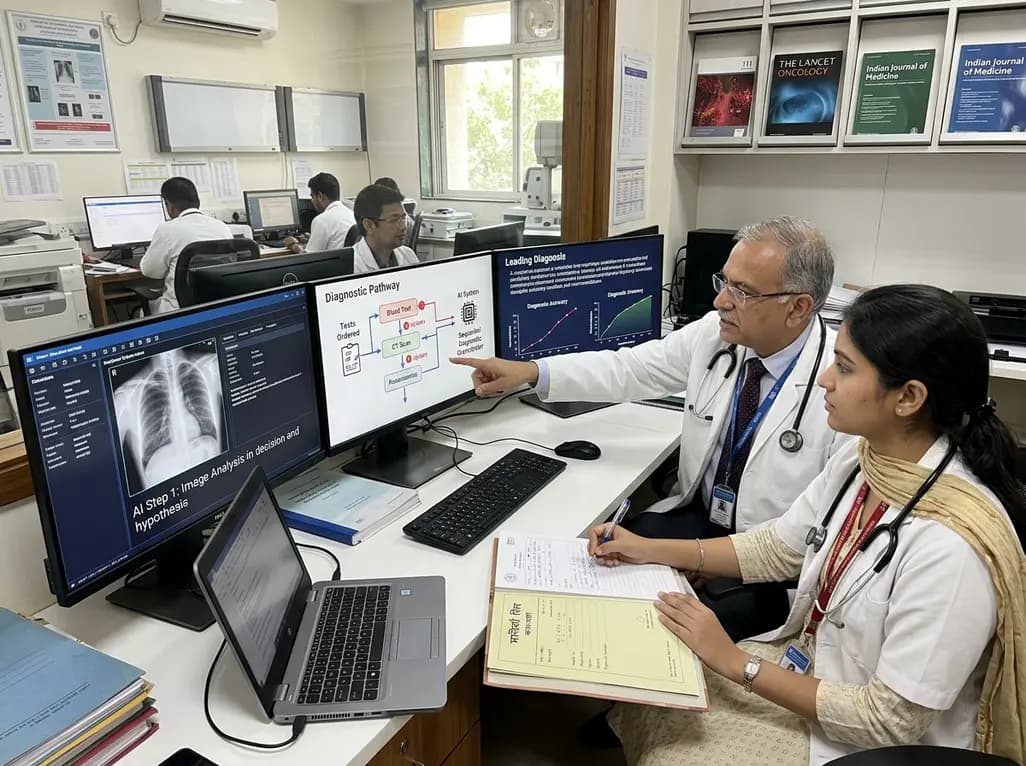
A breakthrough peer-reviewed study demonstrates that a sequential AI diagnosis system can mirror real-world clinical reasoning. By ordering stepwise tests and updating hypotheses dynamically, this multi-agent orchestrator achieved superior diagnostic accuracy while reducing investigative costs.
Today

A prenatal case highlights severe glutaric acidemia type II presenting as bilateral hyperechoic cystic kidneys at 18 weeks. Whole-exome sequencing revealed a novel homozygous ETFDH frameshift variant, demonstrating the power of rapid genetic testing in fetal renal anomalies.
Today

Review how tailored exercise programs benefit frail older patients with heart failure. Explore pathophysiological mechanisms, individualized training prescriptions, and strategies to overcome adherence barriers in clinical practice.
Yesterday

This comparative study evaluates posterior labral tears with and without glenohumeral instability, highlighting distinct demographic patterns, MRI underestimation in stable shoulders, and successful arthroscopic repair outcomes.
Yesterday

A clinical study demonstrates that early intervention with tocilizumab, either as monotherapy or bridged with corticosteroids, achieves significant proptosis reduction and resolves active inflammation in treatment-naive thyroid eye disease.
Yesterday
