.webp&w=384&q=75)

Loading, please wait...
Loading, please wait...

Classic trigeminal neuralgia (CTN) causes debilitating paroxysmal pain, often necessitating surgical intervention when medical therapy fails. Microvascular decompression (MVD) remains the gold standard for treatment, yet predicting which patients will achieve complete relief is often difficult. Recent advancements in computational fluid dynamics (CFD) have now identified specific MVD efficacy predictors that could revolutionize preoperative planning and patient selection.
A recent prospective study utilized preoperative time-of-flight MR angiography to map neurovascular compression sites. Researchers performed CFD simulations to analyze parameters such as peak systolic flow (PSF), wall shear stress (WSS), and oscillatory shear index (OSI). The data revealed that patients with successful surgical outcomes exhibited significantly lower PSF and higher maximum WSS. These hemodynamic metrics serve as objective biomarkers, reflecting the mechanical stress exerted by the offending vessel on the nerve root.
Furthermore, the study developed high-accuracy predictive models using logistic regression. One specific model achieved an area under the receiver operating characteristic curve (AUC) of 0.920, with both sensitivity and specificity reaching 90%. Consequently, identifying these MVD efficacy predictors allows clinicians to move beyond simple morphological assessments to a more functional, physics-based understanding of the neurovascular conflict.
Integrating hemodynamic analysis into the clinical workflow offers several advantages. Firstly, it assists in identifying patients who are unlikely to benefit from MVD, potentially sparing them from invasive procedures with limited upside. Secondly, it helps surgeons prioritize specific vessels in cases where multiple arteries are in contact with the nerve. While traditional imaging identifies the contact, CFD quantifies the severity of the compression. This localized understanding is vital for optimizing surgical strategies and guiding personalized treatment for patients in India and abroad.
The most significant predictors include peak systolic flow (PSF) and maximum wall shear stress (WSS). Research indicates that lower PSF and higher maximum WSS at the compression site are strongly associated with positive surgical outcomes.
CFD provides a non-invasive way to simulate blood flow and mechanical forces at the site of neurovascular contact. It offers quantitative data on pressure drops and shear stress, helping clinicians predict the effectiveness of decompression surgery with high precision.
Disclaimer: This content is for informational and educational purposes only. It does not constitute medical advice or a substitute for professional healthcare consultation. Always seek the advice of a physician or other qualified health provider with any questions regarding a medical condition. Refer to the latest local and national guidelines for clinical practice.
References
Cao C et al. Hemodynamic parameters as biomarkers for predicting microvascular decompression efficacy in classic trigeminal neuralgia. J Neurosurg. 2026 Mar 13. doi: 10.3171/2025.10.JNS25744. PMID: 41825080.
Sun T, et al. Hemodynamic Analysis of the Offending Artery in Patients With Trigeminal Neuralgia. Front Neurol. 2021;12:656208. doi: 10.3389/fneur.2021.656208.
Ishida S, et al. Impact of microvascular decompression on wall shear stress in responsible arteries in trigeminal neuralgia and hemifacial spasm. Sci Rep. 2024;14:22441. doi: 10.1038/s41598-024-73217-x.

Read summarized clinical updates, watch expert medical content, and earn CME certifications right from your smartphone.
Open your smartphone camera to scan and install.





A study identifies hemodynamic parameters, specifically PSF and maximum WSS, as high-accuracy predictors for MVD efficacy in trigeminal neuralgia patients....
7 months ago
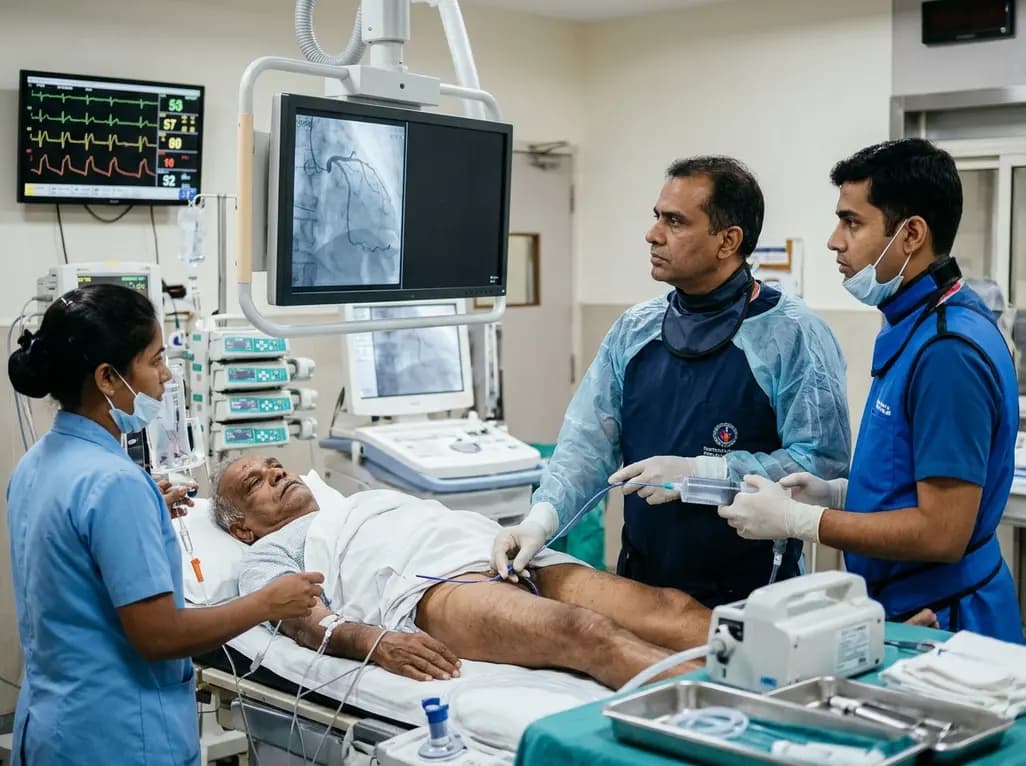
An elderly man with partially repaired Tetralogy of Fallot presented with STEMI caused by coronary embolism rather than atherosclerosis. Successful treatment with sustained mechanical aspiration thrombectomy underscores the vital need for high clinical vigilance in adult congenital heart disease.
Today

Demanding exhaustive hormonal profiling can inadvertently discourage clinical studies involving females. Methodological standards must align with the specific scientific question to expand, not restrict, equitable evidence for women.
Today

A recent study demonstrates that spinal oxygen sensors do not require mitochondrial electron transport to trigger sympathetic excitation during acute hypoxia, revealing new insights into how mitochondrial oxidative stress modulates autonomic tone in cardiovascular and neurological diseases.
Today

A novel calcium polyphosphate coacervate enables injectable bone implants with in situ hierarchical porosity via phase separation and gas foaming, significantly enhancing cell proliferation, energy metabolism, and osteogenic differentiation for minimally invasive bone defect repair.
Today

Following regulatory scrutiny from FSSAI regarding promotional representations and lean muscle preservation claims, Dr. Reddy's Laboratories and Nestlé Health Science are currently reviewing the branding and marketing strategy for their joint nutritional supplement Celevida GLP+.
Today
