.webp&w=384&q=75)

Loading, please wait...
Loading, please wait...
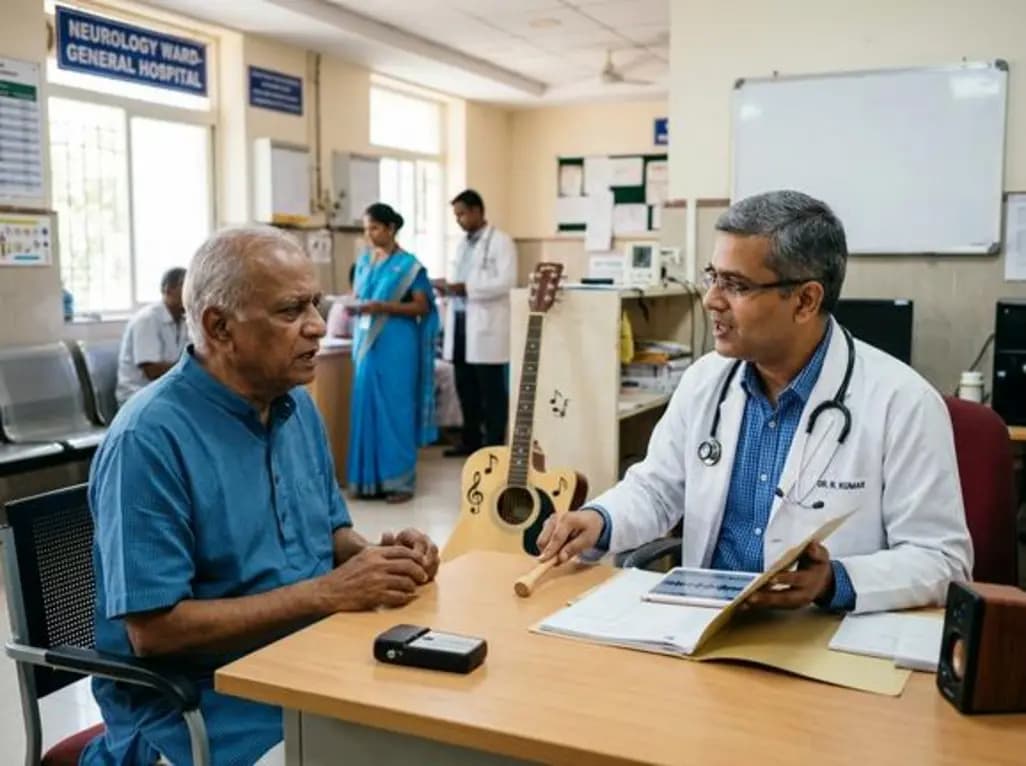
Recent clinical evidence suggests that music therapy for aphasia serves as a powerful catalyst for expressive language rehabilitation. By modulating specific musical elements such as rhythm, melody, and prosody, these interventions stimulate neuroplastic mechanisms. Consequently, patients often experience significant improvements in their ability to produce oral language. A comprehensive systematic review recently examined 33 peer-reviewed studies to evaluate the efficacy of these structured musical protocols.
Music-based interventions utilize the brain's innate ability to process complex auditory patterns. Specifically, researchers focused on how components like melody and rhythm drive neurofunctional recovery. Furthermore, the review included various study designs, such as randomized controlled trials and single-case reports. These studies collectively showed that music-based approaches enhance both linguistic behavior and underlying brain activity. Therefore, clinicians can increasingly view music as a legitimate therapeutic tool rather than just a supplementary activity.
Moreover, the therapeutic role of prosody helps patients regain natural speech flow. Since melody and speech share overlapping neural networks, singing-based therapies often bypass damaged left-hemisphere language centers. Instead, they engage right-hemisphere pathways to restore communication. This dual-hemisphere engagement highlights the clinical diversity and therapeutic potential of these specialized interventions.
Clinicians typically implement these protocols through structured sessions involving rhythmic tapping or melodic intonation. However, the effectiveness often depends on the consistent application of specific musical components. Additionally, the systematic review emphasizes that improvements are not limited to speech alone but also manifest in neural reorganization. As a result, music-based protocols offer a multifaceted approach to treating aphasia, addressing both cognitive and motor-speech deficits.
It works by engaging neuroplasticity and alternative neural pathways. Specifically, it uses melody and rhythm to stimulate brain regions that may be spared during a stroke, helping to bypass damaged speech centers.
The core components include rhythm, melody, and prosody. These elements help organize speech production and improve the timing and flow of expressive language.
Yes. Many patients with non-fluent aphasia retain the ability to sing even when they cannot speak fluently. Singing-based therapies, like Melodic Intonation Therapy, use this preserved ability to gradually rebuild spoken communication.
Disclaimer: This content is for informational and educational purposes only. It does not constitute professional medical advice, diagnosis, or treatment. Always seek the advice of your physician or other qualified healthcare provider with any questions you may have regarding a medical condition. Refer to the latest local and national guidelines for clinical practice.
References
1. Amighetti E et al. Music-based interventions for aphasia: A systematic review of clinical approaches and musical components in expressive language rehabilitation. Neuropsychol Rehabil. 2026 Jun 20. doi: 10.1080/09602011.2026.2691797. PMID: 42322176.
2. Koshimori Y, Shetty Akkunje P, Tjiandri E, et al. Music-based interventions for nonfluent aphasia: A systematic review of randomized control trials. Ann N Y Acad Sci. 2025;1549(1):92-111.
3. Wu K, et al. Application of Music Therapy in Stroke Rehabilitation: A Research Review. BIO Integration. 2025. doi:10.15212/bioi-2025-0074.
"
Read summarized clinical updates, watch expert medical content, and earn CME certifications right from your smartphone.
Open your smartphone camera to scan and install.





A new systematic review of 33 studies confirms that music-based interventions, focusing on rhythm and melody, significantly enhance expressive language and neural function in aphasia patients by engaging neuroplastic mechanisms.
4 months ago

Novel diimide and hydrazone scaffolds, particularly compound #C4, synergistically reactivate latent HIV-1 when combined with JQ1 or PKC activators. Demonstrating donor-matched proviral transcription ex vivo and non-canonical signaling, these findings advance shock and kill strategies toward reservoir eradication.
Today

A comparative cohort study evaluates vNOTES vs TLH hysterectomy for benign conditions, demonstrating shorter operative duration, faster return to daily activities, and equivalent female sexual function scores without increased dyspareunia.
Today

Review how tailored exercise programs benefit frail older patients with heart failure. Explore pathophysiological mechanisms, individualized training prescriptions, and strategies to overcome adherence barriers in clinical practice.
Yesterday

This comparative study evaluates posterior labral tears with and without glenohumeral instability, highlighting distinct demographic patterns, MRI underestimation in stable shoulders, and successful arthroscopic repair outcomes.
Yesterday

A clinical study demonstrates that early intervention with tocilizumab, either as monotherapy or bridged with corticosteroids, achieves significant proptosis reduction and resolves active inflammation in treatment-naive thyroid eye disease.
Today
