

Loading, please wait...
Loading, please wait...

Modern workplaces generate substantial occupational stress that threatens employee mental health and clinical longevity. Consequently, organizational leaders increasingly explore targeted non-pharmacological interventions to preserve workforce well-being. A recent systematic review highlights the strategic application of music in workplace wellness as a potent physiological and psychological stabilizer. Auditory stimuli directly modulate human neurobiology, offering scalable support across high-pressure environments. Therefore, understanding the empirical evidence behind auditory interventions allows healthcare administrators and physicians to design restorative, highly functional work environments.
Auditory stimulation triggers distinct neurobiological cascades within the central and autonomic nervous systems. Specifically, harmonious acoustic structures interact with the limbic system, notably modulating the amygdala and hippocampus. Therefore, this signaling decreases hypothalamic-pituitary-adrenal axis activation and measurably lowers circulating cortisol levels. Furthermore, music listening influences autonomic balance by enhancing parasympathetic tone while attenuating excessive sympathetic drive. Clinical studies demonstrate that relaxing acoustic tempos improve heart rate variability, particularly root mean square of successive differences metrics. Consequently, higher heart rate variability reflects improved autonomic flexibility and physiological stress tolerance. In addition, acoustic rhythms stimulate dopaminergic pathways within the striatum, which significantly elevates subjective mood states and intrinsic motivation. Conversely, high-stress environments without auditory buffers allow systemic catecholamines to remain chronically elevated. This persistent sympathetic arousal accelerates emotional exhaustion and physical fatigue over time. Thus, passive and active auditory interventions supply a reliable counter-regulatory mechanism against acute stress. By modifying basic biological rhythms, structured soundscapes convert chaotic workspaces into neurologically protective ecosystems that sustain baseline cognitive clarity.
Cognitive compatibility represents a fundamental principle in occupational acoustic design. For instance, high-load cognitive tasks demand substantial working memory and complex executive functioning. Instrumental tracks with minimal harmonic disruptions support mental clarity without overloading phonological processing loops. In contrast, songs featuring lyrical content compete directly with verbal processing centers, thereby impairing concentration and performance speed. Conversely, repetitive manual tasks or physical duties benefit remarkably from upbeat, rhythmic tempos. Higher tempo selections stimulate motor coordination, boost alertness, and counteract monotonous fatigue. As a result, workers report lower perceived effort and greater task endurance during routine activities. Additionally, individual identity and musical familiarity dictate personal neurochemical responses. Forced exposure to unfamiliar or disliked musical styles elevates subjective irritation and spikes sympathetic arousal. Therefore, ergonomic auditory protocols must adapt genre, tempo, and volume to specific operational requirements. Offering personal agency over acoustic choices maximizes cognitive alignment while avoiding auditory distraction. Consequently, matching auditory architecture to workflow characteristics ensures sustained productivity without generating unnecessary cognitive friction.
Workplace culture thrives when interpersonal cohesion and social resilience remain robust. Shared auditory experiences create common emotional ground among multidisciplinary teams. Specifically, synchronized background music promotes collective emotional regulation and lowers social defensiveness in collaborative areas. Team members frequently report reduced tension, improved empathy, and open communication during stressful operational shifts. Furthermore, incorporating planned musical interludes during breaks strengthens interpersonal bonds and reduces occupational isolation. When organizations recognize sensory comfort as a structural priority, employees exhibit greater trust in leadership. As a result, workplace satisfaction and overall life satisfaction improve simultaneously. Moreover, healthy interpersonal dynamics buffer against systemic burnout and cynicism. Collective musical listening in social lounges encourages informal peer debriefing and mutual support. Thus, intentional acoustic design does more than soothe individuals; it nurtures an empathetic organizational atmosphere. Because emotional safety is crucial for complex collaborative work, auditory interventions serve as practical facilitators of social synergy. Consequently, workplaces transform into supportive communities where employees maintain resilience despite intense commercial or clinical pressures.
Despite promising clinical observations, significant methodological challenges persist across existing literature. For example, many published studies utilize heterogeneous definitions of well-being, complicating cross-study comparative analyses. Furthermore, small sample sizes and brief intervention timelines limit the generalizability of reported outcomes. Most investigations assess immediate, transient physiological fluctuations rather than longitudinal occupational endpoints. Therefore, we lack comprehensive data evaluating whether daily music exposure prevents chronic depressive disorders or long-term career attrition. Additionally, bibliometric evaluations highlight substantial gaps regarding intersectionality, cultural nuance, and socioeconomic diversity. Auditory preferences reflect deeply entrenched cultural identities, meaning uniform playlists cannot yield predictable benefits across diverse workforces. Moreover, publication bias may overemphasize positive emotional outcomes while underreporting instances of auditory irritation. Researchers must therefore implement rigorous, randomized designs that integrate objective biomarkers with standardized psychological instruments. Tracking sustained physiological metrics like continuous heart rate variability will clarify long-term adaptation. Addressing these analytical weaknesses will establish credible parameters for institutional soundscape integration.
Healthcare professionals confront extraordinary levels of occupational stress, moral injury, and systemic burnout. Long duty hours, critical patient care, and chaotic sensory environments deplete cognitive reserves. Consequently, integrating music in workplace wellness provides direct clinical relevance for medical practitioners and nursing staff. For instance, dedicated respite zones equipped with restorative, low-tempo instrumental music allow rapid autonomic recovery during exhausting shifts. Evidence indicates that just twenty minutes of structured acoustic relaxation lowers blood pressure and diminishes emotional exhaustion among hospital workers. Furthermore, controlled auditory masking in staff lounges blocks intrusive alarm fatigue and hospital noise pollution. As a result, clinicians experience faster parasympathetic recovery, leading to improved bedside decision-making and patient safety. Medical administrators in India and globally can readily implement these cost-effective wellness initiatives. Setting up restorative auditory rooms requires minimal financial capital yet delivers measurable returns in employee retention. Therefore, incorporating structured acoustic hygiene into healthcare operations actively protects clinician mental health while fostering compassionate care delivery.
Listening to soothing music downregulates the hypothalamic-pituitary-adrenal axis, which directly suppresses the synthesis and release of systemic cortisol. Furthermore, slow and predictable auditory rhythms stimulate the parasympathetic nervous system, decelerating heart rate and promoting deep respiration. Consequently, employees encounter rapid autonomic stabilization during high-pressure shifts. This biological dampening prevents chronic endocrine activation, mitigates emotional fatigue, and reinforces psychological resilience across demanding professional environments.
Instrumental compositions, ambient soundscapes, and classical pieces demonstrate superior efficacy for cognitively demanding tasks. Because these genres lack linguistic components, they avoid competing with phonological working memory loops in the brain. In contrast, lyrical tracks create cognitive interference that disrupts verbal reasoning and reduces reading comprehension. Therefore, professionals should prioritize low-tempo, non-vocal music to sustain deep concentration and optimize cognitive endurance.
Hospitals can designate dedicated acoustic recharge rooms where healthcare workers access short, structured listening sessions during stressful shifts. Integrating twenty-minute restorative audio tracks featuring low tempos and gentle melodies substantially alleviates acute alarm fatigue and emotional strain. Additionally, encouraging personal headphone usage during administrative tasks empowers clinicians to self-regulate anxiety without compromising clinical communication or disturbing colleagues in shared workspaces.
Disclaimer: This content is for informational and educational purposes only... Refer to the latest local and national guidelines for clinical practice.
References
Stuti S et al. A review on exploring the influence of music on well-being happiness and satisfaction with life in professional settings. Work. 2026 Oct 19. doi: 10.1177/10519815261493440. PMID: 42895527.
Warran K, Burton A, Fancourt D. What are the active ingredients of arts and health activities? A systematic review. BMC Public Health. 2022;22(1):1599.
Bonakdarpour B, Takarabe C, Agarwal G. Effects of restorative music listening on clinician burnout in healthcare settings. Front Psychol. 2026;17:1489021.

Read summarized clinical updates, watch expert medical content, and earn CME certifications right from your smartphone.
Open your smartphone camera to scan and install.





A systematic review explores how structured auditory environments influence workplace well-being. Music listening reduces cortisol, improves heart rate variability, and mitigates burnout, offering an evidence-based tool for organizational wellness and healthcare team resilience.
Today

Depemokimab offers twice-yearly dosing for severe eosinophilic asthma and chronic rhinosinusitis with nasal polyps, significantly cutting exacerbations and hospital admissions.
Today

New research reveals that HPV16 E7 exosomes significantly upregulate PD-L1 on tumor-infiltrating lymphocytes in cervical cancer, driving local immune suppression and correlating with poorer patient survival. These findings expose key mechanisms of immune evasion with direct relevance to checkpoint blockade therapies.
Today

Partial heart transplantation offers living, growth-capable cardiac valve replacements for children. While orthotopic heart transplantation faces severe logistical barriers in low-resource settings, partial transplantation presents lower graft ischemia sensitivity and simplified immunosuppression protocols.
Today

Evaluating artificial intelligence for simplifying pediatric orthopaedic discharge instructions reveals significant readability gains, dropping reading levels by nearly four grades, but demands surgeon oversight to prevent safety omissions.
Today
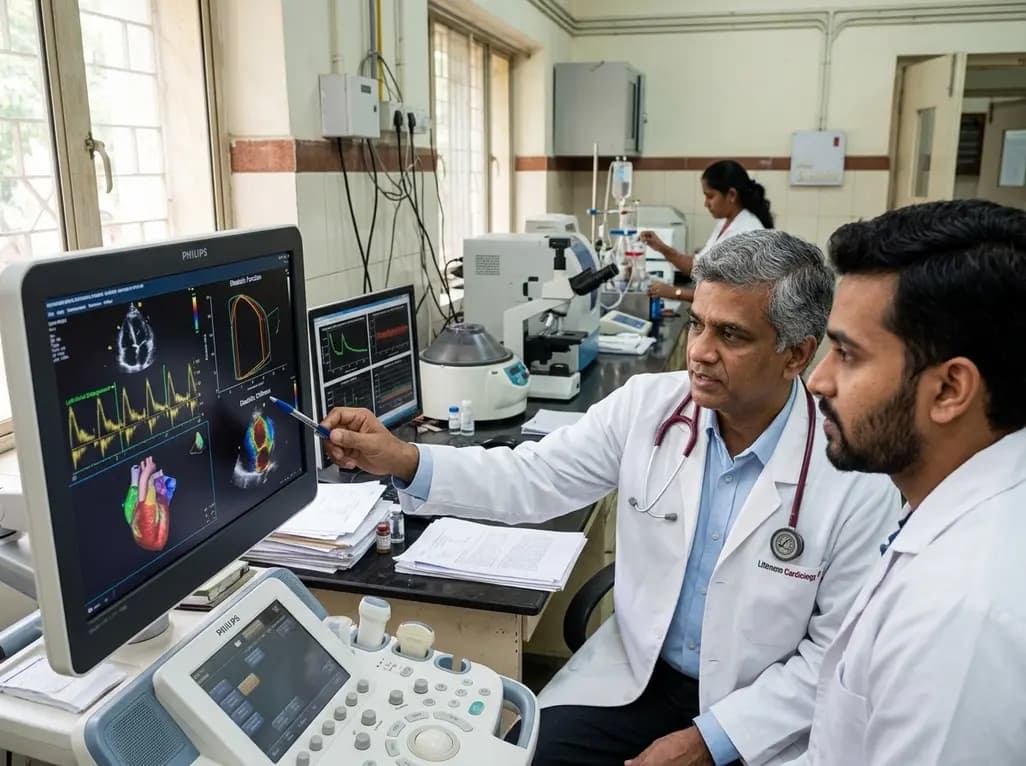
A study evaluates a cardiometabolic HFpEF model combining metabolic stress with chronic mineralocorticoid excess. The findings reveal profound diastolic stiffness, endothelial dysfunction, and pulmonary hypertension, illuminating key pathophysiological mechanisms for targeted cardiopulmonary therapies.
Today
