.webp&w=384&q=75)

Loading, please wait...
Loading, please wait...

The development of a Multiple Myeloma nanomodulator named NanoCURE represents a significant breakthrough in treating bone marrow-based malignancies. Multiple myeloma remains a clinical challenge because the bone marrow microenvironment (BMM) fosters immune evasion. Specifically, the metabolic symbiosis between tumor cells and macrophages creates a protective shield. This shield often leads to therapeutic resistance against standard treatments like proteasome inhibitors.
Moreover, lactate accumulation in the BMM drives histone lactylation. This epigenetic modification promotes immunosuppressive M2 macrophage polarization. Consequently, the tumor escapes the immune system while continuing to proliferate. NanoCURE addresses this by targeting the glycolysis-lactate-lactylation axis directly within the bone marrow.
NanoCURE utilizes a copper-based nanoassembly to deliver lactate oxidase (LOx) and bortezomib (BTZ). Importantly, the system hijacks the monocyte/macrophage pathway to ensure precise delivery to the bone marrow. This "hijacking" strategy allows for high enrichment in the target tissue while keeping systemic copper levels low. Furthermore, the nanomodulator acts as a multifunctional eraser of epigenetic marks.
Mechanistically, the Multiple Myeloma nanomodulator blocks histone lactylation through site-specific binding. Simultaneously, it suppresses the Akt/mTOR/c-Myc signaling axis, which is often overactive in cancer. Additionally, NanoCURE triggers the production of reactive oxygen species (ROS). These ROS induce mitochondrial dysfunction, further amplifying the interference with epigenetic support for the tumor.
In summary, the platform successfully reverses M2 macrophage polarization. This shift enhances the efficacy of proteasome inhibitors in orthotopic xenograft models. Because it preserves hematopoietic integrity and exhibits no organ toxicity, NanoCURE offers a highly safe therapeutic strategy. This "carrier-as-drug" approach provides a promising path to overcoming drug resistance in patients with refractory multiple myeloma.
NanoCURE acts as a bone marrow-targeted nanomodulator that inhibits histone lactylation. By disrupting the lactate-driven epigenetic loop, it reverses immune tolerance and makes tumor cells more sensitive to therapy.
The platform uses a monocyte/macrophage hijacking pathway. This allows the nanoassembly to travel directly to the bone marrow microenvironment, ensuring high local concentrations and reducing systemic side effects.
No, the study indicates that NanoCURE maintains low systemic copper levels. It achieves precise bone marrow enrichment, which ensures high biosafety and preserves the integrity of the hematopoietic system.
Disclaimer: This content is for informational and educational purposes only. It is not a substitute for professional medical advice, diagnosis, or treatment. Always seek the advice of your physician or other qualified health provider with any questions you may have regarding a medical condition. Refer to the latest local and national guidelines for clinical practice.
References
Wu W et al. A Bone Marrow-Targeted Nanomodulator as a Histone Lactylation Inhibitor for Reversing Immune Tolerance in Multiple Myeloma. ACS Nano. 2026 Apr 21. doi: 10.1021/acsnano.5c21396. PMID: 42013452.
Kumar S, et al. Multiple myeloma: diagnosis and treatment. Mayo Clin Proc. 2017;92(1):95-105.
Gandhi UH, et al. Multiple myeloma microenvironment: the role of immune cells and therapeutic opportunities. Front Oncol. 2020;10:604339.
"
Read summarized clinical updates, watch expert medical content, and earn CME certifications right from your smartphone.
Open your smartphone camera to scan and install.





Researchers have developed NanoCURE, a copper-based nanomodulator that targets the glycolysis-lactate-lactylation axis to overcome Multiple Myeloma resistan...
6 months ago
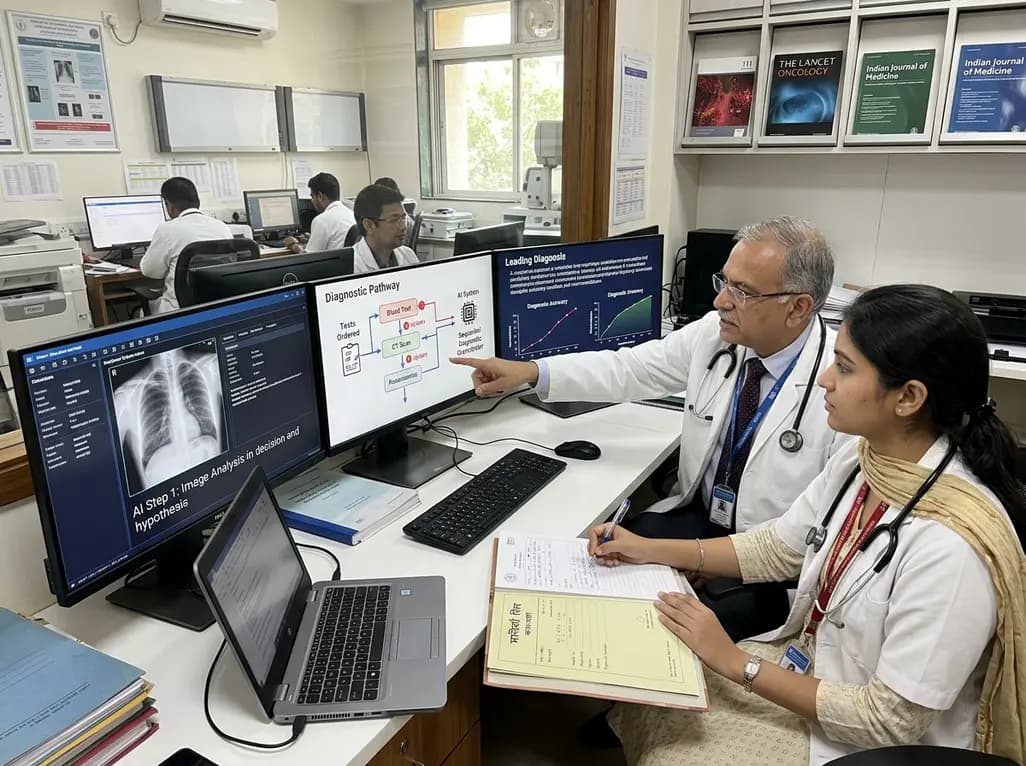
A breakthrough peer-reviewed study demonstrates that a sequential AI diagnosis system can mirror real-world clinical reasoning. By ordering stepwise tests and updating hypotheses dynamically, this multi-agent orchestrator achieved superior diagnostic accuracy while reducing investigative costs.
Today

A prenatal case highlights severe glutaric acidemia type II presenting as bilateral hyperechoic cystic kidneys at 18 weeks. Whole-exome sequencing revealed a novel homozygous ETFDH frameshift variant, demonstrating the power of rapid genetic testing in fetal renal anomalies.
Today

Review how tailored exercise programs benefit frail older patients with heart failure. Explore pathophysiological mechanisms, individualized training prescriptions, and strategies to overcome adherence barriers in clinical practice.
Yesterday

This comparative study evaluates posterior labral tears with and without glenohumeral instability, highlighting distinct demographic patterns, MRI underestimation in stable shoulders, and successful arthroscopic repair outcomes.
Yesterday

A clinical study demonstrates that early intervention with tocilizumab, either as monotherapy or bridged with corticosteroids, achieves significant proptosis reduction and resolves active inflammation in treatment-naive thyroid eye disease.
Yesterday
