

Loading, please wait...
Loading, please wait...

Modern lifestyle medicine increasingly recognizes that chronic disease prevention requires a holistic perspective. Traditionally, clinical research evaluated physical activity, dietary intake, sedentary time, and sleep quality as isolated variables. However, these factors interact dynamically throughout the day. When physicians evaluate multiple health behaviours concurrently, they gain a realistic view of patient habits. Older adults face distinct metabolic challenges, including sarcopenia and central adiposity. Therefore, examining how these behaviours co-occur provides vital diagnostic insight. Daily fluctuations often obscure long-term trends if clinicians rely solely on cross-sectional questionnaires. By capturing continuous behavioural cycles, healthcare providers can identify critical windows for timely interventions. Furthermore, understanding temporal associations between daily movement and nocturnal rest enables tailored therapy. Clinicians can guide older patients toward balanced routines rather than isolated modifications. Ultimately, assessing interconnected behaviours shifts clinical management from reactive treatments toward robust preventive health strategies. Consequently, modern geriatric care benefits immensely from protocols that capture lifestyle interactions without imposing an excessive burden on vulnerable individuals.
To capture rapid within-person fluctuations alongside gradual macro-level changes, researchers utilize the measurement burst design. This methodology combines intensive longitudinal monitoring with multi-wave prospective follow-up. For instance, rather than collecting occasional annual surveys, investigators deploy repeated micro-longitudinal assessment periods across a single year. In a recent twelve-month observational study, investigators enrolled 130 community-dwelling adults aged 55 to 75 years. The protocol implemented four separate seven-day assessment bursts across twelve months. During each burst, participants wore accelerometers to record physical activity and sedentary duration continuously. Concurrently, individuals logged dietary intake and sleep parameters using specialized tools. Additionally, researchers administered time-based ecological momentary assessments via mobile interfaces. This approach gathered repeated real-time reports regarding contextual determinants and mood states. As a result, the design successfully captured within-day variations without demanding constant year-round compliance. Thus, investigators obtained ecologically valid data reflecting authentic daily living circumstances.
A frequent clinical concern regarding intensive digital health tracking involves participant burden and attrition. Older individuals might struggle with complex devices or experience assessment fatigue over repeated monitoring bursts. Nevertheless, the recent trial demonstrated remarkable engagement across the entire study timeline. Out of 130 enrolled participants, 116 adults successfully completed all four measurement bursts. This sustained participation yielded an impressive retention rate of 89.2 percent. Moreover, protocol compliance remained consistently high across diverse data streams. Compliance reached 83.5 percent for time-based ecological momentary assessment prompts. Simultaneously, objective sedentary behaviour monitoring achieved a peak compliance of 91.8 percent. These robust figures confirm that older adults can reliably adopt multi-device monitoring protocols. Clear participant instructions and user-friendly digital tools substantially minimized protocol non-adherence. Consequently, physicians can confidently recommend structured wearable devices to older patients for metabolic and functional health surveillance.
Analyzing the collected longitudinal data revealed meaningful baseline lifestyle characteristics among older adults. Participants reported an average daily energy intake of 1692 kilocalories with notable inter-individual variation. Meanwhile, objective accelerometry demonstrated an alarming degree of physical inactivity. On average, individuals spent 9.4 hours per day engaged in sedentary behaviour. In contrast, daily ambulation averaged 10,610 steps, reflecting substantial physical capability despite prolonged sitting. Regarding specific exercise intensity distributions, participants logged 102.9 minutes of light physical activity daily. Furthermore, moderate physical activity averaged 65.5 minutes, while vigorous exertion remained limited to 11.5 minutes per day. Sleep analysis showed a mean nocturnal duration of 6.4 hours alongside an average sleep efficiency of 79.2 percent. Importantly, these findings demonstrate how high step counts can coexist with marked sedentary time. Therefore, comprehensive lifestyle profiling must evaluate total movement quality rather than single metrics alone.
These empirical findings carry immediate practical significance for primary care physicians and geriatricians. First, the data illustrate the critical difference between between-person differences and within-person fluctuations. A patient might maintain an acceptable weekly step average but experience specific days with severe sedentary accumulation. Similarly, poor nocturnal sleep efficiency frequently triggers next-day dietary disinhibition or reduced physical exertion. When clinicians identify these temporal dependencies, they can craft precise behavioral prescriptions. For example, advising patients to break prolonged sitting spells after poor sleep preserves metabolic homeostasis. In addition, addressing circadian disruption helps prevent maladaptive snacking and insulin resistance. Clinicians should encourage patients to monitor interconnected habits using consumer wearables. By reviewing episodic burst data, doctors and patients can collaboratively discover recurring behavioral bottlenecks. Consequently, preventive counseling evolves from generic advice into personalized chronobiological medicine.
Implementing intensive multi-behaviour monitoring provides several foundational lessons for future clinical trials. Most notably, researchers confirmed that older adults tolerate complex longitudinal protocols when investigators prioritize usability. Technical support and automated reminders significantly reduce missing data points during ecological momentary assessments. However, future investigations must examine how socioeconomic status and cultural factors influence compliance. In countries with high cardiometabolic burdens, adapting burst designs could transform preventive health models. Furthermore, machine learning algorithms can analyze burst datasets to forecast acute glycemic swings or sedentary relapses. Integrating biological biomarkers with continuous behavioural metrics will further illuminate underlying pathophysiological pathways. As digital health tools proliferate, clinicians must champion validated methodologies that accurately capture real-world patient dynamics. Ultimately, embracing measurement bursts allows medical science to decode the intricate rhythms of human health.
A measurement burst design combines longitudinal monitoring with repeated short periods of intensive real-time data collection. Instead of evaluating individuals through sporadic annual visits, researchers implement brief assessment bursts across several months. Participants track multiple behaviours simultaneously using digital devices and momentary questionnaires. This strategy enables investigators to measure rapid daily fluctuations while evaluating gradual long-term trends, providing deeper clinical insights into individual patient variability.
Human lifestyle behaviours do not occur in clinical isolation; rather, they interact dynamically across each twenty-four-hour cycle. For instance, poor sleep duration often impairs next-day impulse control, increasing caloric consumption and sedentary time. Conversely, regular physical exercise significantly enhances nocturnal sleep architecture and metabolic efficiency. Concurrent multi-behaviour tracking allows clinicians to recognize these reciprocal causal loops, enabling personalized lifestyle interventions that address root causes rather than isolated clinical symptoms.
Physicians can apply burst monitoring principles by instructing patients to perform periodic one-week health tracking audits rather than continuous monitoring. Continuous year-round logging frequently causes patient burnout and non-compliance. In contrast, wearing a fitness tracker or logging food intake for seven consecutive days every quarter provides actionable behavioral snapshots. Clinicians can review these focused burst logs during routine follow-ups to tailor exercise prescriptions, optimize sleep hygiene, and reinforce dietary goals effectively.
Disclaimer: This content is for informational and educational purposes only. It is not intended to be a substitute for professional medical advice, diagnosis, or treatment. Refer to the latest local and national guidelines for clinical practice.
References

Read summarized clinical updates, watch expert medical content, and earn CME certifications right from your smartphone.
Open your smartphone camera to scan and install.





A 12-month study evaluating older adults via a measurement burst design revealed high compliance (83.5%-91.8%) and retention (89.2%). Tracking diet, physical activity, sedentary time, and sleep concurrently captures critical within-person daily variations, providing valuable clinical insights for geriatric care.
Today
A recent study highlights that pairing photograph-assisted 24-hour recalls with regional food databases significantly boosts dietary assessment accuracy. This methodology reduces cultural bias and strengthens nutrient tracking, offering crucial lessons for clinicians managing nutritional care in diverse populations.
Today

A preclinical study reveals that cinnamic acid counters D-galactose-induced premature ovarian failure in mice. By enhancing total antioxidant capacity and upregulating protective genes like Nrf2 and Foxo3a, cinnamic acid improved estrous cyclicity and follicular reserve, offering new insights into ovarian health.
Today
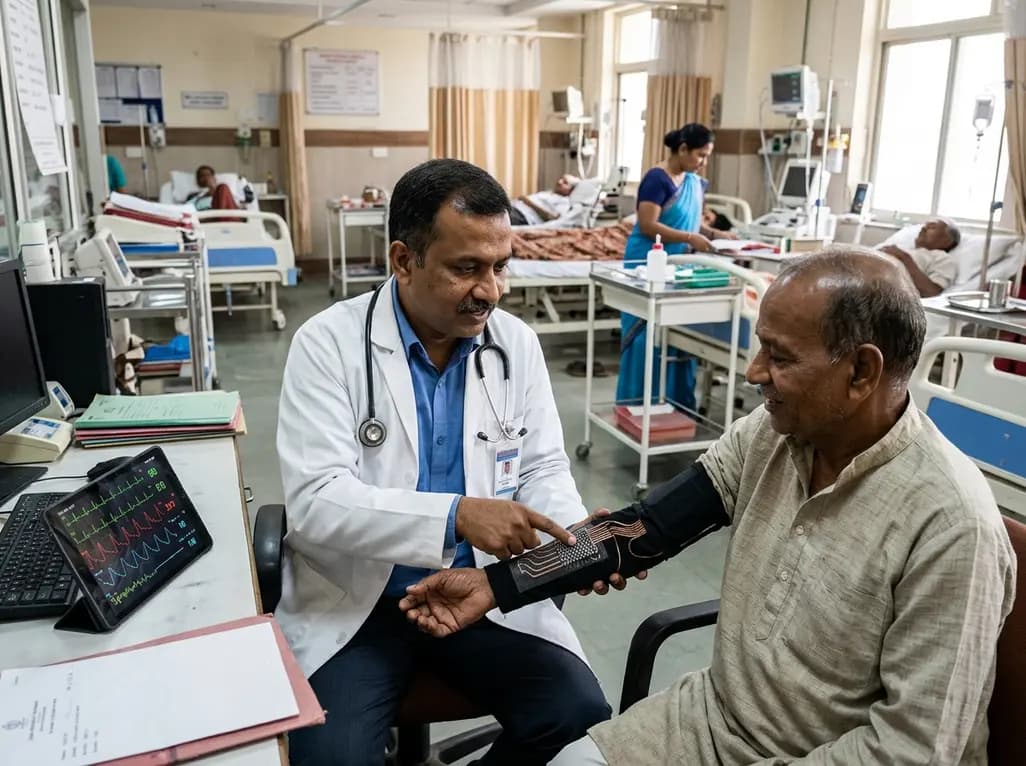
Wearable e-textiles transform cardiovascular monitoring by integrating flexible conductive sensors into everyday clothing. This advance enables continuous, non-invasive assessment of ECG, pulse waves, and hemodynamics, bridging the gap between hospital diagnostics and home healthcare.
Today
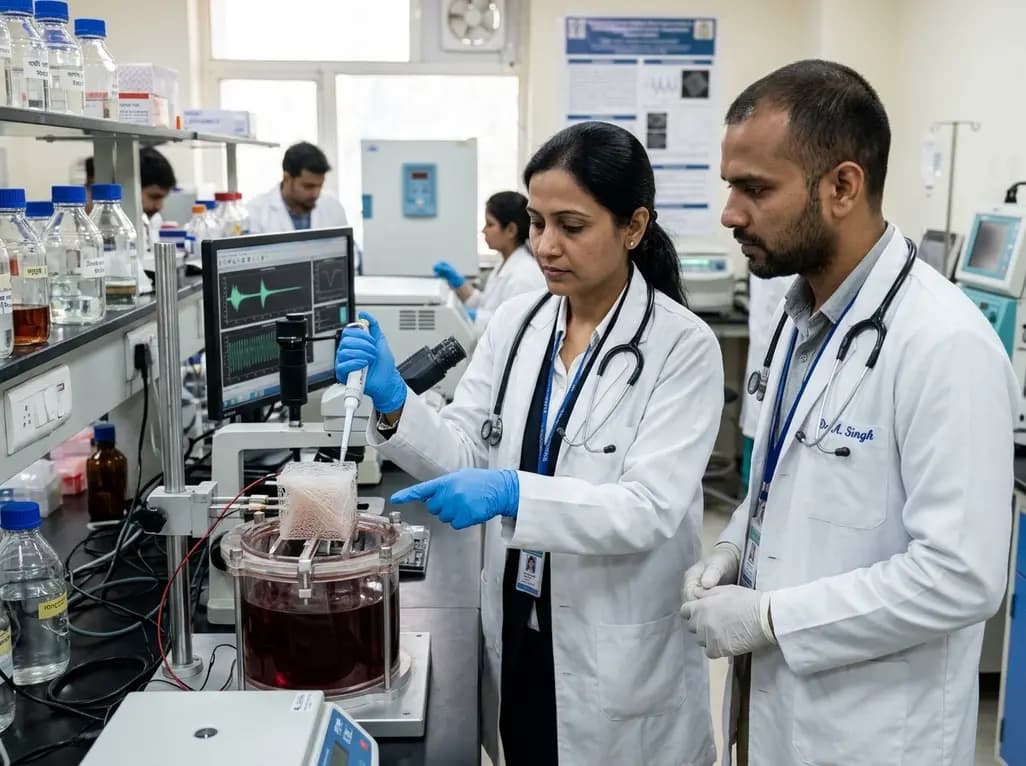
Engineered 3D piezoelectric PHBV scaffolds generate electrical charges during mechanical strain, mimicking native muscle electromechanics to promote cellular alignment, myogenic differentiation, and functional tissue repair in severe volumetric muscle loss.
Today

India's food safety authority is taking aggressive action against major beverage companies for marketing high-caffeine products as energy drinks. This clinical analysis examines the cardiovascular complications, metabolic risks, and pediatric concerns behind the regulator's push for truthful beverage standards.
Today
