.webp&w=384&q=75)

Loading, please wait...
Loading, please wait...

Multiligament knee injuries (MLKIs) represent rare yet severe orthopedic emergencies. These complex injuries involve the disruption of at least two of the four primary knee ligaments. Consequently, successful multiligament knee injury management depends on a rapid diagnosis and a systematic clinical approach. Because high-energy trauma often causes these injuries, surgeons must frequently manage associated neurovascular complications.
Clinicians should prioritize the patient's vascular status immediately upon arrival. Notably, vascular injuries occur in up to 18% of cases. Although palpable pulses provide some reassurance, they do not definitively exclude significant arterial damage. Therefore, surgeons should measure the ankle-brachial index (ABI) for all suspected cases. If the ABI measures less than 0.9, the patient requires an urgent computed tomography (CT) angiogram. Furthermore, practitioners must conduct serial neurovascular examinations for at least 48 hours to identify any delayed thrombosis.
Modern treatment protocols use the Schenck classification to guide surgical decisions. Currently, most specialists recommend operative management for active individuals to restore joint stability. While conservative care remains an option for sedentary patients, it typically results in inferior functional outcomes. Regarding the timing of intervention, early reconstruction within three weeks generally provides superior clinical scores. However, some surgeons prefer staged procedures if severe soft tissue swelling complicates the initial presentation. Additionally, proper rehabilitation remains crucial for preventing joint stiffness and ensuring long-term recovery.
No, a normal pulse does not exclude vascular damage. Research shows that vascular injuries can exist despite palpable pulses. Therefore, clinicians must perform an ABI measurement and maintain a low threshold for CT angiography if they suspect arterial involvement.
Early surgery, typically performed within three weeks, often results in better functional outcomes and higher Lysholm scores. It allows for the anatomical repair or reconstruction of tissues before significant scarring occurs, though surgeons must weigh this against the risk of arthrofibrosis.
Disclaimer: This content is for informational and educational purposes only, and should not be considered medical advice or a substitute for professional consultation with a healthcare provider. Refer to the latest local and national guidelines for clinical practice.
References
1. Hantes M et al. Multiligament-injured knee: what the general orthopedic surgeon should know. EFORT Open Rev. 2026 May 01. doi: 10.1530/EOR-2026-0053. PMID: 42065223.
2. Sleem B, et al. Management and reconstruction strategies for multiligament knee injuries: Advances in diagnosis, surgical techniques, and rehabilitation. J Arthrosc Surg Sports Med. 2025;6:112-124.
3. Murray IR, et al. Multiligament knee injury (MLKI): an expert consensus statement on nomenclature, diagnosis, treatment and rehabilitation. Br J Sports Med. 2024.

Read summarized clinical updates, watch expert medical content, and earn CME certifications right from your smartphone.
Open your smartphone camera to scan and install.





A comprehensive clinical guide for surgeons on the diagnosis, vascular assessment, and surgical timing for managing multiligament knee injuries (MLKI)....
5 months ago

A retrospective cohort study of 7,716 ICU patients from the MIMIC-IV database demonstrates that Gradient Boosting Decision Trees significantly outperform traditional SOFA scores in predicting in-hospital mortality among patients with sepsis and diabetes, with SHAP analysis providing clinical interpretability.
Today
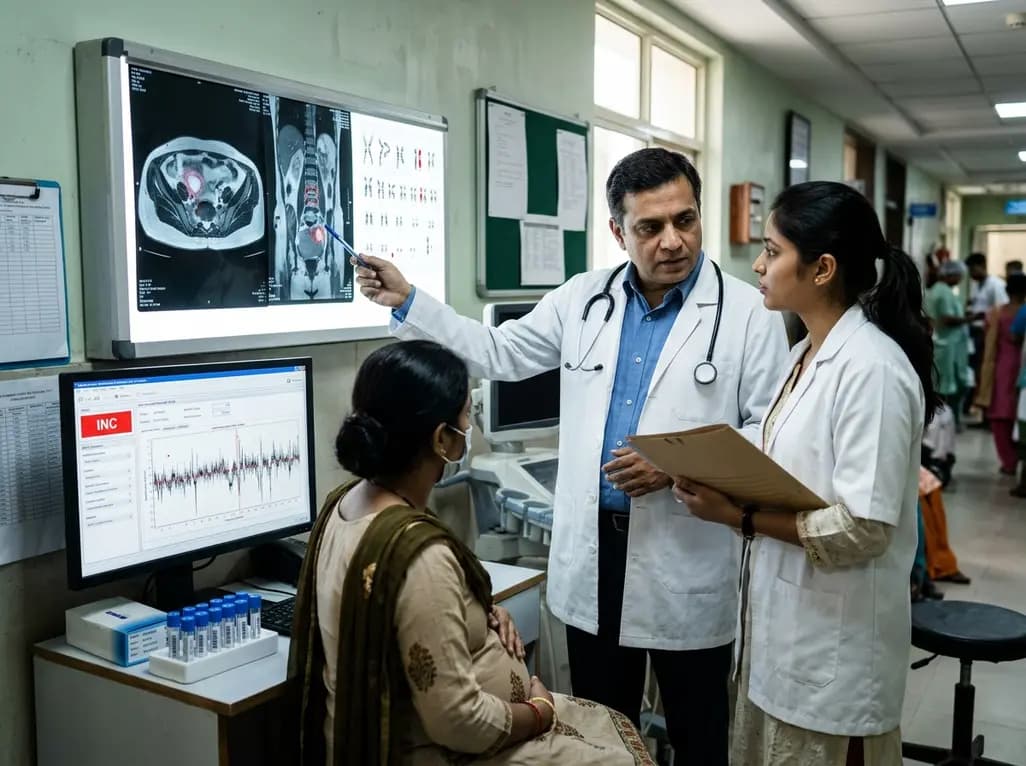
Occult maternal malignancy accounts for 3.82% of persistent unreportable NIPT results with genomic noise. Multiple chromosomal aberrations, notably on chromosome 18, warrant thorough oncological evaluation and whole-body MRI to ensure timely maternal diagnosis while preserving fetal care.
Today

This article reviews the forensic and clinical complexities of acute myocarditis arising on left ventricular hypertrophy in children, highlighting early diagnostic red flags and multidisciplinary postmortem autopsy protocols.
Today

This comparative study evaluates posterior labral tears with and without glenohumeral instability, highlighting distinct demographic patterns, MRI underestimation in stable shoulders, and successful arthroscopic repair outcomes.
Yesterday

A clinical study demonstrates that early intervention with tocilizumab, either as monotherapy or bridged with corticosteroids, achieves significant proptosis reduction and resolves active inflammation in treatment-naive thyroid eye disease.
Yesterday
