.webp&w=384&q=75)

Loading, please wait...
Loading, please wait...

The Multi-Omics for Mothers and Infants (MOMI) Consortium represents a transformative global initiative aimed at decoding the biological mechanisms behind adverse pregnancy outcomes. These complications, which include preterm birth, preeclampsia, and stillbirth, remain a significant challenge for maternal health systems worldwide. Specifically, the burden of these outcomes is disproportionately high in low- and middle-income countries (LMICs). By combining diverse data sources, the consortium seeks to identify critical biological signatures that could lead to better diagnostic tools. This massive undertaking involves a cohort of over 24,000 pregnant women from various international sites.
To understand the multifactorial drivers of these conditions, researchers employ an integrative multi-omics approach. This strategy encompasses genomics, metabolomics, proteomics, and nutrient testing. Consequently, scientists can map the complex interactions between genetics and the environment. Furthermore, the consortium focuses on site-specific signatures, acknowledging that local factors often influence health outcomes. Therefore, the data collected from sites in Bangladesh, Pakistan, Tanzania, and Zambia provides a rich tapestry of information. These efforts allow clinicians to move beyond traditional risk factors toward molecular-based precision medicine.
A vital component of this global network is the Interdisciplinary Group for Advanced Research on Birth Outcomes (GARBH-Ini), a DBT India Initiative. This partnership highlights India's leading role in addressing maternal health challenges through high-quality cohort studies. Additionally, five analytical partners and three bioinformatics teams support the consortium’s rigorous data harmonisation. As a result, the project ensures that findings are robust and applicable across different populations. Notably, the study protocol emphasizes the importance of paired socioeconomic and clinical data to provide a holistic view of pregnancy health.
The primary goal of the MOMI study is to translate molecular findings into enhanced clinical care. By identifying early biomarkers, healthcare providers may soon implement novel therapeutic interventions. Moreover, the initiative paves the way for developing affordable diagnostic tools tailored for resource-limited settings. Ultimately, the consortium aims to reduce maternal and neonatal morbidity by addressing the root causes of pregnancy complications. This research fosters a deeper understanding of placental health and its impact on the long-term well-being of both mothers and infants.
The consortium aims to define the biological mechanisms associated with preterm birth, small for gestational age, preeclampsia, and stillbirth. It focuses on identifying omics-based signatures to improve diagnostic and therapeutic tools in LMICs.
The GARBH-Ini, supported by the DBT India Initiative, provides a specialized cohort and clinical data. This collaboration ensures that the diverse biological and socioeconomic landscape of India is represented in global maternal health research.
Researchers are using an integrative approach that includes genomics, proteomics, metabolomics, and nutrient testing. These layers of data help identify molecular drivers that contribute to different pregnancy outcomes.
Disclaimer: This content is for informational and educational purposes only and does not constitute medical advice, diagnosis, or treatment. Always seek the advice of a qualified healthcare provider with any questions regarding a medical condition. Refer to the latest local and national guidelines for clinical practice.
References

Read summarized clinical updates, watch expert medical content, and earn CME certifications right from your smartphone.
Open your smartphone camera to scan and install.





The MOMI Consortium integrates multi-omics to identify biological signatures for adverse pregnancy outcomes like preterm birth and stillbirth in LMICs....
6 months ago
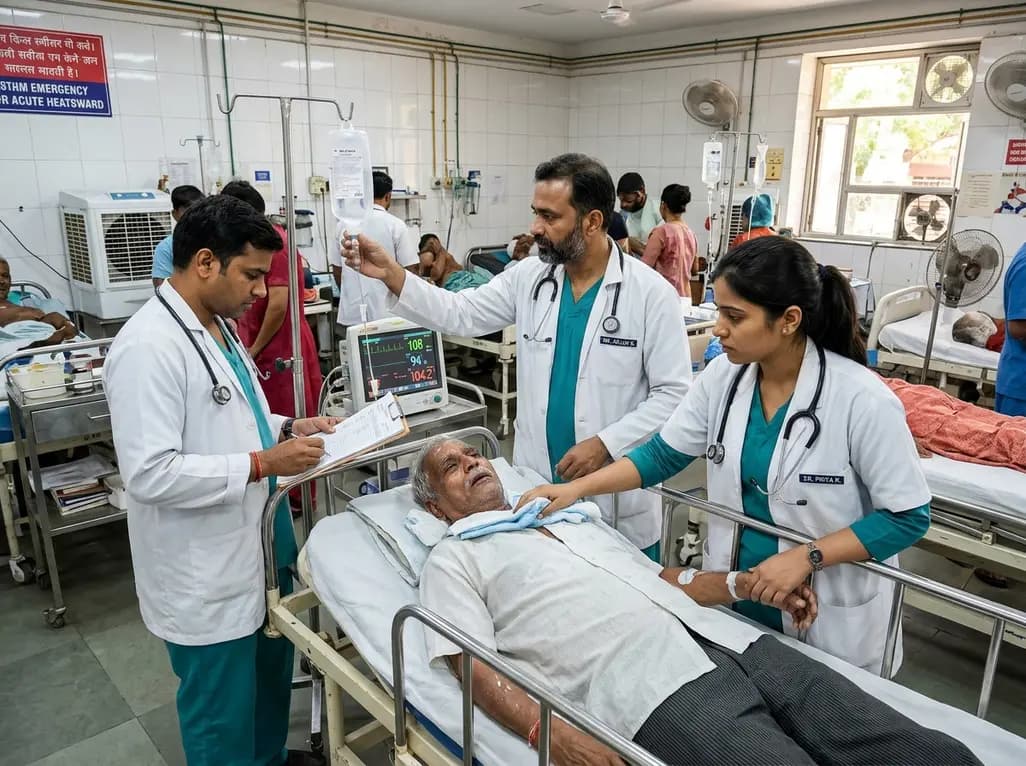
Recent epidemiological data reveals a dramatic surge in summer heat mortality driven by human-induced climate warming. This analysis explores the pathophysiological impacts on cardiac and renal systems, diagnostic dilemmas in death certification, and essential emergency cooling protocols for acute clinical care.
Today

Odisha has established India's first state-level clinical protocol specifically tailored for pregnant women with sickle cell disease. Developed with NHM and UNICEF, the framework provides structured antenatal screening, crisis mitigation, standardized referral pathways, and specialized interdisciplinary care.
Today

India is advancing preventive healthcare by integrating genomics, artificial intelligence, and quantum technologies. With the SANGAM programme sequencing one million Indian genomes, clinicians can unlock personalized therapies, detect cardiometabolic risks early, and curb the burden of diabetes and heart disease.
Today

A randomized controlled trial demonstrates that an eight-week dual-task training intervention significantly improves static and dynamic postural control over standard balance exercises in individuals with chronic ankle instability, addressing critical neurocognitive deficits during athletic and daily activities.
Today

A retrospective cohort study of 7,716 ICU patients from the MIMIC-IV database demonstrates that Gradient Boosting Decision Trees significantly outperform traditional SOFA scores in predicting in-hospital mortality among patients with sepsis and diabetes, with SHAP analysis providing clinical interpretability.
Today
