.webp&w=384&q=75)

Loading, please wait...
Loading, please wait...
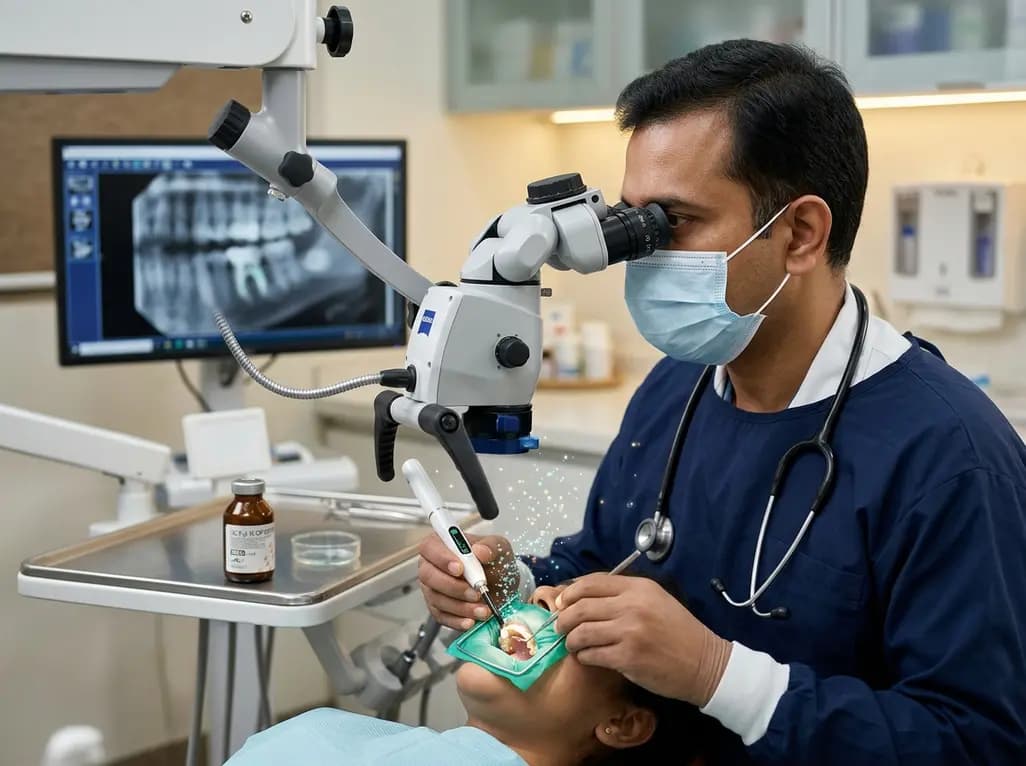
Modern conservative dentistry increasingly focuses on preserving tooth structure through minimally invasive techniques. A primary challenge in managing deep carious lesions involves the effective treatment of demineralized dentin without compromising the dental pulp. Recent advancements have introduced multi-ion-releasing cements remineralization as a cornerstone of interim caries management. These specialized restorative materials do not merely fill a cavity; they actively participate in the biochemical environment of the tooth. By releasing essential ions into the surrounding dental tissues, these cements aim to reverse mineral loss and reinforce the remaining tooth structure. This process is particularly critical in deep caries where the risk of pulp exposure is high. Researchers recently conducted a comprehensive study to evaluate the short-term effects of several multi-ion-releasing cements, including Caredyne Restore and Fuji IX, on demineralized dentin under simulated deep caries conditions. This research provides essential data for clinicians seeking to optimize their restorative protocols and improve long-term patient outcomes. Understanding how these materials interact with demineralized substrates allows for more predictable clinical decisions in daily practice.
The therapeutic efficacy of bioactive cements depends largely on their ability to release specific ions into the demineralized dentin matrix. Specifically, fluoride, zinc, and strontium play pivotal roles in the remineralization process. Fluoride is well-known for its ability to form fluorapatite, which is more resistant to acid challenges than natural hydroxyapatite. Furthermore, the inclusion of zinc ions in modern formulations like Caredyne Restore provides additional benefits. Zinc acts as a potent inhibitor of matrix metalloproteinases (MMPs), which are enzymes responsible for the degradation of the collagen matrix in carious dentin. By preserving the collagen scaffold, zinc facilitates a more stable environment for mineral deposition. Consequently, the synergy between multiple ions creates a robust defense against further decay. Strontium, often found in glass ionomer cements like Fuji IX, also contributes to increased mineral density by substituting for calcium in the apatite crystal lattice. Moreover, these ions collectively increase the pH at the material-dentin interface, which further encourages the precipitation of calcium and phosphate from oral fluids. This multi-faceted approach ensures that the remineralization process is both efficient and durable under the fluctuating conditions of the oral cavity.
The study utilized a rigorous 7-day pH cycling model to compare the performance of various cements. Among the tested materials, Caredyne Restore (CR) and Fuji IX (FU) demonstrated superior remineralization-related effects. Quantitative analysis through transverse microradiography revealed that both CR and FU significantly increased the mineral volume percentage in demineralized dentin compared to the control group. Specifically, the integrated mineral loss values improved markedly after the application of these multi-ion-releasing cements. While both materials were effective, Caredyne Restore showed a distinct advantage in its ion release profile. Scanning electron microscopy and energy-dispersive X-ray spectroscopy (SEM/EDS) confirmed the presence of high concentrations of fluoride and zinc within the remineralized zones of the CR samples. In contrast, Fuji IX primarily relied on the release of fluoride and strontium to achieve its remineralizing effect. Despite these differences in composition, both materials successfully reduced the depth of the carious lesions. This finding suggests that clinicians have multiple reliable options for interim restorations, depending on the specific mineral needs of the patient's dentin. Nevertheless, the presence of zinc in CR may offer a unique protective advantage for the organic matrix of the tooth.
To accurately measure the subtle changes in mineral density, the researchers employed sophisticated diagnostic tools. Swept-source optical coherence tomography (SS-OCT) provided a non-destructive way to monitor the mineral changes in real-time. This technology uses light waves to create cross-sectional images of the dentin, allowing for the visualization of the demineralized zone's boundaries. Researchers found that the SS-OCT signal intensity correlated strongly with the actual mineral content of the specimens. Following the initial demineralization phase, the specimens underwent a 7-day pH cycling protocol, which simulated the natural acid-base challenges found in the mouth. This rigorous testing environment ensured that the observed remineralization was robust enough to withstand typical clinical stresses. Additionally, transverse microradiography (TMR) served as the gold standard for quantifying mineral loss and gain. TMR allows for the precise measurement of mineral volume percentages at various depths within the dentin. By combining these two advanced techniques, the study offered a comprehensive view of how multi-ion-releasing cements remineralization affects the internal structure of the tooth. These methodologies provide a high level of scientific validity to the study's conclusions, making them highly relevant for clinical application.
The clinical implications of this research are significant for the management of deep carious lesions. When a dentist encounters a deep cavity, the primary goal is to remove infected dentin while preserving the affected, yet remineralizable, dentin. Using multi-ion-releasing cements as interim restorations allows for a "wait and see" approach, often referred to as stepwise excavation. During the interim period, the bioactive materials release ions that penetrate the demineralized layer, increasing its hardness and mineral content. This study confirms that even a short-term application of 7 days can initiate significant mineral recovery. Consequently, this process reduces the likelihood of pulp exposure during subsequent restorative steps. For practitioners in India, where the prevalence of deep caries remains high, integrating these materials into daily practice can enhance the success rate of conservative treatments. Furthermore, the use of zinc-containing cements may provide an added layer of protection against secondary caries by inhibiting bacterial activity and enzymatic degradation. Ultimately, the choice of a multi-ion-releasing cement should be based on the specific clinical scenario and the desired ion release profile. Implementing these evidence-based strategies can lead to improved longevity for restorations and better overall dental health for patients.
As the field of restorative dentistry continues to evolve, the shift toward bioactive materials is becoming more pronounced. The transition from inert filling materials to those that actively interact with the tooth structure represents a paradigm shift in patient care. Multi-ion-releasing cements are at the forefront of this movement. In the Indian context, where cost-effectiveness and durability are paramount, these materials offer a practical solution for preventing the progression of decay. Future developments may see the inclusion of even more diverse ions, such as bioactive glass or silver nanoparticles, to further enhance the therapeutic properties of these cements. Moreover, as diagnostic tools like SS-OCT become more accessible, clinicians will be better equipped to monitor the progress of remineralization chairside. This study by Du Z et al. serves as a vital foundation for understanding the short-term benefits of these materials. However, long-term clinical trials are still necessary to fully realize the potential of these bioactive agents over years of service. By staying informed about the latest research and adopting innovative materials, Indian dental professionals can continue to lead the way in providing high-quality, tooth-preserving care to their diverse patient populations.
Multi-ion cements release essential elements like fluoride, zinc, and strontium directly into the demineralized dentin. These ions penetrate the porous tooth structure and promote the formation of new mineral crystals, such as fluorapatite. Additionally, certain ions like zinc inhibit enzymes that break down the collagen scaffold. This dual action restores the mineral density of the dentin and protects the underlying organic matrix from further degradation during caries management.
Zinc is a critical component in modern bioactive cements because it serves multiple functions. Primarily, it acts as a matrix metalloproteinase (MMP) inhibitor, preventing the enzymatic breakdown of the dentin's collagen fibers. This preservation of the organic scaffold is essential for successful mineral deposition. Furthermore, zinc possesses mild antimicrobial properties and can enhance the overall mechanical stability of the remineralized zone, leading to more durable and successful restorative outcomes.
While multi-ion-releasing cements are highly effective for remineralization, they are often used as interim or base materials in deep cavities. Their primary role is to stabilize the carious process and promote mineral recovery before a final, more wear-resistant restoration is placed. However, some advanced glass hybrid versions are designed for long-term use. The choice depends on the specific clinical case, the mechanical requirements of the cavity, and the patient's overall oral health status.
Disclaimer: This content is for informational and educational purposes only. It does not constitute professional medical advice, diagnosis, or treatment. Always seek the advice of your dentist or other qualified healthcare provider with any questions you may have regarding a dental condition. Refer to the latest local and national guidelines for clinical practice.
References
Du Z et al. Remineralization-Related Effects of Multi-Ion Cements on Demineralized Dentin. Int Dent J. 2026 Jul 16. doi: undefined. PMID: 42462351.
Nakagawa H, Sadr A, Shimada Y, Tagami J, Sumi Y. Validation of swept source optical coherence tomography (SS-OCT) for the diagnosis of smooth surface caries in vitro. J Dent. 2013;41(1):80-89.
Hassan U, Farooq I, Mahdi S, Ullah R, Rana H. Newer Glass Ionomer Cements having Strontium Ions and the Effect of their Release on Acidic Medium. Int J Prosthodont Restor Dent 2012;2(2):57-60.

Read summarized clinical updates, watch expert medical content, and earn CME certifications right from your smartphone.
Open your smartphone camera to scan and install.





A recent study evaluates the remineralization effects of multi-ion-releasing cements on demineralized dentin. Findings highlight how materials like Caredyne Restore and Fuji IX enhance mineral density and ion deposition, offering valuable insights for managing deep carious lesions.
3 months ago

A multicenter study from Southeastern Türkiye identified rare alpha-1 antitrypsin deficiency variants, including the homozygous Malton genotype, among COPD patients. Half were never-smokers, highlighting the critical need for comprehensive genetic screening beyond common S and Z alleles.
Today

A comprehensive scoping review synthesises evidence linking prenatal maternal mental health to long-term offspring neurodevelopment, evaluating neuroendocrine, inflammatory, and epigenetic pathways while highlighting clinical screening and future research priorities.
Today

The Directorate General of Health Services directs Indian states to halt the hazardous reuse and reprocessing of single-use medical devices. Discover regulatory implications under the Drugs and Cosmetics Act, critical infection risks, legal liabilities, and operational changes required across clinical specialties.
Today
A 25-year multi-institutional cohort reveals high recurrence rates in pediatric giant cell tumor of bone, particularly in patients with open physes and bone marrow edema on preoperative MRI. Early surveillance and careful balance between growth plate preservation and tumor clearance are essential.
Today

India is advancing preventive healthcare by integrating genomics, artificial intelligence, and quantum technologies. With the SANGAM programme sequencing one million Indian genomes, clinicians can unlock personalized therapies, detect cardiometabolic risks early, and curb the burden of diabetes and heart disease.
Today
