.webp&w=384&q=75)

Loading, please wait...
Loading, please wait...

Head and neck squamous cell carcinoma remains a major global public health challenge, particularly in regions with high tobacco consumption. Patients who harbor TP53 mutations frequently exhibit poor prognosis, high recurrence, and marked primary resistance to checkpoint immunotherapies. Recent preclinical studies show that targeting altered signaling cascades can reverse this non-responsive phenotype. Specifically, applying mTOR inhibition in HNSCC has emerged as a promising strategy to remodel immune-cold tumor microenvironments. By re-establishing effective immune surveillance, targeted mTOR blockade provides a vital novel approach for overcoming recalcitrant head and neck malignancies.
TP53 mutations occur in a substantial majority of smoking-associated head and neck cancers. Consequently, these genetic alterations drive aggressive biological phenotypes and early treatment resistance. Mutated p53 protein disrupts normal cellular checkpoint controls and enhances aberrant survival signaling. Furthermore, p53 loss continuously activates the phosphoinositide 3-kinase and mTOR cellular pathways. This sustained signaling cascade fuels rapid cell proliferation and fosters an immunosuppressive tumor microenvironment.
In addition to promoting growth, TP53-mutant tumors actively exclude protective cytotoxic lymphocytes. As a result, these malignancies present clinically as immune-cold tumors with poor response to standard single-agent anti-PD-1 blockade. Myeloid-derived suppressor cells and regulatory T cells accumulate in high numbers within the stroma. Therefore, clinicians encounter severe therapeutic deadlocks when managing recurrent or metastatic disease. Reversing this deeply ingrained immune exclusion requires interventions that target the underlying metabolic and signaling drivers of the tumor stroma.
The mammalian target of rapamycin pathway serves as a central metabolic node regulating cell survival and immune dynamics. Applying mTOR inhibition in HNSCC directly halts aberrant tumor cell proliferation while altering secretome production. Preclinical evaluation using the mTOR inhibitor everolimus demonstrates significant suppression of primary tumor growth in syngeneic models. Crucially, this treatment shifts the local microenvironment from immune-cold to immune-active.
Mechanistically, everolimus stimulates a robust local cytokine and chemokine response. Treated tumor tissues demonstrate significant upregulation of tumor necrosis factor-alpha and CXCL10. Consequently, this inflammatory chemoattraction prompts robust infiltration of cytotoxic CD8+ T lymphocytes and functional dendritic cells into the tumor core. Simultaneously, the therapy significantly reduces the accumulation of immunosuppressive regulatory T cells. Therefore, targeted mTOR blockade restores essential antigen presentation and effective T-cell recruitment within previously non-responsive tumor tissue.
Angiogenesis and immune suppression share common regulatory axes within solid tumors. Specifically, hypoxia-inducible factor 1-alpha and vascular endothelial growth factor A drive aberrant blood vessel formation and myeloid suppression. In TP53-mutant HNSCC, this pathway actively recruits myeloid-derived suppressor cells while preventing lymphocyte entry. However, everolimus treatment effectively disrupts this oppressive signaling loop by inhibiting HIF-1alpha and VEGFA expression.
By dampening pro-angiogenic signals, everolimus normalizes tumor vasculature and reduces immunosuppressive recruitment. As a result, myeloid-derived suppressor cells lose their primary migratory stimuli and diminish within the tumor stroma. Furthermore, overcoming hypoxia-driven immunosuppression allows effector T cells to penetrate deep into tumor nests. Consequently, this multi-pronged reprogramming removes physical and chemical barriers that previously blocked antitumor immune responses. Targeting vascular dysfunction therefore represents a key mechanism by which mTOR inhibitors revitalize cold head and neck lesions.
Immune checkpoint molecules frequently mediate adaptive resistance during targeted cancer therapies. Under baseline conditions, TP53-mutant tumor cells utilize PD-L1 expression to evade cytotoxic lymphocyte clearance. Similarly, exhausted T cells upregulate PD-1 receptors, leading to functional paralysis. However, treatment with everolimus significantly attenuates the expression of both PD-1 on T cells and PD-L1 on tumor cells.
This suppression of checkpoint signaling restores functional cytotoxic competence to tumor-infiltrating lymphocytes. Consequently, reactivated CD8+ T cells regain their capacity to lyse malignant cells effectively. In addition, reducing inhibitory receptor density prevents rapid T-cell exhaustion within the tumor microenvironment. While single-agent everolimus may encounter adaptive feedback mechanisms over time, its combination with anti-PD-1 checkpoint inhibitors yields synergistic tumor control. Therefore, mTOR blockade acts as an essential sensitizing agent that re-opens the window for durable immunotherapy responses.
Translating these preclinical insights into clinical practice offers promising avenues for head and neck oncologists. Historically, patients with TP53-mutant HNSCC face dismal overall survival rates and limited second-line therapeutic choices. Immune checkpoint inhibitors alone frequently fail in this subset due to established primary immune resistance. Consequently, integrating mTOR inhibitors into existing treatment regimens addresses a major unfulfilled clinical need.
Furthermore, biomarker-driven patient selection remains paramount for optimizing therapeutic success. Clinicians can utilize TP53 mutation status and p16 negativity to identify individuals most likely to benefit from everolimus-based regimens. Preclinical and early clinical trial data strongly support combining mTOR inhibition with immune checkpoint blockade to prevent treatment relapse. Therefore, ongoing clinical trials must evaluate these combination strategies in high-risk patients. Adopting this rational targeted approach may ultimately transform therapeutic paradigms and improve survival outcomes in aggressive head and neck cancers.
mTOR inhibition with everolimus alters the tumor microenvironment by boosting inflammatory cytokines like TNF-alpha and CXCL10. This chemokine shift promotes the recruitment of antitumor CD8+ T cells and dendritic cells. Simultaneously, the treatment suppresses regulatory T cells and inhibits the HIF-1alpha/VEGFA axis. Consequently, these combined changes convert immune-cold, treatment-resistant tumor stroma into an active, immune-responsive microenvironment.
TP53-mutant head and neck cancers demonstrate intrinsic immunotherapy resistance due to constitutive PI3K/AKT/mTOR activation and immune exclusion. These tumors recruit high levels of immunosuppressive regulatory T cells and myeloid-derived suppressor cells while excluding cytotoxic lymphocytes. Furthermore, elevated HIF-1alpha and VEGFA signaling creates a hypoxic, anti-inflammatory microenvironment. As a result, immune checkpoint monotherapy fails to elicit durable T-cell activation in these patients.
Preclinical evidence strongly supports combining everolimus with anti-PD-1 therapy to overcome adaptive resistance. Everolimus downregulates PD-1 and PD-L1 expression while restoring T-cell cytotoxicity, thereby sensitizing resistant tumors to checkpoint blockade. While monotherapy may show limited long-term durability, combination therapy achieves superior and sustained tumor control. Clinical trials are currently evaluating these combination strategies to establish safety, optimal dosing, and clinical efficacy.
Disclaimer: This content is for informational and educational purposes only and does not constitute medical advice. Healthcare professionals should rely on their clinical judgment and refer to official guidelines when making treatment decisions.
References

Read summarized clinical updates, watch expert medical content, and earn CME certifications right from your smartphone.
Open your smartphone camera to scan and install.





Targeting the mTOR pathway with everolimus reprograms the immune-cold tumor microenvironment in TP53-mutant head and neck squamous cell carcinoma, boosting CD8+ T-cell infiltration and restoring antitumor cytotoxic response.
last month
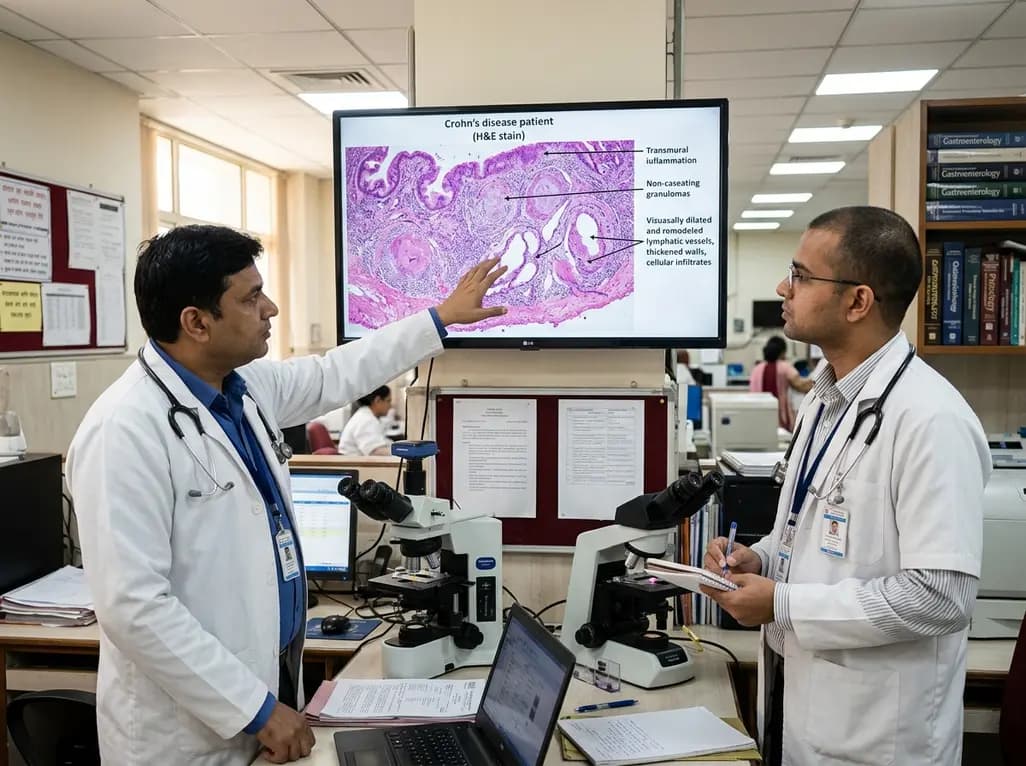
Intestinal lymphatic dysfunction is re-emerging as a fundamental driver of Crohn's disease pathogenesis. Explore how structural remodeling, lymphangitis, and defective clearance shape transmural inflammation and offer novel therapeutic targets.
Today

A school-based intervention using the Health Action Process Approach (HAPA) significantly enhanced adolescents' perceived benefits of consulting healthcare providers and promoted proactive menstrual health behaviors, offering key clinical insights for managing adolescent dysmenorrhea and endometriosis.
Today

A comprehensive analysis of the Translational Maturity Framework for nanomedicine-device combination products, evaluating regulatory complexity, manufacturing hurdles, and clinical readiness across oncology, cardiology, and orthopedics.
Today

A cross-sectional study reveals that sarcopenic obesity independently increases functional impairment and severe disc degeneration in patients with degenerative lumbar spinal stenosis, highlighting the need for body composition assessment.
Today

A landmark dose-response meta-analysis of 8.8 million adults reveals that high ultra-processed food intake significantly elevates risks for cardiovascular disease, cancer, diabetes, depression, and all-cause mortality, highlighting urgent needs for clinical lifestyle interventions.
Today
