.webp&w=384&q=75)

Loading, please wait...
Loading, please wait...

For decades, gastroenterologists primarily framed inflammatory bowel pathology around mucosal epithelial breakdown and dysregulated mucosal immunity. However, early historical descriptions consistently highlighted structural alterations within the regional lymphatic network. Emerging experimental and clinical investigations now urge clinicians to reconsider the role of lymphatics in Crohn's disease as a foundational driver of persistent intestinal inflammation.
Historically, pioneering investigators observed prominent vascular alterations in resected surgical specimens from patients with regional enteritis. In fact, early twentieth-century pathologists frequently described Crohn's disease as an elephantiasis of the intestinal wall. They identified marked lymphangiectasia, granulomatous endolymphangitis, and perilymphatic lymphocytic cuffing throughout the submucosa and subserosa. Furthermore, researchers replicated transmural segmental enteritis in experimental models simply by sclerosing mesenteric lymphatic channels. These historical experiments produced hallmark pathological features of human disease, including skip lesions, transmural edema, and fistulas. Consequently, early clinicians deduced that physical obstruction of intestinal drainage initiates bowel wall thickening. Over subsequent decades, however, molecular immunology shifted focus toward mucosal cytokine cascades and luminal microflora. Therefore, scientific literature largely relegated lymphatic pathology to an incidental consequence of chronic injury. Today, contemporary imaging and immunohistochemical techniques confirm that lymphatic disruption occurs early during pathogenesis. Pathologists regularly observe mesenteric lymphadenopathy long before overt mucosal ulceration manifests. Re-evaluating these classic observations provides essential perspective on how fluid stasis initiates progressive transmural disease.
Extensive structural remodeling defines the intestinal lymphatic microvasculature in active Crohn's disease. Specifically, patients exhibit dilated, tortuous submucosal vessels alongside profound compensatory lymphangiogenesis. Studies utilizing podoplanin immunostaining demonstrate markedly elevated lymphatic vessel density across both inflamed and non-inflamed intestinal segments. Furthermore, pro-inflammatory cytokines stimulate local endothelial proliferation, but these nascent vessels display severe functional impairment. Because these newly formed capillaries lack adequate pericyte coverage, they fail to transport interstitial fluid efficiently. In addition, collecting mesenteric vessels exhibit reduced spontaneous contractile pumping, creating profound lymphatic stasis. Consequently, accumulated lymph containing bioactive lipids and cellular debris leaks into the adjacent mesentery. This persistent leakage triggers rapid mesenteric adipocyte hyperplasia, commonly recognized as creeping fat. Moreover, local adipokines amplify regional immune activation, which directly damages lymphatic endothelial cells and accelerates fibrosis. Thus, a destructive bidirectional loop develops: mechanical obstruction generates lymph stasis, which sparks inflammation, while chronic inflammation further paralyses lymphatic drainage. Recognizing this reciprocal relationship explains why segments of persistent edema frequently transition into dense fibromuscular strictures.
Peyer patches represent critical immune hubs that interface directly with the mucosal lymphatic vasculature. Under healthy physiological conditions, specialized microfold cells transport luminal antigens across follicle-associated epithelium into underlying lymphatics for tolerogenic immune sampling. In Crohn's disease, however, genetic polymorphisms in NOD2 and autophagy pathways impair normal intracellular pathogen clearance. Consequently, translocating enteric bacteria evade localized containment within gut-associated lymphoid tissue and penetrate draining lymphatic capillaries. Microorganisms such as Yersinia, adherent-invasive Escherichia coli, and various enteroviruses exploit this defective barrier to infect mesenteric channels. Once inside the lymphatic lumen, microbial antigens trigger intense localized immune activation. Macrophages and lymphocytes aggregate along vessel walls, forming characteristic non-caseating granulomatous endolymphangitis. Furthermore, this intraluminal inflammatory mass directly occludes lymphatic flow, precipitating upstream interstitial hypertension. Primate models demonstrate that deliberate lymphatic outflow obstruction rapidly alters the luminal microbiome, driving dysbiosis and mucosal erosions. Therefore, bacterial translocation into impaired lymphatics establishes a self-sustaining cycle of inflammation and tissue remodeling. Understanding this vascular-immune interface clarifies why granulomas preferentially cluster around regional mesenteric collectors.
Metastatic Crohn's disease provides fascinating clinical insight into systemic lymphatic involvement. This rare cutaneous manifestation features non-caseating granulomatous inflammation in skin tissues entirely discontinuous from the gastrointestinal tract. Most commonly, lesions develop in intertriginous skin folds, the perineum, or lower extremities, presenting as firm nodules, plaques, or chronic ulcerations. Biopsies consistently reveal granulomas surrounding dermal lymphatic channels, accompanied by prominent localized lymphangiectasia. Because these lesions occur far from the gut lumen, they illustrate that granulomatous lymphangitis can propagate independently of direct mucosal microbial contact. Clinicians hypothesize that circulating primed memory lymphocytes or trafficking dendritic cells home selectively to distant lymphatic endothelium. Furthermore, retrograde lymphatic dissemination or systemic endothelial vulnerability may explain these aberrant cutaneous deposits. In pediatric and adult cohorts, cutaneous lesions sometimes precede overt bowel symptoms by several years. Moreover, acknowledging metastatic cutaneous involvement reinforces the concept that Crohn's disease represents a generalized disorder of lymphatic-vascular conduits. By closely observing these extraintestinal manifestations, clinicians appreciate that lymphatic endothelial dysfunction extends well beyond the terminal ileum.
Current pharmacological paradigms in Crohn's disease focus almost exclusively on mucosal immunosuppression through biologics and targeted small molecules. Although these agents suppress cytokine storms, they rarely resolve underlying lymphatic congestion or reverse established fibrostenosis. Therefore, restoring intestinal lymphatic drainage represents a compelling, untapped therapeutic avenue. Preclinical investigations demonstrate that pro-lymphangiogenic treatments, particularly vascular endothelial growth factor C (VEGF-C), significantly ameliorate experimental colitis. Specifically, VEGF-C administration enhances functional lymphatic vessel density, clears interstitial edema, and accelerates the emigration of inflammatory leukocytes to regional lymph nodes. Additionally, improved lymphatic flow promotes the phenotypic transition of pro-inflammatory M1 macrophages toward pro-resolving M2 macrophages. Beyond growth factors, pharmacological modulation of lymphatic smooth muscle contractility offers immense therapeutic potential. For instance, selective agonists that stimulate lymphatic pumping could alleviate mesenteric hypertension and reduce fat-wrapping. Mesenteric-sparing surgical techniques also minimize disruption of regional lymph collectors, thereby lowering postoperative recurrence. Ultimately, combining conventional immunomodulators with lymphatic-directed therapies could optimize mucosal healing and prevent irreversible bowel damage in clinical practice.
When mesenteric lymphatic collectors suffer obstruction from granulomas and endothelial inflammation, interstitial fluid cannot return efficiently into systemic circulation. Consequently, high-protein fluid and cellular debris accumulate within the submucosal and muscularis layers, creating chronic intestinal lymphedema. This chronic stasis promotes sustained tissue hypoxia, drives mesenchymal cell proliferation, and stimulates extensive collagen deposition. Over time, progressive mural thickening, transmural fibrosis, and narrow strictures develop, severely compromising gut motility and predisposing patients to mechanical obstruction.
Both conditions frequently involve the terminal ileum and mesenteric lymph nodes, presenting identical clinical and endoscopic challenges. However, intestinal tuberculosis typically features confluent, large, caseating granulomas with extensive lymph node necrosis and prominent peritonitis. In contrast, Crohn's disease demonstrates discrete, micro-granulomas clustered around intramural lymphatic collectors without caseation. Evaluating regional lymphadenopathy via contrast cross-sectional imaging and histological assessment of lymphatic architecture helps clinicians distinguish these entities and avoid inappropriate immunosuppressive therapy.
Current experimental models show that enhancing functional lymphangiogenesis actually reduces bacterial burden rather than spreading systemic infection. Properly formed lymphatic capillaries facilitate rapid dendritic cell migration and transport bacterial antigens directly to draining mesenteric lymph nodes for immune clearance. In contrast, dysfunctional, obstructed lymphatics cause fluid stagnation and wall breakdown, which permits uncontrolled transmural microbial translocation into the peritoneal cavity and systemic circulation, exacerbating clinical sepsis.
Disclaimer: This content is for informational and educational purposes only and should not be considered medical advice. Always consult a qualified healthcare provider for diagnosis and treatment. Refer to the latest local and national guidelines for clinical practice.
References

Read summarized clinical updates, watch expert medical content, and earn CME certifications right from your smartphone.
Open your smartphone camera to scan and install.





Intestinal lymphatic dysfunction is re-emerging as a fundamental driver of Crohn's disease pathogenesis. Explore how structural remodeling, lymphangitis, and defective clearance shape transmural inflammation and offer novel therapeutic targets.
Today
A school-based intervention using the Health Action Process Approach (HAPA) significantly enhanced adolescents' perceived benefits of consulting healthcare providers and promoted proactive menstrual health behaviors, offering key clinical insights for managing adolescent dysmenorrhea and endometriosis.
Today
A landmark dose-response meta-analysis of 8.8 million adults reveals that high ultra-processed food intake significantly elevates risks for cardiovascular disease, cancer, diabetes, depression, and all-cause mortality, highlighting urgent needs for clinical lifestyle interventions.
Today
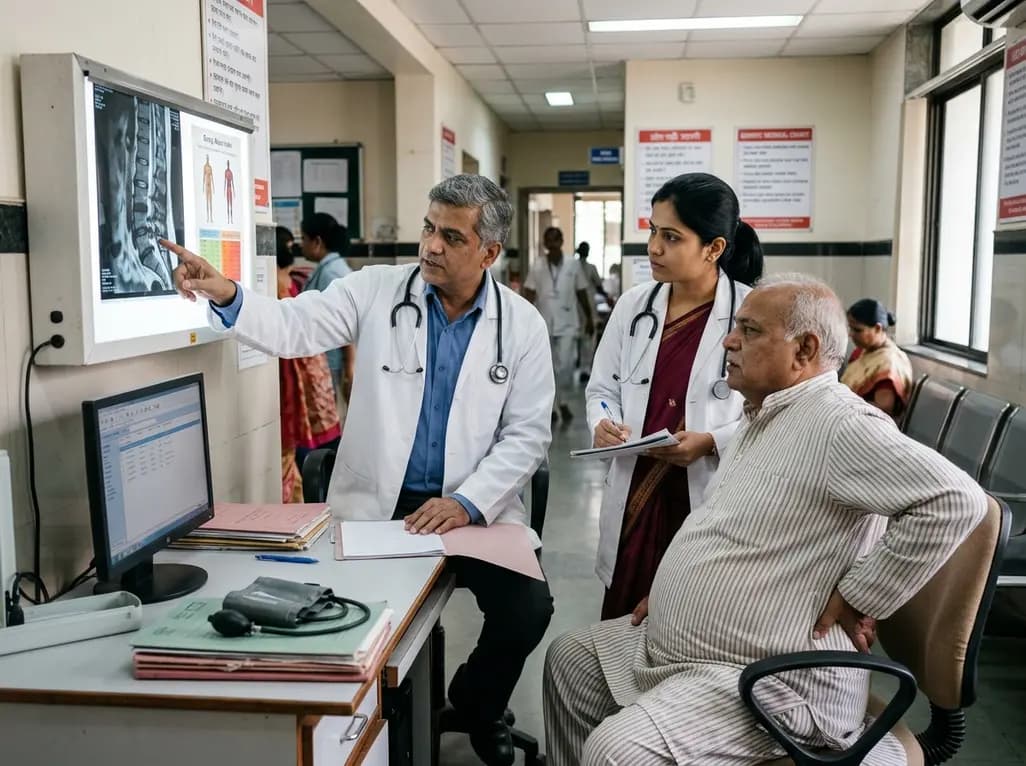
A cross-sectional study reveals that sarcopenic obesity independently increases functional impairment and severe disc degeneration in patients with degenerative lumbar spinal stenosis, highlighting the need for body composition assessment.
Today

Non-invasive biospecimen sampling offers exciting opportunities for stress medicine. This article examines a pioneering protocol comparing cortisol, inflammatory cytokines, and metabolic markers across blood plasma, whole saliva, and oral mucosal transudate during baseline and acute stress states.
Today
