.webp&w=384&q=75)

Loading, please wait...
Loading, please wait...

Researchers have recently introduced a revolutionary 3D-printed input-processing-output-flow (IPOF) framework. This modular microfluidic probe allows for the creation of complex, addressable fluidic landscapes. Unlike traditional systems, this design eliminates the need for fixed and enclosed architectures. Consequently, scientists can now reconfigure fluidic functions on demand without redesigning entire devices. This strategy transforms continuous flows into discrete, independently addressable output nodes.
The system relies on precisely engineered, interchangeable modules. These components provide plug-and-play control over reagent delivery, flow confinement, and mixing. Furthermore, the approach decouples fluidic function from fixed device geometry. This innovation supports emerging needs in high-content screening and precision bioanalysis. By using a modular microfluidic probe, researchers can achieve localized chemical reactions and multiscale surface patterning with ease. The physical reconfiguration process is simple and requires no specialized cleanroom environments.
This technology offers a scalable foundation for open-space microfluidics. It is particularly relevant for translational research and diagnostic development in India and beyond. Since it avoids expensive fabrication processes, the system is highly accessible to various laboratories. Moreover, the ability to create discrete output nodes enhances experimental flexibility for complex biological assays. Therefore, this modular microfluidic probe could significantly accelerate drug discovery and liquid biopsy research by providing precise control over the cellular microenvironment.
Traditional chips use fixed, enclosed architectures that often limit sample access and adaptability. In contrast, this modular microfluidic probe uses an open-space framework and interchangeable modules that allow for rapid, physical reconfiguration.
This technology is ideal for high-content screening, localized reactions on biological surfaces, and multiscale patterning, which are essential for precision bioanalysis and diagnostic testing.
Disclaimer: This content is for informational and educational purposes only. It does not constitute medical advice or endorse any specific technology for clinical use. Refer to the latest local and national guidelines for clinical practice.
References
1. Glia A et al. Modular microfluidic probe for addressable fluidic landscapes. Lab Chip. 2026 May 27. doi: 10.1039/d6lc00133e. PMID: 42201759.
2. Ali DS et al. Twenty years of microfluidic probes and open-space microfluidics: from origins to emerging directions. Lab Chip. 2026 Jan 20. doi: 10.1039/D5LC00879D.
3. Yan S et al. Modular microfluidics for life sciences. J Nanobiotechnology. 2023 Mar 11. doi: 10.1186/s12951-023-01846-x.

Read summarized clinical updates, watch expert medical content, and earn CME certifications right from your smartphone.
Open your smartphone camera to scan and install.





Researchers have developed a modular microfluidic probe that allows for the precise and reconfigurable delivery of chemical cues on open surfaces....
4 months ago

Explore vital recurrent stroke predictors in lacunar stroke patients managed with intensive blood pressure lowering. This analysis examines trial findings from SPS3 to uncover residual vascular risks, metabolic factors, and targeted secondary prevention strategies for high-risk neurological patients.
Today
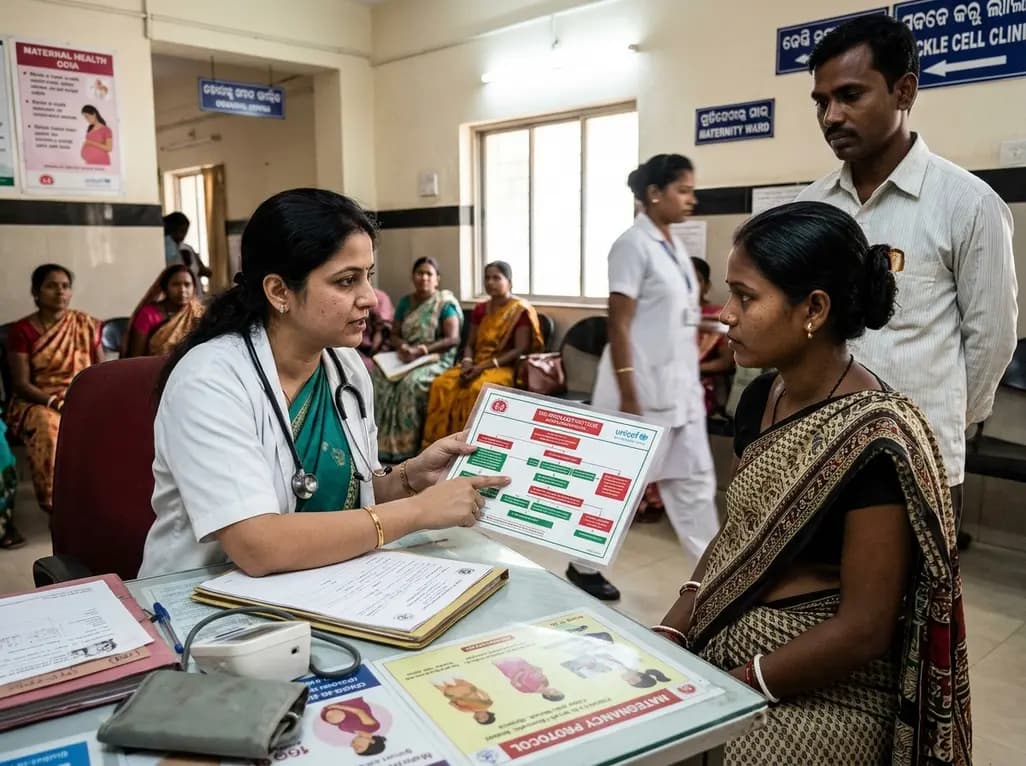
Odisha has established India's first state-level clinical protocol specifically tailored for pregnant women with sickle cell disease. Developed with NHM and UNICEF, the framework provides structured antenatal screening, crisis mitigation, standardized referral pathways, and specialized interdisciplinary care.
Today
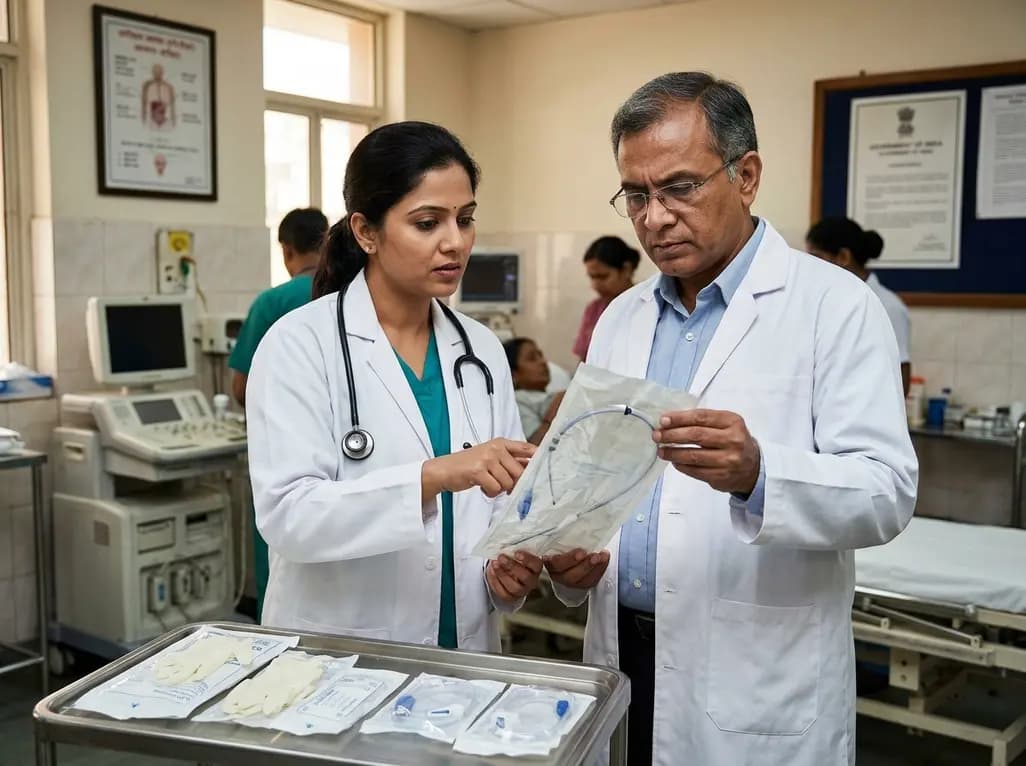
The Directorate General of Health Services directs Indian states to halt the hazardous reuse and reprocessing of single-use medical devices. Discover regulatory implications under the Drugs and Cosmetics Act, critical infection risks, legal liabilities, and operational changes required across clinical specialties.
Today

Mitochondria-targeted nanoparticles self-assembled from EGCG and L-glutamic acid effectively restore mitochondrial homeostasis, suppress synovial inflammation, and attenuate chondrocyte senescence in osteoarthritis, offering a promising disease-modifying nanotherapy.
Today

India is advancing preventive healthcare by integrating genomics, artificial intelligence, and quantum technologies. With the SANGAM programme sequencing one million Indian genomes, clinicians can unlock personalized therapies, detect cardiometabolic risks early, and curb the burden of diabetes and heart disease.
Today
