.webp&w=384&q=75)

Loading, please wait...
Loading, please wait...

Recent clinical data reveals that modified water vapor therapy provides a safe and effective option for men with large-volume benign prostatic hyperplasia (BPH). Traditionally, minimally invasive options remained limited for patients with prostate volumes exceeding 80 mL. However, this prospective study demonstrates that modified techniques using the Rezum system can significantly alleviate symptoms and reduce gland size even in larger prostates.
Clinicians enrolled 196 consecutive patients with a median prostate volume of 96 mL. All participants underwent the modified thermal therapy with successful outcomes. Consequently, researchers observed a dramatic decrease in the International Prostate Symptom Score (IPSS) from 21.2 at baseline to 10.8 at one year. Additionally, the median prostate volume shrank from 96 mL to 60 mL, representing a 37.5% reduction. These findings highlight the procedure's ability to handle substantial enlargement without compromising patient safety.
Furthermore, the maximum urinary flow rate (Qmax) improved significantly from 8.3 mL/s to 15.7 mL/s. Importantly, quality of life (QoL) scores also mirrored this positive trend, improving from 4.3 to 1.7. Because these results remained stable for twelve months, the study suggests that modified protocols can effectively bridge the gap between medication and more invasive surgeries. Specifically, this approach offers a faster recovery while preserving sexual function, which remains a primary concern for many patients. Therefore, urologists may find this technique particularly useful for aging populations seeking less invasive interventions for significant glandular enlargement.
Yes, recent studies show that modified water vapor therapy is safe and effective for prostates over 80 mL, with significant reductions in volume and no major complications reported in large cohorts.
Patients typically experience a significant drop in IPSS scores. In this study, scores improved from 21.2 to 10.8, along with a nearly 100% increase in the maximum urinary flow rate (Qmax).
Disclaimer: This content is for informational and educational purposes only. It is not intended as a substitute for professional medical advice, diagnosis, or treatment. Always seek the advice of your physician or other qualified health provider with any questions you may have regarding a medical condition. Refer to the latest local and national guidelines for clinical practice.
References
Lu Q et al. Modified water vapor thermal therapy for large-volume benign prostatic hyperplasia. BMC Urol. 2026 Feb 07. doi: 10.1186/s12894-026-02050-3. PMID: 41652420.
Siqueira MHB et al. Rezūm water vapor thermal therapy for large-volume (≥80 mL), symptomatic, benign prostatic enlargement: Large, multicenter, real-world cohort with two-year followup. Can Urol Assoc J. 2025. doi: 10.5489/cuaj.9336.
Bole R et al. Rezūm therapy for ≥80-mL benign prostatic enlargement: a large, multicentre cohort study. BJU Int. 2022. doi: 10.1111/bju.15753.

Read summarized clinical updates, watch expert medical content, and earn CME certifications right from your smartphone.
Open your smartphone camera to scan and install.





A study shows modified water vapor therapy (Rezum) is safe and effective for large-volume BPH, reducing prostate volume by 37.5% and improving IPSS scores....
8 months ago

Explore vital recurrent stroke predictors in lacunar stroke patients managed with intensive blood pressure lowering. This analysis examines trial findings from SPS3 to uncover residual vascular risks, metabolic factors, and targeted secondary prevention strategies for high-risk neurological patients.
Today
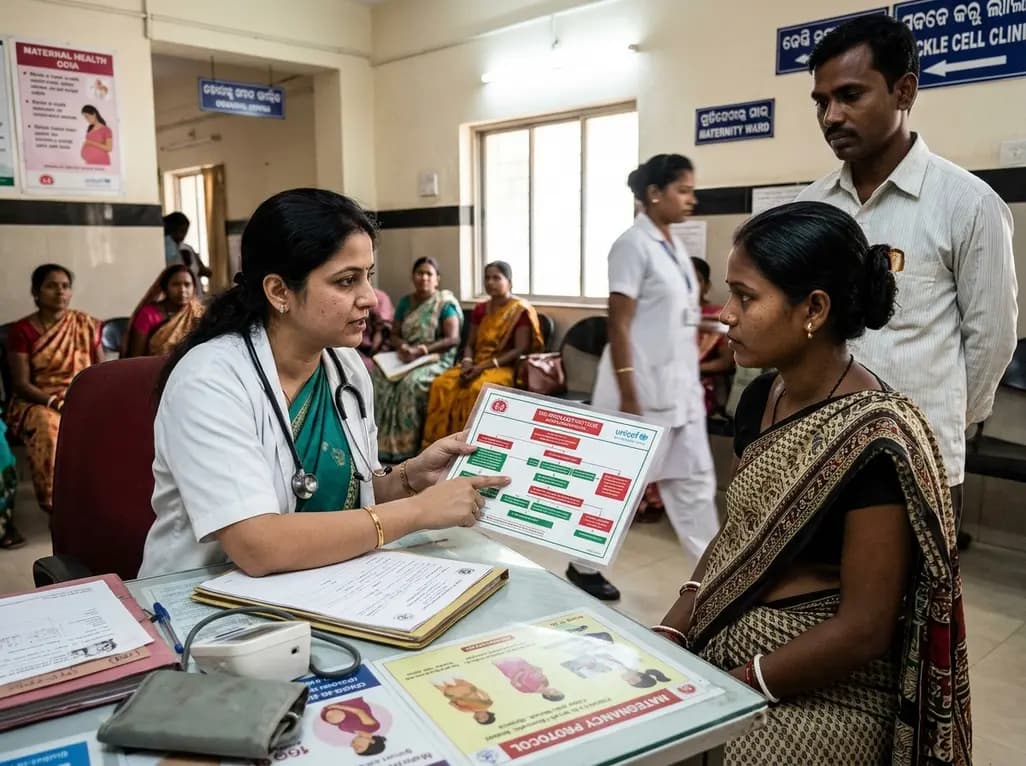
Odisha has established India's first state-level clinical protocol specifically tailored for pregnant women with sickle cell disease. Developed with NHM and UNICEF, the framework provides structured antenatal screening, crisis mitigation, standardized referral pathways, and specialized interdisciplinary care.
Today

The Directorate General of Health Services directs Indian states to halt the hazardous reuse and reprocessing of single-use medical devices. Discover regulatory implications under the Drugs and Cosmetics Act, critical infection risks, legal liabilities, and operational changes required across clinical specialties.
Today

Mitochondria-targeted nanoparticles self-assembled from EGCG and L-glutamic acid effectively restore mitochondrial homeostasis, suppress synovial inflammation, and attenuate chondrocyte senescence in osteoarthritis, offering a promising disease-modifying nanotherapy.
Today

India is advancing preventive healthcare by integrating genomics, artificial intelligence, and quantum technologies. With the SANGAM programme sequencing one million Indian genomes, clinicians can unlock personalized therapies, detect cardiometabolic risks early, and curb the burden of diabetes and heart disease.
Today
