.webp&w=384&q=75)

Loading, please wait...
Loading, please wait...
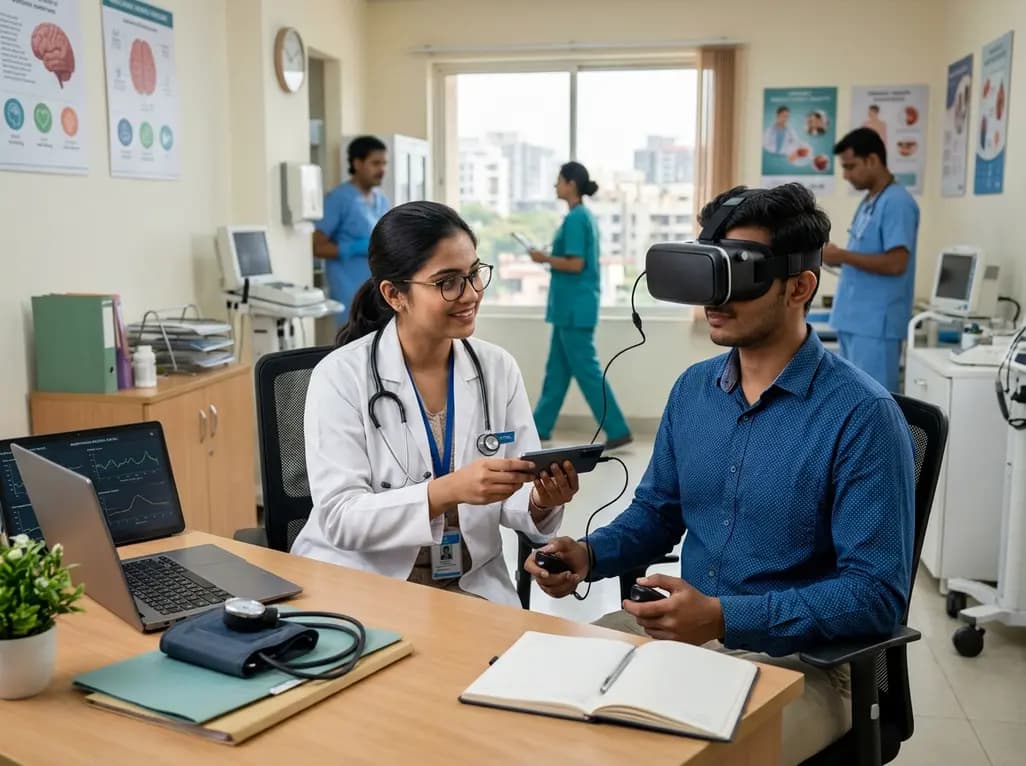
Young adults across the globe experience disproportionately high levels of psychological distress, which contributes to substantial personal and societal burdens. Unfortunately, conventional stress management methods often face significant underutilization among youth due to structural barriers, perceived inconvenience, high costs, and persistent social stigma. Consequently, digital therapeutics have emerged as promising alternatives to bridge this persistent care gap. A recent pilot randomized controlled trial explored the clinical utility of virtual reality stress reduction delivered via mobile devices to evaluate whether immersive digital environments could meaningfully improve mental health outcomes in this vulnerable demographic.
Epidemiological data consistently demonstrate that college students and young working professionals report escalating levels of academic, social, and financial stress. When left unaddressed, chronic psychological strain frequently evolves into debilitating generalized anxiety disorders and major depressive episodes. Although mindfulness practices and cognitive behavioral therapies offer robust clinical benefits, traditional in-person modalities often suffer from poor compliance and elevated attrition rates. Many young adults perceive conventional meditation as monotonous or difficult to sustain without structured environmental guidance. Therefore, mobile immersive technology represents a compelling solution. By placing users in multisensory, digitally simulated environments, mobile headsets foster immediate attentional capture and psychological presence. This sensory engagement blocks out real-world distractions and allows users to practice emotional regulation techniques with minimal cognitive resistance. As digital native populations increasingly seek accessible, technology-driven solutions, evaluating standardized virtual interventions becomes an essential clinical imperative for contemporary psychiatric and primary care practice.
To evaluate the preliminary efficacy of immersive digital therapeutics, investigators conducted a pilot randomized controlled trial involving 70 young adults aged 18 to 29 years. All enrolled participants demonstrated moderate-to-high baseline psychological distress, defined as a sum score of 14 or greater on the validated 10-item Perceived Stress Scale. Researchers randomly allocated participants into either an intervention group consisting of 34 individuals or an inactive control group containing 36 individuals. The intervention cohort participated in an 8-week program utilizing MindCo Relief, a specialized mobile digital application that pairs virtual mindfulness environments with access to structured online coaching. In contrast, the control group received no therapeutic intervention throughout the study duration. The primary clinical outcome measured self-reported perceived stress changes over time. Additionally, secondary outcome measures captured psychological resilience using the Connor-Davidson Resilience Scale, anxiety symptom severity through the Generalized Anxiety Disorder-7 tool, depressive symptoms via the Patient Health Questionnaire-9, and overall quality of life using the General Well-Being Schedule. Analysts utilized linear mixed-effects models to rigorously assess longitudinal changes across the 8-week follow-up period.
The study cohort had a mean age of 23 years and comprised predominantly female participants and students, with demographic characteristics evenly distributed between both study arms. The primary linear mixed-effects analyses revealed a statistically significant interaction between time and the intervention. Participants utilizing the mobile program demonstrated substantial reductions in perceived stress compared to their control counterparts. Furthermore, secondary mental health metrics mirrored these favorable primary findings. The intervention group experienced statistically significant decreases in generalized anxiety severity and depressive symptom burdens over the 8-week duration. In addition to symptom alleviation, participants assigned to the immersive platform achieved a statistically significant improvement in overall quality of life. Interestingly, changes in psychological resilience scores did not reach statistical significance between the groups. Secondary analyses also revealed that neither the total percentage of completed digital modules nor the total count of attended coaching sessions was significantly associated with outcome changes. This suggests that even partial engagement with immersive mindfulness environments can trigger meaningful physiological and psychological benefits.
The positive therapeutic responses observed in this trial highlight unique neurobiological and cognitive mechanisms intrinsic to immersive virtual environments. Unlike conventional smartphone applications that rely solely on two-dimensional screens and passive audio prompts, virtual reality generates an intense feeling of presence. This immersive presence actively recruits visual and auditory processing networks, which effectively disrupts maladaptive rumination and negative cognitive loops. By transporting the user into serene nature scenes or guided meditative spaces, the nervous system shifts from sympathetic fight-or-flight hyperarousal toward restorative parasympathetic dominance. Consequently, individuals achieve rapid autonomic stabilization, characterized by reduced heart rate variability stress patterns and lowered systemic muscle tension. Furthermore, the gamified and interactive nature of digital therapeutics promotes user agency. When young adults feel actively involved in their self-regulation training, their intrinsic motivation strengthens. Integrating structured coaching alongside digital immersion provides an added layer of psychological safety, helping users translate newly acquired mindfulness skills into their demanding daily routines.
For primary care physicians, psychiatrists, and allied mental health professionals, these findings offer practical implications for modern stepped-care psychiatric models. Integrating mobile immersive tools into routine outpatient pathways can serve as an effective first-line or adjunct intervention for mild-to-moderate psychological distress. Because these mobile platforms require only widely available consumer hardware, clinicians can recommend them to mitigate lengthy waiting times for specialized psychotherapy. However, medical professionals must recognize that digital tools complement rather than entirely replace comprehensive psychiatric evaluations and evidence-based pharmacotherapy. Providers should evaluate patients for simulator sickness or sensory overload before initiating immersive regimens. Moreover, larger multicenter randomized trials with diverse socioeconomic cohorts are still necessary to evaluate long-term symptom remission and sustain user engagement over extended follow-up windows. Nonetheless, mobile digital therapeutics represent an accessible, scalable, and highly appealing approach to modern adolescent and young adult mental healthcare delivery.
Virtual reality provides immersive, three-dimensional sensory environments that create a deep sense of presence. Unlike standard two-dimensional mobile apps that require substantial cognitive effort to ignore external distractions, virtual reality naturally captures visual and auditory attention. This immersion disrupts negative rumination more rapidly, fostering faster autonomic relaxation and higher initial engagement among young adults who struggle with traditional unguided meditation practices.
Yes, clinicians can safely recommend evidence-based mobile virtual reality programs as scalable lifestyle interventions or adjuncts to standard care. These tools offer structured relaxation training for patients presenting with mild-to-moderate situational stress and anxiety. However, providers should ensure that patients undergo appropriate baseline psychiatric evaluations and monitor them periodically to confirm clinical improvement alongside conventional clinical recommendations.
Mobile virtual reality interventions typically utilize standard modern smartphones inserted into affordable, lightweight head-mounted display headsets. Some contemporary programs also operate on standalone consumer headsets that do not require external computing hardware. This accessibility allows patients to complete guided therapeutic modules conveniently from home without needing specialized, expensive clinical laboratory equipment or complex technical expertise.
Disclaimer: This content is for informational and educational purposes only and does not constitute medical advice, diagnosis, or treatment. It is not intended to replace professional clinical judgment. Clinicians should evaluate this information in the context of individual patient presentations and local practice standards. Refer to the latest local and national guidelines for clinical practice.
References

Read summarized clinical updates, watch expert medical content, and earn CME certifications right from your smartphone.
Open your smartphone camera to scan and install.





A pilot randomized controlled trial reveals that mobile virtual reality-based mindfulness programs significantly alleviate perceived stress, anxiety, and depressive symptoms while enhancing quality of life among young adults facing elevated psychological distress.
last month

According to WHO data, average lifespan reached 73.3 years in 2023, recovering from pandemic lows. However, healthy life expectancy lags at 62.8 years due to surging noncommunicable conditions like cardiovascular disease and dementia, demanding proactive primary screening and sustained chronic care.
Today

A scoping review reveals how pregnancy affects phonation through laryngeal edema and reduced phonation time rather than major acoustic pitch alterations. Learn how to identify, evaluate, and manage vocal symptoms in expectant mothers.
Today

Medical robotics is transitioning beyond operative suites into diagnostics, cardiology, and endocrinology. Explore how innovations in tele-robotics, AI integration, and nanomedicine are overcoming geographical barriers and transforming precision healthcare delivery across India's evolving disease landscape.
Today
Researchers have engineered an artificial sensory-pain integrated receptor using a multi-threshold organic synaptic transistor. The system distinguishes benign touch from noxious stimuli, enabling safer, more responsive prosthetic limbs with built-in memory and simplified hardware architecture.
Today

A qualitative meta-synthesis highlights the complex interplay between gender dysphoria, minority stress, and eating disorders in transgender and gender-diverse individuals. Clinicians must recognize these distinct drivers to offer supportive, gender-affirming, and interdisciplinary eating disorder care.
Today
