.webp&w=384&q=75)

Loading, please wait...
Loading, please wait...

Globally, millions of individuals leave their home countries to secure employment and sustain their families. However, geographical relocation frequently strains emotional well-being and disrupts essential support systems. In this context, understanding migrant worker mental health requires examining how interpersonal relationships protect against or amplify psychological distress. While clinicians often assume that expanding social ties always enhances emotional resilience, recent epidemiological data reveal a much more complex dynamic. Social networks can buffer loneliness, but they also impose significant emotional and financial demands on vulnerable workers.
Migrant domestic workers routinely navigate grueling labor schedules, language barriers, and deep cultural isolation. Consequently, prolonged separation from families deprives these workers of primary emotional anchors. Clinicians regularly observe elevated rates of depressive symptoms, generalized anxiety, and post-traumatic stress among transnational laborers. Furthermore, social isolation intensifies physical complaints, as psychological distress often manifests somatically in primary healthcare consultations.
Nevertheless, the traditional view of social capital posits that any community connection inherently improves psychiatric resilience. In reality, interpersonal connections carry dual properties that produce conflicting health outcomes. For instance, close friends offer vital companionship during weekly rest periods, which eases the pain of homesickness. Conversely, these same networks create expectations of mutual aid that financially and emotionally drained workers struggle to satisfy. Therefore, medical practitioners must recognize that social networks do not act as simple protective shields. Instead, peer structures function as dynamic environments where positive reinforcement and interpersonal stress coexist. When healthcare professionals evaluate displaced populations, they must investigate the qualitative characteristics of these personal relationships. Understanding these subtle relational nuances helps clinicians distinguish between therapeutic social integration and exhausting social obligations.
To untangle these complex interpersonal dynamics, a landmark cross-sectional investigation evaluated migrant domestic workers in Macao SAR, China. The investigators utilized respondent-driven sampling to recruit 1,681 female domestic workers, comprising 1,329 Filipino participants and 352 Indonesian participants. This methodology allowed researchers to reach a hidden and historically marginalized population. Specifically, researchers applied egocentric name-generating questionnaires to quantify structural and functional dimensions of social networks.
The study systematically evaluated five distinct network capital attributes. These attributes included network size, emotional closeness, perceived helpfulness of social support, reciprocity burden, and access to emergency financial aid. Additionally, the team assessed clinical mental health indicators, including validated measures for depression, anxiety, post-traumatic stress disorder, loneliness, and self-rated general health. Because testing multiple comparisons across various predictors can generate spurious statistical significance, the authors implemented the Benjamini-Hochberg false discovery rate procedure. As a result, this rigorous analytical framework ensured robust, dependable associations between relational characteristics and psychiatric outcomes. Ultimately, the comparative design highlighted meaningful sociodemographic differences between distinct national cohorts, offering valuable epidemiological insights for global health clinicians.
The empirical results demonstrated distinct structural patterns and health associations across the surveyed cohorts. Overall, Filipino domestic workers maintained larger social circles, with a mean network size of 6.00 individuals, compared to 3.69 individuals among Indonesian peers. After applying Benjamini-Hochberg corrections, perceived social support helpfulness demonstrated powerful protective benefits. Specifically, Filipino workers who perceived their network support as truly helpful reported markedly lower loneliness and significantly better self-rated health.
However, the findings simultaneously illuminated the severe psychiatric cost of interpersonal obligations. Across multiple diagnostic models, a higher reciprocity burden consistently correlated with worse psychological outcomes. For example, individuals who experienced intense obligations to reciprocate favors demonstrated significantly higher post-traumatic stress disorder symptom scores. When peers repeatedly demand emotional counseling or financial assistance, vulnerable laborers experience overwhelming interpersonal pressure. Consequently, the psychological toll of satisfying reciprocal duties frequently outweighs the emotional comfort derived from peer companionship. Thus, social capital ceases to function as a therapeutic asset when mutual expectations transform into exhausting obligations. Primary care physicians must realize that helping others can ironically compromise a caregiver's personal mental health.
Perhaps the most striking outcome of the analysis centers on the paradoxical role of network size. On one hand, maintaining a larger social circle effectively lowered subjective loneliness among migrant workers. Broader social connectivity naturally provides routine interaction and visible proof of community presence. On the other hand, multivariable linear regression revealed that expanding network size independently predicted higher scores for depression, anxiety, and post-traumatic stress.
This apparent contradiction reveals the emotional cost of widespread social entanglement. Larger networks inevitably expose workers to the shared trauma, systemic injustices, and financial struggles of numerous peers. Because marginalized laborers frequently lack formal safety nets, they rely heavily on informal mutual aid. Therefore, each additional contact increases the likelihood of absorbing vicarious distress or facing difficult requests for emergency remittances. Moreover, navigating large social networks in cramped living conditions generates acute interpersonal conflict. In contrast to popular clinical assumptions, more social contacts do not automatically generate better psychological health. Instead, wide networks frequently induce emotional contagion and relational exhaustion. Clinicians must therefore assess the psychological weight of social commitments rather than simply praising expansive peer circles.
These epidemiologic observations provide vital guidance for primary healthcare providers, general practitioners, and mental health specialists. When clinicians evaluate migrant workers presenting with chronic somatic complaints or unexplained fatigue, they must look beyond standard biomedical explanations. Physical distress, such as recurring tension headaches or gastrointestinal disturbances, frequently stems from unaddressed interpersonal strain and heavy financial obligations.
Accordingly, physicians should integrate targeted psychosocial questioning into routine clinical consultations. Rather than merely asking whether a patient has friends, practitioners must explore the quality and demands of those relationships. For instance, inquiring about remittance pressures and reciprocal financial duties can uncover substantial sources of emotional distress. Furthermore, clinicians should educate patients on boundary management and stress reduction within their peer networks. Mental health professionals can assist patients by validating the exhausting nature of mutual aid obligations. Similarly, developing coping strategies that allow migrants to step back from overwhelming community responsibilities can reduce depressive symptoms. Ultimately, clinical interventions must strengthen protective, authentic emotional bonds while mitigating destructive relational burdens.
Addressing these psychiatric challenges requires systemic strategies that extend far beyond individual clinical consultations. Healthcare systems and municipal policymakers must establish structured community programs that foster healthy social connections. Specifically, providing safe communal recreation spaces allows domestic workers to socialize without entering competitive or exploitative informal arrangements. In addition, consulates and non-governmental organizations should offer accessible mental health counseling in native languages.
Moreover, institutional programs must incorporate education on financial literacy and interpersonal boundary setting. By equipping workers with skills to navigate peer loans and family remittances, organizations can directly alleviate reciprocity burdens. Furthermore, expanding institutional safety nets reduces the reliance on informal networks during emergency health crises. When municipal authorities protect labor rights and ensure reasonable rest days, workers obtain genuine opportunities to recover mentally. Consequently, coordinated public health initiatives can transform social networks from draining obligations into authentic sources of emotional resilience. Healthcare providers must collaborate with community advocates to champion these essential structural reforms.
Although larger social circles reduce subjective loneliness, they often increase emotional demands and social friction. Migrants in expansive networks frequently encounter peer distress, collective grief, and substantial financial obligations. Consequently, maintaining extensive ties exposes individuals to secondary trauma and severe emotional fatigue, which elevates depression and anxiety scores despite providing social connection.
Reciprocity burden represents the psychological and financial strain of fulfilling mutual assistance expectations within social networks. For instance, domestic workers frequently experience relentless pressure to lend money, organize logistics, or provide emotional counseling to peers. Furthermore, when workers cannot balance these demands with their demanding employment, chronic stress and trauma symptoms worsen significantly.
Clinicians should screen beyond routine psychiatric symptoms by examining interpersonal stressors and community support structures. Specifically, practitioners must evaluate network quality rather than mere social contact. Therefore, assessing financial remittance pressures, peer obligations, and access to genuine emotional support enables medical teams to identify hidden distress and design targeted psychosocial interventions.
Disclaimer: This content is for informational and educational purposes only... Refer to the latest local and national guidelines for clinical practice.
References
1. Sumerlin TS et al. The ties that bind: migrant worker social networks, mental health, loneliness and self-rated health. Epidemiol Psychiatr Sci. 2026 Sep 16. doi: 10.1017/S2045796026100894. PMID: 42745661.
2. Shi S, Loi S. Loneliness as a pathway to immigrant health decline: A longitudinal mediation analysis in Germany. MPIDR Working Paper. 2025;WP-2025-015:1-35.
3. Holt-Lunstad J. Social connection and worker well-being. NIOSH Science Bulletin, Centers for Disease Control and Prevention. 2023 Nov 20.

Read summarized clinical updates, watch expert medical content, and earn CME certifications right from your smartphone.
Open your smartphone camera to scan and install.





A landmark study examines social network capital and migrant worker mental health, revealing that while helpful social support reduces loneliness, large network sizes and reciprocity burdens elevate risks of depression, anxiety, and PTSD.
Today

Digital health tools often perform unevenly across diverse populations, reinforcing systemic inequities. Addressing this challenge requires transparent reporting of subgroup performance, representative dataset curation, and rigorous postdeployment monitoring across commercial healthcare technologies.
Today
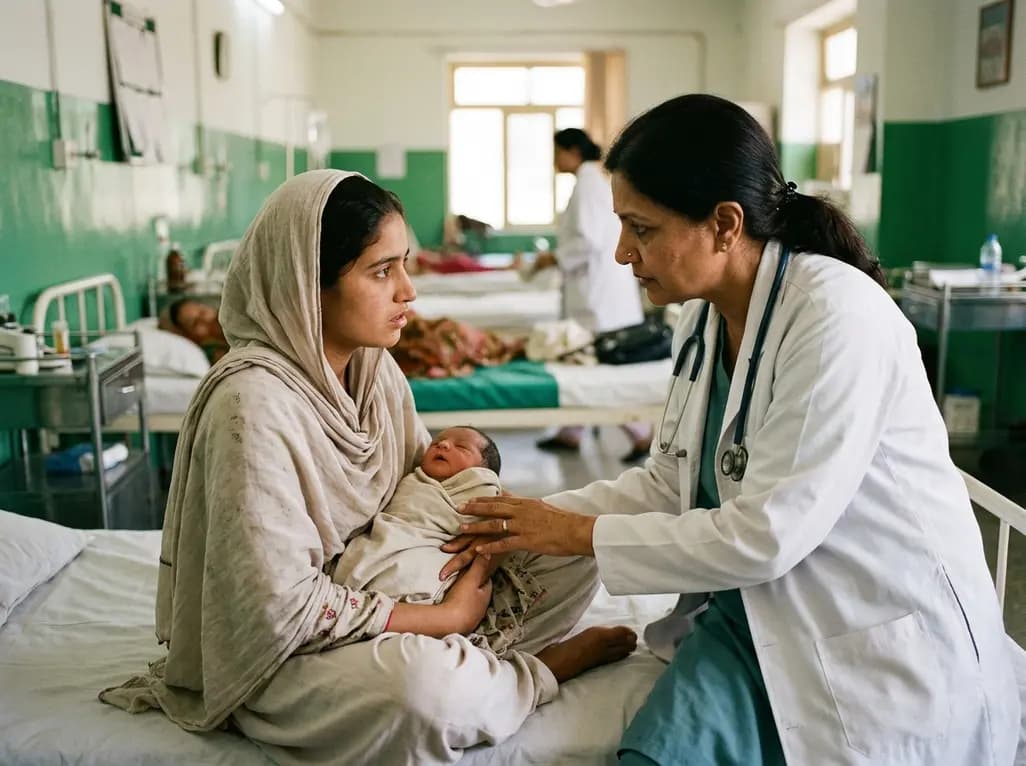
Prelacteal feeding persists in South Asian communities despite known clinical risks. This review examines determinants from Chitral, pathophysiological hazards, and pediatric strategies to eliminate harmful feeds and support exclusive breastfeeding.
Today
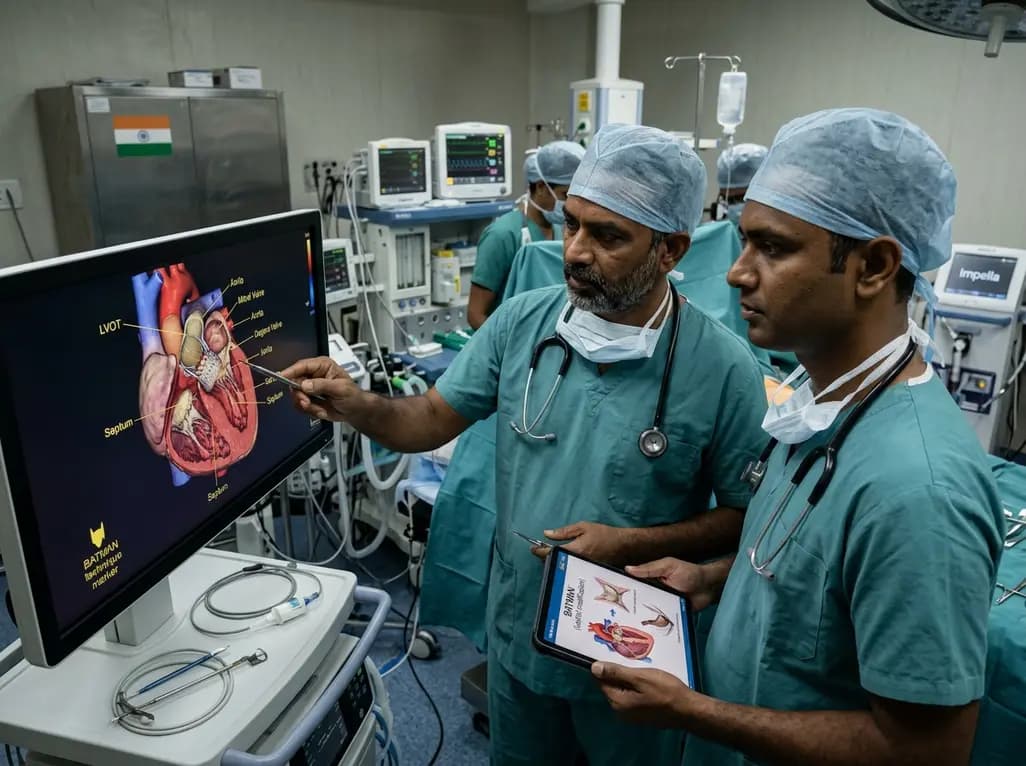
Transcatheter mitral valve replacement in patients with degenerated bioprostheses carries a substantial risk of LVOT obstruction. Combining leaflet modification via the BATMAN technique with mechanical circulatory support offers a viable, life-saving solution for anatomically challenging surgical candidates.
Today
A comparative cohort study demonstrates that patients undergoing total hip arthroplasty after prior hip arthroscopy achieve comparable functional recovery, low complication rates, and equivalent implant survivorship when conversion occurs after six months.
Today
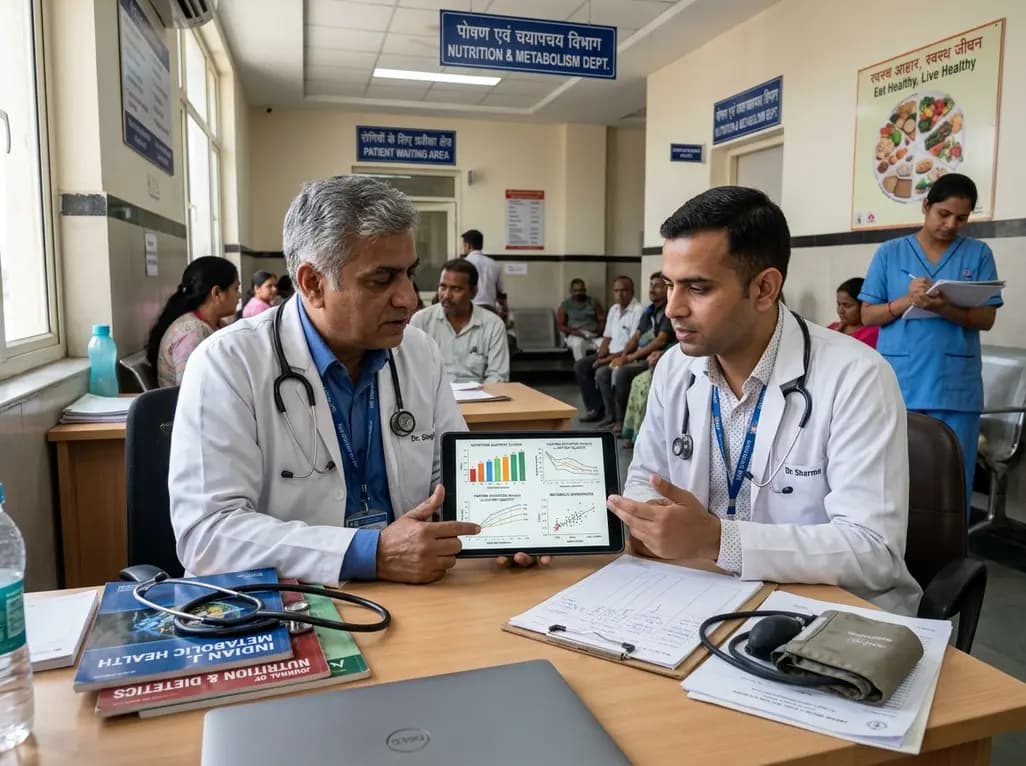
A cross-sectional study of 320 adults evaluated the link between habitual fasting duration and dietary quality using Nutrition Quotient scores, highlighting the clinical necessity of balancing time-restricted eating with nutrient density and meal quality in routine metabolic practice.
Today
