.webp&w=384&q=75)

Loading, please wait...
Loading, please wait...

Eliminating harmful prelacteal feeding practices remains an enduring challenge for pediatricians, neonatologists, and public health physicians across South Asia. Prelacteal feeding refers to administering liquids, fluids, or solid substances to newborns before regular maternal breastfeeding begins. Historically, families introduce substances like animal milk, honey, herbal infusions, sugar water, and ghutti during the first hours. Consequently, these non-nutritive substances introduce dangerous environmental pathogens into the sterile neonatal gastrointestinal tract. Furthermore, this untimely intervention critically interferes with early mother-infant bonding and delays the crucial onset of lactogenesis. Global feeding guidelines strongly recommend initiating breast milk within sixty minutes. However, entrenched cultural customs often override evidence-based medical counseling. In many rural communities, elder relatives continue to believe that maternal colostrum is dirty or insufficient for newborn nourishment. Therefore, healthcare providers must thoroughly examine regional determinants that sustain these practices across vulnerable communities. In addition, recognizing local demographic factors helps clinicians design targeted educational interventions to eliminate preventable neonatal morbidity. Ultimately, protecting newborn nutrition requires strong clinical advocacy and proactive community engagement.
A recent cross-sectional investigation by Ullah and colleagues evaluated maternal feeding behaviors in Chitral, northwestern Pakistan. Researchers surveyed 345 mothers with young infants aged under 24 months using structured, interviewer-administered questionnaires. Overall, the investigators discovered that 26 percent of surveyed mothers admitted to administering prelacteal feeds. Most notably, the study revealed striking cultural disparities between distinct ethnic populations coexisting in the same territory. Specifically, 31 percent of Kho mothers administered prelacteal substances, whereas zero percent of indigenous Kalash mothers did. In addition, multivariable logistic regression analysis showed that maternal illiteracy significantly increased prelacteal administration. Similarly, home deliveries and lack of antenatal counseling independently multiplied the risk of harmful feeds. Conversely, mothers who attended regular antenatal care sessions rarely offered non-breast liquids to their infants. Furthermore, advice from grandmothers and traditional birth attendants heavily influenced maternal choices within conservative households. These findings demonstrate that cultural traditions and health literacy govern newborn feeding choices rather than geography alone. Therefore, clinicians must appreciate that ethnic traditions dictate clinical outcomes within remote populations.
From a pediatric standpoint, early exposure to non-sterile prelacteal substances introduces catastrophic risks to the developing infant. The neonatal gastrointestinal epithelium exhibits high mucosal permeability and an immature local immune barrier during early life. When families introduce raw liquids or contaminated solids, microbial pathogens easily penetrate the intestinal lining. Consequently, neonates experience a heightened incidence of severe gastroenteritis, systemic sepsis, and necrotizing enterocolitis. Furthermore, administering fluids through unsterilized droppers, fingers, or bottles causes immediate microflora dysbiosis. Natural colostrum provides concentrated secretory immunoglobulin A, lactoferrin, and beneficial oligosaccharides that establish protective gut colonization. However, prelacteal liquids fill the infant's diminutive gastric capacity without delivering appropriate macronutrients or immunological protection. As a result, the newborn experiences satiety, which severely weakens the vigorous suckling reflex required for successful latching. This reduction in early nipple stimulation suppresses maternal prolactin and oxytocin surges, thereby causing delayed lactogenesis stage II. In addition, delayed initiation prevents the newborn from receiving the gentle laxative effects of colostrum, increasing hyperbilirubinemia risk. Therefore, pediatric practitioners must view prelacteal ingestion as an acute clinical hazard rather than an innocuous cultural preference.
The findings from northern Pakistan closely mirror prevailing neonatal care challenges across diverse regions of India. Data from the National Family Health Survey demonstrate that prelacteal administration remains pervasive despite rising institutional delivery rates. In rural Indian communities, elders frequently administer concoctions like jaggery, honey, ghutti, animal milk, or castor oil before breastfeeding. Many families believe these substances clean newborn meconium or transmit virtuous character traits from respected elder relatives. In addition, rural mothers often discard nutrient-rich colostrum under the erroneous belief that thick yellow milk is indigestible. Consequently, early initiation within the vital golden hour occurs in less than half of Indian deliveries. Moreover, social hierarchies within joint families often disempower young primiparous mothers, transferring feeding choices to grandmothers. However, national programs like Mothers' Absolute Affection and Home Based Newborn Care actively counter these widespread misconceptions. In addition, community health workers, including Accredited Social Health Activists, provide grassroots counseling on exclusive breastfeeding. Nevertheless, persistent educational gaps between different districts emphasize that clinicians must remain vigilant regarding home feeding rituals. Therefore, Indian pediatric teams must consistently identify domestic barriers to optimal newborn feeding during routine care.
To successfully eradicate prelacteal feeding, clinicians must integrate structured infant feeding education into routine perinatal care pathways. Obstetricians and pediatricians must begin proactive counseling during early antenatal checkups rather than waiting until labor delivery suites. Specifically, clinicians should emphasize that human colostrum serves as the newborn's first immunization, rich in protective antibodies. Furthermore, healthcare teams must involve expectant fathers and influential grandmothers during prenatal discussions to dismantle generational myths. Inside maternity units, labor room nurses and neonatologists must enforce continuous skin-to-skin contact immediately following birth. Consequently, placing the vigorous infant onto the maternal abdomen stimulates innate foraging behaviors and secures early latching. In addition, hospitals must strictly adhere to Baby-Friendly Hospital Initiative guidelines by prohibiting free formula samples and pacifiers. When medical indications warrant supplementation, pediatric teams must prescribe pasteurized donor milk through sterile cups rather than bottles. Similarly, postpartum discharge summaries should explicitly reinforce exclusive breastfeeding practices for the first six months. By maintaining an empathetic, culturally competent dialogue, physicians can transform deep-rooted community feeding norms and safeguard neonatal health.
Prelacteal feeding exposes a fragile newborn infant to unsterilized fluids and bacterial pathogens before protective maternal immunity develops. Consequently, introduced liquids can cause life-threatening diarrhea, neonatal sepsis, and necrotizing bowel inflammation. Furthermore, these substances satiate the neonate's tiny stomach, blunting the innate suckling drive required to stimulate maternal prolactin secretion. As an unfortunate result, this interference substantially delays lactogenesis, compromising the successful establishment of long-term exclusive breastfeeding.
In many South Asian communities, families administer honey, animal milk, ghutti, herbal concoctions, castor oil, and boiled sugar water. Additionally, elderly relatives often offer holy water or mashed dates due to longstanding cultural beliefs. Families erroneously believe that these non-nutritive mixtures cleanse newborn meconium, ease digestion, or bestow moral virtues. However, pediatricians strongly condemn these practices because non-sterile substances introduce contaminated microbes and precipitate severe metabolic complications in delicate neonates.
Clinicians can effectively eliminate prelacteal feeding by mandating uninterrupted skin-to-skin contact between mother and newborn immediately following birth. Furthermore, delivery room teams must facilitate the first breastfeed within the golden hour before transferring the dyad. Obstetric providers should also counsel family elders during antenatal appointments to address deep-seated traditional myths. Finally, hospitals must enforce Baby-Friendly hospital policies that strictly prohibit infant bottles, unnecessary infant formula samples, and pacifiers within postnatal wards.
Disclaimer: This content is for informational and educational purposes only... Refer to the latest local and national guidelines for clinical practice.
References
Ullah S et al. Determinants of Prelacteal Feeding Among Mothers in the Remote Communities of Chitral, Pakistan. Breastfeed Med. 2026 Sep 17. doi: 10.1177/15568253261490310. PMID: 42753255.
Ministry of Health and Family Welfare, Government of India. National Family Health Survey (NFHS-5), 2019-21: India Factsheet. International Institute for Population Sciences; 2021.
World Health Organization, UNICEF. Protecting, promoting and supporting breastfeeding: the baby-friendly hospital initiative for small, sick and preterm newborns. Geneva: World Health Organization; 2020.

Read summarized clinical updates, watch expert medical content, and earn CME certifications right from your smartphone.
Open your smartphone camera to scan and install.





Prelacteal feeding persists in South Asian communities despite known clinical risks. This review examines determinants from Chitral, pathophysiological hazards, and pediatric strategies to eliminate harmful feeds and support exclusive breastfeeding.
Today

A rare case of acute coronary obstruction during TAVR caused by suspected calcified amorphous tumor embolization underscores the critical role of intracardiac imaging, emergency ECMO, and the paradox of enlarged-aperture valve geometry.
Today
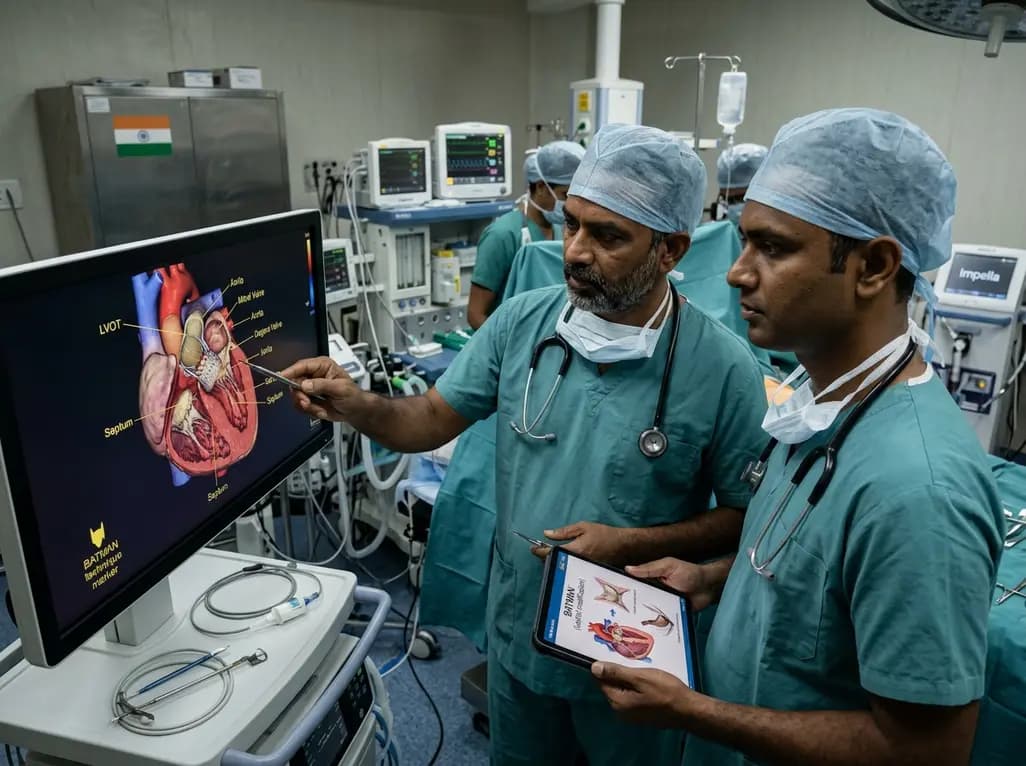
Transcatheter mitral valve replacement in patients with degenerated bioprostheses carries a substantial risk of LVOT obstruction. Combining leaflet modification via the BATMAN technique with mechanical circulatory support offers a viable, life-saving solution for anatomically challenging surgical candidates.
Today
A comparative cohort study demonstrates that patients undergoing total hip arthroplasty after prior hip arthroscopy achieve comparable functional recovery, low complication rates, and equivalent implant survivorship when conversion occurs after six months.
Today
A cross-sectional study of 320 adults evaluated the link between habitual fasting duration and dietary quality using Nutrition Quotient scores, highlighting the clinical necessity of balancing time-restricted eating with nutrient density and meal quality in routine metabolic practice.
Today
