.webp&w=384&q=75)

Loading, please wait...
Loading, please wait...

Evaluating total hip arthroplasty outcomes remains essential as hip preservation techniques expand rapidly across modern orthopedic practice. Over the past two decades, orthopedic surgeons have increasingly utilized hip arthroscopy to treat femoroacetabular impingement, labral tears, and early chondral pathology. Consequently, clinicians frequently encounter active individuals who eventually progress to advanced joint osteoarthritis despite undergoing initial joint-preserving procedures. Many surgeons question whether periarticular scarring, capsular alteration, or residual intra-articular changes compromise subsequent arthroplasty performance. Therefore, understanding postoperative recovery trajectories helps joint replacement specialists optimize preoperative counseling, procedural planning, and long-term rehabilitation strategies effectively.
Furthermore, the time interval between primary hip arthroscopy and subsequent conversion arthroplasty represents an essential determinant of clinical safety. Previous investigations demonstrated that rapid conversion within six months heightens surgical site infections, soft-tissue complications, and early mechanical loosening. However, when surgical teams space conversion beyond six months, periarticular tissues achieve biological stability and acute inflammatory responses resolve. Recent comparative studies therefore investigate whether previous arthroscopic intervention truly impairs long-term functional recovery when clinicians respect this protective interval. Ultimately, joint reconstruction teams require definitive clinical evidence to guide surgical decisions and reassure patients requiring secondary arthroplasty.
To answer this pressing clinical question, researchers conducted a comprehensive retrospective comparative cohort study at a high-volume center. Specifically, the investigation evaluated whether prior ipsilateral hip arthroscopy influences clinical performance following total hip replacement compared with primary arthroplasty. Importantly, the researchers established an explicit inclusion threshold requiring a conversion window exceeding six months after the initial arthroscopic procedure. This strategic design successfully eliminated confounding acute post-surgical inflammatory reactions and localized soft-tissue healing artifacts, ensuring accurate and unbiased functional comparisons.
Overall, the study population encompassed 546 adult patients across both comparative cohorts. In particular, 89 patients formed the cohort with prior hip arthroscopy before arthroplasty, while 457 patients received primary total hip arthroplasty without prior hip surgery. The entire study cohort demonstrated a mean age of 67.0 ± 13.3 years, and 54 percent of participants were male. Furthermore, the clinical investigators maintained an extensive mean follow-up duration of 52.6 ± 28.1 months. Thus, this four-year surveillance window provided sufficient statistical power to observe implant survivorship, patient recovery trajectories, and secondary complication frequencies with high clinical reliability.
The primary clinical outcome instrument was the Hip Disability and Osteoarthritis Outcome Score, validating multidimensional joint recovery. This comprehensive tool measures five distinct functional domains: pain severity, persistent joint symptoms, activities of daily living, sports capabilities, and hip-related quality of life. Moreover, both patient cohorts achieved statistically significant improvements from baseline across every individual HOOS domain postoperatively. These robust improvements clearly confirm that modern total hip replacement reliably restores substantial mobility, irrespective of previous surgical interventions.
However, detailed statistical evaluation revealed notable nuances between the two clinical cohorts. Patients undergoing primary arthroplasty demonstrated a statistically higher mean improvement across HOOS subscales compared to the conversion cohort. Nevertheless, final absolute postoperative scores between both cohorts remained clinically comparable, showing that both patient groups achieved high-level functional status. Clinicians should note that patients undergoing prior arthroscopy often report higher baseline expectations, central pain sensitization, and altered kinematics. As a result, although net numerical gains measured slightly lower, the final physical capacity provided excellent pain relief, functional independence, and overall patient mobility.
Beyond the primary HOOS evaluation, investigators recorded extensive secondary patient-reported outcome measures to capture broader clinical recovery. These validated instruments included the Harris Hip Score, the Oxford Hip Score, and the Visual Analogue Scale for pain assessment. Remarkably, both surgical groups achieved profound reductions in self-reported pain levels alongside dramatic functional score elevations. Thus, patients who experienced failed hip arthroscopy did not suffer persistent chronic joint discomfort after undergoing definitive total hip replacement.
Crucially, safety outcomes demonstrated reassuring parity between the two treatment cohorts during long-term clinical monitoring. The overall complication rates did not differ significantly between patients with prior arthroscopy and those receiving index arthroplasty. Furthermore, revision rates remained entirely equivalent between both cohorts across the 52-month follow-up window. Many orthopedic surgeons previously expressed theoretical concerns regarding severe capsular scarring, elevated periprosthetic infection risk, or component malpositioning after portal creation. In contrast, this comparative study confirms that these theoretical risks do not translate into elevated revision rates or surgical complications when conversion occurs beyond six months.
These clinical findings provide practical reassurances for joint preservation specialists, sports medicine surgeons, and adult reconstruction teams. Hip arthroscopy remains a potent, tissue-sparing intervention for active individuals suffering from labral tears, cam lesions, and early impingement pathology. However, when progressive cartilage degeneration supervenes, conversion to total hip arthroplasty frequently becomes unavoidable over time. Reassuringly, this comparative evidence demonstrates that patients do not forfeit favorable long-term functional recovery if their initial joint preservation surgery ultimately fails.
Therefore, orthopedic specialists can counsel prospective arthroscopy candidates with greater transparency and scientific confidence. Clinicians must emphasize that maintaining an interval greater than six months before conversion safeguards surrounding soft tissues and reduces surgical complications. Additionally, surgeons should prepare patients for minor score differences while confirming that definitive functional outcomes remain excellent. Clear preoperative communication bridges the gap between patient expectations and achievable clinical milestones, thereby optimizing post-arthroplasty satisfaction, implant longevity, and patient quality of life.
Current clinical evidence indicates that prior hip arthroscopy does not compromise the ultimate clinical success or implant survivorship of subsequent total hip arthroplasty. Although patients with prior arthroscopy often show slightly smaller net point improvements on functional scoring tools, their final mobility and pain relief match primary arthroplasty recipients. As long as surgeons avoid rapid conversion within six months, complication and revision rates remain entirely comparable between both patient cohorts.
Patients receiving primary hip arthroplasty generally present with severe, advanced joint stiffness and debilitating chronic symptoms, which allows for greater numerical improvements after joint reconstruction. In contrast, individuals undergoing conversion arthroplasty often present earlier in their degenerative cascade or have managed symptoms through previous joint-preserving care. Furthermore, heightened patient expectations and pre-existing soft-tissue alterations can moderate the magnitude of subjective score gains without impairing final functional independence or daily physical capability.
Orthopedic surgeons generally recommend waiting at least six to twelve months following hip arthroscopy before considering total hip replacement. Studies demonstrate that converting to arthroplasty within six months significantly elevates the risk of surgical site infections, capsular stiffness, and early prosthetic failure. Allowing at least six months facilitates complete resolution of post-arthroscopic inflammatory changes and soft-tissue healing, thereby optimizing the biological environment for successful prosthetic fixation and uncomplicated postoperative recovery.
Disclaimer: This content is for informational and educational purposes only, intended for healthcare professionals, and does not constitute medical advice or a substitute for professional clinical judgment. Neither MedicoCX nor its affiliates endorse or validate any non-FDA/non-CDSCO approved indications, therapies, or interventions mentioned herein. Always verify treatment protocols, dosages, and contraindications against official, current prescribing guidelines and peer-reviewed literature. Clinicians must exercise independent judgment when managing individual patients. Refer to the latest local and national guidelines for clinical practice.
References

Read summarized clinical updates, watch expert medical content, and earn CME certifications right from your smartphone.
Open your smartphone camera to scan and install.





A comparative cohort study demonstrates that patients undergoing total hip arthroplasty after prior hip arthroscopy achieve comparable functional recovery, low complication rates, and equivalent implant survivorship when conversion occurs after six months.
Today
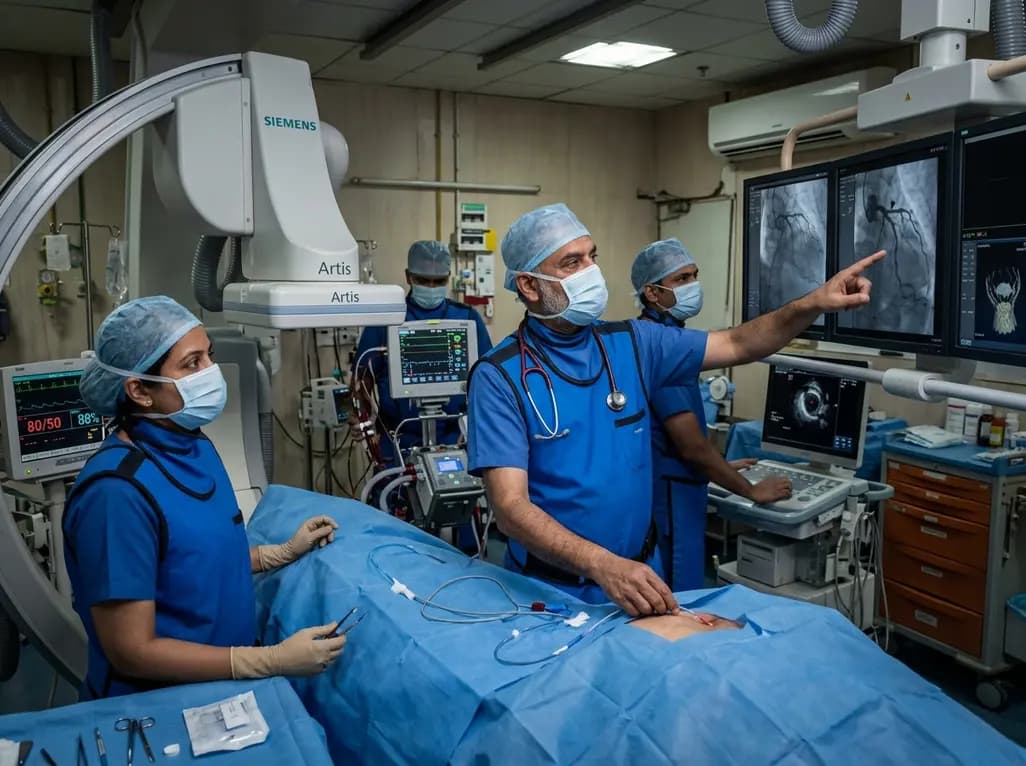
A rare case of acute coronary obstruction during TAVR caused by suspected calcified amorphous tumor embolization underscores the critical role of intracardiac imaging, emergency ECMO, and the paradox of enlarged-aperture valve geometry.
Today

Prelacteal feeding persists in South Asian communities despite known clinical risks. This review examines determinants from Chitral, pathophysiological hazards, and pediatric strategies to eliminate harmful feeds and support exclusive breastfeeding.
Today
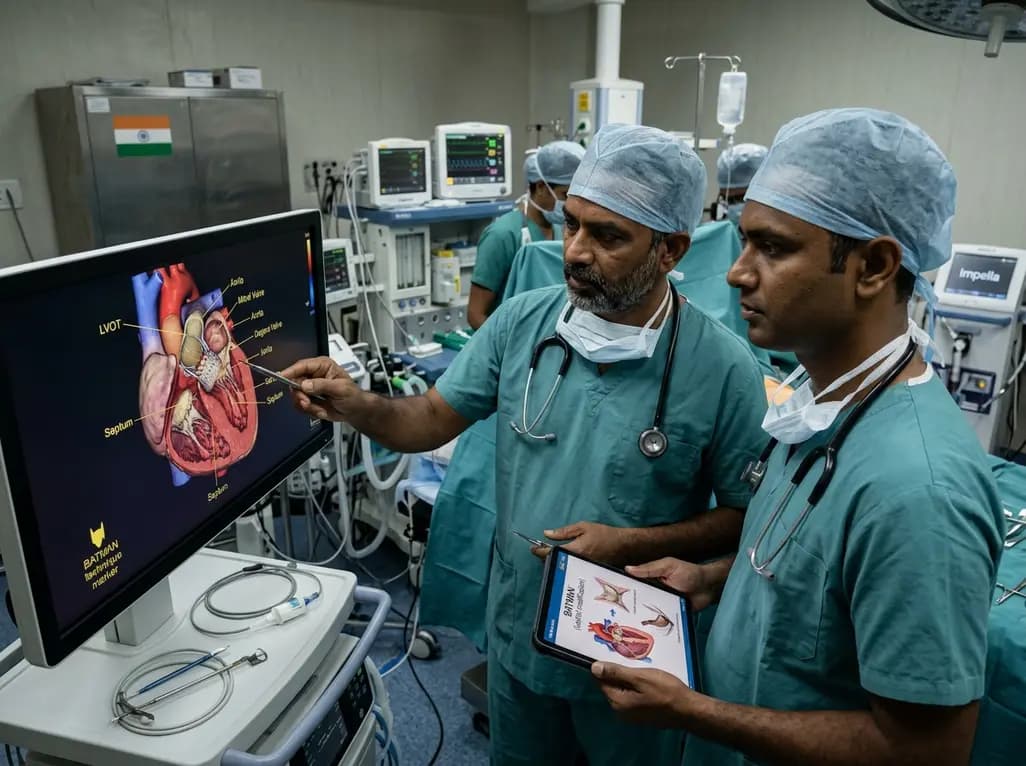
Transcatheter mitral valve replacement in patients with degenerated bioprostheses carries a substantial risk of LVOT obstruction. Combining leaflet modification via the BATMAN technique with mechanical circulatory support offers a viable, life-saving solution for anatomically challenging surgical candidates.
Today

A cross-sectional study of 320 adults evaluated the link between habitual fasting duration and dietary quality using Nutrition Quotient scores, highlighting the clinical necessity of balancing time-restricted eating with nutrient density and meal quality in routine metabolic practice.
Today
