

Loading, please wait...
Loading, please wait...
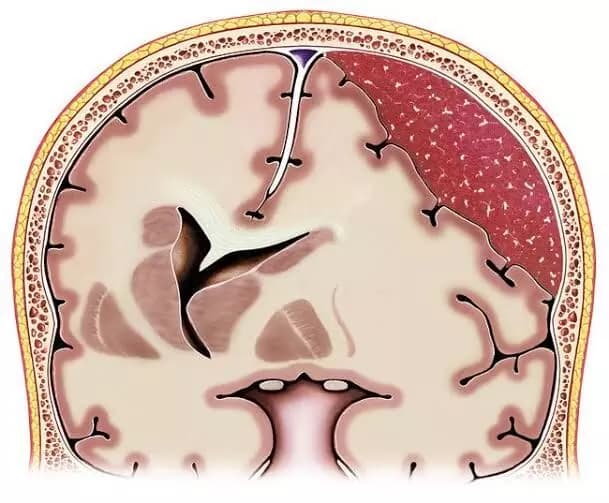
This systematic review and meta-analysis assessed whether adding middle meningeal artery embolization (MMAE) to surgical evacuation reduces recurrence of chronic subdural hematoma compared with surgery alone. Eight randomized trials involving 1,961 patients were included. Adjunctive MMAE was associated with a significantly lower risk of recurrence (RR, 0.63; 95% CI, 0.46–0.85), with no observed statistical heterogeneity for this outcome (\(I^2 = 0\%\)). Trial sequential analysis supported the recurrence finding. Although conventional meta-analysis suggested fewer repeat operations, the trial sequential analysis indicated that this result was less robust to analytical assumptions. Safety outcomes were comparable between treatment groups. Exploratory analyses suggested that patient age and anticoagulation use might help explain differences between studies, but these findings were hypothesis-generating because they used aggregate-level data from a limited number of trials. Conclusion: Adjunctive MMAE appears to reduce chronic subdural hematoma recurrence without a clear increase in adverse events, but its effects on reoperation and other patient-centered outcomes require further evaluation.

Read summarized clinical updates, watch expert medical content, and earn CME certifications right from your smartphone.
Open your smartphone camera to scan and install.





This systematic review and meta-analysis assessed whether adding middle meningeal artery embolization (MMAE) to surgical evacuation reduces recurrence of chronic subdural hematoma compared with surgery alone. Eight randomized trials involving 1,961 patients were included. Adjunctive MMAE was associated with a significantly lower risk of recurrence (RR, 0.63; 95% CI, 0.46–0.85), with no observed statistical heterogeneity for this outcome (\(I^2 = 0\%\)). Trial sequential analysis supported the recurrence finding. Although conventional meta-analysis suggested fewer repeat operations, the trial sequential analysis indicated that this result was less robust to analytical assumptions. Safety outcomes were comparable between treatment groups. Exploratory analyses suggested that patient age and anticoagulation use might help explain differences between studies, but these findings were hypothesis-generating because they used aggregate-level data from a limited number of trials. Conclusion: Adjunctive MMAE appears to reduce chronic subdural hematoma recurrence without a clear increase in adverse events, but its effects on reoperation and other patient-centered outcomes require further evaluation.
Today

A retrospective comparative cohort study evaluated genitourinary safety in HFpEF between dapagliflozin and empagliflozin over six months. Rates of symptomatic UTI and asymptomatic bacteriuria showed no statistically significant differences, supporting comparable safety profiles across both SGLT2 inhibitors.
Today
A novel folate-conjugated tecto-dendrimer nanoplatform successfully delivers siRNA to achieve targeted HK2 silencing, disrupting ovarian cancer glycolysis and suppressing lactate output.
Today
A comparative non-contact study reveals that high-power radiofrequency delivery with the QDOT MICRO catheter induces an artifactual contact force rise. Electrophysiologists must understand this power-dependent thermal and electrical phenomenon to avoid inadvertent catheter withdrawal and ineffective ablation.
Today
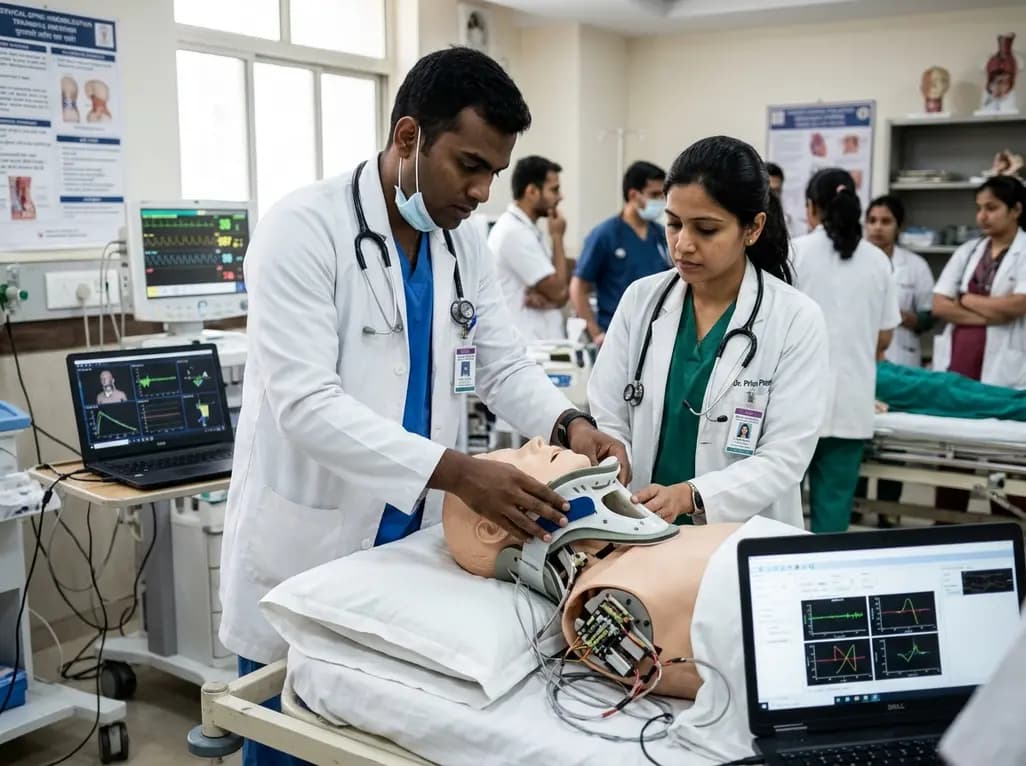
A novel proof-of-concept study presents a six-degree-of-freedom articulated manikin neck equipped with linear potentiometers. The system provides real-time kinematic motion feedback during cervical immobilisation, delivering sub-degree tracking accuracy to improve pre-hospital trauma training and patient safety.
Today
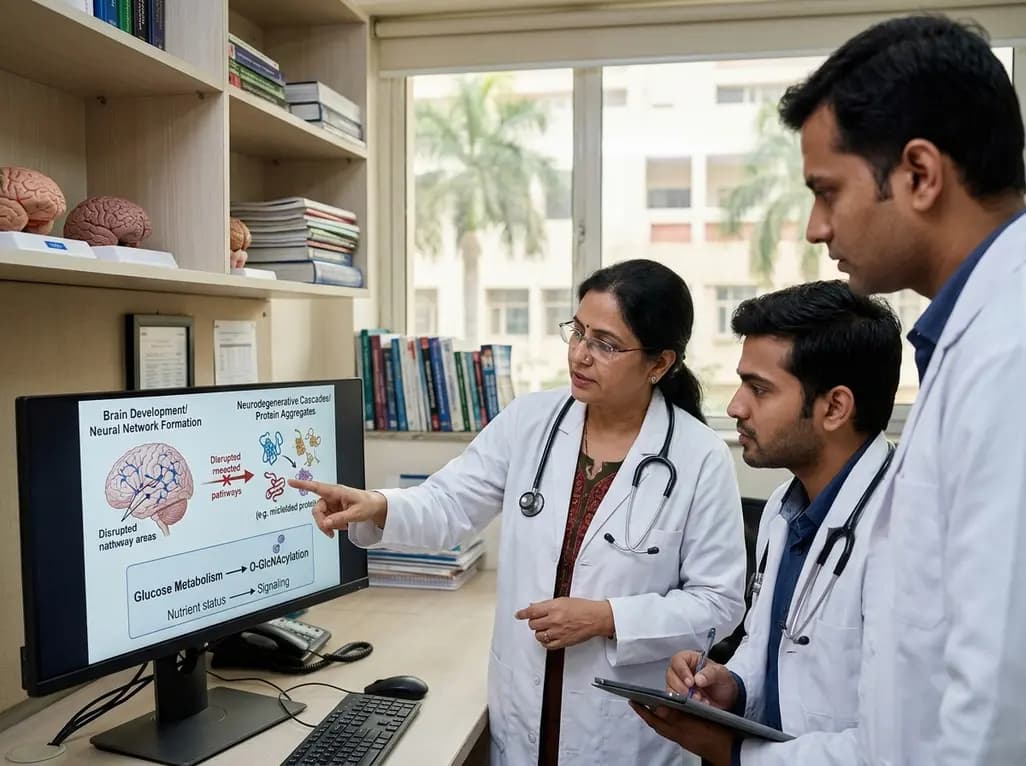
Protein O-GlcNAcylation couples cellular nutrient status to vital neuronal functions. This review explores how disrupted O-GlcNAc cycling drives both neurodevelopmental delays and neurodegenerative cascades, positioning metabolic post-translational modifications as therapeutic targets in clinical neurology.
Today
