.webp&w=384&q=75)

Loading, please wait...
Loading, please wait...
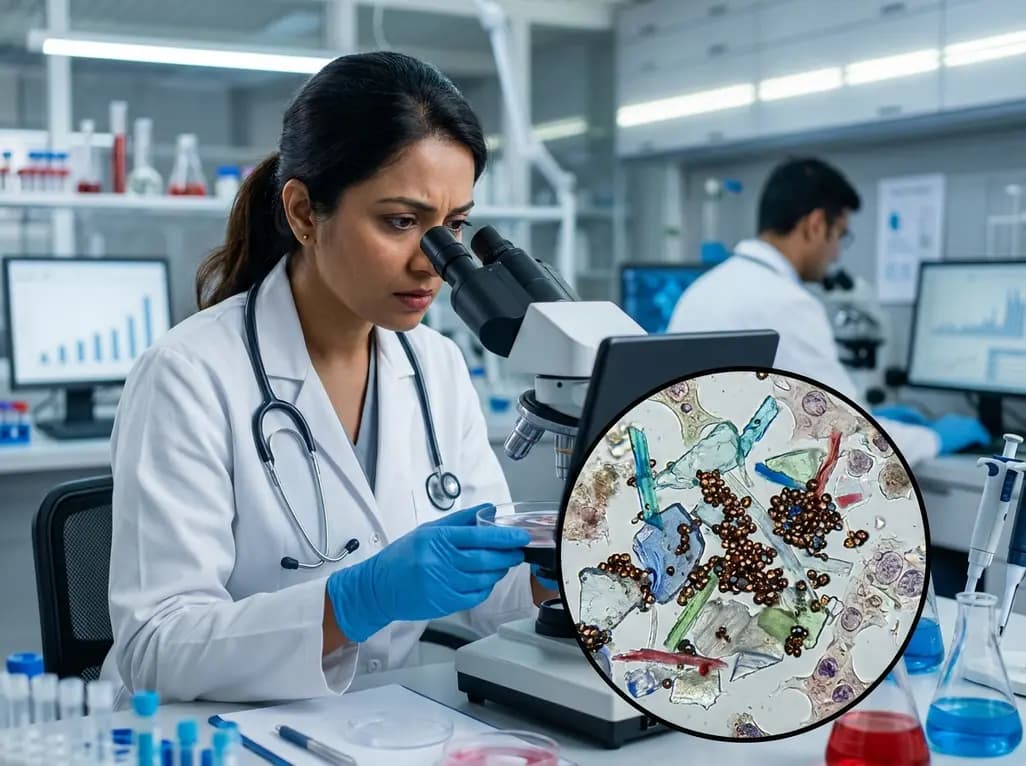
The increasing prevalence of microplastics and nanoplastics (MNPs) in aquatic environments has raised alarms regarding their role as vectors for other contaminants. A recent study published in Environmental Toxicology and Chemistry highlights a concerning Microplastic Nanoplastic Toxicity Interaction that exacerbates the harmful effects of metal-based nanoparticles. By using Daphnia magna as a model organism, researchers investigated the synergistic impact of polystyrene plastics and copper oxide nanoparticles (CuO-NPs). The findings suggest that the presence of plastic particles not only increases the lethal potency of copper but also alters its fundamental biological action mechanisms.
The study demonstrated that both microplastics and nanoplastics significantly lowered the median lethal concentration (LC50) of CuO-NPs. Specifically, nanoplastics reduced the LC50 from 4.007 mg/L to 3.156 mg/L, while microplastics had an even more dramatic effect, dropping it to 1.727 mg/L. This indicates that microplastics may more than double the toxicity of copper oxide. Furthermore, the accumulation of copper within the organisms increased by up to 254% when microplastics were present. This synergy suggests that plastic particles act as powerful carriers, facilitating the entry and retention of heavy metals in living tissues.
The researchers identified distinct pathways through which these particles exert their effects. Co-exposure with nanoplastics primarily disrupted copper absorption and ion homeostasis. Additionally, it interfered with autophagic processes, which are essential for cellular waste management. In contrast, microplastics exacerbated toxicity by interfering with oxidative phosphorylation pathways. Consequently, the presence of these plastic pollutants forces the organism to face multiple metabolic stressors simultaneously, significantly increasing ecological and potentially human health risks through the food chain.
For medical professionals in India, these findings underscore the "One Health" challenge. India faces significant challenges with both plastic waste management and industrial heavy metal pollution in major water bodies. Because Daphnia magna serves as a foundational species in aquatic food webs, its increased bioaccumulation of copper poses a risk of biomagnification. Higher concentrations of heavy metals in the food supply can lead to chronic toxicity in human populations. Therefore, understanding these interactions is vital for developing future environmental health guidelines and assessing long-term exposure risks in polluted regions.
Microplastics act as vectors that increase the bioavailability and accumulation of nanoparticles like copper oxide. They can transport these metals into organisms more efficiently and interfere with metabolic pathways such as oxidative phosphorylation.
While both enhance toxicity, nanoplastics often disrupt ion homeostasis and cellular autophagy. Microplastics, on the other hand, tend to have a more profound impact on oxidative phosphorylation and lead to higher overall accumulation of heavy metals.
This research highlights how plastic pollution can magnify the toxic risks of industrial contaminants. Through the process of biomagnification, these intensified toxins can move up the food chain, eventually reaching human consumers and increasing the risk of heavy metal-related illnesses.
Disclaimer: This content is for informational and educational purposes only. It does not constitute medical advice or establish a doctor-patient relationship. Always seek the advice of a qualified healthcare provider for any medical concerns. Refer to the latest local and national guidelines for clinical practice.
References
1. Feng Y et al. Microplastic and nanoplastic particles exert distinct effects on the toxicity and action mechanisms of CuO nanoparticles in Daphnia magna. Environ Toxicol Chem. 2026 Jun 15. doi: undefined. PMID: 42295846.
2. Vethaak AD, Legler J. Microplastics and human health. Science. 2021 Feb 12;371(6530):672-674. doi: 10.1126/science.abe5041.
3. Prata JC, da Costa JP, Lopes I, Duarte AC, Rocha-Santos T. Environmental exposure to microplastics: An overview on possible human health effects. Sci Total Environ. 2020 Feb 1;702:134455. doi: 10.1016/j.scitotenv.2019.134455.

Read summarized clinical updates, watch expert medical content, and earn CME certifications right from your smartphone.
Open your smartphone camera to scan and install.





New research reveals that microplastics and nanoplastics significantly amplify the toxicity and bioaccumulation of copper oxide nanoparticles. By disrupting metabolic pathways and ion homeostasis, these plastic pollutants increase ecological risks, highlighting a critical One Health concern for public health.
4 months ago

Novel diimide and hydrazone scaffolds, particularly compound #C4, synergistically reactivate latent HIV-1 when combined with JQ1 or PKC activators. Demonstrating donor-matched proviral transcription ex vivo and non-canonical signaling, these findings advance shock and kill strategies toward reservoir eradication.
Today

A comparative cohort study evaluates vNOTES vs TLH hysterectomy for benign conditions, demonstrating shorter operative duration, faster return to daily activities, and equivalent female sexual function scores without increased dyspareunia.
Today

Review how tailored exercise programs benefit frail older patients with heart failure. Explore pathophysiological mechanisms, individualized training prescriptions, and strategies to overcome adherence barriers in clinical practice.
Yesterday

This comparative study evaluates posterior labral tears with and without glenohumeral instability, highlighting distinct demographic patterns, MRI underestimation in stable shoulders, and successful arthroscopic repair outcomes.
Yesterday

A clinical study demonstrates that early intervention with tocilizumab, either as monotherapy or bridged with corticosteroids, achieves significant proptosis reduction and resolves active inflammation in treatment-naive thyroid eye disease.
Today
