.webp&w=384&q=75)

Loading, please wait...
Loading, please wait...
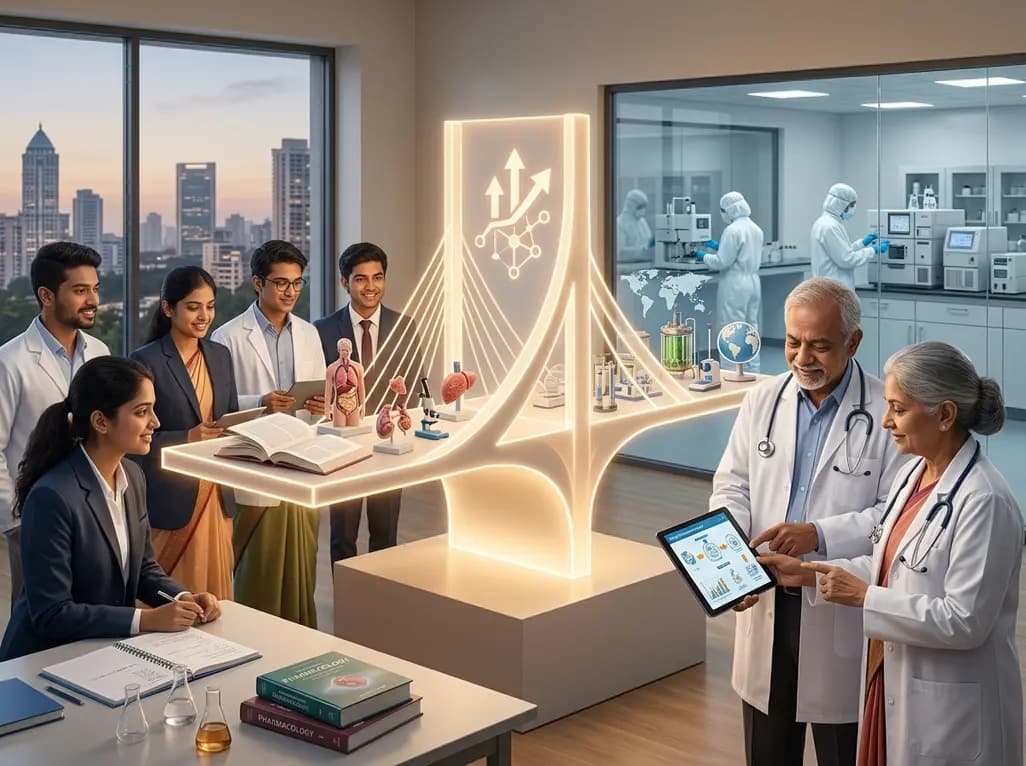
Merck India has joined forces with NMIMS School of Pharmacy & Technology Management. This strategic alliance marks the launch of the CATALYST programme for pharmaceutical students. Consequently, this initiative bridges the critical gap between academic studies and real-world pharmaceutical practices. Furthermore, the collaboration aims to prepare graduates for evolving global healthcare demands. Ultimately, this represents a major step forward for professional healthcare training in India.
The Indian healthcare sector is undergoing rapid growth and transformation. However, academic curriculums often struggle to keep pace with these modern industry standards. To solve this issue, NMIMS and Merck have structured a highly specialized certification pathway. This curriculum specifically targets final-year pharmacy students who wish to excel in clinical research and developmental domains. During this intensive 12-week programme, candidates will engage with professional leaders to understand the operations of major pharmaceutical corporations. Additionally, students will receive deep insights into drug manufacturing and quality control standards. This hands-on training ensures that graduates do not enter the workforce with theoretical knowledge alone. Furthermore, the programme emphasizes critical thinking and creative problem-solving under tight regulatory deadlines. Consequently, the certification serves as an outstanding bridge between classroom learning and commercial industry requirements. By participating, students can significantly elevate their professional profile. Ultimately, this collaboration creates a direct pipeline of job-ready talent for global pharmaceutical corporations.
The programme provides a comprehensive learning journey spanning multiple scientific areas. To achieve this, the curriculum offers modules that address key aspects of modern drug development. Specifically, students will explore clinical trials, pharmacovigilance, and the strict guidelines governing modern drug approvals. Additionally, the coursework covers advanced topics such as formulation development and state-of-the-art analytical techniques. Therefore, participants will gain a detailed perspective of how molecules transition from laboratory concepts to active market therapies. Furthermore, industry experts from Merck will lead interactive training sessions to provide authentic real-world examples. This direct exposure allows students to discuss complex laboratory challenges and understand standard operating procedures. As a result, students can easily connect theoretical biochemistry principles with actual clinical trial applications. Consequently, this holistic training prepares candidates to handle complex research assignments immediately after graduation. Indeed, mastering these diverse technical domains is essential for anyone aiming to build a successful career in modern healthcare. Ultimately, the comprehensive curriculum ensures that students acquire a robust foundation in both academic theory and industrial execution.
A major focus of this partnership is the emphasis on Global Capability Centres, also known as GCCs. These organizations play a vital role in supporting international pharmaceutical functions and clinical data management. Therefore, understanding GCC operations is incredibly valuable for Indian pharmacy graduates who seek global career opportunities. Merck possesses immense expertise in running these sophisticated centres worldwide. By sharing this specialized knowledge, the programme teaches students about internationally aligned processes and regulatory standards. Additionally, students will learn how to coordinate across different time zones and manage global project deliverables. This exposure is vital because modern pharmaceutical development is a highly collaborative, international endeavor. Consequently, graduates who understand global communication and compliance protocols are in high demand. Furthermore, the training helps candidates develop the specific soft skills needed for corporate success. This includes professional presentation techniques, remote collaboration strategies, and technical report writing. Ultimately, this specialized focus prepares students to step directly into global roles without requiring extensive introductory corporate training. By bridging this gap, Merck and NMIMS are helping to position India as a premier talent hub.
Both NMIMS and Merck view this initial launch as the beginning of a long-term academic relationship. Specifically, they plan to conduct multiple editions of the programme annually to benefit successive batches of students. This sustainable model ensures that the educational ecosystem continuously adapts to new healthcare innovations. Furthermore, successful participants will receive a formal certification jointly signed by both respected institutions. This credential serves as a powerful testament to a student's dedication, skills, and readiness for industrial roles. Indeed, having Merck’s backing on a resume can dramatically improve job placement outcomes for young graduates. Additionally, the partnership aims to foster a culture of active research and development within academic institutions. By introducing contemporary R&D practices early, the programme inspires students to pursue careers in scientific discovery. Therefore, the collaboration actively shapes the future leaders of medical innovation. Consequently, other academic institutions may soon look to this successful partnership as a gold standard for industry integration. Ultimately, the programme creates a win-win scenario where academia gains real-world insights and the industry receives highly skilled, competent clinical trial professionals.
Investing in student capability building is crucial for the long-term success of the healthcare sector. Without proper training, new graduates often face steep learning curves when they enter professional laboratory settings. Therefore, Merck’s early intervention helps to mitigate this issue by preparing students before graduation. According to company leaders, this early training builds a skilled, confident workforce ready to lead future healthcare initiatives. Furthermore, this initiative aligns perfectly with national education policies that emphasize practical skills and vocational training. By offering structured internships and real-world exposure, NMIMS ensures its graduates remain highly employable. Additionally, a well-trained workforce attracts more international investment into India’s expanding clinical trials and pharmaceutical manufacturing sectors. Consequently, this training model contributes directly to the country's economic and scientific progress on a global scale. Moreover, the programme helps build essential professional networks between students and senior industry mentors. These connections often lead to career mentorship and early job placements. Ultimately, this strategic partnership represents a forward-thinking approach to healthcare education, creating lasting positive impacts for the broader healthcare ecosystem.
Q1: What is the primary objective of the NMIMS and Merck CATALYST programme?
The main goal is to prepare pharmacy students for the rapidly changing demands of the global healthcare and pharmaceutical industries. By combining academic coursework with intensive, 12-week industry training modules, the programme equips candidates with practical R&D knowledge. Consequently, this helps bridge the gap between academic theory and corporate processes, making graduates highly competitive in today's job market.
Q2: How does the training programme help students prepare for global corporate roles?
The programme draws extensively on Merck's deep global capability network to teach students internationally aligned workflows and regulatory standards. Additionally, participants learn how global departments coordinate on clinical development projects. This comprehensive exposure helps students build the vital capabilities needed for global roles. Consequently, graduates are prepared to enter multinational pharmaceutical companies and make immediate professional contributions.
Q3: Will participants receive an official certification after completing this training course?
Yes, all students who successfully complete the 12-week programme will receive an official certification. This document is jointly issued by SVKM's NMIMS School of Pharmacy & Technology Management and Merck India. Ultimately, this credential serves as strong evidence of a candidate's industry readiness, specialized knowledge, and familiarity with R&D practices. This significantly improves career prospects during job placements.
Disclaimer: This content is for informational and educational purposes only. It does not constitute medical advice or replace professional judgment. Refer to the latest local and national guidelines for clinical practice.
References

Read summarized clinical updates, watch expert medical content, and earn CME certifications right from your smartphone.
Open your smartphone camera to scan and install.





Merck India and NMIMS SPPSPTM have partnered to launch the CATALYST programme, a 12-week certification designed to bridge the gap between academia and industry. The initiative aims to equip pharmaceutical students with core technical and regulatory skills, preparing them for roles in Global Capability Centres.
3 months ago
Explore vital recurrent stroke predictors in lacunar stroke patients managed with intensive blood pressure lowering. This analysis examines trial findings from SPS3 to uncover residual vascular risks, metabolic factors, and targeted secondary prevention strategies for high-risk neurological patients.
Today

Odisha has established India's first state-level clinical protocol specifically tailored for pregnant women with sickle cell disease. Developed with NHM and UNICEF, the framework provides structured antenatal screening, crisis mitigation, standardized referral pathways, and specialized interdisciplinary care.
Today

The Directorate General of Health Services directs Indian states to halt the hazardous reuse and reprocessing of single-use medical devices. Discover regulatory implications under the Drugs and Cosmetics Act, critical infection risks, legal liabilities, and operational changes required across clinical specialties.
Today

Mitochondria-targeted nanoparticles self-assembled from EGCG and L-glutamic acid effectively restore mitochondrial homeostasis, suppress synovial inflammation, and attenuate chondrocyte senescence in osteoarthritis, offering a promising disease-modifying nanotherapy.
Today

India is advancing preventive healthcare by integrating genomics, artificial intelligence, and quantum technologies. With the SANGAM programme sequencing one million Indian genomes, clinicians can unlock personalized therapies, detect cardiometabolic risks early, and curb the burden of diabetes and heart disease.
Today
