

Loading, please wait...
Loading, please wait...

Mental disorders impose an overwhelming social and economic burden across the modern world. Currently, severe mental health resource inequality creates massive discrepancies in diagnosis, treatment, and long-term recovery between high-income and low-income nations. Policymakers frequently overlook psychiatric services when distributing national healthcare budgets. Consequently, millions of vulnerable individuals endure debilitating conditions without adequate professional intervention. Furthermore, epidemiologists observe that psychiatric conditions contribute heavily to global disability-adjusted life-years. However, health infrastructure across many developing territories fails to match this growing epidemiological reality.
International health agencies have repeatedly emphasized that psychiatric wellbeing is fundamental to overall public health. Nevertheless, national expenditure on psychiatric facilities remains disproportionately low in developing nations. In contrast, wealthy countries concentrate advanced psychiatric hospitals, skilled allied specialists, and evidence-based pharmacotherapies in major urban hubs. Therefore, the imbalance creates a profound structural barrier for vulnerable communities. In addition, rural communities in resource-constrained territories frequently lack access to even basic psychiatric outpatient services. Addressing this systemic challenge requires robust epidemiological evaluations that pinpoint structural gaps. Clinicians must understand how global distributions of human and physical capital influence disease severity on the ground.
To evaluate resource distribution, investigators conducted a rigorous observational analysis incorporating 146 distinct countries and territories worldwide. The research team merged empirical data from the World Health Organization Global Health Observatory with epidemiological metrics from the Global Burden of Disease study. Specifically, the authors tracked critical resource variables, including psychiatric beds, outpatient facilities, and specialized psychiatric personnel per capita. In addition, they quantified disease burdens using standardized prevalence rates, incidence calculations, and disability-adjusted life-years across populations.
Furthermore, the researchers applied spatial autocorrelation techniques to detect significant geographic clustering of resources and disease burdens across world regions. They also generated Lorenz curves and calculated Gini coefficients to illustrate systemic resource inequality among economic groups. In contrast to conventional univariate comparisons, the study implemented multivariable generalized linear regression models. As a result, the authors could evaluate independent associations between specific healthcare inputs and population-level health outcomes. Notably, the statistical models adjusted for critical macroeconomic confounders, such as gross domestic product, total healthcare spending, and national demographic profiles. This methodological rigor provided clear insight into how resource allocation correlates with clinical mental disorder outcomes globally across diverse populations.
The observational analysis revealed striking inequalities in global mental healthcare capacity across socioeconomic tiers. Specifically, countries with higher income levels possessed significantly greater mental health human resources, inpatient bed capacity, and specialized clinical infrastructure. In contrast, low-income and lower-middle-income territories demonstrated severe deficits across every measured category. Lorenz curve analyses confirmed extreme international concentration of psychiatric professionals, where a small minority of wealthy nations commands the majority of trained specialists.
Additionally, spatial autocorrelation identified prominent geographic clusters of high resource density across high-income regions, including Western Europe and North America. Conversely, extensive regions of Sub-Saharan Africa and South Asia exhibited pronounced low-resource clustering. Generalized linear models showed that higher clinician density correlated with reduced disease-related disability and lower overall burden for major psychiatric disorders. However, the data revealed an apparent paradox where affluent nations reported higher diagnosed prevalence of certain conditions. Epidemiologists attribute this finding to superior screening tools, lower diagnostic thresholds, and expanded health literacy in wealthier systems. Ultimately, these empirical results confirm that resource deprivation directly impairs longitudinal disorder management across underdeveloped regions worldwide. Therefore, closing these geographic gaps remains critical for universal psychiatric coverage.
The stark findings from this global analysis carry profound clinical implications for practicing healthcare providers in developing nations. In countries facing severe workforce deficits, general practitioners, internists, and family physicians routinely manage complex psychiatric illnesses. Consequently, primary care clinicians must diagnose major depression, bipolar disorder, and schizophrenia without immediate specialist support. Furthermore, inadequate community facilities force clinicians to manage severe crises in overcrowded general medical wards. Therefore, physicians must develop strong competency in baseline psychiatric assessment, emergency de-escalation, and fundamental psychopharmacology.
Moreover, the shortage of allied mental health specialists severely restricts access to structured psychotherapy and community-based psychosocial rehabilitation. As a result, primary care doctors frequently rely on pharmacotherapy alone, despite clinical guidelines recommending integrated psychotherapeutic approaches. In addition, patients in resource-limited settings often present with advanced or refractory illness due to delayed recognition and pervasive societal stigma. When clinicians lack diagnostic support, medical comorbidities such as metabolic syndrome and cardiovascular disease frequently go unaddressed in psychiatric patients. Thus, frontline practitioners must maintain high clinical vigilance, screening routinely for somatic complications and medication side effects during regular consultations. Accordingly, systematic medical evaluations improve overall long-term survival and quality of life.
To mitigate workforce shortages, healthcare systems must implement pragmatic operational strategies such as task-sharing and collaborative care models. Specifically, task-sharing delegates defined screening, counseling, and psychoeducational protocols to trained community health workers, nurses, and primary care physicians. Decades of implementation trials demonstrate that community providers can deliver evidence-based psychological interventions effectively when psychiatric specialists supervise them. Consequently, this model expands therapeutic reach while conserving specialized psychiatric expertise for complex, refractory, or high-risk cases.
Furthermore, digital psychiatry and tele-mental health platforms offer valuable mechanisms to bridge geographic barriers in underserved rural territories. Through remote consultations, tertiary care psychiatrists can conduct structured diagnostic evaluations and guide local physicians through challenging clinical decisions. In addition, health authorities must integrate standardized screening tools into routine primary health clinic workflows. For example, validating straightforward questionnaires enables early case detection. Similarly, ensuring an uninterrupted supply chain for essential psychotropic medications prevents relapses and unnecessary hospitalizations. Therefore, governments must allocate sustainable funding toward decentralized district mental healthcare infrastructure. Ultimately, these integrated reforms transform fragmented services into comprehensive, accessible community care networks.
Severe resource gaps leave primary care clinicians without specialist backup, diagnostic infrastructure, or allied psychotherapy services. Consequently, non-specialist physicians must manage complex psychiatric conditions with limited training. This deficit delays accurate diagnoses, increases reliance on monotherapy, elevates rates of chronic disability, and worsens overall prognosis for vulnerable patient populations.
Task-sharing trains non-specialist health workers, community nurses, and primary physicians to deliver standardized psychosocial interventions and basic psychopharmacology. Furthermore, specialists provide continuous clinical supervision and manage complex referrals. This decentralized framework expands population access to timely mental healthcare, reduces hospital-level burdens, and optimizes clinical outcomes within severely resource-constrained environments.
Wealthier nations possess structured screening protocols, higher density of psychiatric professionals, and greater population mental health literacy. Consequently, individuals seek medical attention earlier in disease progression. In contrast, low-income nations suffer from diagnostic underreporting due to limited diagnostic facilities, extreme workforce shortages, and pervasive cultural stigma surrounding mental illness.
Disclaimer: This content is for informational and educational purposes only... Refer to the latest local and national guidelines for clinical practice.
References

Read summarized clinical updates, watch expert medical content, and earn CME certifications right from your smartphone.
Open your smartphone camera to scan and install.





An observational study of 146 nations reveals that global mental health resource inequality significantly exacerbates psychiatric disease burdens. Closing this infrastructure gap demands targeted investments, integrated primary care models, and equitable distribution of psychiatric professionals worldwide.
Today

Standardizing continuous physiological waveforms in EHRs has long challenged clinical teams. The novel TIDE framework leverages HL7 FHIR R4 to decouple queryable clinical metadata from massive raw signal repositories, unlocking scalable telemetry exchange for bedside care and predictive research.
Today

A secondary analysis of the MOMS clinical trial reveals that infant sex does not influence neonatal opioid withdrawal syndrome severity in buprenorphine-exposed newborns. Maternal co-exposures and clinical factors drive outcomes, highlighting the need for objective assessment and supportive breastfeeding.
Today
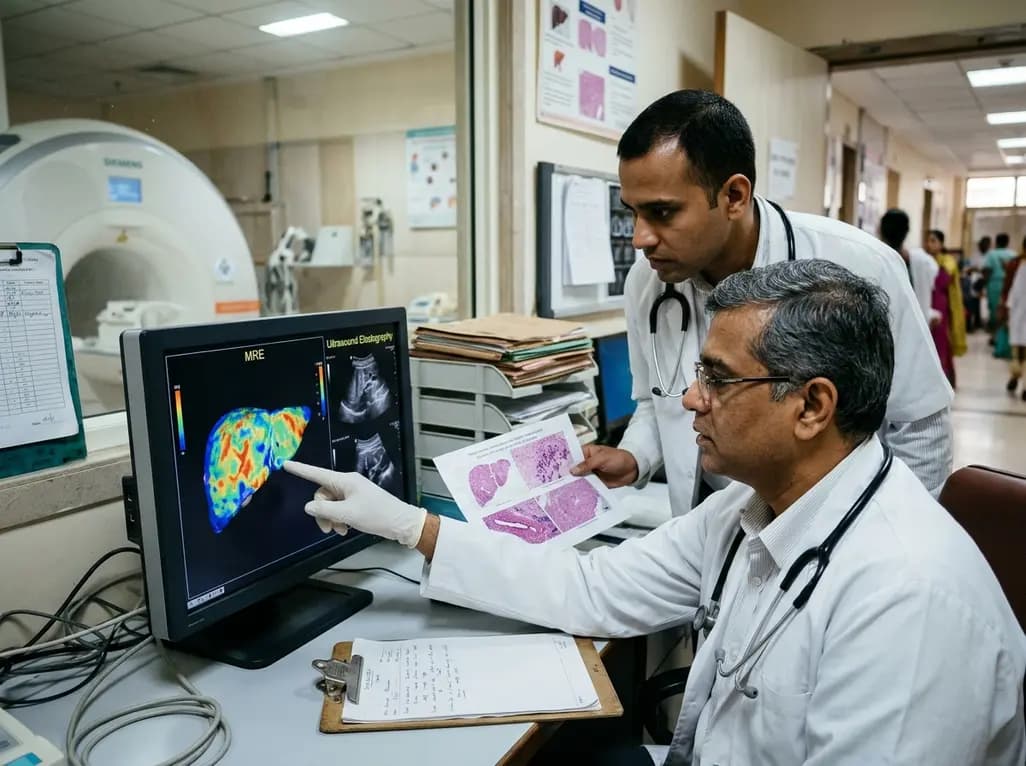
A comparative study reveals magnetic resonance elastography outperforms ultrasound elastography in assessing liver fibrosis in Fontan-associated liver disease, demonstrating stronger histological agreement and superior discrimination.
Today

A systematic review and meta-analysis highlights the substantial impact of plyometric jump training on jump performance, reactive strength, and landing kinematics in female team-sport athletes, providing evidence-based programming guidelines for sports medicine and orthopedics.
Today

A comprehensive review of the role of growth hormone in diabetic kidney disease and podocytopathy. Learn how elevated GH activates ZEB2, Notch, and TGF-beta1, driving podocyte loss and glomerulosclerosis, and explore novel targeted therapeutic approaches.
Today
