.webp&w=384&q=75)

Loading, please wait...
Loading, please wait...
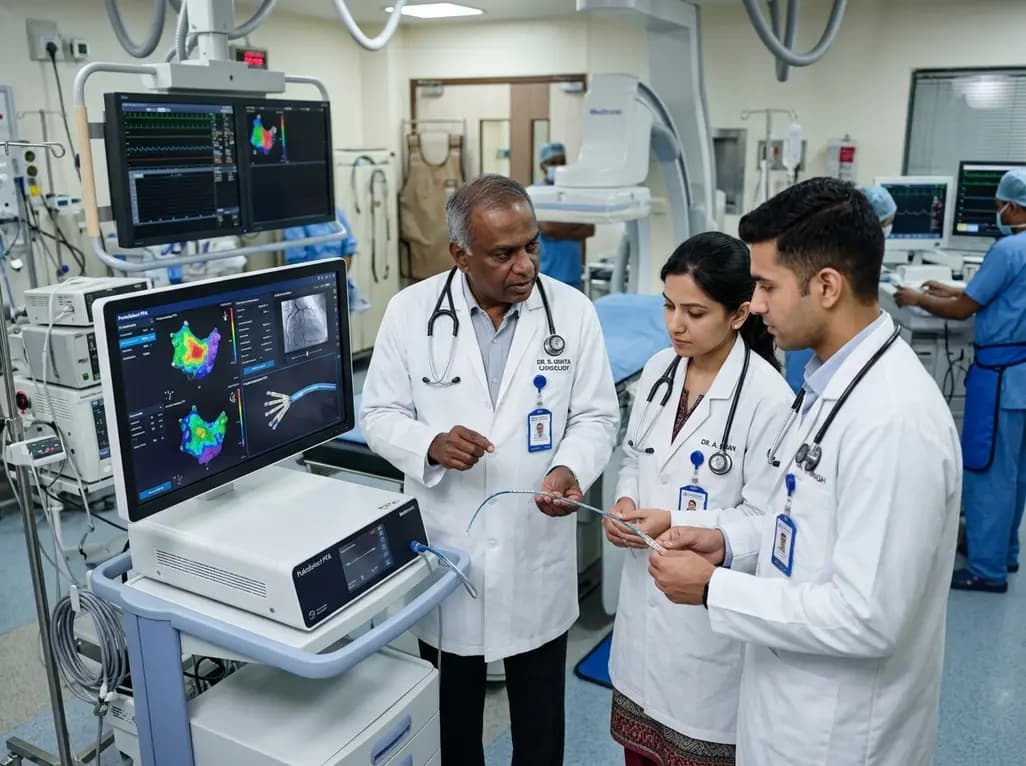
Medtronic India recently introduced the groundbreaking PulseSelect system to the Indian healthcare market. This innovative technology brings Pulsed Field Ablation to local electrophysiologists for treating atrial fibrillation (AFib). Consequently, patients suffering from irregular heartbeats can now access a safer treatment pathway. Specifically, this next-generation device targets pulmonary veins with high precision, which significantly lowers stroke risks.
Atrial fibrillation currently affects over seven million people in India, creating a massive public health burden. Furthermore, many cases remain underdiagnosed because mild or intermittent symptoms often go unnoticed. If clinicians leave AFib untreated, patients face severe risks of stroke and heart failure. Therefore, continuing medical innovation is essential to strengthen the overall cardiac care ecosystem.
Traditional therapies like radiofrequency ablation and cryoablation rely on extreme heat or extreme cold. However, these thermal energies carry an inherent risk of damaging surrounding healthy tissues. In contrast, Pulsed Field Ablation utilizes short, high-voltage electrical pulses to isolate the pulmonary veins. Additionally, this non-thermal mechanism selectively targets cardiac cells while sparing critical structures like the esophagus and phrenic nerve. Consequently, the procedure offers an exceptional safety profile and supports a smoother recovery.
Electrophysiologists across India have welcomed this technological advancement. For example, prominent hospitals like Kauvery Hospital in Chennai have already launched specialized programs to integrate these advanced platforms. Moreover, clinical data from global trials confirms that the system maintains a high rate of procedural efficiency. As a result, physicians can perform these procedures faster while optimizing laboratory workflows. Ultimately, this launch provides Indian clinicians with a powerful tool to enhance precision and improve long-term patient outcomes.
Q1: What is Pulsed Field Ablation and how does it work?
Pulsed Field Ablation is a next-generation cardiac treatment. Indeed, it uses short electrical pulses instead of extreme thermal energy to isolate abnormal tissues. Specifically, this non-thermal process targets problematic cardiac cells through electroporation. Consequently, this selective approach avoids damaging nearby critical structures.
Q2: Why is the launch of the PulseSelect system in India significant?
Atrial fibrillation affects millions of people in India, which substantially increases stroke risks. However, the condition remains heavily underdiagnosed across the country. Therefore, introducing this advanced technology provides local physicians with safer and more precise tools.
Disclaimer: This content is for informational and educational purposes only. It does not constitute medical advice or replace professional judgment. Refer to the latest local and national guidelines for clinical practice.
References

Read summarized clinical updates, watch expert medical content, and earn CME certifications right from your smartphone.
Open your smartphone camera to scan and install.





Medtronic has introduced its innovative PulseSelect Pulsed Field Ablation (PFA) system in India. This next-generation, non-thermal cardiac ablation technology targets atrial fibrillation, reducing tissue damage risks and offering a safer, faster treatment option to help prevent strokes across the country.
4 months ago

Review how tailored exercise programs benefit frail older patients with heart failure. Explore pathophysiological mechanisms, individualized training prescriptions, and strategies to overcome adherence barriers in clinical practice.
Today

Recent clinical studies reveal maternal autoantibodies targeting IL-1RA as potential triggers for preterm labor, opening avenues for targeted cytokine therapies. Concurrently, new perioperative findings show inhaled cannabis increases propofol requirements during upper endoscopy compared to oral edible consumption.
Today

In high-risk pulmonary embolism complicated by severe anemia and active uterine bleeding, systemic thrombolysis is contraindicated. Large-bore aspiration thrombectomy provides rapid hemodynamic rescue without fibrinolysis, supported by inferior vena cava filter placement and multidisciplinary critical care.
Today

This comparative study evaluates posterior labral tears with and without glenohumeral instability, highlighting distinct demographic patterns, MRI underestimation in stable shoulders, and successful arthroscopic repair outcomes.
Today

A clinical study demonstrates that early intervention with tocilizumab, either as monotherapy or bridged with corticosteroids, achieves significant proptosis reduction and resolves active inflammation in treatment-naive thyroid eye disease.
Today
