.webp&w=384&q=75)

Loading, please wait...
Loading, please wait...

The Indian healthcare infrastructure sector is witnessing a monumental transformation through massive private equity investments and institutional consolidations. Recently, global investment firm KKR officially announced the landmark Medicover India hospital acquisition for $1.39 billion. This historic transaction represents one of the largest single-asset hospital investments across South Asia. Furthermore, the buyout transfers control of a prominent 24-hospital healthcare platform operating across South and West India directly to KKR. Consequently, this strategic move reshapes the competitive dynamics of private clinical delivery networks across key Indian states. Ultimately, clinical leadership teams and medical directors must understand how these institutional shifts influence patient care standards, technology access, and operational governance.
The buyout marks a pivotal moment for regional tertiary healthcare delivery. Established in 2017, Medicover India rapidly expanded its clinical presence across key southern and western Indian corridors. Currently, the multi-specialty platform operates 24 modern hospitals containing approximately 4,800 beds. Moreover, the network supports comprehensive care across more than 80 specialized clinical domains, powered by over 1,900 practicing physicians. Specifically, high-acuity departments such as cardiology and neurology generate over 34 percent of overall inpatient revenue. Consequently, KKR recognizes the tremendous potential in scaling these essential medical specialties across high-growth healthcare markets.
Additionally, European healthcare leader Medicover AB divested its stake to realign its corporate strategy. Consequently, the Swedish parent organization will redirect capital toward European healthcare markets including Poland, Germany, and Romania. Meanwhile, KKR intends to operate Medicover India as an independent, standalone platform without merging it into existing assets like Baby Memorial or HCG. Furthermore, private equity analysts anticipate substantial primary capital injections into Medicover India to accelerate clinical expansion and modernize digital infrastructure. Indeed, this capital deployment directly aligns with India's long-term national health policy framework.
Institutional ownership transitions frequently introduce modern administrative efficiencies and upgraded medical technologies into clinical settings. Following the transaction, KKR plans to back Medicover India's clinical staff, nursing personnel, and medical leadership. Specifically, the investment firm aims to fortify clinical governance frameworks while elevating quality metrics across all operating facilities. Furthermore, clinicians expect accelerated investments in advanced diagnostic systems, robotic surgical platforms, and integrated electronic health records. Consequently, these technical additions will directly improve diagnostic precision and surgical outcomes for thousands of daily patients across India.
Moreover, strengthening operational standards remains essential for maintaining patient trust in rapidly expanding hospital networks. Private equity backing enables hospitals to recruit top-tier clinical specialists across oncology, nephrology, and neurosurgery. Furthermore, standardized treatment protocols will streamline emergency response workflows and intensive care management. Consequently, hospital administrators can systematically optimize bed utilization rates while maintaining excellent patient safety benchmarks. Notably, local medical communities across Telangana, Andhra Pradesh, Maharashtra, and Karnataka stand to gain significantly from expanded tertiary capabilities. Ultimately, robust clinical governance protects physician autonomy while driving continuous, evidence-based performance improvements across all clinical departments.
The private healthcare landscape in India is undergoing unprecedented institutional consolidation driven by global private equity capital. Over recent years, major global funds have deployed billions of dollars into acquiring tertiary hospital chains and specialized health platforms. Consequently, single-specialty centers and regional clinical networks face increasing pressure to scale operations or integrate into larger management ecosystems. Furthermore, large healthcare platforms benefit from substantial economies of scale, centralized procurement models, and elevated brand equity. Therefore, smaller healthcare providers must adapt strategically to remain competitive within modern medical markets across South Asia.
Additionally, private capital influx addresses critical infrastructure deficits across tier-two and tier-three Indian cities. While metropolitan healthcare facilities often reach market saturation, regional urban hubs continue to experience growing demand for high-quality clinical interventions. Furthermore, institutional investors recognize that expanding advanced healthcare access yields both strong financial returns and positive societal impact. Consequently, multi-specialty hospital chains are rapidly establishing state-of-the-art facilities beyond major capital cities. Indeed, this decentralization of advanced medical care provides underserved populations with direct access to sophisticated clinical expertise and complex surgical procedures close to home.
For practicing physicians and healthcare professionals, institutional acquisition brings both structural changes and meaningful opportunities. Firstly, financial backing from global investment funds ensures consistent funding for advanced medical equipment and modernized research infrastructure. Moreover, doctors gain access to continuous medical education, international clinical exchanges, and structured leadership development programs. Consequently, medical teams can adopt international best practices and participate in multi-centric clinical studies more effectively. Furthermore, modern digital health tools will simplify administrative burdens, allowing practitioners to allocate more time to direct patient care and clinical innovation.
However, clinical staff must also navigate institutional shifts in performance measurement, resource utilization, and administrative oversight. Private equity management models typically emphasize standardized clinical pathways, cost optimization, and transparent quality tracking. Consequently, medical practitioners must align their clinical routines with formal governance standards and objective outcome metrics. Furthermore, hospital administrators will likely implement rigorous quality accreditation protocols across all operational units. Fortunately, when clinical autonomy and administrative efficiency exist in harmony, medical practitioners achieve superior professional satisfaction. Ultimately, collaborative leadership between clinicians and management ensures patient safety remains the absolute priority.
The successful execution of this billion-dollar acquisition highlights robust investor confidence in India's long-term healthcare trajectory. Moving forward, the capital injection into Medicover India will fund network expansion, sub-specialty clinical programs, and digital transformation. Furthermore, health system planners anticipate new facility launches and strategic bolt-on acquisitions in key geographic corridors. Consequently, patient communities across West and South India will experience improved access to high-end medical interventions, including organ transplantation, advanced cardiology, and precision oncology care. Therefore, institutional expansion plays a crucial role in closing regional clinical access gaps efficiently.
Additionally, healthcare policymakers view private sector consolidation as a catalyst for elevated national healthcare standards. As large platforms scale, they set higher benchmarks for clinical quality, infection control, and patient management. Furthermore, public-private alignment through national health insurance programs can enable broader socio-economic access to consolidated hospital networks. Consequently, more patients from diverse economic backgrounds will receive timely, high-quality secondary and tertiary medical care. Ultimately, the evolution of India's hospital market promises a more resilient, technology-driven, and accessible healthcare ecosystem for future generations of patients.
Q1: What are the primary terms of the KKR acquisition of Medicover India?
Global private equity firm KKR agreed to acquire 100 percent of Medicover India's hospital operations in a landmark transaction valued at approximately $1.39 billion. Medicover AB divested its controlling stake to sharpen its operational focus exclusively on European markets. Meanwhile, KKR plans to invest significant primary capital to enhance clinical capabilities, upgrade technology infrastructure, and expand hospital bed capacity across South and West India while maintaining the entity as a standalone healthcare platform.
Q2: How big is the Medicover India hospital network across the country?
Medicover India represents a major multi-specialty hospital network comprising 24 hospital facilities and approximately 4,800 operational beds across key regions in South and West India. Supported by over 1,900 qualified doctors and 11,000 healthcare staff, the network delivers comprehensive care across more than 80 clinical specialties. Notably, high-acuity medical disciplines like cardiology and neurology contribute significantly to inpatient revenues, making the network a vital healthcare provider in regional markets.
Q3: How does this deal affect medical professionals and clinical governance?
The deal provides medical professionals with expanded access to advanced clinical technology, modern diagnostic systems, and structured professional development programs. Furthermore, KKR's institutional backing reinforces strong clinical governance standards and standardized operational workflows across all facilities. Consequently, doctors and healthcare staff can deliver higher quality, evidence-based care while benefiting from upgraded infrastructure. Importantly, management aims to support clinical teams without compromising physician autonomy or direct patient care priorities.
Disclaimer: This content is for informational and educational purposes only. It does not constitute medical advice or replace professional judgment. Refer to the latest local and national guidelines for clinical practice.
References

Read summarized clinical updates, watch expert medical content, and earn CME certifications right from your smartphone.
Open your smartphone camera to scan and install.





Global private equity firm KKR has agreed to acquire the Indian hospital operations of Swedish healthcare giant Medicover AB for $1.39 billion. The deal encompasses 24 multi-specialty hospitals and 4,800 beds across South and West India, underscoring major institutional consolidation in private healthcare.
Today
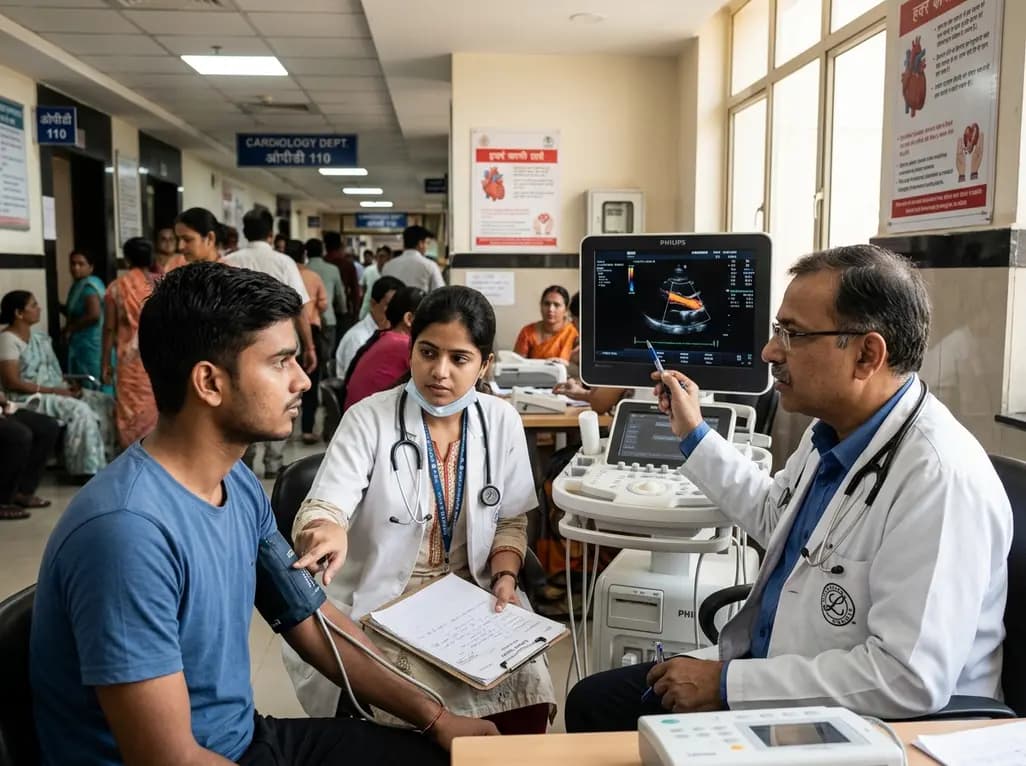
A multi-state Indian study by KMCRI reveals alarming cardiovascular risk markers among healthy adolescents and young adults, including hyperhomocysteinemia and early blood vessel damage.
Today
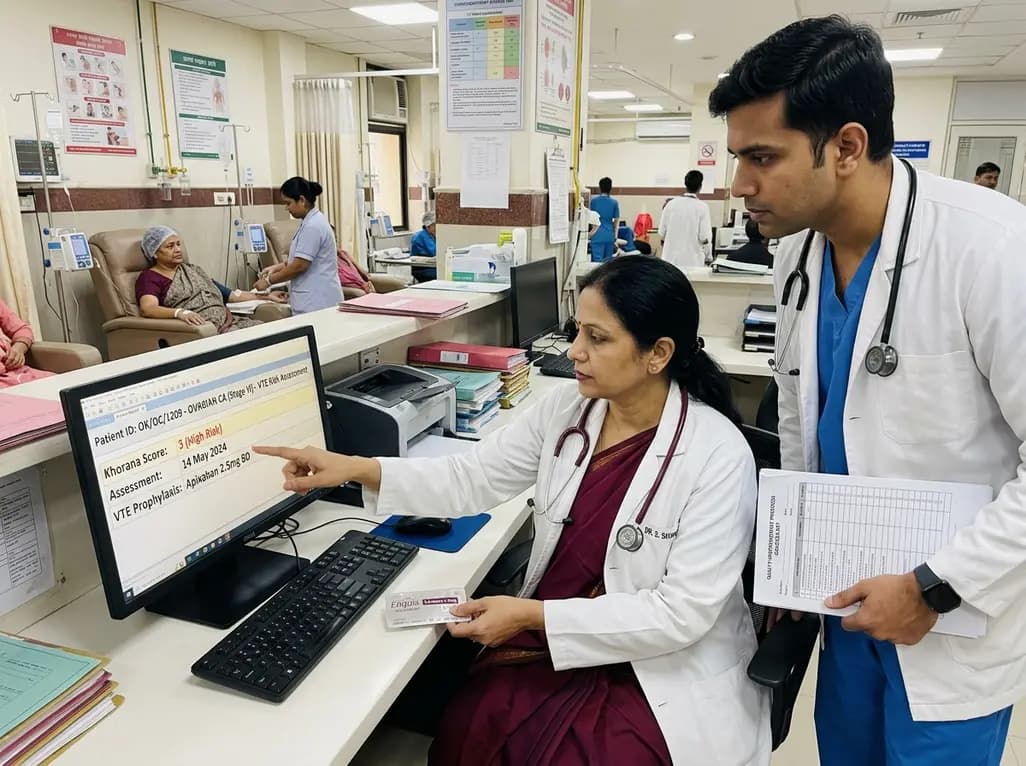
Implementing a structured quality improvement program with automated Khorana scoring and apixaban prescribing significantly reduces venous thromboembolism in ovarian cancer patients undergoing first-line chemotherapy without increasing bleeding risks.
Today

A systematic review comparing biportal endoscopic revision discectomy with open microdiscectomy for recurrent lumbar disc herniation found biportal surgery reduced hospital stays and back pain scores, though evidence remains preliminary due to retrospective study design and serious risk of bias.
Today
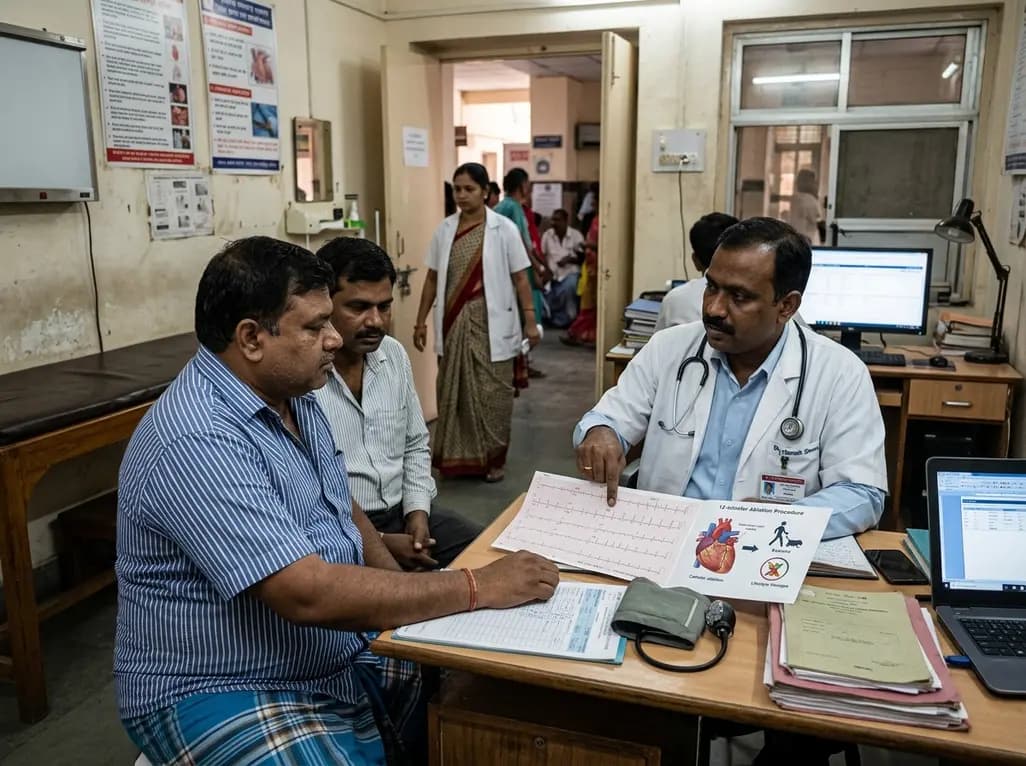
Per-protocol analysis of the PRAGUE-25 trial demonstrates that catheter ablation significantly reduces atrial fibrillation burden, hospitalizations, and emergency visits compared to lifestyle modification plus antiarrhythmic drugs in obese patients.
Today
