.webp&w=384&q=75)

Loading, please wait...
Loading, please wait...

Recurrent lumbar disc herniation presents a substantial clinical challenge for spine surgeons worldwide. Managing this condition requires careful surgical planning, especially when conservative medical treatments fail to relieve debilitating radicular pain. Historically, surgeons have considered open microdiscectomy as the primary gold standard for reoperation. However, dense epidural scar tissue from previous interventions significantly distorts anatomical tissue planes. Consequently, revision procedures carry heightened risks of incidental durotomy, nerve root injury, and surgical site infection. In recent years, biportal endoscopic revision discectomy has emerged as a promising, minimally invasive technique designed to mitigate access-related surgical morbidity. By utilizing two distinct operative portals, surgeons achieve enhanced visual magnification and fluid-based tissue displacement. This technical refinement helps clinicians navigate surrounding epidural scarring with greater accuracy. Nevertheless, comparative evidence evaluating biportal endoscopic approaches against traditional microdiscectomy remains evolving. Clinicians must thoroughly evaluate whether these novel endoscopic techniques deliver meaningful clinical superiority, equivalence, or noninferiority before establishing updated standardized protocols.
A recent systematic review and meta-analysis evaluated biportal endoscopic revision discectomy versus open microdiscectomy in patients with recurrent lumbar disc herniation without spinal instability. Researchers systematically searched major medical databases, including PubMed, Scopus, and ScienceDirect, to compile comparative clinical studies. The meta-analysis analyzed three retrospective studies encompassing 208 adult patients. Specifically, 91 individuals underwent biportal endoscopic procedures, whereas 117 patients received open microdiscectomy. Primary surgical metrics assessed included hospital stay length, operative duration, pain reduction, functional recovery, and complication incidence. Interestingly, the meta-analysis demonstrated that biportal endoscopic surgery was associated with a statistically significant reduction in hospital stay. Specifically, patients in the biportal cohort experienced a shorter hospitalization compared to those receiving open microdiscectomy. Furthermore, biportal techniques showed favorable trends in early recovery metrics. However, operative times remained comparable between both surgical approaches. Furthermore, researchers observed no statistically significant differences regarding intraoperative durotomy, nerve injury, or overall complication rates between the two intervention cohorts.
Postoperative pain relief and functional improvement represent fundamental clinical benchmarks in spine surgery outcomes. In this meta-analysis, investigators closely examined long-term back pain and leg pain visual analog scale scores. The synthesis revealed that biportal endoscopic surgery yielded slightly lower long-term back-pain scores compared with traditional open microdiscectomy. Specifically, the calculated mean difference favored the biportal approach, showing zero heterogeneity across the analyzed datasets. Consequently, patients undergoing biportal intervention reported modest improvements in persistent axial back pain. Conversely, long-term leg pain relief yielded comparable improvements across both surgical groups without significant statistical variance. Additionally, patient-reported outcome measures evaluated through modified MacNab criteria showed similar satisfactory rates between biportal and open approaches. Similarly, disease recurrence rates remained equivalent between both cohorts during follow-up assessments. Therefore, while biportal endoscopic surgery provides minor advantages in axial back pain reduction, both techniques effectively achieve radicular pain decompression in recurrent lumbar disc herniation cases.
To rigorously evaluate meta-analytic findings, researchers performed trial sequential analysis on conventionally significant outcomes. Trial sequential analysis helps quantify statistical power and prevents premature conclusions drawn from small sample sizes. Notably, trial sequential analysis for length of hospital stay revealed that firm evidence was not yet established. The cumulative Z-curve failed to cross the required monitoring boundary, indicating that current sample sizes remain statistically underpowered. In contrast, the trial sequential analysis for long-term back pain successfully crossed the required monitoring boundary. This finding indicates robust statistical evidence supporting back pain reduction advantages. However, critical methodological limitations require cautious interpretation. All included retrospective studies exhibited serious overall risk of bias when evaluated using the seven-domain ROBINS-I tool. Furthermore, the total sample size across all studies remained limited to 208 patients. Consequently, current evidence should be classified as preliminary rather than definitive proof of clinical superiority.
The findings from this comprehensive systematic review offer valuable insights for practicing orthopaedic and neurosurgical specialists. Biportal endoscopic techniques offer clear physiological advantages, including smaller surgical incisions, reduced paraspinal muscle stripping, and minimal tissue disruption. Additionally, continuous fluid irrigation during biportal endoscopy enhances visual clarity and aids in gentle dissection of scarred epidural tissues. These factors collectively explain the observed reductions in early postoperative back pain and abbreviated hospital stays. Consequently, biportal endoscopic revision discectomy serves as a feasible, safe, and effective surgical alternative for carefully selected patients. However, spine surgeons must recognize that existing literature does not yet establish clear clinical superiority or formal noninferiority over microdiscectomy. Therefore, treatment decisions should incorporate individual patient anatomy, surgeon expertise, equipment availability, and cost-effectiveness considerations. Future well-designed prospective randomized controlled trials with larger patient cohorts are essential to establish definitive evidence-based clinical guidelines.
As minimally invasive spine surgery continues to evolve rapidly, technological innovations will likely further refine biportal endoscopic techniques. Specialized instruments designed specifically for scarred revision beds will enhance surgical efficiency and safety. Furthermore, structured training programs and standardized learning curves are necessary to help spine surgeons transition safely from open microdiscectomy to advanced biportal endoscopic procedures. Patient selection also remains paramount; individuals without segmental instability or severe anatomical deformities represent the optimal candidates for endoscopic revision discectomy. In addition, prospective multi-center registries can track long-term clinical outcomes, cost-effectiveness, and return-to-work rates. Ultimately, as surgical technology and clinical evidence mature, biportal endoscopic techniques will play an increasingly prominent role in modern spine care paradigms worldwide.
Biportal endoscopic revision discectomy is a minimally invasive spine surgery performed through two small skin incisions. One portal houses an endoscope providing magnified visualization, while the second portal allows passage of specialized surgical instruments. Surgeons utilize this dual-portal technique to remove recurrent herniated disc material and decompress compressed neural structures through dense epidural scarring, minimizing muscle disruption and enhancing postoperative recovery compared to traditional open microdiscectomy.
Revision spine surgery is technically demanding because initial operative procedures create extensive epidural fibrosis and scar tissue. This fibrous scar tissue obliterates natural anatomical planes, tightly adhering the dura mater and spinal nerve roots to surrounding bony and soft tissue structures. Consequently, dissecting through revision tissue beds significantly increases the clinical risk of accidental dural tears, neural trauma, intraoperative hemorrhage, and prolonged surgical duration compared to primary discectomy.
According to recent systematic review findings, biportal endoscopic revision discectomy demonstrated overall complication rates comparable to open microdiscectomy. Specifically, no statistically significant differences were observed regarding dural tears, nerve root injury, surgical site infection, or recurrent herniation rates between the two procedures. Both surgical approaches provided safe neural decompression, although biportal endoscopic surgery offered distinct recovery-related benefits such as shorter hospital stays and lower back pain scores.
Disclaimer: This content is for informational and educational purposes only and does not constitute medical advice, diagnosis, or treatment. Always consult a qualified healthcare provider regarding clinical decisions. Refer to the latest local and national guidelines for clinical practice.
References

Read summarized clinical updates, watch expert medical content, and earn CME certifications right from your smartphone.
Open your smartphone camera to scan and install.





A systematic review comparing biportal endoscopic revision discectomy with open microdiscectomy for recurrent lumbar disc herniation found biportal surgery reduced hospital stays and back pain scores, though evidence remains preliminary due to retrospective study design and serious risk of bias.
last month

Explore the emerging role of Brixadi, an extended-release buprenorphine injection, for managing stimulant use disorder through kappa opioid receptor antagonism and steady plasma levels.
Today

A premature neonate developed upper limb compartment syndrome after uterine rupture extruded the arm through a scar defect. Conservative management with continuous monitoring yielded complete functional recovery and normal limb growth at 10-year follow-up, highlighting non-operative safety in selected cases.
Today
Dendritic cells bridge innate and adaptive immunity in myocardial infarction. This review explores their pathological roles, circulating dynamics, novel tolerogenic interventions, and how standard cardiovascular medications modulate dendritic cells to improve post-infarction myocardial repair and patient outcomes.
Today
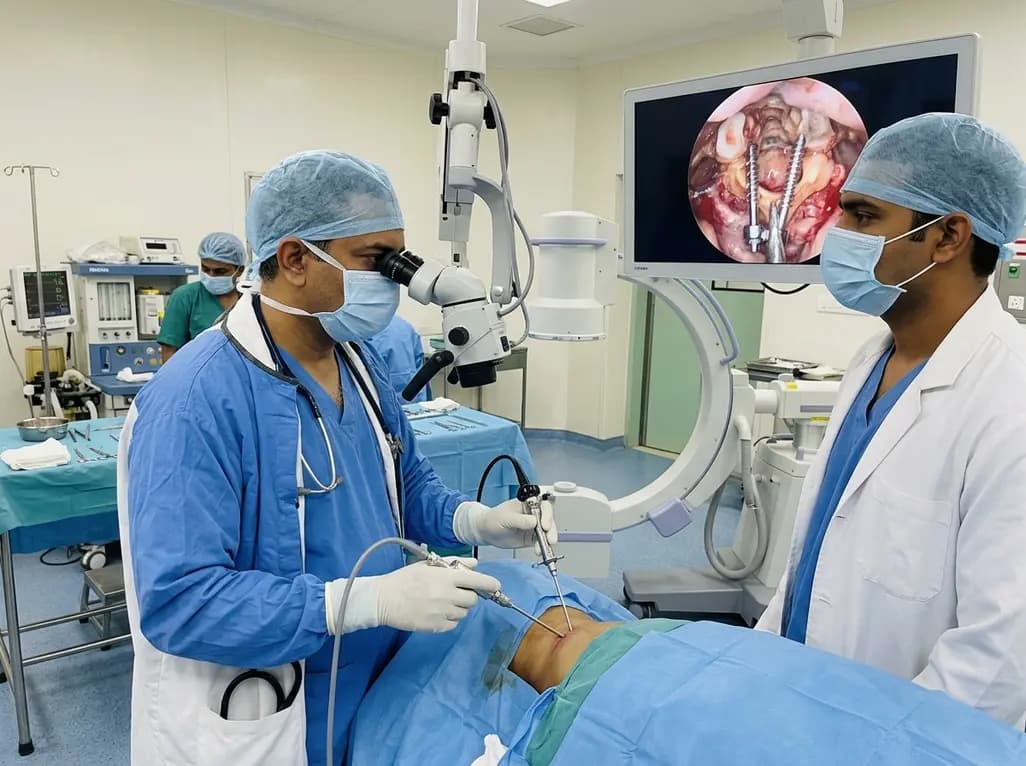
Endoscopic posterior cervical fusion combines minimally invasive decompression, joint preparation, and rigid screw-rod fixation for atlantoaxial pathologies. Early clinical findings demonstrate solid bony union, excellent symptom relief, and minimal soft-tissue morbidity without significant vascular compromise.
Yesterday
Atherosclerosis involves extensive glycometabolic reprogramming across immune and vascular cells. This review examines how glycolysis, the pentose phosphate pathway, and lactate-driven epigenetic shifts fuel plaque vulnerability, while highlighting novel therapeutic targets like PFKFB3 and LDHA.
Today
