.webp&w=384&q=75)

Loading, please wait...
Loading, please wait...

Arid ecosystems present some of the most challenging environments for plant life, characterized by extreme temperatures, low water availability, and alkaline soils. Despite these harsh conditions, medicinal plants like those in the Artemisia genus thrive, largely due to their complex biological adaptations. A significant part of this resilience stems from the Medicinal Artemisia Microbiome, a diverse community of bacteria that resides within and around the plant tissues. These microorganisms are not merely passive residents; they are active participants in the plant’s survival strategy. They assist in nutrient acquisition, provide protection against pathogens, and modulate the production of bioactive secondary metabolites. Understanding how these communities are assembled is crucial for pharmacology and traditional medicine, particularly in countries like India where Artemisia species are valued for their therapeutic properties. Recent research has shed light on the intricate interplay between the host plant’s genetic makeup and its immediate environment. By examining the bacterial structures across different niches such as bulk soil, the rhizosphere, and various plant compartments, scientists can begin to unravel the secrets of plant-microbe interactions in extreme climates. This knowledge is essential for optimizing the cultivation of medicinal herbs and ensuring the consistency of their active pharmaceutical ingredients.
The genetic identity of a host plant serves as a foundational blueprint for the recruitment of specific microorganisms. Specifically, the host genotype plays a pivotal role in determining which bacterial taxa can successfully colonize the plant’s internal and external environments. In a recent study involving Artemisia herba-alba, Artemisia negrei, and Artemisia mesatlantica, researchers discovered that host species significantly influenced the composition of the bacteriome. Among these, Artemisia mesatlantica stood out by hosting the most specific bacterial taxa compared to its relatives. This suggests that certain plants possess unique genetic traits or exudate profiles that attract specialized microbes. Furthermore, the study highlighted that different plant compartments, such as the roots and shoots, harbor distinct bacterial communities. This compartmentalization is likely a reflection of the differing physiological needs and environmental exposures of each tissue type. For instance, the root system interacts directly with the soil matrix, requiring a different set of microbial partners than the aerial shoot tissues. Consequently, the host acts as a biological filter, selecting for specific bacteria that can survive within its unique physiological landscape. This host-driven selection ensures that the plant maintains a functional and stable microbiome, even when environmental conditions fluctuate significantly.
While the host genotype provides the blueprint, the surrounding soil environment acts as a powerful filter that shapes the Medicinal Artemisia Microbiome. Soil physicochemical properties, often referred to as edaphic factors, are critical drivers of microbial diversity and composition. Key factors such as soil pH, calcium carbonate content, organic matter, and electrical conductivity have been strongly correlated with shifts in bacterial communities. In arid regions, soils are often highly alkaline and nutrient-poor, which creates a high-stress environment for both plants and microbes. Therefore, only those bacteria capable of tolerating these specific chemical conditions can persist in the bulk soil and eventually colonize the plant’s rhizosphere. The study found that these soil properties orchestrate the assembly of distinct yet functionally coherent bacterial communities. For example, high calcium carbonate levels and alkalinity may favor certain taxa while inhibiting others, thereby defining the pool of available microbes for the plant to recruit. Moreover, organic matter serves as a vital energy source, influencing the overall biomass and activity of the soil bacteriome. Understanding these edaphic influences is particularly relevant for agricultural practices, as altering soil conditions can directly impact the microbial health and medicinal quality of the harvested plants.
Despite the variations driven by host genetics and soil chemistry, a conserved core bacteriome has been identified across multiple Artemisia species. This core community comprises specific genera such as Bacillus, Microvirga, and Rhizobium. These bacteria are well-documented for their beneficial roles in plant growth promotion and biocontrol. The persistence of these taxa across different hosts and compartments suggests a stable and evolutionarily conserved association. Specifically, Bacillus species are renowned for their ability to produce antimicrobial compounds and solubilize phosphorus, making them invaluable partners in nutrient-deficient arid soils. Similarly, Rhizobium and Microvirga are often associated with nitrogen cycling and stress tolerance mechanisms. The presence of this core group suggests that these bacteria perform essential ecological roles that are universal to the Artemisia genus. Furthermore, these core microbes are often linked to the production of bioactive secondary metabolites, which are the very compounds that give these plants their medicinal value. Identifying a stable core bacteriome provides a potential avenue for developing standardized microbial inoculants. Such biofertilizers could enhance the resilience and therapeutic potency of medicinal crops, offering a sustainable alternative to chemical interventions in modern and traditional pharmacognosy.
The findings regarding the Medicinal Artemisia Microbiome hold significant implications for practitioners of AYUSH and pharmaceutical scientists in India. Indian traditional medicine systems often rely on the standardized quality of medicinal plants to ensure therapeutic efficacy. Since the microbiome directly influences the synthesis of secondary metabolites like artemisinin and various essential oils, the health of the plant-microbe association is paramount. If soil factors and host genetics determine the microbial makeup, they also indirectly dictate the phytochemical profile of the herb. Consequently, variations in the growing environment can lead to inconsistent drug quality, which is a major challenge in herbal medicine. By understanding the role of Bacillus and Rhizobium in these plants, researchers can develop better cultivation protocols that mimic natural microbial ecosystems. Moreover, this research supports the concept of "terroir" in medicinal plant science, where the specific geography and soil conditions define the medicinal properties of the plant. Integrating microbiome data into the standardization process could lead to more predictable clinical outcomes for patients using Artemisia-based treatments. This scientific validation of traditional knowledge strengthens the foundation of plant-based therapies and opens new doors for drug discovery and sustainable herbal production.
As we look toward the future, the study of the Medicinal Artemisia Microbiome offers a blueprint for broader research into other wild medicinal species. The interplay between nature and nurture—represented by host identity and soil properties—is a complex dynamic that requires further exploration through functional metagenomics. While this study identified the bacterial taxa present, the next step is to directly assess their functional contributions to plant health and metabolite production. For instance, how do these bacteria specifically activate the biosynthetic pathways for complex molecules? Furthermore, exploring the fungal component of the microbiome, or the "mycobiome," could provide a more holistic view of these symbiotic relationships. In the context of climate change, understanding how extreme arid conditions shape these interactions is vital for preserving biodiversity and securing medicinal resources. Developing synthetic microbial communities based on core taxa like Bacillus could revolutionize how we grow medicinal herbs in degraded or marginal lands. Therefore, interdisciplinary collaboration between ecologists, microbiologists, and pharmacologists will be essential. By harnessing the power of the plant microbiome, we can enhance the sustainability of medicinal agriculture and continue to uncover the therapeutic potential of the natural world, ensuring that future generations benefit from these ancient biological alliances.
Soil pH acts as a fundamental environmental filter that determines which bacteria can survive in the rhizosphere. In highly alkaline or arid soils, the pH shifts the availability of nutrients and the solubility of minerals. This directly influences the bacterial taxa that associate with the plant. Since these microbes often trigger the production of medicinal compounds, an optimal soil pH is required to maintain a microbiome that supports high concentrations of bioactive secondary metabolites.
Genera like Bacillus and Rhizobium are vital members of the core bacteriome because they provide essential services to the host. Bacillus is known for its ability to produce lytic enzymes and antimicrobial agents that protect the plant from soil-borne pathogens. Rhizobium species, even in non-legumes, can assist in nutrient uptake and enhance the plant’s ability to withstand abiotic stresses like drought and salinity, ensuring stable growth in arid environments.
Doctors in India often utilize drugs derived from Artemisia, such as those used for malaria or in AYUSH practices for metabolic and infectious diseases. This research explains how environmental and genetic factors influence the plant’s internal chemical factory. Understanding the microbiome helps in standardizing the quality and potency of these herbal medicines. It ensures that the active ingredients remain consistent across different batches, leading to more reliable therapeutic results and improved patient safety.
Disclaimer: This content is for informational and educational purposes only and does not constitute medical advice. It is not intended to be a substitute for professional clinical judgment, diagnosis, or treatment. Always seek the advice of your physician or other qualified health provider with any questions you may have regarding a medical condition. Refer to the latest local and national guidelines for clinical practice.
References
Karim R et al. Host genotype and edaphic factors shaped bacterial communities associated with native and endemic medicinal Artemisia species in arid environment. Environ Microbiome. 2026 Jun 26. doi: 10.1186/s40793-026-00920-9. PMID: 42363299.
El Khalloufi F et al. Chemical Composition and Antimicrobial Activity of Artemisia herba-alba and Origanum majorana Essential Oils from Morocco. Molecules. 2023; 28(4):1582. doi: 10.3390/molecules28041582.
Wahab A et al. Soil-Microbe-Plant Interactions: A Review on Mechanisms and Applications for Sustainable Agriculture. Plants (Basel). 2023; 12(11):2215. doi: 10.3390/plants12112215.

Read summarized clinical updates, watch expert medical content, and earn CME certifications right from your smartphone.
Open your smartphone camera to scan and install.





New research explores how host genotype and soil properties shape the bacterial communities of medicinal Artemisia species, offering insights for pharmaceutical standardization and AYUSH practitioners.
3 months ago
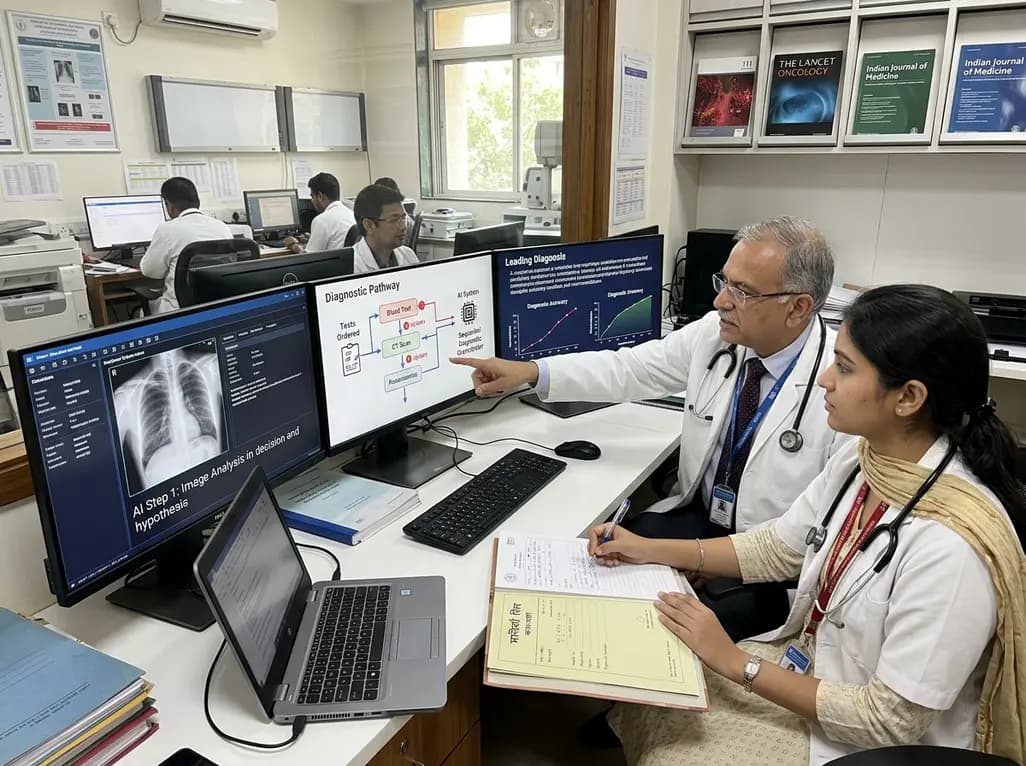
A breakthrough peer-reviewed study demonstrates that a sequential AI diagnosis system can mirror real-world clinical reasoning. By ordering stepwise tests and updating hypotheses dynamically, this multi-agent orchestrator achieved superior diagnostic accuracy while reducing investigative costs.
Today

A prenatal case highlights severe glutaric acidemia type II presenting as bilateral hyperechoic cystic kidneys at 18 weeks. Whole-exome sequencing revealed a novel homozygous ETFDH frameshift variant, demonstrating the power of rapid genetic testing in fetal renal anomalies.
Today

Review how tailored exercise programs benefit frail older patients with heart failure. Explore pathophysiological mechanisms, individualized training prescriptions, and strategies to overcome adherence barriers in clinical practice.
Yesterday

This comparative study evaluates posterior labral tears with and without glenohumeral instability, highlighting distinct demographic patterns, MRI underestimation in stable shoulders, and successful arthroscopic repair outcomes.
Yesterday

A clinical study demonstrates that early intervention with tocilizumab, either as monotherapy or bridged with corticosteroids, achieves significant proptosis reduction and resolves active inflammation in treatment-naive thyroid eye disease.
Yesterday
