.webp&w=384&q=75)

Loading, please wait...
Loading, please wait...

Medication Therapy Management implementation is a vital strategy for improving patient safety in complex clinical areas like oncology. However, a recent study in Kenya highlights a significant gap between the high perceived value of these services and their actual availability in clinical practice. Moreover, findings showed that while over 90% of participants believed MTM would reduce toxicities, only about 24% understood the service. Consequently, this lack of awareness, combined with severe staffing shortages and inadequate funding, creates a bottleneck in delivering high-quality cancer care. In addition, the research surveyed 450 participants, including patients, caregivers, and professionals across four cancer care centres. Furthermore, the results indicated that 86.9% of participants reported MTM services as currently unavailable.
Therefore, healthcare systems must prioritize workforce capacity and sustainable financing to institutionalize medication safety. Specifically, bridging the gap requires competency-based training and digitally enabled delivery models. Similarly, in low-resource settings like India, these models could reduce medication errors and improve patient adherence. Ultimately, strategic investment in pharmacy services is necessary to protect oncology patients from preventable adverse events.
MTM aims to optimize therapeutic outcomes by improving medication adherence and reducing adverse events or toxicities associated with complex chemotherapy regimens.
Common barriers include inadequate funding, a shortage of specialized staff, and low awareness among both patients and healthcare providers regarding the service.
Disclaimer: This content is for informational and educational purposes only and does not constitute medical advice or a professional relationship. Always consult a qualified healthcare provider for diagnosis and treatment. Refer to the latest local and national guidelines for clinical practice.
References
1. Kathare J et al. Knowledge, attitudes, practices, and implementation of Medication Therapy Management in Selected Cancer Care Centres in Kenya. Int J Pharm Pract. 2026 Mar 29. doi: undefined. PMID: 41904657.
2. Jarab AS, et al. Pharmacists' knowledge and attitudes toward medication therapy management service and the associated challenges and barriers for its implementation. Saudi Pharm J. 2022 Jun;30(6):842-848. doi: 10.1016/j.jsps.2022.03.008.
3. Swarnakar R, Yadav SL. Cancer rehabilitation in India: Current status, scope, and future perspectives. World J Gastrointest Oncol. 2025 Oct 24;17(10).

Read summarized clinical updates, watch expert medical content, and earn CME certifications right from your smartphone.
Open your smartphone camera to scan and install.





A study on MTM in Kenyan cancer centres reveals high support but low utilization due to funding and staffing issues, highlighting a global need for MTM inte...
6 months ago
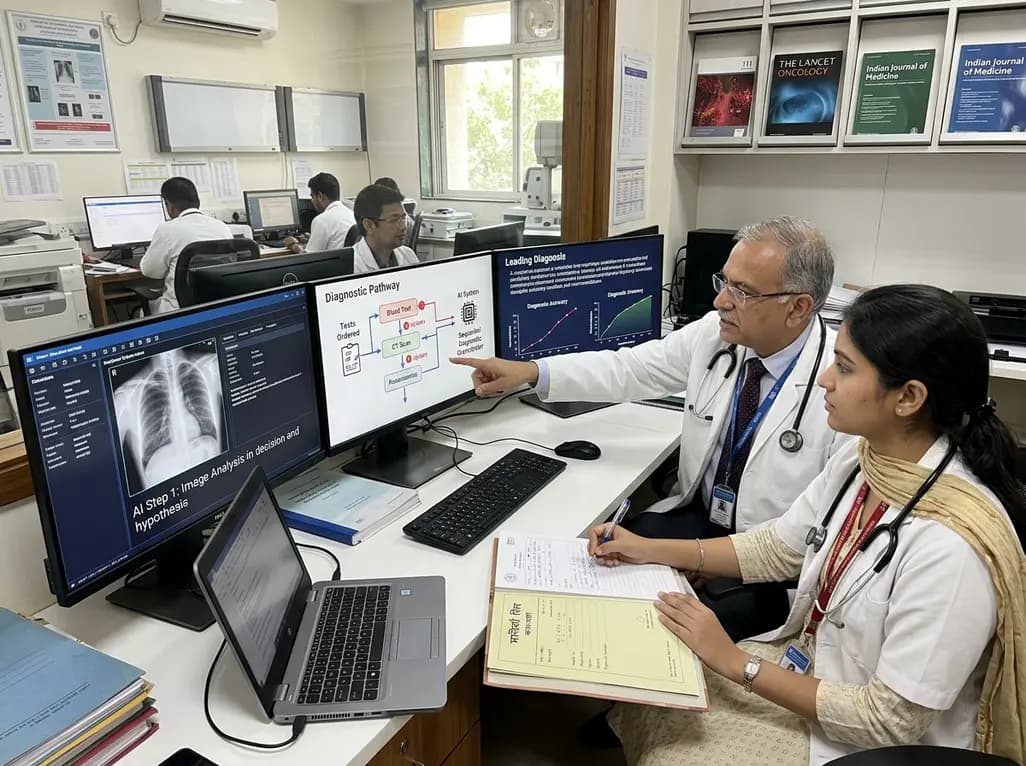
A breakthrough peer-reviewed study demonstrates that a sequential AI diagnosis system can mirror real-world clinical reasoning. By ordering stepwise tests and updating hypotheses dynamically, this multi-agent orchestrator achieved superior diagnostic accuracy while reducing investigative costs.
Today

A prenatal case highlights severe glutaric acidemia type II presenting as bilateral hyperechoic cystic kidneys at 18 weeks. Whole-exome sequencing revealed a novel homozygous ETFDH frameshift variant, demonstrating the power of rapid genetic testing in fetal renal anomalies.
Today

Review how tailored exercise programs benefit frail older patients with heart failure. Explore pathophysiological mechanisms, individualized training prescriptions, and strategies to overcome adherence barriers in clinical practice.
Yesterday

This comparative study evaluates posterior labral tears with and without glenohumeral instability, highlighting distinct demographic patterns, MRI underestimation in stable shoulders, and successful arthroscopic repair outcomes.
Yesterday

A clinical study demonstrates that early intervention with tocilizumab, either as monotherapy or bridged with corticosteroids, achieves significant proptosis reduction and resolves active inflammation in treatment-naive thyroid eye disease.
Yesterday
