.webp&w=384&q=75)

Loading, please wait...
Loading, please wait...
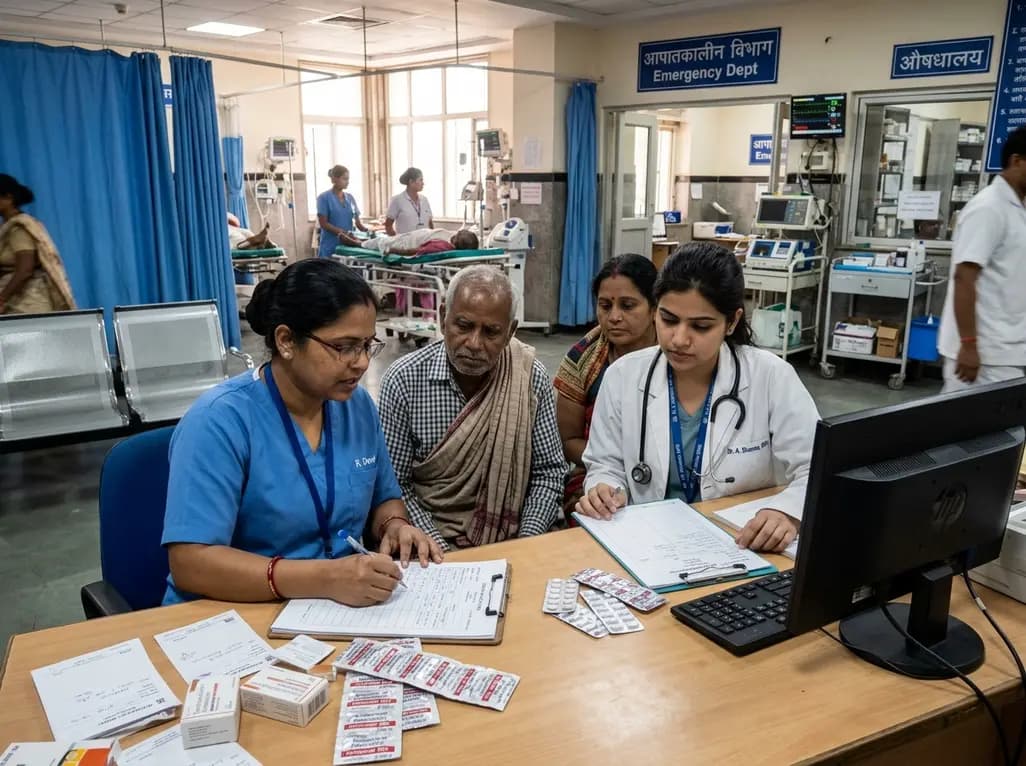
Emergency departments face relentless pressure to deliver rapid, accurate medical decisions while optimizing staff allocation. Obtaining a precise record of home medications represents a vital step in preventing hospital adverse drug events. Historically, clinical pharmacists verified every home medication list collected by pharmacy technicians, which required substantial time and effort. However, health systems are now implementing a medication history triage model to streamline this resource-intensive procedure. Under this strategic approach, pharmacists only validate medication histories that meet specific high-risk criteria, allowing low-risk histories to bypass redundant secondary review.
Recent research evaluated this innovative performance improvement initiative within a 100-bed adult emergency department over a two-month period. Investigators reviewed adult patient admissions whose technician-collected home medication lists bypassed traditional pharmacist verification. The primary goal was determining whether bypassing pharmacist verification compromised overall data precision or patient safety. Furthermore, researchers measured the clinical time saved by exempting routine histories from double verification. By establishing clear triage criteria, emergency care teams can deploy specialized personnel more efficiently. Pharmacy technicians handle primary data collection through structured interviews and electronic health record cross-referencing, while clinical pharmacists reallocate their expertise toward complex patient consultations. Consequently, this model offers a scalable strategy for modern emergency medicine.
Maintaining exceptional data accuracy remains paramount when altering clinical workflows. In this study, researchers evaluated a convenience sample of 150 technician-collected medication histories that bypassed pharmacist verification. The results demonstrated an impressive 95% accuracy rate, as 143 out of 150 records were completely free of discrepancies. This high success rate indicates that well-trained pharmacy technicians can reliably gather comprehensive home medication records without requiring constant oversight. Furthermore, these findings support the safety of selective triage protocols in high-volume settings.
The implementation of targeted screening protocols ensures that technicians independently manage straightforward cases while routing complex regimens to clinical pharmacists. In addition, proper initial training equips technicians to navigate patient interviews, contact community pharmacies, and check electronic dispensing records. As a result, the vast majority of documented lists contain correct drug names, dosages, and administration frequencies. Preserving a 95% accuracy rate without routine pharmacist intervention validates the structural integrity of the triage design. Hospital leadership can feel confident that patient care quality remains uncompromised. Ultimately, this evidence demonstrates that emergency departments can safely streamline reconciliation workflows. By trusting trained technicians with routine documentation, institutions maintain robust clinical standards while optimizing staff deployment across the emergency care continuum.
Although the unreviewed medication histories maintained a 95% overall accuracy, analyzing the remaining 5% of cases provided valuable insights into common error types. Among the 150 reviewed histories, seven total discrepancies occurred. The most frequently observed discrepancy was drug omission, which accounted for 4% of total reviews. Drug addition represented 2% of cases, while incorrect administration frequency occurred in 2% of histories. Finally, incorrect dosage was detected in only 1% of reviewed records. Understanding these specific discrepancy patterns helps clinical managers refine training programs and triage criteria.
Drug omissions frequently stem from patient recall gaps during busy emergency department intakes. Patients often forget to mention non-daily prescriptions, topicals, or recently adjusted medications during initial interviews. On the other hand, drug addition errors usually happen when previously discontinued therapies remain active in older electronic medical records. Frequency and dosage discrepancies typically arise from misunderstandings regarding complex dosing regimens or changing physician instructions. Consequently, identifying these recurring error modalities allows pharmacy departments to implement targeted preventative strategies. For instance, technicians can utilize structured prompt questions focused on high-risk categories, such as inhalers, eye drops, or PRN medications. Continuous quality monitoring ensures that minor errors are identified and corrected promptly before impacting inpatient therapy.
Beyond maintaining accuracy, the primary incentive for implementing a triage protocol is optimizing clinical efficiency and saving staff hours. In this emergency department study, pharmacists spent approximately 5 minutes reviewing each technician-collected medication history. Given an average workload of 120 medication histories collected daily, routine manual review previously consumed 10 hours of clinical pharmacist time every day. Extrapolating these numbers across a single month reveals that bypassing secondary review for low-risk lists saves up to 300 clinical pharmacist hours monthly.
This substantial reduction in documentation burden translates directly into increased clinical availability. Instead of performing repetitive, low-risk verification tasks, clinical pharmacists can redirect their specialized expertise toward high-priority emergency activities. For example, pharmacists can participate directly in resuscitation protocols, conduct comprehensive bedside consultations for high-risk patients, perform complex pharmacokinetic dosing, and assist physicians with critical drug selections. Furthermore, reallocated clinical hours enable pharmacists to monitor high-alert medications and address active drug interactions in real time. Consequently, the health system maximizes the value of specialized pharmacy staff without compromising medication safety. Efficiency gains of this magnitude prove that intelligent triage frameworks substantially improve operational productivity in emergency medicine.
Implementing a structured triage model offers profound practical benefits for emergency care systems worldwide, including growing healthcare networks in India and across the globe. As emergency department patient volume rises, administrative burdens often pull clinicians away from bedside patient care. Adopting technician-driven medication reconciliation supported by triaged pharmacist review creates a highly effective operational framework. This model optimizes labor division while upholding stringent clinical governance and quality metrics.
To successfully implement this model, healthcare institutions must establish clear, evidence-based triage criteria. For instance, medication histories involving high-risk drug classes—such as anticoagulants, narrow therapeutic index drugs, insulin, or antiarrhythmics—should always require double verification by a clinical pharmacist. Conversely, routine regimens for stable, non-critical patients can safely bypass secondary review following technician collection. In addition, hospitals must invest in continuous competency training and periodic quality audits for pharmacy technicians. Establishing standardized operational protocols ensures consistent performance and minimizes documentation variance across shifts. By empowering pharmacy technicians and optimizing clinical pharmacist deployment, emergency departments can enhance overall care quality, reduce clinical burnout, and foster a culture of continuous workflow innovation.
Successful implementation of a technician-centered triage framework requires a structured rollout strategy supported by comprehensive operational policies. First, healthcare organizations should establish robust credentialing and training curricula for pharmacy technicians participating in medication history collection. Training programs must emphasize effective patient interviewing techniques, systematic cross-verification with outpatient dispensing databases, and accurate electronic health record documentation. Additionally, technicians must undergo practical assessments to demonstrate clinical competency before independently handling unreviewed medication histories.
Second, pharmacy directors should collaborate with emergency medicine leadership to refine triage risk criteria continuously. Clear threshold guidelines help identify complex regimens—such as multi-drug immunosuppressive therapy, active oncology protocols, or high-risk pediatric cases—that automatically trigger pharmacist review. Furthermore, implementing automated clinical decision support tools within the electronic health record can assist technicians in flagging potential inconsistencies instantly. Finally, emergency departments must establish continuous quality control loops, including random monthly audits conducted by senior pharmacists. Auditing technician-entered histories maintains high data standards, identifies early educational opportunities, and ensures enduring clinical alignment. By combining rigorous training, risk-stratified triage rules, and persistent oversight, hospitals establish a safe, efficient, and sustainable medication management model.
A medication history triage model is a strategic clinical workflow where pharmacy technicians collect home medication lists from incoming emergency patients. Instead of requiring a pharmacist to verify every list, specific criteria determine whether a history needs secondary review. Low-risk medication histories bypass pharmacist verification, while high-risk regimens or complex profiles undergo mandatory pharmacist evaluation. This operational framework maintains high documentation precision while optimizing clinical pharmacy staff utilization.
Pharmacy technicians maintain exceptional accuracy through structured clinical training, standardized interview techniques, and multi-source verification. Technicians interview patients directly while cross-referencing outpatient dispensing databases, past medical records, and local community pharmacies. Furthermore, initial training protocols teach technicians to identify key regimen details, dosage forms, and administration schedules accurately. Standardized documentation templates and continuous quality control audits ensure that technician-collected medication histories consistently meet rigorous patient safety standards.
Implementing a triaged review framework substantially reduces the documentation burden on emergency department clinical pharmacists. By eliminating redundant reviews of routine, low-risk medication lists, pharmacists save valuable time that can be redirected toward high-impact clinical services. These include direct bedside care, critical resuscitation assistance, complex pharmacokinetic drug monitoring, physician consultations, and targeted patient education. Consequently, hospitals maximize operational efficiency while improving clinical patient care outcomes.
Disclaimer: This content is for informational and educational purposes only and does not constitute medical advice, diagnosis, or treatment. Always consult a qualified healthcare professional regarding any medical condition or operational clinical decisions. Refer to the latest local and national guidelines for clinical practice.
References

Read summarized clinical updates, watch expert medical content, and earn CME certifications right from your smartphone.
Open your smartphone camera to scan and install.





A study evaluated a triage model for pharmacist review of pharmacy technician-collected medication histories in an emergency department. Unreviewed histories achieved 95% accuracy, while saving up to 300 pharmacist hours monthly, demonstrating that selective verification maintains quality while freeing resources.
last month

A study reveals that salivary cortisone correlates more strongly with serum cortisol than salivary cortisol during dynamic adrenal testing, while salivary dexamethasone accurately confirms compliance. This provides a non-invasive, precise alternative to venipuncture for diagnosing adrenal disorders.
Today
Prenatal evaluation of fetal growth restriction requires an integrated diagnostic approach. While chromosomal microarray remains fundamental, exome sequencing offers significant diagnostic yield in isolated and syndromic cases, especially when ultrasound shows skeletal anomalies or normal placental function.
Today

Evaluating disagreement among Friedewald, Martin-Hopkins, and Sampson LDL-C equations reveals diagnostic uncertainty at statin cutoffs. An interpretable regime-aware calibration model rescues patient misclassifications without extra testing costs.
Today
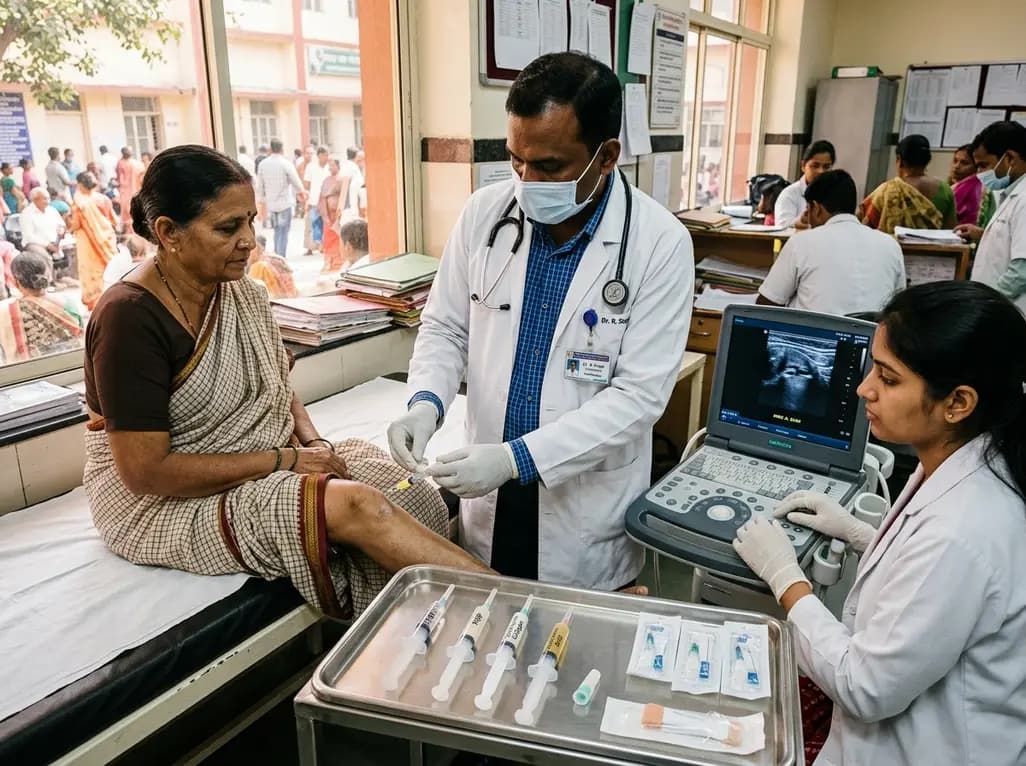
A randomized controlled trial compared ultrasound-guided intra-articular injections of PRP, hydrolyzed type I collagen, and hyaluronic acid in knee osteoarthritis. All therapies demonstrated significant improvements in WOMAC and pain scores at six months, supporting hydrolyzed collagen as a viable biological option.
Today
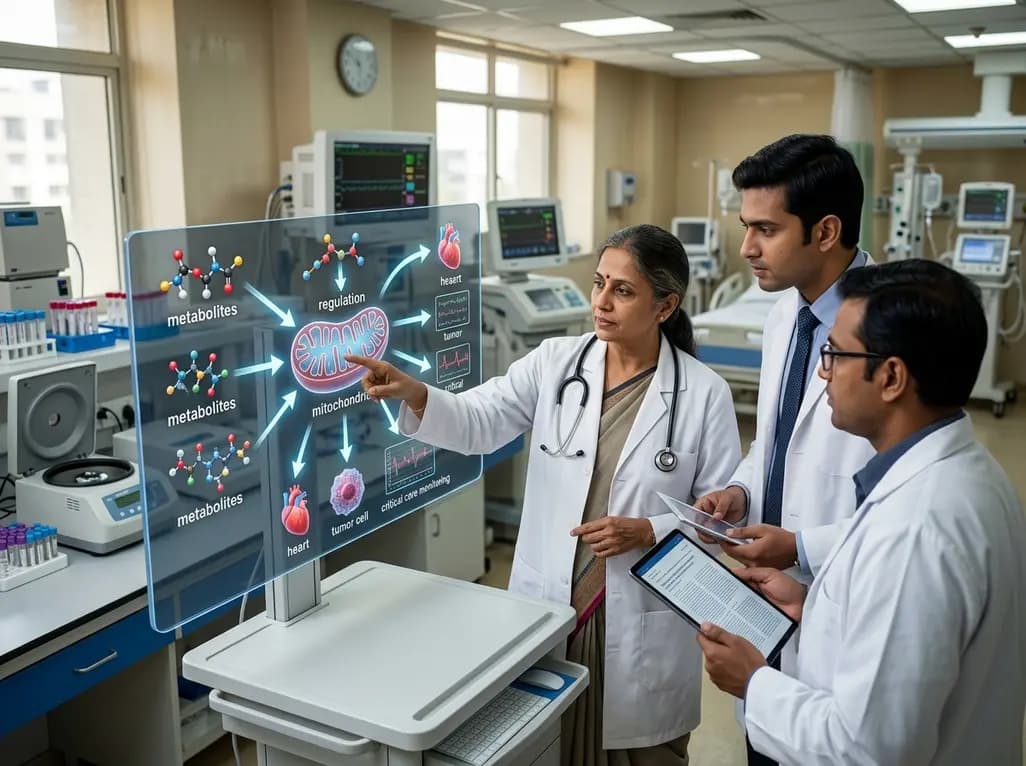
A groundbreaking review highlights mitochondrial quality control as a pivotal gating layer between metabolite signaling and regulated cell death, offering transformative therapeutic avenues across cardiology, oncology, and critical care.
Today
