.webp&w=384&q=75)

Loading, please wait...
Loading, please wait...
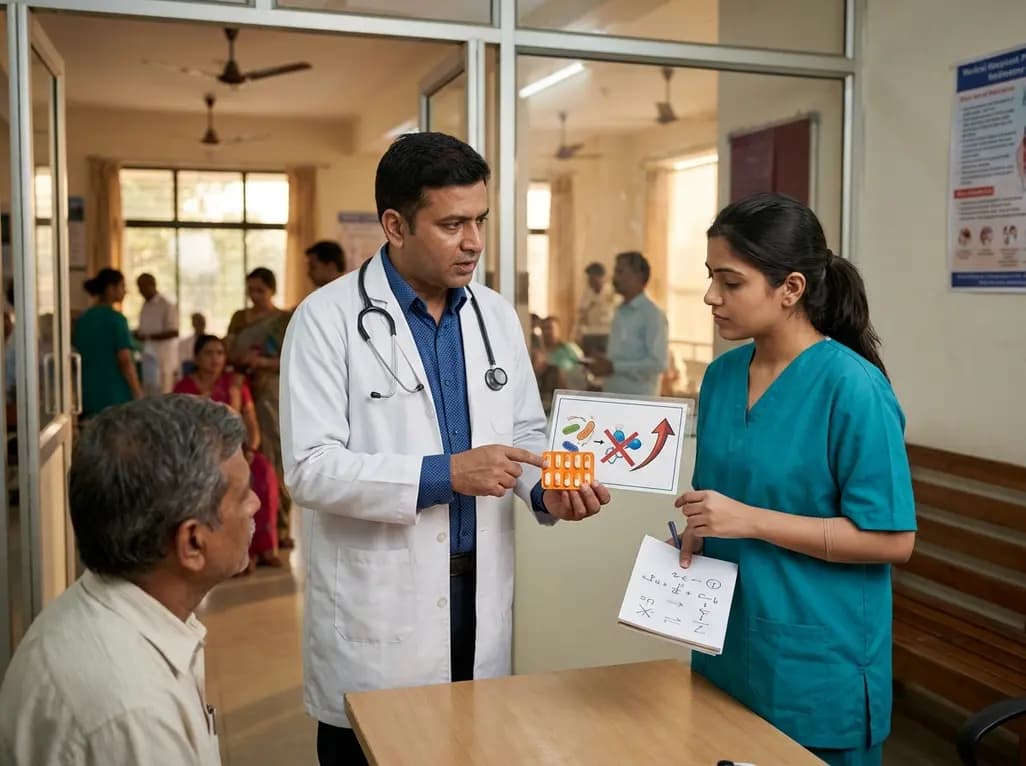
Research integrity serves as the cornerstone of medical advancement and clinical trust. However, medical research misconduct has emerged as a pervasive threat that undermines the credibility of scientific literature. A recent cross-sectional survey focusing on Iranian postgraduate students of medical sciences highlights a troubling prevalence of unethical practices. This study is particularly significant because it addresses behaviors that are often underreported due to their sensitive nature. Specifically, the investigation looks at plagiarism, data fabrication, and authorship misrepresentation. For healthcare professionals and educators, understanding the depth of these issues is vital for maintaining the sanctity of evidence-based medicine. Furthermore, the findings suggest that the pressure to produce results often outweighs the commitment to ethical rigor. Consequently, this creates a ripple effect where flawed data could potentially influence future clinical guidelines or public health policies. Addressing this phenomenon requires a nuanced understanding of how often these breaches occur and why students feel compelled to bypass ethical boundaries.
Measuring medical research misconduct is notoriously difficult because individuals are rarely willing to admit to unethical behavior in direct surveys. To overcome this social desirability bias, researchers in this study employed the Unmatched Count Technique (UCT). This indirect method provides respondents with absolute anonymity, as they only report the total number of items on a list that apply to them, rather than identifying specific behaviors. By using a double-list design, the study compared a control list of non-sensitive items with a treatment list that included one sensitive misconduct behavior. For example, half of the participants might receive a list of five innocuous academic activities, while the other half receives those same five plus one sensitive item like "purchasing a thesis." The difference in the mean scores between these two groups allows researchers to calculate a high-precision prevalence estimate for the sensitive behavior. Because participants know their individual answers cannot be linked to misconduct, they are significantly more likely to provide honest data. This methodological approach proves essential for uncovering the "hidden" statistics of academic dishonesty in medical universities.
The results of the UCT survey reveal a high incidence of various unethical behaviors among postgraduate medical students. Plagiarism, specifically using others\' ideas or phrases without proper citation, was the most frequently reported misconduct at a staggering 43%. This suggests that nearly half of the student population may be struggling with basic academic integrity standards or citation protocols. Furthermore, dishonest result reporting and data fabrication or deletion were reported by 38% and 34% of respondents, respectively. These figures are particularly alarming in the medical field, where data accuracy is a matter of patient safety. Additionally, authorship misrepresentation was admitted by 34% of the participants, reflecting a culture where credit is sometimes given without merit. Salami slicing—the practice of splitting a single study into several smaller publications—was reported by 26%. Finally, 20% of students confessed to the outright purchase of research work. These findings indicate that medical research misconduct is not merely a series of isolated incidents but a systemic issue that requires immediate institutional intervention.
While the study focused on Iranian institutions, the implications for the global community, including India, are profound. In India, the National Medical Commission (NMC) and the University Grants Commission (UGC) have recently tightened regulations regarding academic integrity. Studies conducted in Indian medical colleges have mirrored these findings, showing high rates of "gift authorship" and plagiarism among postgraduates. The Iranian data serves as a critical warning for Indian medical educators to reinforce the ethical guidelines established by the Indian Council of Medical Research (ICMR). Moreover, the transition to mandatory thesis submissions for postgraduate degrees in India has increased the pressure on students, sometimes leading to the same shortcuts observed in the Iranian study. Consequently, the use of advanced detection tools like Turnitin and iThenticate is becoming standard, yet these tools only catch plagiarism, not data fabrication. The global medical community must recognize that medical research misconduct is a borderless challenge. Therefore, adopting indirect measurement techniques like UCT in local contexts could provide a more accurate picture of research integrity within the Indian healthcare education system.
Understanding the root causes is essential for developing effective prevention strategies. Often, medical research misconduct is driven by an intense "publish or perish" culture where career advancement is strictly tied to the number of publications. For many postgraduate students, a lack of formal training in research methodology and ethics leads to unintentional breaches, such as poor paraphrasing. However, the more egregious acts, like purchasing research or fabricating data, often stem from a perceived lack of time and inadequate faculty supervision. Additionally, when institutions prioritize quantity over quality, students may perceive that the system rewards high output regardless of its ethical foundations. To combat this, universities must shift their focus toward fostering a culture of integrity rather than just checking for compliance. Furthermore, mentorship plays a crucial role; when senior researchers model ethical behavior, students are more likely to follow suit. Creating enforceable institutional mechanisms and providing robust ethics training throughout the medical curriculum are indispensable steps toward protecting the future credibility of medical research and professional practice.
The Unmatched Count Technique is preferred because it effectively eliminates social desirability bias. In traditional surveys, participants often hide unethical behaviors to avoid judgment or repercussions. By providing a list where they only disclose the number of applicable items, their specific choices remain anonymous. This leads to higher honesty levels and more accurate prevalence data for sensitive topics like medical research misconduct, compared to direct questioning methods.
Salami slicing involves fragmenting a single comprehensive study into multiple smaller papers to increase a researcher\'s publication count. This practice distorts the scientific record by making a single set of findings appear more significant or widely replicated than it actually is. It burdens the peer-review system and complicates meta-analyses, ultimately misleading clinicians who rely on clear, consolidated evidence for making informed treatment decisions for their patients.
The National Medical Commission and the University Grants Commission have implemented tiered penalties for plagiarism in India. Level 0 (up to 10% similarity) is usually acceptable, while Level 1 (10-40%) requires manuscript revision. Higher levels (above 40%) can lead to the cancellation of student registration or the loss of increments for faculty. These regulations aim to uphold high academic standards and ensure that Indian medical research remains internationally credible and ethical.
Disclaimer: This content is for informational and educational purposes only. It does not constitute legal or professional medical advice. Always consult institutional ethics committees for specific research guidelines. Refer to the latest local and national guidelines for clinical practice.
References
Omidi S et al. Indirect measurement of research misconduct among Iranian postgraduate students of medical sciences using the unmatched count technique. Res Integr Peer Rev. 2026 Jun 28. doi: undefined. PMID: 42365392.
Indian Council of Medical Research. National Ethical Guidelines for Biomedical and Health Research Involving Human Participants. 2017.
National Medical Commission. Guidelines on Professional Responsibilities of Medical Students. 2023.
"
Read summarized clinical updates, watch expert medical content, and earn CME certifications right from your smartphone.
Open your smartphone camera to scan and install.





A new study reveals high levels of research misconduct among medical postgraduates. Using the Unmatched Count Technique, researchers found significant rates of plagiarism and data fabrication, highlighting an urgent need for enhanced ethical training and stricter academic policies in medical sciences.
3 months ago

Novel diimide and hydrazone scaffolds, particularly compound #C4, synergistically reactivate latent HIV-1 when combined with JQ1 or PKC activators. Demonstrating donor-matched proviral transcription ex vivo and non-canonical signaling, these findings advance shock and kill strategies toward reservoir eradication.
Today

A comparative cohort study evaluates vNOTES vs TLH hysterectomy for benign conditions, demonstrating shorter operative duration, faster return to daily activities, and equivalent female sexual function scores without increased dyspareunia.
Today

Review how tailored exercise programs benefit frail older patients with heart failure. Explore pathophysiological mechanisms, individualized training prescriptions, and strategies to overcome adherence barriers in clinical practice.
Yesterday

This comparative study evaluates posterior labral tears with and without glenohumeral instability, highlighting distinct demographic patterns, MRI underestimation in stable shoulders, and successful arthroscopic repair outcomes.
Yesterday

A clinical study demonstrates that early intervention with tocilizumab, either as monotherapy or bridged with corticosteroids, achieves significant proptosis reduction and resolves active inflammation in treatment-naive thyroid eye disease.
Today
