.webp&w=384&q=75)

Loading, please wait...
Loading, please wait...
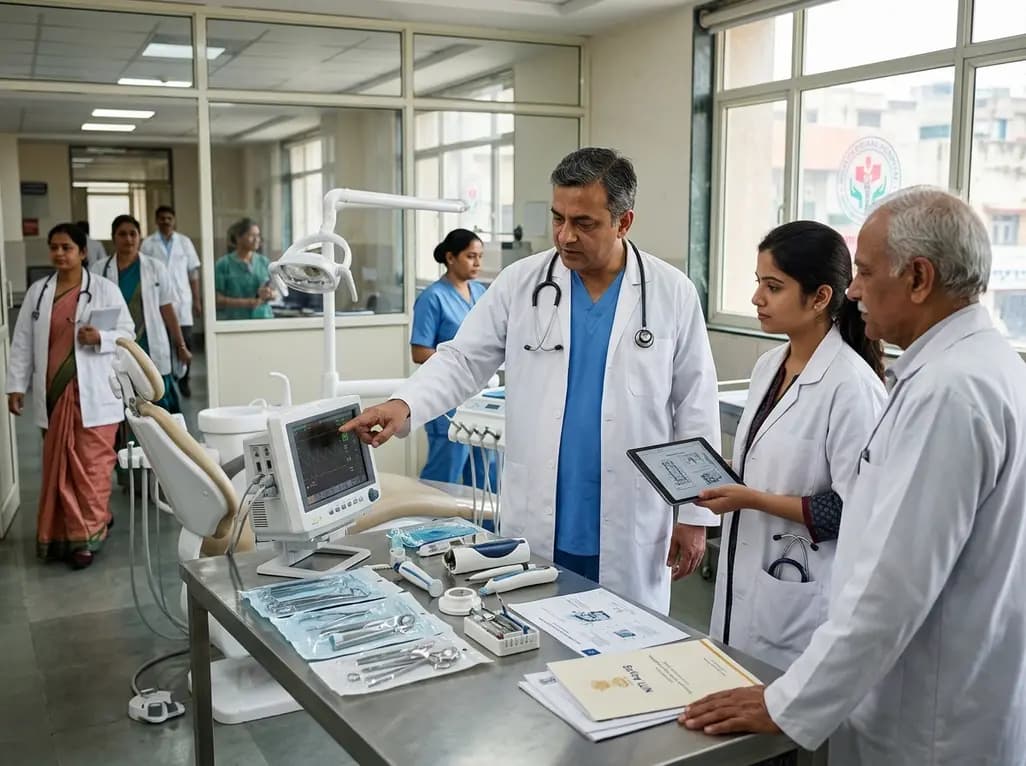
India currently stands at a decisive crossroads in modern healthcare delivery and industrial self-reliance. To support local production, NITI Aayog recently convened a high-level consultation to revolutionize domestic medical device manufacturing across the nation. Government authorities, prominent researchers, and dental innovators discussed structural barriers that hinder domestic production. Consequently, policy leaders are designing robust frameworks to reduce import reliance, upgrade clinical device security, and ensure steady supplies for tertiary hospitals and primary healthcare clinics.
India currently relies on imports for roughly seventy to eighty percent of its advanced diagnostic and therapeutic equipment. Although the country manufactures numerous basic consumables and disposables, advanced electro-medical instruments and specialized dental tools often originate abroad. Therefore, domestic facilities must navigate harsh competitive dynamics against established foreign conglomerates. In response, NITI Aayog engaged with top academic institutions like IIT Delhi and IIT Mumbai alongside public institutions like the Indian Council of Medical Research. These collaborative talks focused on accelerating domestic research while aligning commercial output directly with national healthcare priorities. Furthermore, government planners recognized that building robust local supply chains provides substantial protection against global logistical disruptions. Clinicians and hospital administrators frequently confront volatile procurement costs when dealing with foreign medical technology. By establishing a thriving local manufacturing base, domestic healthcare providers can access cost-effective, high-performing tools tailored specifically to Indian disease burdens. Thus, the renewed focus on indigenous development promises to transform diagnostic accessibility for millions of patients across tier-two and tier-three cities.
Stringent compliance frameworks safeguard clinical safety, but procedural redundancies often stifle manufacturing momentum. The Association of Indian Medical Device Industry highlighted significant operational barriers during the consultations. Historically, entrepreneurs could inaugurate a functional production facility in approximately eighteen months. However, overlapping regulatory authorities and shifting statutory benchmarks have lengthened this timeline to nearly four years. Consequently, domestic developers face extended commercial delays that discourage private equity and venture capital. In addition, entrepreneurs often struggle to navigate disjointed oversight shared across divergent government bureaus. To resolve these friction points, industry representatives are urging policymakers to enact a dedicated statutory framework for medical devices. A single, harmonized legislation would separate medical devices from outdated pharmaceutical regulations. Furthermore, streamlined licensing systems will establish predictable review periods for clinical trials, biocompatibility analyses, and facility audits. By establishing centralized, transparent clearance mechanisms, the central government can significantly accelerate facility approvals. Ultimately, faster regulatory clearances ensure that safe, clinically validated domestic tools reach operating rooms and outpatient dental practices without unnecessary administrative impediments.
Indian medical technology producers currently navigate a ten to fifteen percent cost disadvantage compared to international competitors. High domestic capital costs, elevated industrial electricity rates, and expensive logistics drive up overall production expenses. Moreover, local innovators often face limited access to patient risk capital during critical developmental stages. Because medical hardware requires protracted prototyping and extensive bench testing, standard commercial financing frequently proves unviable. In response, industry associations are urging the central administration to introduce comprehensive fiscal incentives. Targeted capital subsidies, duty rationalization on essential components, and specialized infrastructure clusters can effectively level the commercial playing field. Furthermore, domestic manufacturers desperately require expanded access to shared testing laboratories, cleanrooms, and centralized calibration centers. Constructing independent testing centers consumes massive financial reserves that small enterprises simply cannot afford. Therefore, state-supported testing facilities will lower financial entry barriers for pioneering medical startups. By mitigating these severe operational overheads, indigenous firms can deliver competitively priced devices without sacrificing technical excellence. Consequently, public procurement programs and private hospital chains can prioritize affordable, locally manufactured clinical equipment.
The dental equipment segment represents an increasingly vital yet historically neglected subset of India's medical technology landscape. Most high-speed handpieces, endodontic motors, imaging sensors, and composite materials originate from international vendors. As a result, dental practitioners frequently manage excessive equipment maintenance expenses and prolonged spare-part procurement delays. During the NITI Aayog consultations, leading dental device manufacturers and specialized e-commerce platforms voiced their strategic concerns. These stakeholders highlighted the pressing need for targeted incentives that encourage domestic fabrication of precision dental tools. In addition, academic research institutes must collaborate directly with dental colleges to test clinical prototypes effectively. Establishing reliable post-market surveillance mechanisms will also reassure clinicians regarding the mechanical reliability and biological safety of indigenous dental equipment. Furthermore, digital dental technologies, such as intraoral scanners and computer-aided milling machines, demand robust software-hardware integration. Targeted research grants can stimulate indigenous engineering in these specialized fields. Ultimately, expanding local dental manufacturing will reduce operational costs for private clinics, allowing practitioners to offer more affordable restorative and preventive oral care to broader patient populations.
Achieving durable sovereignty in healthcare technologies demands cohesive coordination between industry leaders, academic engineers, and clinical practitioners. NITI Aayog operates as a crucial catalyst, bridging bureaucratic gaps between the Department of Pharmaceuticals, the Ministry of Health, and domestic research councils. However, sustainable progress requires continuous communication rather than sporadic industrial consultations. Academic hubs such as the Indian Institutes of Technology offer world-class technical talent, yet their prototypes frequently languish without industrial commercialization. Therefore, structured translational pipelines must guide academic concepts from university workshops into commercial manufacturing plants. Additionally, Indian healthcare professionals must participate actively during initial device design phases. Clinician feedback ensures that domestic medical and dental tools address real-world ergonomic and functional demands. Meanwhile, public healthcare procurement policies must actively incentivize hospitals to purchase certified domestic hardware. Through predictable public purchasing and rigorous international quality certifications, local brands can build reputable market profiles. Consequently, this unified approach will bolster domestic supply resilience, reduce foreign exchange outflows, and elevate India into a premier global hub for medical device export.
Q1: Why are Indian medical device manufacturers facing significant cost disadvantages?
Indian producers experience a ten to fifteen percent cost disadvantage due to high capital rates, expensive electricity tariffs, and elevated freight logistics. Furthermore, manufacturers face inadequate testing facilities, expensive imported raw components, and limited access to developmental risk funding compared to heavily subsidized foreign manufacturers.
Q2: How do prolonged regulatory licensing timelines impact Indian healthcare delivery?
When manufacturing licenses take up to four years to obtain due to overlapping bureaucratic bodies, breakthrough diagnostic and therapeutic tools face severe commercial delays. Consequently, Indian hospitals must rely on expensive imported alternatives, which elevates total healthcare delivery costs and delays modern clinical adoption across rural facilities.
Q3: What specific measures did the industry propose to NITI Aayog?
The Association of Indian Medical Device Industry proposed a dedicated legal framework specifically tailored for medical devices, separate from general pharmaceutical regulations. Additionally, they recommended expedited licensing pathways, expanded public testing infrastructure, duty rationalization on essential components, and financial support to counterbalance imported equipment advantages.
Disclaimer: This content is for informational and educational purposes only. It does not constitute medical advice or replace professional judgment. Refer to the latest local and national guidelines for clinical practice.
References

Read summarized clinical updates, watch expert medical content, and earn CME certifications right from your smartphone.
Open your smartphone camera to scan and install.





NITI Aayog is designing transformative policy measures to revitalize India's medical and dental device manufacturing industry. By tackling persistent regulatory delays, infrastructure gaps, and production cost disadvantages, the government aims to boost clinical self-reliance and secure high-grade domestic technologies.
Today

A comparative study evaluates three ambient listening systems across Dutch outpatient consultations, examining their accuracy, completeness, and speed when facing dialect variations, multispeaker dynamics, and conversational interruptions.
Today

A recent cohort study reveals that reproductive-age women with cerebral venous thrombosis have nearly double the odds of developing intracranial hypertension compared to older women. Superior sagittal and lateral sinus occlusions heighten this risk, predisposing patients to persistent visual impairment.
Today
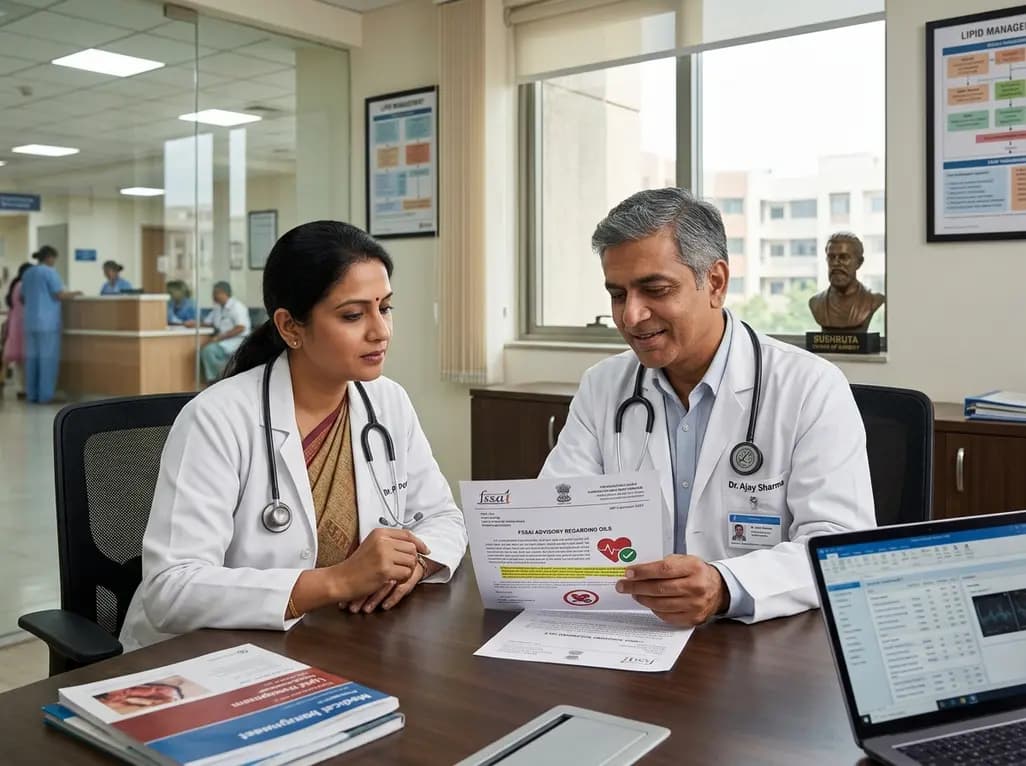
India's food safety authority FSSAI has issued show-cause notices to Gemini Edibles, BigBasket, and Flipkart for unpermitted cardiovascular claims regarding Freedom Rice Bran Oil. This regulatory move highlights the strict enforcement of advertising standards and the clinical necessity of evidence-based lipid care.
Today

Diagnostic data shows that nearly one in four spine investigations now involve patients younger than 40 years. This comprehensive overview explores the drivers behind this demographic trend, evaluates ergonomic hazards, clarifies red-flag signs, and highlights clinical indications for judicious diagnostic imaging.
Today
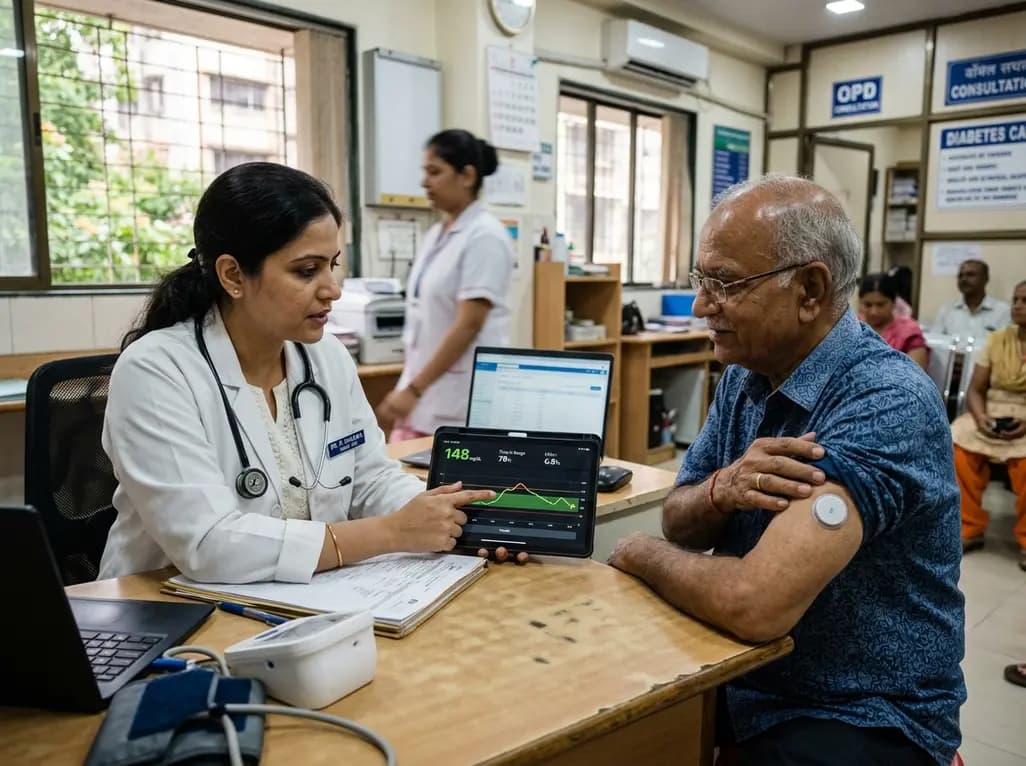
A landmark randomized clinical trial demonstrates that real-time continuous glucose monitoring significantly reduces HbA1c and enhances time in range for individuals with type 2 diabetes who do not take insulin, paving the way for broader clinical adoption and personalized metabolic therapy in primary care.
Today
