.webp&w=384&q=75)

Loading, please wait...
Loading, please wait...

Recent regulatory developments in India underscore growing vigilance over deceptive nutritional marketing. Specifically, the Food Safety and Standards Authority of India (FSSAI) has taken stern action against unverified dietary assertions. The regulator recently flagged deceptive rice bran oil claims promoted by commercial manufacturers and digital storefronts. For medical practitioners, this regulatory intervention highlights a critical intersection between public health communications and clinical practice. Patients frequently encounter commercial advertisements that promise effortless cholesterol reduction. Consequently, individuals may replace evidence-based lifestyle changes or prescription therapies with marketed cooking products. Understanding the nuances of these regulatory actions equips doctors to guide their patients effectively.
FSSAI recently served formal show-cause notices to Gemini Edibles alongside prominent e-commerce entities BigBasket and Flipkart India. The enforcement action focused on marketing strategies for Freedom Cooking Rice Bran Oil. The commercial campaigns claimed that the product reduces bad cholesterol and concurrently maintains or boosts good cholesterol. In addition, the advertisements highlighted high concentrations of natural oryzanol exceeding 10,000 parts per million.
However, regulatory authorities determined that these therapeutic assertions exceeded the legal framework. The food authority clarified that existing regulations strictly prohibit such unapproved cardiovascular claims on edible vegetable oils. Manufacturers cannot legally market standard cooking oils as targeted hypolipidemic agents. Therefore, the regulator directed all three food business operators to show cause under the statutory food safety act.
Furthermore, this enforcement push marks a decisive shift in how regulators monitor digital advertising. Regulators are no longer focusing solely on traditional packaging labels. Instead, they actively monitor digital storefronts, marketplace listings, and social media campaigns. Because digital platforms influence millions of urban consumers every day, misleading promotional materials can distort patient behavior. Consequently, regulatory bodies are enforcing stringent accountability across entire supply and marketing chains.
The core legal framework governing these violations is the Food Safety and Standards Advertising and Claims Regulations of 2018. Under these statutory rules, food operators must validate every physiological and nutritional statement through rigorous scientific consensus. Schedule II-A of these regulations outlines permissible statements for edible vegetable oils. While manufacturers may state that an oil contains natural antioxidants like oryzanol, they cannot promise direct therapeutic cures.
Specifically, the law prohibits unapproved claims that suggest a food item can prevent, treat, or reduce disease risk independently. Rice bran oil naturally contains gamma-oryzanol, tocopherols, and tocotrienols. Research indicates that gamma-oryzanol may support lipid metabolism when part of a balanced diet. However, commercial promoters crossed statutory boundaries by asserting definite reductions in low-density lipoprotein and elevations in high-density lipoprotein.
Moreover, regulators emphasize that dietary fats function as macronutrients rather than pharmaceutical compounds. Misleading product claims blur this essential clinical boundary. When commercial brands advertise specific parts-per-million concentrations alongside overt cardiovascular promises, consumers mistakenly equate cooking oils with therapeutic interventions. Therefore, statutory standards mandate that commercial marketing must remain neutral, factual, and strictly aligned with established public health guidelines.
Beyond deceptive marketing assertions, FSSAI identified significant licensing discrepancies during its investigation. Notably, Gemini Edibles allegedly sold food products through its proprietary website without holding a valid central e-commerce license. Digital retail operations require explicit central licensing under current Indian food safety statutes. This requirement ensures that digital distributors maintain comprehensive supply chain traceability and strict storage standards.
Simultaneously, the regulatory authority executed rigorous enforcement actions against other non-compliant food operators across India. The regulator suspended the operational license of DNV Food Products Limited due to grave violations discovered during facility inspections. These severe infractions involved poor hygiene standards, substandard sanitation, unsafe storage conditions, and licensing irregularities. Furthermore, FSSAI permanently cancelled the operating license of Jhanvittanni because of persistent non-compliance with statutory safety mandates.
These comprehensive actions reflect a robust regulatory crackdown on food safety across multiple operational tiers. Food safety authorities are targeting both physical manufacturing hygiene and digital consumer representations. For healthcare providers, these systemic actions demonstrate that regulatory bodies are intensifying quality assurance. Consequently, clinicians can trust that public health agencies are actively closing loopholes that compromise consumer safety.
From a cardiovascular perspective, cooking oils represent an essential component of daily nutrition in Indian households. However, no single cooking oil acts as an independent panacea for dyslipidemia or atherosclerotic cardiovascular disease. Rice bran oil possesses a relatively balanced fatty acid profile, containing monounsaturated and polyunsaturated fats alongside saturated lipids. The presence of gamma-oryzanol does provide antioxidant properties that support overall cellular health.
Nonetheless, clinical trials demonstrate that cardiovascular risk reduction requires comprehensive dietary and lifestyle modification. Relying on an edible oil to lower bad cholesterol without dietary caloric restriction or medical therapy yields negligible clinical benefit. Furthermore, excessive heating or repeated frying rapidly oxidizes vegetable oils, generating toxic polar compounds. These deteriorated compounds promote endothelial inflammation and exacerbate systemic cardiometabolic dysfunction.
In routine clinical practice, cardiologists and physicians frequently manage patients with elevated LDL-C and low HDL-C levels. Many of these patients consume calorie-dense, oil-rich foods under the false belief that certain commercial oils offer cardiac protection. Therefore, clinicians must actively dispel these marketing myths. Physicians should remind patients that cooking oils deliver nine calories per gram regardless of antioxidant content.
To deliver effective cardiovascular risk counseling, physicians should incorporate clear guidance regarding cooking fats into clinical consultations. First, doctors should evaluate the total quantity of visible fat consumed rather than solely discussing oil varieties. Current nutritional guidelines recommend limiting total visible fat intake to approximately twenty to thirty grams per individual daily. Patients must understand that excessive oil consumption promotes weight gain, hepatic steatosis, and atherogenic dyslipidemia.
Second, medical practitioners should advise patients to rotate or blend cooking oils instead of depending on a single brand. Combining rice bran oil with mustard, groundnut, or sesame oil optimizes the ratio of omega-six to omega-three fatty acids. This balanced ratio supports systemic vascular health and reduces inflammatory pathways. Furthermore, doctors must educate patients about thermal stability and warn against reusing cooked oil.
Finally, physicians must emphasize that nutritional adjustments complement, rather than substitute, guideline-directed medical therapy. When patients present with significant cardiovascular risk or familial hypercholesterolemia, pharmacological agents remain indispensable. Commercial claims promising rapid cholesterol reduction can foster false security and medication non-adherence. By addressing these deceptive assertions during routine clinic visits, clinicians empower patients to make informed, scientifically sound dietary decisions.
Q1: Why did FSSAI issue notices regarding Freedom Rice Bran Oil?
The food regulator issued notices because the brand promoted unapproved cardiovascular claims across digital platforms and social media. Specifically, advertisements claimed that the oil actively reduces bad cholesterol and increases good cholesterol. Furthermore, the brand advertised high oryzanol concentrations without proper statutory authorization. These promotional statements violate FSSAI advertising regulations of 2018, which prohibit unverified therapeutic assertions for edible vegetable oils. Consequently, the authority ordered the involved operators to explain why statutory penalties should not apply.
Q2: Does scientific evidence support oryzanol as a standalone cholesterol treatment?
Scientific research indicates that gamma-oryzanol possesses beneficial antioxidant properties and may modestly assist lipid metabolism when part of a balanced diet. However, robust clinical evidence does not support oryzanol as a standalone substitute for lipid-lowering medical therapy. Commercial cooking oils contain oryzanol in modest amounts that cannot replace prescription statins or lifestyle modifications. Therefore, medical professionals must advise patients against relying solely on fortified cooking oils to manage clinical dyslipidemia.
Q3: How should clinicians advise dyslipidemic patients about selecting cooking oils?
Clinicians should advise patients to prioritize moderation over specific brand marketing. Doctors recommend restricting visible fat consumption to twenty to thirty grams daily while rotating edible oils such as rice bran, mustard, and groundnut oil. This strategy achieves a balanced fatty acid intake without excess saturated fat. Furthermore, physicians must instruct patients to avoid reusing fried oil and clarify that no cooking oil eliminates the necessity for prescribed cardiovascular medications.
Disclaimer: This content is for informational and educational purposes only. It does not constitute medical advice or replace professional judgment. Refer to the latest local and national guidelines for clinical practice.
References

Read summarized clinical updates, watch expert medical content, and earn CME certifications right from your smartphone.
Open your smartphone camera to scan and install.





India's food safety authority FSSAI has issued show-cause notices to Gemini Edibles, BigBasket, and Flipkart for unpermitted cardiovascular claims regarding Freedom Rice Bran Oil. This regulatory move highlights the strict enforcement of advertising standards and the clinical necessity of evidence-based lipid care.
Today

A comparative study evaluates three ambient listening systems across Dutch outpatient consultations, examining their accuracy, completeness, and speed when facing dialect variations, multispeaker dynamics, and conversational interruptions.
Today

A recent cohort study reveals that reproductive-age women with cerebral venous thrombosis have nearly double the odds of developing intracranial hypertension compared to older women. Superior sagittal and lateral sinus occlusions heighten this risk, predisposing patients to persistent visual impairment.
Today

Diagnostic data shows that nearly one in four spine investigations now involve patients younger than 40 years. This comprehensive overview explores the drivers behind this demographic trend, evaluates ergonomic hazards, clarifies red-flag signs, and highlights clinical indications for judicious diagnostic imaging.
Today
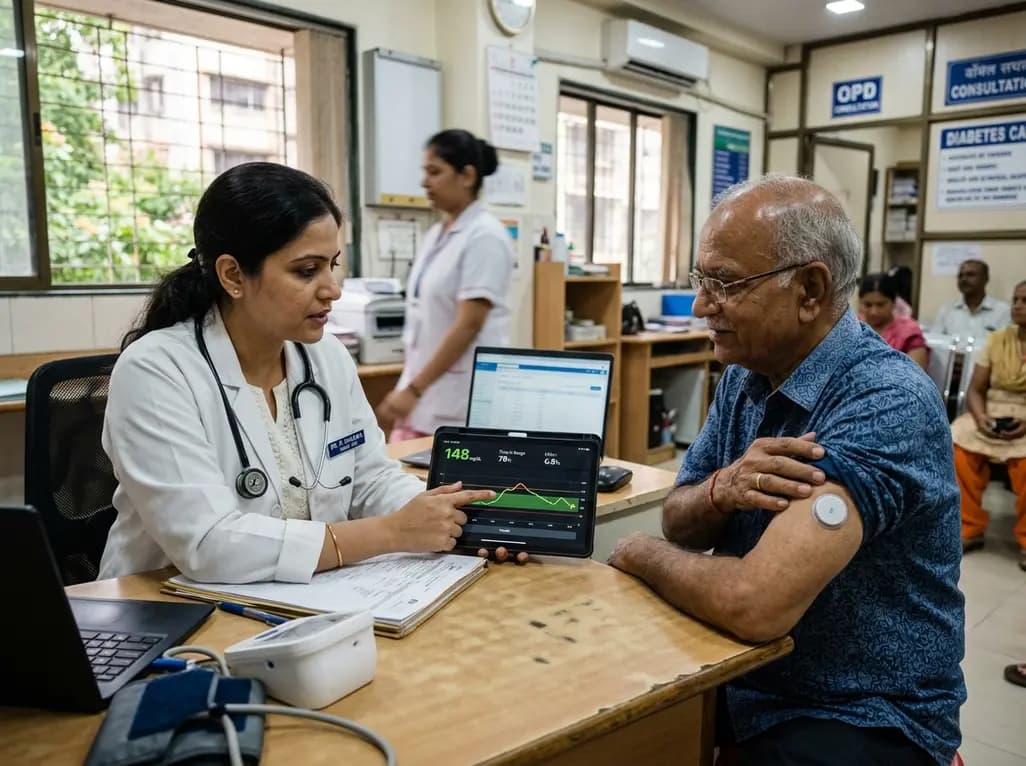
A landmark randomized clinical trial demonstrates that real-time continuous glucose monitoring significantly reduces HbA1c and enhances time in range for individuals with type 2 diabetes who do not take insulin, paving the way for broader clinical adoption and personalized metabolic therapy in primary care.
Today
