.webp&w=384&q=75)

Loading, please wait...
Loading, please wait...
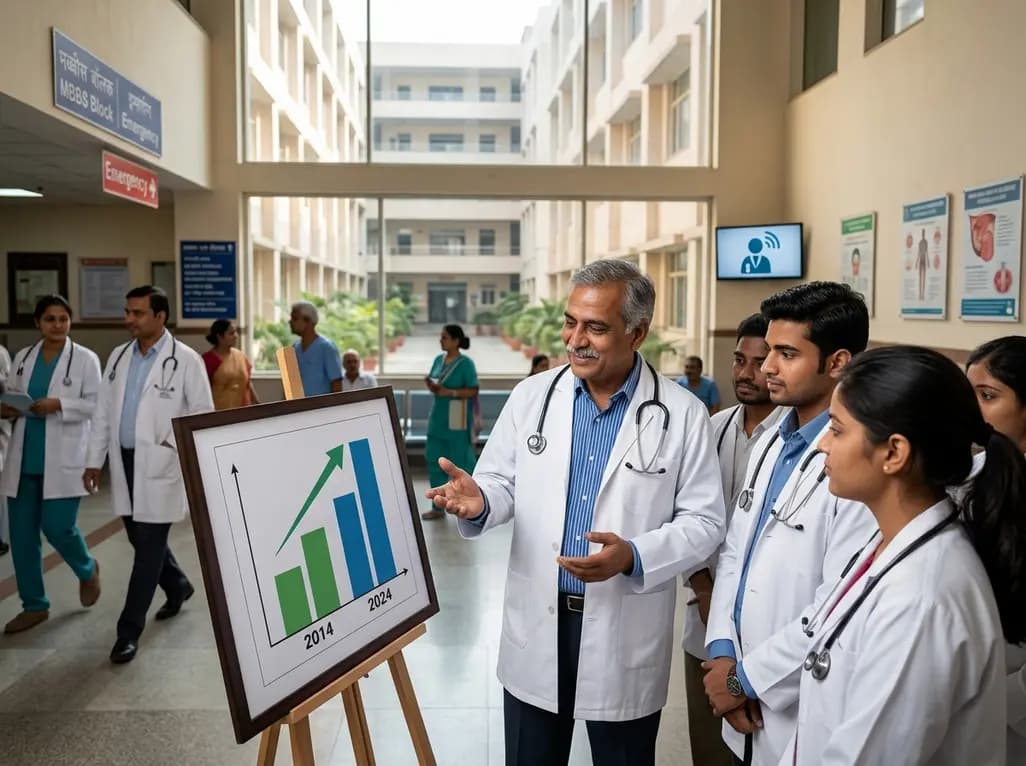
The rapid expansion of medical colleges in India marks a transformative milestone in the nation's contemporary healthcare trajectory. Union Health Minister J. P. Nadda highlighted this milestone during the 79th WHO Regional Committee session in Timor-Leste. Specifically, the total tally of recognized medical colleges in India climbed remarkably from 387 in 2014 to 858 at present. Consequently, this sustained institutional development represents an extraordinary increase of 121.71 percent across a single decade. Both public and private sectors contributed to this infrastructural capacity building.
In addition, medical seat capacity expanded at a comparable pace across undergraduate and postgraduate tiers. Undergraduate MBBS capacity climbed dramatically from 51,348 seats to 1,42,464 seats nationwide, registering a rise of 177.45 percent. Similarly, postgraduate training opportunities rose sharply from 31,185 positions to 86,287 positions, registering a 176.69 percent increase. Therefore, educational policymakers have broadened the professional pipeline for producing competent clinicians. Furthermore, this deliberate expansion directly targets historical geographic imbalances in health human resources. The central government prioritized upgrading existing district civil hospitals into functioning teaching institutions. As a result, aspiring medical students from underserved regions now access world-class clinical training locally. Ultimately, this structural capacity enhancement establishes the necessary operational foundation for achieving universal health coverage across the country.
Expanding basic undergraduate capacity alone cannot resolve the complex healthcare challenges facing secondary and tertiary health facilities. Therefore, national health planners extended dedicated capacity-building schemes in September 2025 to create 10,000 additional postgraduate positions by 2028-29. Moreover, administrators intentionally directed these new training opportunities toward critical shortage clinical disciplines. These priority branches include emergency medicine, psychiatry, geriatrics, and family medicine. Consequently, advanced postgraduate curricula now align directly with the country's transitioning epidemiological and demographic profile.
Furthermore, the rising prevalence of chronic conditions and an ageing populace require specialized medical competencies at district levels. Medical colleges in India are actively redesigning residency pathways to cultivate holistic, community-oriented specialist expertise. In addition, administrative bodies are distributing residency seats toward historically underserved states and tribal belts. Thus, regional disparities in access to advanced surgical and medical interventions are steadily decreasing. Senior residents and fellows gain practical clinical experience using modern diagnostic technologies and therapeutic protocols. Meanwhile, academic medical centres are introducing structured departmental programs to foster faculty development and clinical research. By actively prioritizing underserved specialties, health authorities ensure that secondary referral hospitals can manage acute medical emergencies locally. Additionally, increasing postgraduate seats directly improves patient care delivery in busy public hospitals. Consequently, patient safety improves as qualified residents provide round-the-clock specialized clinical coverage.
A robust healthcare system cannot function effectively through medical doctors alone; it requires cohesive, multidisciplinary clinical teams. Consequently, the Indian government is establishing 157 new nursing colleges directly adjacent to existing medical colleges. In fact, this strategic initiative will add approximately 15,700 qualified nursing graduates to the workforce each year. In addition, health authorities intend to provide affordable, high-calibre nursing education directly to students within rural and aspirational districts. Thus, health systems can systematically eliminate persistent workforce deficits between metropolitan cities and rural peripheral hospitals.
Furthermore, legislative reforms have modernized professional governance through the National Nursing and Midwifery Commission Act of 2023. Notably, regulatory bodies introduced comprehensive nurse practitioner programs across 10 critical clinical specialities. As a result, advanced practice nurses can now manage specialized clinical workflows in critical care and emergency settings. In addition, statutory reforms under the 2021 Allied Healthcare Act organized 57 distinct allied professions under a formal regulatory framework. Furthermore, national initiatives target the formal certification of 100,000 allied healthcare professionals over a five-year period. Technologists, physiotherapists, and medical laboratory specialists receive standardized competency-based instruction. Therefore, clinical teams can coordinate harmoniously across intensive care units, operative suites, and diagnostic suites. Ultimately, this comprehensive educational restructuring enhances diagnostic precision, decreases patient complications, and elevates hospital care standards nationwide.
Merely increasing the number of graduating physicians does not automatically ensure their physical presence in underserved rural communities. Therefore, the Ministry of Health and Family Welfare formulated multifaceted recruitment and retention strategies for difficult terrains. Health authorities introduced competitive compensation scales, difficult-area allowances, and performance-linked financial incentives to motivate clinicians. Moreover, state departments implement flexible workforce models, including the insourcing of private specialists and contractual fixed-tenure postings. Consequently, working in remote community health centres has become financially attractive and professionally viable for specialist doctors.
Additionally, primary care networks are expanding rapidly to provide integrated preventive and diagnostic clinical services. More than 170,000 Ayushman Arogya Mandirs currently deliver decentralized primary care, including early non-communicable disease screening and specialist referrals. Meanwhile, Ayushman Arogya Shivirs regularly organize periodic specialist screening camps directly inside remote rural villages. Thus, marginalized patients receive timely consultations for hypertension, diabetes, and cancers without travelling great distances. Furthermore, community health centres and first referral units undergo structural upgrades to support surgical, obstetric, and trauma interventions. As a result, rural medical officers can stabilize acute emergencies effectively before arranging necessary secondary transport. By combining tangible financial incentives with modern workplace infrastructure, healthcare administrators are overcoming long-standing rural healthcare deficiencies. Ultimately, these targeted initiatives protect vulnerable families from catastrophic out-of-pocket medical expenditures.
Digital health technologies serve as indispensable instruments for bridging persistent geographic divides in specialist clinical care. For example, India's national telemedicine system, eSanjeevani, facilitates millions of virtual consultations between community wellness centres and tertiary medical experts. In addition, the Ayushman Bharat Digital Mission enables interoperable electronic health records using unique patient identification accounts. Thus, attending clinicians can instantly review patient medical histories during complex emergency referrals or remote consultations. Furthermore, health facilities are deploying artificial intelligence tools to accelerate oncological and cardiovascular screenings in resource-limited rural clinics.
These domestic initiatives aligned seamlessly with international public health goals during the recent ministerial assembly in Timor-Leste. Health ministers across member states formally adopted the landmark Dili Declaration to advance equity in specialized care. Specifically, the regional declaration urges nations to align medical education, workforce planning, and health financing with emerging demographic challenges. Furthermore, the declaration recommends task-sharing, mentoring programs, visiting specialist networks, and coordinated digital referral pathways. High-priority clinical areas identified include cardiovascular medicine, cancer treatment, emergency trauma care, maternal health, and mental health rehabilitation. Notably, the World Health Organization honored India with two regional public health awards during this session. The prestigious accolades recognized India's sustained elimination of maternal and neonatal tetanus alongside leadership in protocol-driven chronic disease management.
Q1: How rapidly has medical education capacity expanded across India over the past decade?
Medical infrastructure in India expanded at an unprecedented pace between 2014 and the present day. Specifically, the total number of medical colleges rose from 387 to 858, achieving an increase of 121.71 percent. In addition, undergraduate MBBS positions grew by 177.45 percent to 1,42,464 seats. Furthermore, postgraduate training capacity climbed by 176.69 percent to 86,287 seats nationwide. Consequently, this dramatic expansion significantly bolsters clinical workforce availability across diverse secondary and tertiary healthcare facilities.
Q2: What specific strategies are authorities implementing to retain specialist clinicians in rural areas?
Healthcare administrators employ multifaceted financial and operational mechanisms to retain skilled specialist physicians in remote communities. For example, health authorities offer competitive remuneration packages, difficult-area hardship allowances, and performance-based monetary incentives. In addition, states utilize flexible administrative models, such as insourcing private specialty consultations and offering fixed-tenure clinical contracts. Furthermore, upgrading rural community health centres and deploying telemedicine networks helps doctors practice effectively, ensuring sustainable rural clinical postings.
Q3: What are the primary objectives outlined in the WHO Dili Declaration on human resources for health?
The Dili Declaration establishes an international commitment among South-East Asian nations to achieve equitable access to specialized medical care. In particular, it urges member governments to align workforce planning with changing population demographics and disease burdens. Furthermore, the declaration advocates structured task-sharing, visiting specialist initiatives, rotational outreach, and digital telemedicine integration. Consequently, underserved communities gain reliable access to essential services in cardiology, trauma, oncology, mental health, and geriatric medicine.
Disclaimer: This content is for informational and educational purposes only. It does not constitute medical advice or replace professional judgment. Refer to the latest local and national guidelines for clinical practice.
References

Read summarized clinical updates, watch expert medical content, and earn CME certifications right from your smartphone.
Open your smartphone camera to scan and install.





At the 79th WHO Regional Committee session, Union Health Minister J.P. Nadda highlighted that medical colleges in India grew from 387 in 2014 to 858, alongside massive seat increases. With the Dili Declaration, the nation focuses on specialist retention, digital telemedicine, and equitable rural healthcare access.
Today

Researchers have developed an innovative ultrasound-responsive nano-contrast agent that co-delivers CIITA-siRNA and rapamycin directly to inflamed thyroid tissue, significantly reducing autoimmune injury and thyroid autoantibodies in preclinical models of Hashimoto thyroiditis.
Today
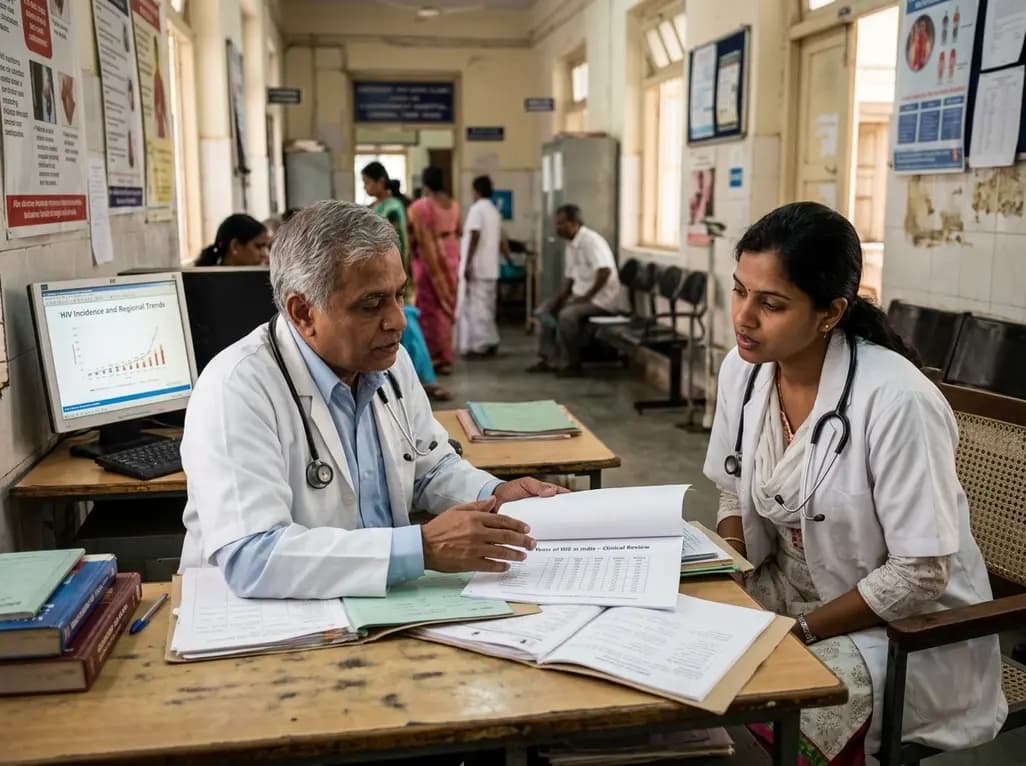
Four decades after India's first detected HIV case, national successes mask persistent regional disparities, maternal seroconversion, and late presentation. Clinicians must adapt strategies to match modern epidemiological realities.
Today
A landmark study of 1,333 patients demonstrates that aortic root preservation provides robust 10-year durability in acute type A aortic dissection, even with significant baseline aortic regurgitation. Preoperative regurgitation did not independently increase early mortality.
Today
A propensity-matched study reveals that patients with severe generalized ligamentous laxity experience a slower recovery trajectory after hip arthroscopy for femoroacetabular impingement. While final two-year outcomes remain favorable, tailored rehabilitation and capsular management are critical.
Today
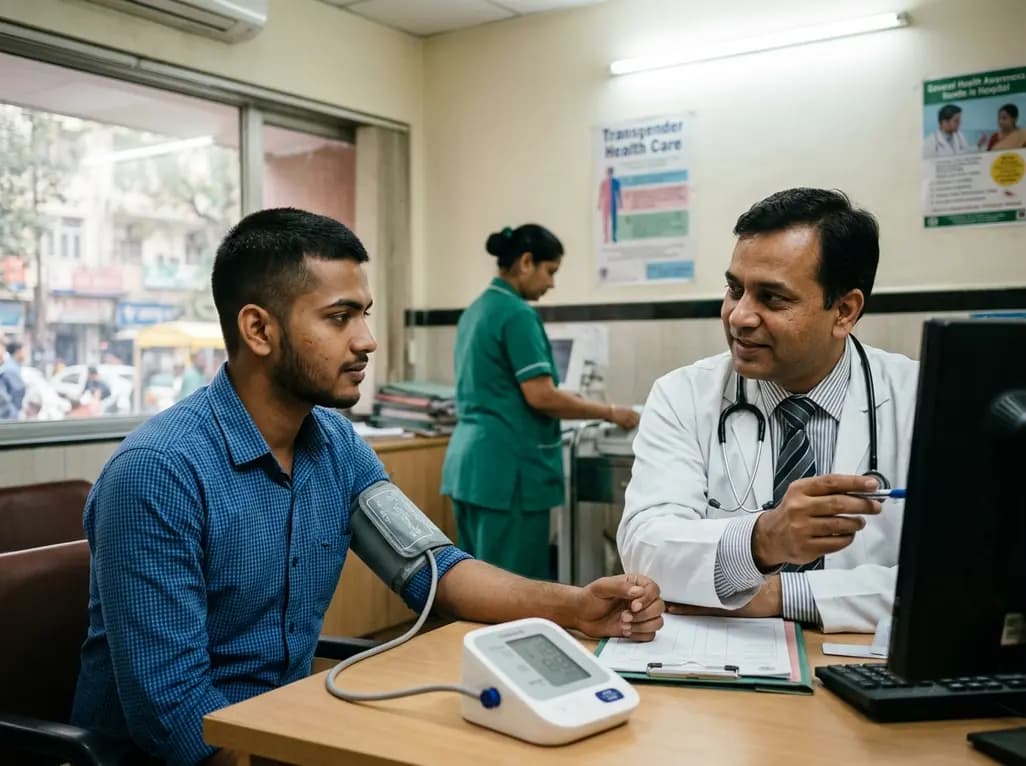
Groundbreaking research examines the distinct and combined effects of gender minority stress and testosterone therapy on acute blood pressure reactivity in transgender and nonbinary adults assigned female at birth, providing vital insights into cardiovascular risk stratification.
Today
