.webp&w=384&q=75)

Loading, please wait...
Loading, please wait...

The Medanta Varanasi expansion represents a strategic move by Global Health Limited to enhance healthcare delivery in Northern India. Specifically, the board recently approved a ₹550 crore investment for a new 400-bed multispecialty hospital in Varanasi. This development utilizes a built-to-suit and lease model with Shripal Hospitality and other partners. Furthermore, the partner will develop the civil infrastructure while Medanta manages the medical equipment and interiors. Consequently, this facility will bolster the chain's footprint in Uttar Pradesh alongside its Lucknow and Noida locations. Once completed, Medanta’s total bed capacity in the state will increase to approximately 1,900 beds.
Dr. Naresh Trehan emphasized that this project reflects the company's commitment to patient-centric, high-quality healthcare. Additionally, the hospital will sit on a freehold land parcel in the heart of the city. This location allows the facility to cater to a massive population base of over four million people. However, the current healthcare landscape in Varanasi often requires patients to travel elsewhere for complex procedures. Moreover, most existing local facilities operate on a much smaller scale of 50 to 150 beds. Therefore, the 400-bed super-specialty center will bridge the gap in access to advanced tertiary care. Ultimately, Global Health aims to complete construction within the next four years, subject to statutory approvals.
Q1: What is the total investment for the new Medanta facility?
Medanta plans to invest approximately ₹550 crores specifically in medical technology, interior fit-outs, and clinical services.
Q2: How will the infrastructure for the Varanasi hospital be developed?
The project follows a build-to-suit model where a partner handles civil construction according to Medanta's strict technical specifications.
Q3: How many total beds will Medanta have in Uttar Pradesh?
With the addition of the Varanasi facility, the total capacity in the state will reach 1,900 beds, including the Lucknow and Noida hospitals.
Disclaimer: This content is for informational and educational purposes only. It does not constitute medical advice or replace professional judgment. Refer to the latest local and national guidelines for clinical practice.
References

Read summarized clinical updates, watch expert medical content, and earn CME certifications right from your smartphone.
Open your smartphone camera to scan and install.





Medanta plans a 400-bed multispecialty hospital in Varanasi with a ₹550 crore investment to improve tertiary healthcare access in Uttar Pradesh....
6 months ago
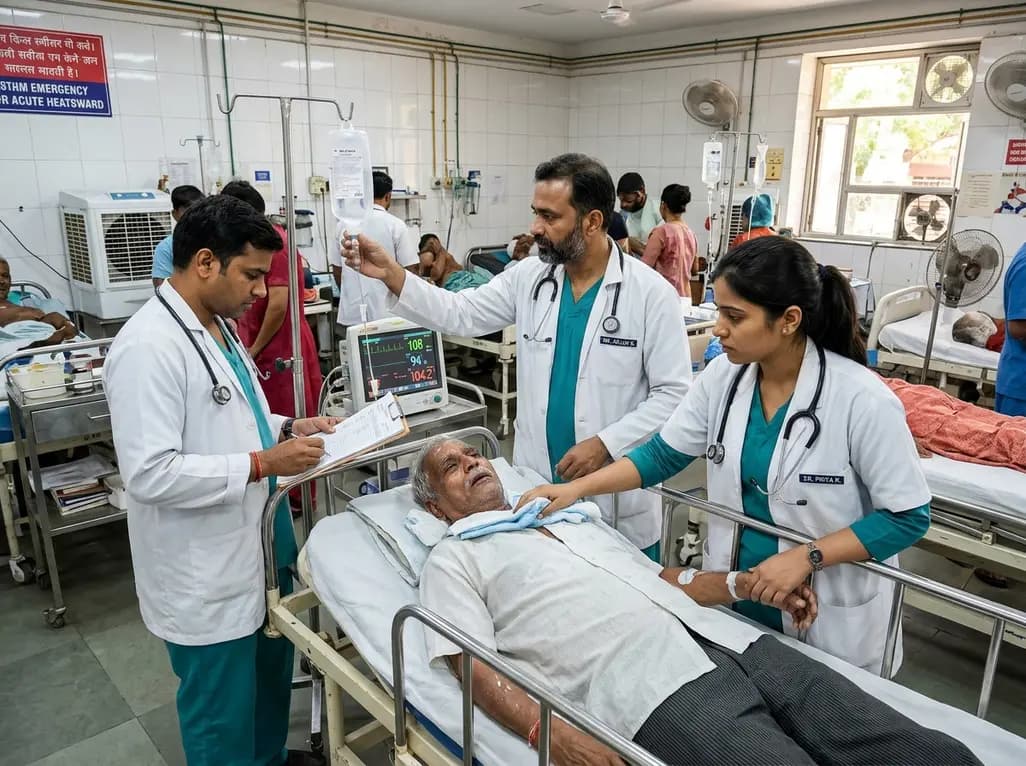
Recent epidemiological data reveals a dramatic surge in summer heat mortality driven by human-induced climate warming. This analysis explores the pathophysiological impacts on cardiac and renal systems, diagnostic dilemmas in death certification, and essential emergency cooling protocols for acute clinical care.
Today

Odisha has established India's first state-level clinical protocol specifically tailored for pregnant women with sickle cell disease. Developed with NHM and UNICEF, the framework provides structured antenatal screening, crisis mitigation, standardized referral pathways, and specialized interdisciplinary care.
Today

India is advancing preventive healthcare by integrating genomics, artificial intelligence, and quantum technologies. With the SANGAM programme sequencing one million Indian genomes, clinicians can unlock personalized therapies, detect cardiometabolic risks early, and curb the burden of diabetes and heart disease.
Today

A randomized controlled trial demonstrates that an eight-week dual-task training intervention significantly improves static and dynamic postural control over standard balance exercises in individuals with chronic ankle instability, addressing critical neurocognitive deficits during athletic and daily activities.
Today

A retrospective cohort study of 7,716 ICU patients from the MIMIC-IV database demonstrates that Gradient Boosting Decision Trees significantly outperform traditional SOFA scores in predicting in-hospital mortality among patients with sepsis and diabetes, with SHAP analysis providing clinical interpretability.
Today
