.webp&w=384&q=75)

Loading, please wait...
Loading, please wait...

Recent public health surveillance demonstrates an alarming resurgence of wild-type measles virus infections globally. Consequently, frontline clinicians must urgently reinforce their approach to measles outbreak management. The United States Centers for Disease Control and Prevention recently documented over 4,400 confirmed cases across multiple jurisdictions. Moreover, disease activity has accelerated rapidly, driving hundreds of pediatric and adult hospital admissions. Because infectious diseases cross international borders effortlessly, healthcare practitioners worldwide must remain hyper-vigilant. Early detection prevents secondary household clusters and institutional spread.
Current epidemiological surveillance highlights an important demographic shift that challenges conventional pediatric assumptions. Historically, clinicians encountered measles predominantly in preschool children. However, recent surveillance figures show that individuals aged five to nineteen now represent forty-two percent of total infections. In addition, adults aged twenty and older constitute another forty-one percent of reported cases. This older cohort faces substantial risks of severe systemic morbidity.
Suboptimal community vaccine coverage creates critical pockets of susceptible adolescents and adults. Consequently, secondary transmission accelerates within high-density settings such as colleges, boarding schools, and workplaces. Waning immunity or incomplete primary childhood vaccination leaves these individuals vulnerable. Furthermore, delayed diagnosis in older patients frequently occurs because clinicians maintain lower suspicion for classic exanthems in adults.
Therefore, modern clinical surveillance requires an expanded diagnostic index of suspicion across all age groups. Frontline physicians should aggressively identify non-immune individuals during routine consultations. Early isolation of suspect cases remains paramount to interrupt transmission chains rapidly. Additionally, public health authorities must collaborate closely with clinical networks to track secondary attack rates.
Measles typically initiates with an intense prodromal phase following an incubation interval of ten to fourteen days. Patients present with high-grade spiking fevers, profound malaise, anorexia, and classic respiratory catarrh. Specifically, the triad of persistent cough, severe coryza, and bilateral non-purulent conjunctivitis reliably alerts clinicians. During this initial stage, viral shedding reaches its absolute peak through airborne micro-droplets.
Approximately two to three days after symptom onset, pathognomonic Koplik spots appear on the buccal mucosa. These clustered, white-blue lesions resemble tiny grains of salt on an erythematous base. Soon thereafter, a non-pruritic maculopapular exanthem erupts behind the hairline and post-auricular regions. The rash progressively spreads cephalocaudally across the face, trunk, and extremities over several days.
However, presentation in vaccinated individuals with waning titers or immunocompromised hosts can be strikingly atypical. Such patients might demonstrate muted rash morphology or absent pathognomonic mucosal enanthems. Moreover, immunosuppressed individuals may fail to mount typical inflammatory responses, complicating timely recognition. Consequently, clinicians must evaluate unexplained febrile respiratory syndromes carefully, even when classic cutaneous signs seem indeterminate.
Rapid diagnostic confirmation is vital during widespread regional outbreaks. Clinicians should never delay airborne isolation measures while awaiting definitive laboratory reports. When an infection is suspected, physicians must promptly collect a nasopharyngeal swab alongside serum specimens. Reverse-transcription polymerase chain reaction assays provide the highest diagnostic sensitivity during early prodromal illness.
Additionally, serologic assessment using measles-specific IgM and IgG enzyme-linked immunosorbent assays provides essential confirmatory data. Measles IgM antibodies typically emerge within three days of rash onset and remain detectable for four weeks. However, false-negative IgM results can occur if clinicians draw serum samples too early in the disease course. Therefore, repeated serologic sampling after seventy-two hours becomes necessary when high clinical suspicion persists.
Genotyping through reference laboratories delivers invaluable molecular epidemiology intelligence. This surveillance helps public health experts differentiate between distinct importation chains and sustained domestic endemic cycles. Furthermore, clinicians must promptly report every suspect case to local statutory disease monitoring bodies. Timely notification triggers rapid contact tracing, active ring surveillance, and targeted community post-exposure prophylaxis.
Measles generates profound transient immunosuppression by depleting circulating memory T cells and neutralizing secondary humoral defenses. Consequently, secondary bacterial and viral infections develop frequently, driving extensive hospitalizations. Severe bronchopneumonia represents the single most common cause of measles-related mortality across both infants and adults. Secondary bacterial pathogens like Streptococcus pneumoniae and Staphylococcus aureus frequently invade damaged respiratory epithelium.
Moreover, neurological complications cause lasting morbidity. Acute post-infectious encephalitis occurs in approximately one in every one thousand infections, presenting with seizures, lethargy, and coma. Subacute sclerosing panencephalitis remains a devastating, fatal degenerative complication that manifests years after primary childhood infection. In addition, severe keratoconjunctivitis can lead rapidly to corneal ulceration and permanent blindness in malnourished patients.
Furthermore, high-risk cohorts demand aggressive monitoring and specialized inpatient care pathways. These vulnerable groups include infants under twelve months, pregnant women, malnourished individuals, and immunocompromised patients. Clinicians must institute rigorous supportive fluid maintenance, antipyretics, and targeted antibacterial coverage for secondary infections. Prompt administration of high-dose vitamin A reduces measles-related mortality and ocular complications substantially.
Effective prevention hinges on maintaining ninety-five percent community coverage with two doses of live attenuated vaccine. In routine immunization programs, children receive their first dose of measles-containing vaccine at nine to twelve months. Subsequently, infants receive a mandatory second booster dose between fifteen and twenty-four months of age. This two-dose regimen achieves sustained protective immunity in over ninety-seven percent of recipients.
However, vaccine hesitancy and operational disruptions create dangerous gaps in population-level herd protection. Clinicians must actively screen immunization records during every clinical encounter to offer appropriate catch-up immunization. For susceptible contacts exposed to confirmed cases, physicians can administer the measles vaccine within seventy-two hours. Alternatively, human normal immunoglobulin offers effective passive post-exposure protection if administered within six days of initial exposure.
In healthcare environments, strict adherence to infection prevention protocols prevents catastrophic nosocomial dissemination. Suspected patients should immediately wear surgical masks and transition into negative-pressure airborne isolation suites. Furthermore, healthcare facilities must verify that all healthcare personnel possess documented, two-dose proof of measles immunity. Ultimately, robust clinical vigilance combined with aggressive immunization advocacy remains our strongest defense against resurging disease.
Q1: Why are older children and adults experiencing higher measles infection rates during recent outbreaks?
Older cohorts experience higher infection rates primarily because of historical immunization gaps and waning secondary vaccine-induced immunity over time. Furthermore, individuals who missed scheduled childhood doses or received only a single vaccine dose remain highly susceptible. As community transmission escalates in dense environments like universities and offices, these non-immune teenagers and adults face substantial exposure risks. Consequently, clinicians must maintain clinical vigilance regardless of the patient's age.
Q2: What is the recommended post-exposure prophylaxis protocol for susceptible individuals exposed to measles?
Clinicians recommend administering the live-attenuated measles vaccine within seventy-two hours of initial exposure to eligible susceptible individuals. Alternatively, physicians should provide human normal immunoglobulin within six days of exposure for high-risk individuals who cannot receive live vaccines. This high-risk category includes infants under six months, pregnant females, and severely immunocompromised patients. Intramuscular or intravenous immunoglobulin delivers immediate passive neutralizing antibodies, effectively mitigating severe illness or preventing clinical disease completely.
Q3: How does high-dose vitamin A administration benefit patients diagnosed with acute measles infection?
Acute measles infection rapidly depletes endogenous vitamin A stores, which impairs mucosal epithelial integrity and suppresses cellular immunity. Therefore, the World Health Organization recommends therapeutic high-dose oral vitamin A for all diagnosed pediatric measles patients. Clinicians administer age-adjusted doses on two consecutive days immediately upon diagnosis. This vital intervention preserves gastrointestinal and respiratory mucosal barriers, accelerates recovery, prevents xerophthalmia, and reduces measles-associated pneumonia and overall mortality significantly.
Disclaimer: This content is for informational and educational purposes only. It does not constitute medical advice or replace professional judgment. Refer to the latest local and national guidelines for clinical practice.
References

Read summarized clinical updates, watch expert medical content, and earn CME certifications right from your smartphone.
Open your smartphone camera to scan and install.





With global measles cases surging and shifting toward older children and adults, clinicians face renewed diagnostic and containment challenges. Review key prodromal signs, critical inpatient complications, updated immunization strategies, and outbreak response protocols to protect vulnerable populations.
Today

A comparative study evaluates three ambient listening systems across Dutch outpatient consultations, examining their accuracy, completeness, and speed when facing dialect variations, multispeaker dynamics, and conversational interruptions.
Today

A recent cohort study reveals that reproductive-age women with cerebral venous thrombosis have nearly double the odds of developing intracranial hypertension compared to older women. Superior sagittal and lateral sinus occlusions heighten this risk, predisposing patients to persistent visual impairment.
Today

India's food safety authority FSSAI has issued show-cause notices to Gemini Edibles, BigBasket, and Flipkart for unpermitted cardiovascular claims regarding Freedom Rice Bran Oil. This regulatory move highlights the strict enforcement of advertising standards and the clinical necessity of evidence-based lipid care.
Today

Diagnostic data shows that nearly one in four spine investigations now involve patients younger than 40 years. This comprehensive overview explores the drivers behind this demographic trend, evaluates ergonomic hazards, clarifies red-flag signs, and highlights clinical indications for judicious diagnostic imaging.
Today
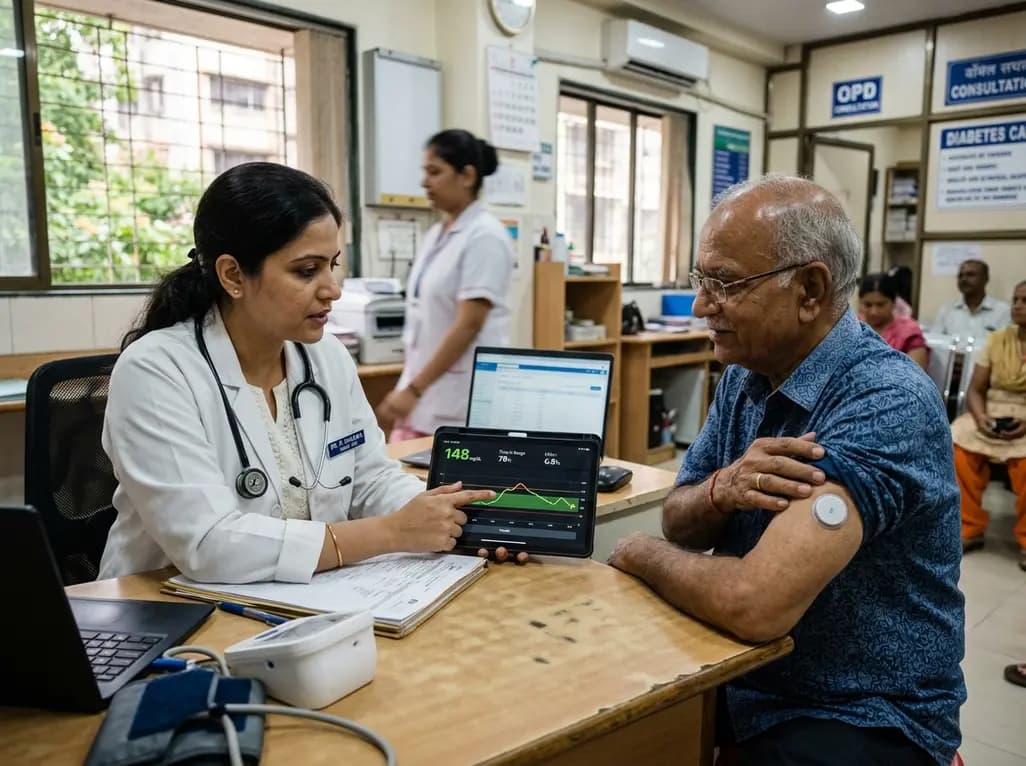
A landmark randomized clinical trial demonstrates that real-time continuous glucose monitoring significantly reduces HbA1c and enhances time in range for individuals with type 2 diabetes who do not take insulin, paving the way for broader clinical adoption and personalized metabolic therapy in primary care.
Today
